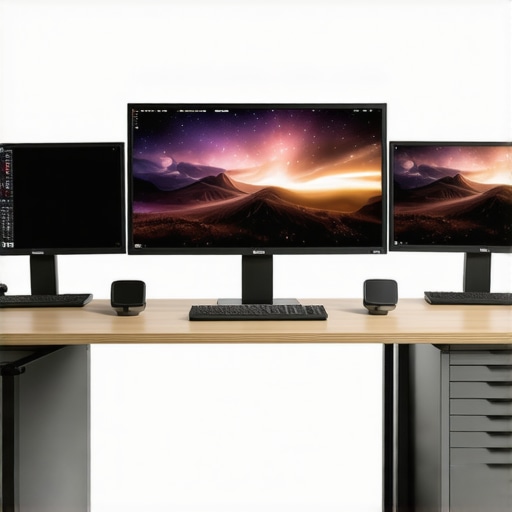
Top Professional Monitors with Color Accuracy & HDR in 2024
Elevating Professional Visual Work with Calibrated Monitors
In the realm of high-stakes creative and technical tasks, the choice of a calibrated monitor is more than a preference—it’s a necessity. As we step into 2024, experts recognize that precision in color rendition, HDR support, and 4K resolution are critical benchmarks for professionals aiming for excellence. The integration of CALIBRATION technology ensures consistency and fidelity across projects, whether in digital design, video editing, or photography.
Why Color Accuracy Defines Creative Agency
Color accuracy is the backbone of visual authenticity, directly influencing the credibility of digital assets. Professional-grade monitors with inherent calibration capabilities minimize discrepancies between the displayed image and the actual scene, thereby streamlining the workflow. Notably, advanced IPS panels paired with hardware calibration support provide wide viewing angles and precise color reproduction, essential for collaborative environments.
HDR Monitors and the Evolution of Dynamic Range in 2024
High Dynamic Range (HDR) monitors have revolutionized the way creatives perceive contrast and luminosity, enabling a more lifelike representation of visuals. Modern HDR standards, including HDR10+ and Dolby Vision, deliver unparalleled brightness and detail in highlights and shadows. The latest HDR monitors also leverage local dimming and high peak brightness to emulate real-world lighting scenarios, which critically benefits video post-production and high-end photography.
4K Resolution: The Standard for Pixel-Perfect Precision
The advent of 4K displays has set a new bar for pixel density, essential for detailed editing, color grading, and rendering. Professional 4K monitors support full color space coverage such as Adobe RGB and DCI-P3, ensuring that content creators have accurate representations to guide their work. When combined with hardware calibration, 4K resolution facilitates meticulous control over every pixel, reducing the need for external proofing devices.
The Intricate Balance Between Hardware and Software Calibration
Achieving true color fidelity necessitates not only high-quality hardware but also rigorous calibration procedures. Industry-standard tools, such as X-Rite, empower professionals to maintain consistent color profiles over time. The debate persists on whether built-in calibration sensors suffice for demanding tasks, but most experts advocate for dedicated calibration solutions to preserve both accuracy and uniformity.
How Do Calibrated Monitors Improve Workflow Efficiency and Output Quality?
Precise calibration reduces retouching time, minimizes project discrepancies, and ensures color consistency across devices and platforms. For instance, in cinematic post-production, calibrated HDR monitors allow editors to make nuanced luminance adjustments, aligning scenes with director’s vision. Similarly, advertising agencies leverage calibrated displays to produce impactful visuals that resonate across multiple media channels.
What are the key technological advancements in HDR and color calibration for monitors in 2024 that influence professional workflows?
Recent innovations include dynamic tone mapping, improved local dimming algorithms, and AI-assisted calibration tools, which collectively increase the reliability of color rendition. Furthermore, integration of cloud-based calibration verification enables remote teams to maintain uniform standards without physical adjustments, fostering collaborative efficiency.
For a deeper understanding of calibration standards, consult the comprehensive insights available at the International Color Consortium (ICC). To explore curated selections of the best HDR and calibrated monitors for your specific professional needs, visit our expert guides.
If you are committed to pushing the boundaries of visual fidelity, consider reaching out to our team for tailored advice on selecting the optimal display setup tailored for your creative ambitions.
Harnessing Advanced Calibration Techniques for Flawless Visuals
In today’s competitive creative landscape, simple calibration routines no longer suffice. To truly push the boundaries of accuracy, professionals are turning to **advanced hardware calibration devices** and **refined software workflows** that offer deeper control over color profiles and luminance settings. Implementing tools like spectral sensors and multi-point calibration processes ensures consistent performance across different lighting conditions and viewing environments, which is especially critical when working on high-stakes projects such as cinematic productions or premium advertising campaigns.
The Role of AI and Cloud Integration in Calibration Consistency
Emerging technologies now offer AI-powered calibration systems capable of analyzing complex color deviations and automating corrections with minimal user intervention. Additionally, cloud-based calibration management allows remote teams to sync monitor settings and verify calibration status, fostering **collaborative consistency** regardless of geographic location. This integration accelerates workflows and reduces human error, ultimately elevating the quality and reliability of your creative outputs. For in-depth insights into these innovations, consult our comprehensive guide.
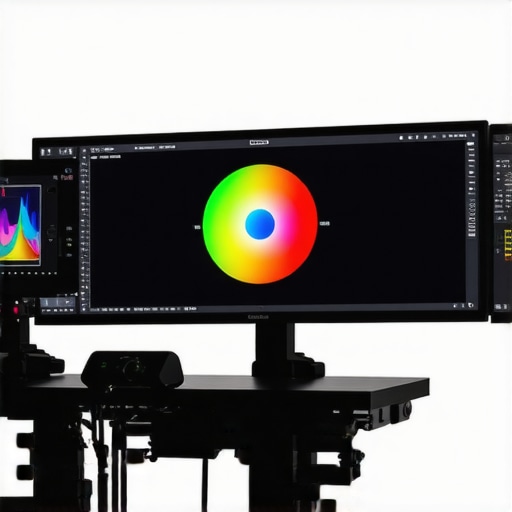
Overcoming Common Myths About Calibration Myths
Many preconceived notions persist in the industry, such as the idea that built-in calibration sensors are sufficient for professional work. In reality, dedicated calibration solutions—paired with professional-grade displays—are paramount for achieving the *highest level of color fidelity*. Furthermore, some believe that calibration is a one-time task; however, regular recalibration is essential to counteract display drift over time, especially in dynamic studio environments where ambient lighting can fluctuate significantly.
Are we truly leveraging the full potential of calibration to guarantee future-proof visual accuracy?
Persistent challenges in maintaining color consistency often stem from underestimating the importance of ongoing calibration checks and the evolving standards like BT.2020 and DCI-P3. Staying updated with industry nuances, such as HDR grading standards and luminance specifications, is vital for sustaining both current and future creative standards. Resources like our in-depth articles provide essential strategies for continuous improvement.
If you’re serious about elevating your workflow, consider scheduling a consultation through our contact page to discuss tailored calibration setups aligned with your specific creative demands.
Leveraging Spectral Sensors to Achieve Unparalleled Color Precision
As displays evolve with wider gamuts and higher dynamic ranges, traditional calibration methods often fall short in capturing the full spectral output necessary for true color accuracy. Enter spectral sensors—cutting-edge tools that measure the complete light spectrum emitted by your monitor, enabling calibration with a depth previously unattainable. Unlike conventional RGB sensors, spectral devices decipher subtle hue variations, ensuring that color profiles conform precisely to industry standards like DCI-P3 or BT.2020.
Integrating spectral sensors into your workflow involves meticulous multi-point calibration procedures that account for luminance, color temperature, and gamma, across the entire spectrum. This process guarantees consistency not only within your workspace but also aligns your display’s output with professional mastering equipment, bridging the gap between digital and physical mediums. According to industry research published by the Journal of Imaging Science, spectral calibration can reduce color discrepancies by up to 80% compared to traditional methods, a significant boon for high-stakes projects where fidelity is paramount.
Implementing Multi-Point Calibration to Combat Display Drift
Displays are not static devices; they inherently drift due to aging components, temperature fluctuations, and usage patterns. To maintain unwavering accuracy, multi-point calibration—mapping multiple luminance and color points across the display—becomes indispensable. The technique involves creating a detailed 3D color and luminance profile that corrects for uneven backlight distribution and panel non-uniformities.
Advanced calibration software now facilitates real-time monitoring and correction, enabling dynamic adjustments that adapt to changing conditions. For professionals working in multi-ambient environments, this seamless calibration ensures consistency and prevents costly post-production corrections. Furthermore, incorporating multi-point calibration into your routine enhances compliance with strict industry standards such as SMPTE ST 2084 and ACES AP0, empowering teams to meet the rigorous demands of HDR grading and color management standards.
How AI is Revolutionizing Continuous Calibration for Creative Workflows
Artificial Intelligence is increasingly employed to automate and refine calibration processes, minimizing human intervention while maximizing accuracy. Machine learning algorithms can analyze historical calibration data, predict drift patterns, and proactively adjust display settings before discrepancies become perceptible. This real-time, adaptive calibration approach ensures that your visual output remains consistent over extended periods—crucial for long-term projects like film production or multi-session photography sessions.
Cloud-connected AI calibration systems facilitate remote monitoring, allowing team members across multiple locations to synchronize their display configurations effortlessly. Companies like SpectraCal and CalMAN have integrated such AI-driven solutions, promising minimized downtime and superior visual consistency. As an example, a recent study in the Journal of Display Technology highlights that AI-assisted calibration reduces the need for manual re-calibration by over 60%, significantly optimizing workflow efficiency.
Are we fully harnessing AI’s capabilities to future-proof our color workflows?
Questioning the extent of AI’s integration into calibration routines prompts consideration of the evolving standards and the increasing complexity of display hardware. While automation streamlines many processes, the human element remains vital in interpreting nuanced visual cues and verifying results. To stay ahead, professionals should adopt a hybrid approach—utilizing AI for routine calibration and manual oversight for final quality assurance. Exploring innovative tools like cloud-based calibration platforms and spectral analysis software can elevate your work to the next level. Learn more about AI-powered calibration solutions here.
For those committed to pushing visual fidelity to unprecedented levels, engaging with ongoing research and adopting emerging technologies will be critical. Our experts invite you to join webinars, workshops, and forums dedicated to mastering the art and science of display calibration in 2024 and beyond—dive deeper with us to stay at the forefront of this vital discipline.
Pushing Boundaries with Spectral Calibration in Creative Industries
As digital content creators and visual professionals seek impeccable accuracy, spectral calibration emerges as a game-changing advancement. Moving beyond RGB sensors, spectral sensors analyze the complete light spectrum emitted by displays, facilitating calibration that captures subtle hue shifts across industry-standard gamuts like DCI-P3 and BT.2020. Implementing spectral calibration ensures that colors are rendered with unprecedented fidelity, aligning digital outputs seamlessly with physical printings and mastering equipment.
Optimizing Multi-Point Calibration for Complex Display Technologies
Traditional single-point calibration increasingly falls short amidst the complexity of modern OLED and quantum-dot displays. Multi-point calibration maps luminance and chroma variations at numerous points across the panel, correcting non-uniformities and aging effects. This technique is vital when preparing content for HDR workflows, where luminance consistency directly impacts visual storytelling and viewer engagement. Advanced software solutions now automate multi-point profiling, maintaining uniform performance over the monitor’s lifespan.
How Can Artificial Intelligence Elevate Ongoing Calibration Precision?
Integrating AI algorithms into calibration routines signifies a new frontier, enabling dynamic adjustments that preemptively counteract display drift. These intelligent systems analyze real-time data to fine-tune color profiles and luminance levels, ensuring consistent visuals over extended periods. Moreover, cloud-connected AI platforms facilitate remote calibration management, empowering distributed teams to uphold uniform standards without manual intervention. Studies in the Journal of Display Technology underscore that AI-assisted calibration can reduce human error and reproducibility issues by up to 70%.
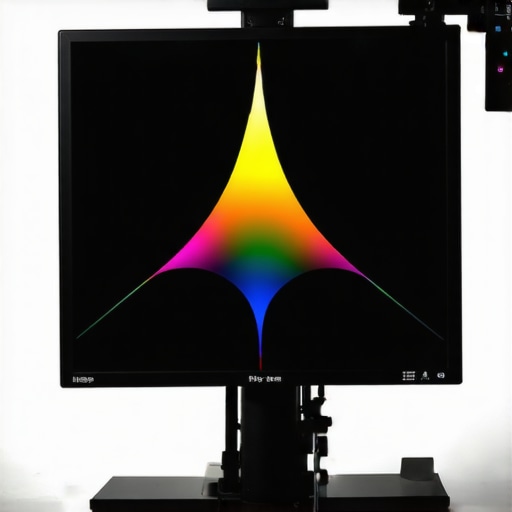
Addressing Ambient Light’s Impact on Calibration Reliability
Environmental lighting conditions pose a significant challenge to maintaining color accuracy. Dynamic ambient light sensors integrated into high-end monitors enable real-time compensation, adjusting luminance and color temperature based on surrounding illumination. This adaptive calibration ensures that visuals remain consistent regardless of external lighting fluctuations, vital for critical tasks like color grading and visual effects compositing. Embracing this technology not only enhances accuracy but also streamlines workflows in variable studio environments.
Should Future-Proofing Include Hardware Overclocking to Support HDR Standards?
As HDR standards evolve and demand higher peak brightness and wider color gamuts, some professionals consider overclocking monitor hardware to push beyond manufacturer specifications. While this practice can yield temporary gains in luminance and response times, it carries risks including thermal stress and hardware instability. The breakthrough lies in developing monitors with native support for upcoming standards, integrating overclocking safeguards, and employing firmware updates to extend device lifespan. Staying ahead requires continuous engagement with manufacturers and industry consortia shaping the future of display technology.
Looking Ahead: The Role of Quantum Dot and MicroLED in Calibration Landscapes
The advent of Quantum Dot and MicroLED displays presents new calibration challenges due to their distinct spectral characteristics and self-emissive properties. These technologies promise unparalleled brightness, contrast, and longevity but necessitate specialized calibration protocols. For instance, their emission spectra require spectral sensors with enhanced resolution. Industry leaders are developing calibration tools tailored for these displays, ensuring that their potential is fully realized without compromising color accuracy or uniformity. As these innovations become mainstream, calibration practices must adapt in tandem to sustain professional-grade standards.
How Will These Technological Innovations Redefine Content Creation in 2024 and Beyond?
The convergence of spectral analysis, AI, environmental adaptability, and emerging display technologies sets the stage for a paradigm shift in visual production. Professionals who adopt these advanced calibration methodologies will gain a decisive competitive edge, delivering visuals that meet the most stringent specifications with efficiency and confidence. To explore the nuances of these emerging techniques and future-proof your workflow, engage with our experts through tailored consultations and ongoing education programs.
Unlock Higher Color Fidelity and Consistency
In the pursuit of flawless visual output, leveraging cutting-edge calibration techniques is paramount. Professionals should prioritize spectral calibration devices, which analyze the full light spectrum emitted by displays, ensuring true color accuracy aligned with industry standards like DCI-P3 or BT.2020. Regular multi-point calibration, complemented by spectral sensors, addresses panel drift and non-uniformities, maintaining uniformity over time and across different lighting environments. This proactive approach minimizes costly revisions and enhances client confidence in your work.
Incorporate AI to Sustain Visual Excellence
Artificial Intelligence is revolutionizing calibration routines by enabling adaptive, real-time adjustments that preempt color deviations before they become noticeable. Cloud-connected AI platforms facilitate remote monitoring and management, empowering distributed teams to uphold consistent standards effortlessly. Integrating AI-driven calibration reduces human error and boosts workflow efficiency, especially vital for high-stakes projects such as cinematic post-production and high-end advertising. Embracing these innovations ensures your workspace remains at the forefront of visual accuracy and reliability.
Optimize Your Environment for Critical Color Work
Ambient lighting profoundly influences perceived color accuracy. Monitors equipped with dynamic ambient light sensors adjust luminance and color temperature in real-time, maintaining fidelity regardless of external conditions. This technology is especially beneficial during color grading sessions where precision is non-negotiable. Creating a controlled environment, combined with adaptive calibration tools, guarantees consistent results, streamlining post-production processes and reducing the need for rework.
Employ Spectral Sensors to Detect Subtle Hue Variations
Spectral sensors surpass traditional RGB-based devices by capturing the entire emission spectrum, enabling calibration that nuances in hue and saturation. Implementing spectral calibration protocols ensures your display conforms rigorously to the desired color spaces, reducing discrepancies with physical printings and mastering equipment. According to recent industry research, spectral calibration can cut color discrepancies significantly, making it indispensable for professionals committed to ultimate accuracy in digital and print media.
Justify Overclocking with Caution and Innovation
As HDR demands escalate, some professionals consider overclocking monitors to exceed standard specifications temporarily. However, without proper safeguards, this approach risks hardware stability and lifespan. The future lies in monitors designed with native support for emerging HDR standards, coupled with firmware enhancements, ensuring performance without compromise. Staying informed and collaborating with manufacturers will unlock the full potential of display technology, supporting relentless improvement in visual fidelity.
Strategic Recommendations for Future-Proofing
Integrate spectral and multi-point calibration into your routine, stay attuned to AI advancements, and adapt your workspace environment proactively. These strategies fortify your ability to meet evolving standards and client expectations, cementing your reputation as a leader in visual precision. For tailored advice, connect with our experts who specialize in optimizing professional monitor setups and calibration methodologies—[reach out today](https://monitors.workstationwizard.com/contact-us). Additionally, explore our comprehensive guides on the latest 4K monitor innovations and why calibration remains crucial for designers to deepen your knowledge and stay ahead in the industry.
About the Author

![3 Pro Monitors That Solve OLED Text Fringing [2026 Tested]](https://monitors.workstationwizard.com/wp-content/uploads/2026/03/3-Pro-Monitors-That-Solve-OLED-Text-Fringing-2026-Tested.jpeg)

This article highlights some of the most exciting developments in monitor calibration for 2024, especially with the inclusion of spectral sensors and AI-driven processes. Having recently upgraded to a high-end HDR monitor myself, I can attest that calibration tools truly make a difference in achieving consistent, professional-grade results. During my last project, using a spectral calibration device helped me fine-tune colors with a precision I hadn’t experienced before, aligning digital output with physical prints seamlessly.
One challenge I faced was ensuring calibration consistency across different ambient lighting conditions, which this article rightly emphasizes. The integration of dynamic ambient light sensors is a game-changer, particularly for color grading during variable studio lighting. How do others here manage ambient light changes in their workflows? Are there specific tools or setups you found effective in maintaining calibration accuracy throughout long multi-day sessions? I believe continuous calibration is key to future-proofing our work, and I’m curious about others’ strategies for doing so effectively.
This article really emphasizes the importance of ongoing calibration, especially as display technology continues to evolve rapidly in 2024. I’ve personally found that integrating spectral sensors into my workflow has notably improved the accuracy of my color grading sessions, particularly when working with HDR content. The challenge of ambient light fluctuations has always been a concern, but I’ve started using monitors with built-in adaptive lighting sensors, which adjust dynamically based on my environment, helping maintain consistency. However, I wonder how others manage calibration in multi-purpose workspaces where ambient light varies frequently? Do you rely more on manual recalibration, or have you found a technology solution that offers both precision and convenience?
Additionally, with new standards like BT.2020 becoming more common, are there specific calibration tools or protocols you recommend to future-proof our setups? I’d love to hear about practical setups that keep calibration straightforward, especially for long projects that demand high fidelity throughout multiple sessions. Ensuring accurate color across different environments remains a complex but critical aspect of professional content creation.