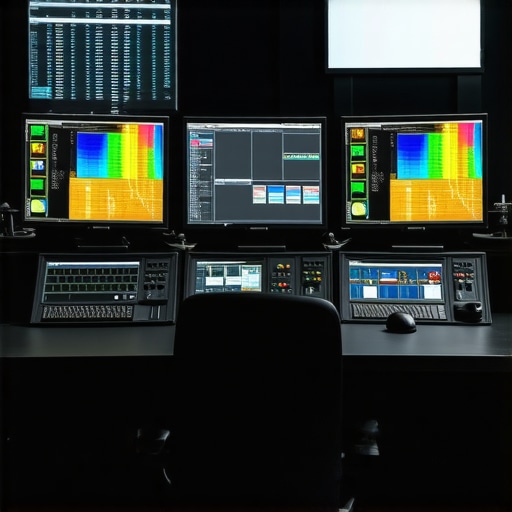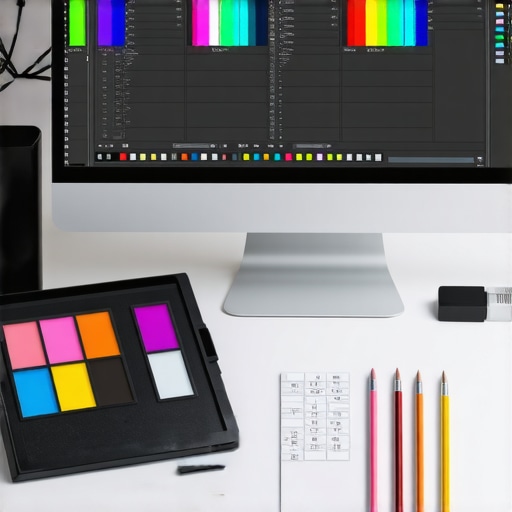
Are 5,000 Nits Overkill? 3 HDR Monitors for 2026 Pros
Elevating Visual Fidelity in Professional Workflows
In the realm of high-end digital production, the distinction between a standard display and a calibrated 4K monitor extends beyond mere resolution. For creative professionals, such as video editors, photographers, and designers, achieving impeccable color accuracy and consistency is paramount. As advancements in HDR technology and display calibration converge, understanding the intricacies of these tools becomes essential for maintaining industry-leading standards.
Optimal Choice of Calibrated Monitors for Precise Color Reproduction
Choosing a calibrated monitor involves evaluating hardware capabilities that ensure minimal color drift, high bit-depth support, and compatibility with calibration devices. Professional-grade monitors frequently incorporate hardware LUTs (Lookup Tables) and support industry standards like Rec. 2020 and DCI-P3, enabling accurate color workflows. For instance, models featured in comprehensive calibration guides demonstrate how hardware calibration minimizes Delta E discrepancies, crucial for post-production quality control.
HDR Monitors and Their Role in Color-Accurate Content Creation
HDR technology has revolutionized visual fidelity, but it introduces complexity regarding peak luminance, color volume, and tone mapping. High-nit monitors, particularly those exceeding 1500 nits, facilitate a broader luminance range, crucial for realistic HDR grading. However, as discussed in expert HDR reviews, not all HDR displays deliver true color volume or support proper PQ or HLG standards. Selecting an HDR monitor that faithfully reproduces content without oversaturation remains a nuanced challenge.
Can the Nits Count? Debunking Overkill in HDR Brightness
Does Increasing Peak Brightness Guarantee Better Visuals or Lead to Diminishing Returns?
This question addresses a crucial debate in professional display technology. While traditional wisdom correlates higher nits with improved HDR performance, recent studies reveal that excessive peaks, such as 3000 nits, may offer limited perceptual benefits and introduce calibration challenges. The pursuit of over-bright displays can complicate consistent color reproduction due to inter-device variability, as highlighted in industry analyses. Consequently, achieving a balanced luminance—around 1000 to 2000 nits paired with accurate gamma and tone mapping—proves more pragmatic for professional workflows.
Manufacturers and Standards Shaping the Next Generation of Classic Screen Quality
Leading manufacturers continue to push the boundaries of color fidelity and HDR performance, adopting standards like BT.2020 and 12-bit processing. Trade-offs between brightness, contrast ratio, and color volume are under constant evaluation by industry authorities and certification bodies. For example, the adoption of hardware LUTs and 3D calibration options underscores a commitment to reliable, repeatable color accuracy, as detailed in white papers on industry standards.
Addressing Color Drift and Maintaining Calibration in Professional Environments
Color drift over time remains an ongoing issue, often requiring periodic recalibration. Advanced monitor calibration solutions incorporate built-in hardware LUTs and self-calibration features, helping professionals uphold superior consistency. Understanding the lifecycle of calibration aids in establishing workflows that prevent drift-related compromises in creative projects.
Engage with the community of visual experts—share your insights on calibrated workflows or HDR strategies to push the boundaries of professional display technology.
Elevate Your Workflow: The Power of Proper Calibration Strategies
While having a top-tier calibrated monitor is essential, implementing a comprehensive calibration routine ensures sustained color accuracy over time. Tools like integrated hardware LUTs and third-party calibration devices can help professionals maintain consistent performance, especially when managing large project portfolios. For example, refer to expert calibration methods that address common pitfalls and optimize workflow efficiency.
Challenging the Norm: Is Higher Nits Always Better for Creative Professionals?
This longstanding assumption—that peaks above 2000 nits inherently lead to superior HDR content—merits reevaluation. Recent empirical studies suggest that saturation and color volume are not solely dependent on luminance; device processing and tone-mapping algorithms play crucial roles. The focus should instead be on achieving a balanced spectrum where maximum luminance complements accurate color reproduction, enabling true creative flexibility without overemphasizing brightness levels. For an in-depth exploration, see the detailed standards outlined in industry benchmark standards.
How Can Emerging Hardware and Software Innovations Shape Future Color Workflows?
The advent of AI-driven calibration tools and real-time monitoring introduces new possibilities in maintaining pristine color fidelity. These innovations can preemptively identify drift issues, automate calibration adjustments, and adapt to changing ambient conditions, ensuring perpetual accuracy. As the integration of such technologies advances, professionals will need to stay informed about evolving standards and best practices. To explore further, consider reviewing insights into self-calibrating monitors that are transforming industry norms.
Engage with fellow experts by sharing your calibration workflows or HDR optimization techniques—your insights could help refine collective best practices and push the boundaries of visual excellence.
Push the Limits: Beyond Peak Brightness for Creative Precision
While pushing the luminance horizon to impress with numbers like 3000 nits can seem alluring, seasoned professionals recognize that true color accuracy and consistency depend on a harmonious balance between brightness, contrast, and color volume. Excessive luminance often introduces calibration complexities, especially when managing multiple displays across a standard workspace. Instead, elevating your workflow relies on optimizing tone mapping algorithms and ensuring your monitor’s hardware LUTs are meticulously calibrated, enabling realistic HDR content that reflects real-world lighting conditions. Recent advancements, such as Dolby Vision and HDR10+ dynamic tone mapping, have begun to bridge this gap by adapting luminance dynamically according to content and ambient lighting, elevating creative possibilities.
Expert Tip: Prioritize monitors supporting Dolby Vision’s dynamic metadata for more nuanced HDR grading—this ensures your luminance peaks work synergistically with accurate color reproduction, rather than merely excelling in raw brightness metrics.
Color Management: Building Robust Color Fidelity Frameworks
Creating a reliable environment for color-critical workflows extends beyond installing high-end monitors. It involves establishing comprehensive calibration routines that incorporate hardware LUTs, colorimeter devices, and robust software. Regular calibration—using industry-standard tools like the X-Rite i1Profiler or CalMAN—keeps color fidelity intact over time, especially in studios where multiple professionals handle post-production tasks. Implementing a standardized process minimizes color discrepancies, ensuring consistency across collaborative projects and compliant delivery standards.
How Do Industry Standards like IEEE 1789 Impact Monitor Calibration in Practice?
This specific standard addresses spectral power distribution and the mutual influence of light sources and displays on human perception, directly influencing calibration procedures. By adhering to IEEE 1789 guidelines, professionals can better account for ambient lighting conditions and monitor response curves, improving the perceptual accuracy of colors and luminance. As research from the IEEE Spectrum emphasizes, integrating such standards helps reduce visual fatigue and enhances long-term decision-making accuracy in color-critical environments, fostering greater confidence in the final output.
Incorporating these standards into calibration routines is essential for environments demanding unwavering precision, such as cinematic post-production and high-fidelity digital arts. For a deeper dive, industry white papers and calibration software updates frequently incorporate IEEE 1789 considerations, guiding practitioners toward more scientifically grounded workflows.
The Algorithm of Perception: Bridging Human Vision and Display Tech
Understanding how the human eye perceives luminance and color guides the development of next-generation displays. Recent research in visual neuroscience demonstrates that perceptual thresholds for brightness and color differences are non-linear, meaning that incremental luminance increases do not necessarily yield perceptible improvements in image quality. Instead, calibration should focus on mimicking natural viewing conditions, such as ambient light matching, to replicate real-world visual cues more accurately. Techniques like local dimming zones with high contrast ratios further emulate how our eyes interpret real scenes, providing immersive realism without relying solely on sheer luminance.
Engage with the Community: Share your experiences with perceptual calibration techniques and discuss emerging hardware innovations—these insights drive collective progress and refine expert practices.
Future-Proofing Your Display Ecosystem Through Adaptive Technologies
Emerging adaptive hardware, such as self-adjusting displays equipped with built-in sensors and AI-driven calibration algorithms, are poised to revolutionize professional workflows. These systems continuously monitor ambient light, color drift, and display aging, making real-time calibration adjustments to preserve color accuracy without manual intervention. Research in machine learning applications, as detailed in recent IEEE publications, suggests that such systems can proactively identify subtle calibration deviations and correct them promptly—saving time and minimizing errors in demanding production environments. As these technologies mature, integrating them into your workflow becomes paramount for maintaining a competitive edge in color fidelity management.
Professionals are encouraged to explore upcoming standards and participate in beta testing of such innovations, fostering an ecosystem where calibration becomes seamless and intrinsic to the display experience. To stay ahead, subscribe to industry updates and engage with vendors pioneering these adaptive solutions—your expertise in integrating new tools will define the next era of visual excellence.
Unveiling the Science Behind Perceptual Calibration Adjustments
The core of exemplary color management lies in aligning digital outputs with human visual perception, a process grounded in perceptual psychology and neurovisual research. Modern calibration techniques incorporate models like the CIEDE2000 color difference formula and perceptually uniform color spaces such as Jzazbz, facilitating adjustments that go beyond mere hardware settings. By integrating these scientific principles, professionals can attain a level of color fidelity that remains consistent across various viewing environments, critical for high-stakes post-production and digital artistry.
How Can Spectroradiometric Feedback Elevate Your Calibration Accuracy?
Incorporating spectroradiometers into calibration workflows allows for precise measurement of spectral power distributions of displays, leading to calibration that captures the nuanced emission profiles influencing human perception. Such feedback enables correction algorithms to account for display-specific spectral deviations, resulting in a more faithful reproduction of colors and luminance. Industry-leading calibration solutions, like those employing advanced spectral sensors, are instrumental in environments demanding uncompromising accuracy, such as cinematic color grading and scientific visualization. According to the Journal of the Society for Information Display, spectral feedback enhances calibration stability over time, reducing drift-related discrepancies.
What Are the Latest Innovations in Hardware LUTs for Color Precision?
Emerging hardware Lookup Tables (LUTs) with higher bit depths and 3D mapping capabilities facilitate complex color transformations with minimal interpolation artifacts. These advanced LUTs, often embedded directly in professional-grade monitors, allow for precise emulation of color spaces such as ACES or Rec. 2100, crucial for consistent workflows in HDR and SDR domains. Notably, the integration of real-time hardware LUTs with machine learning algorithms enables adaptive calibration that can predict and correct drift proactively, marking a significant leap forward in display fidelity management.
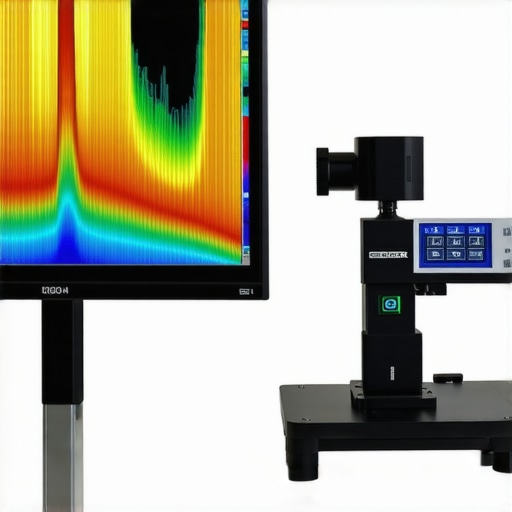
Leveraging AI for Calibration Evolution: Explore how artificial intelligence optimizes calibration by analyzing vast datasets of display behaviour, enabling dynamic adjustments that sustain color integrity amid aging components and environmental changes.
Designing Multi-Dimensional Calibration Frameworks for Multi-Monitor Setups
In professional environments where multiple displays operate synchronously, traditional calibration methods often falter in maintaining consistency across different models, brands, and ages. Implementing multi-dimensional calibration frameworks involves spectral, spatial, and temporal synchronization, often facilitated through centralized calibration management software. Such systems support workflows where each monitor’s unique emission characteristics are meticulously aligned, reducing inter-device discrepancies and ensuring a uniform visual environment essential for collaborative editing, virtual production, and immersive VR content creation.
Assessing Long-Term Calibration Integrity through Continuous Monitoring
Beyond initial calibration, sustaining color accuracy requires ongoing monitoring that captures drift due to component aging, ambient light variations, and operational stress. Integrating photometric sensors and automated calibration routines into monitoring ecosystems facilitates real-time detection of deviations, triggering recalibration protocols that uphold standards without interrupting workflows. As detailed in recent IEEE standards, continuous calibration models not only extend equipment lifespan but also guarantee that content remains visually consistent over extended project timelines, reinforcing the importance of proactive upkeep in professional grading environments.
Curious About Pushing Calibration Boundaries? Share How You Tackle Long-Term Accuracy
Join online communities and professional networks to exchange insights on innovative calibration workflows, adaptive correction algorithms, and integration of emerging hardware solutions. Your expertise can contribute to establishing industry benchmarks for longevity and precision in digital display calibration, fostering a community committed to visual excellence.
Expert Insights & Advanced Considerations
Harness Perceptual Uniformity for Consistent Colors
Implementing calibration models grounded in perceptual psychology, such as CIEDE2000 and Jzazbz, ensures that color differences are aligned with human visual perception, resulting in more reliable and consistent output across diverse lighting conditions and viewing environments.
Leverage Spectroradiometric Feedback for Ultimate Precision
Utilizing spectroradiometers allows for detailed spectral measurements of displays, enabling calibration that considers spectral power distributions. This approach minimizes discrepancies in color rendering, particularly important for scientific visualization and high-end content creation.
Adopt Adaptive Hardware Techniques to Combat Drift
Emerging self-analysing displays equipped with AI-driven calibration algorithms proactively adjust to aging components and changing ambient conditions, maintaining optimal performance and reducing manual recalibration efforts.
Emphasize Standard Compliance for Future-Proofing
Aligning calibration routines with standards like IEEE 1789 and adopting industry benchmarks such as BT.2020 ensures that your workflow remains consistent, compliant, and adaptable as technology and content standards evolve.
Curated Expert Resources
- Whitepapers on Visual Neuro-Calibration: Deep dives into how perceptual models enhance calibration accuracy, offering insights for high-fidelity professionals.
- Spectral Measurement Tools: Resources on spectroradiometer technologies that push calibration precision beyond standard colorimeters.
- IEEE Standards Documentation: Comprehensive guidelines that influence calibration practices and ambient light management for optimal performance.
- Industry Benchmark Reports: Up-to-date analyses on display standards, and how they influence content creation and grading workflows.
- Research in Machine Learning for Display Calibration: Latest advancements in AI-driven tools that facilitate real-time, adaptive calibration solutions.
Reflections for the Modern Creative Professional
In an era where visual fidelity is paramount, mastering advanced calibration techniques—such as spectral accuracy, perceptual modeling, and adaptive hardware—becomes essential. These strategies transcend traditional methods, offering a pathway to uncompromising color and luminance precision in your workflows. Embracing such innovations not only elevates your craft but also positions you at the forefront of industry standards. Engage with the community through forums and industry events, sharing your insights on calibration methodologies, and continually refine your expertise. For a deeper exploration, browse our comprehensive guide to HDR calibration and discover tools that can empower your creative process.
About the Author