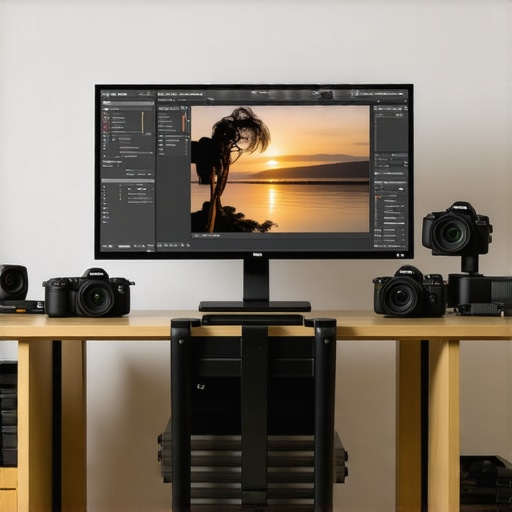
Best HDR Monitors for Photo & Video with Accurate Color 2024
Elevating Visual Fidelity Through Advanced Monitor Technology
In the realm of professional visual production, the caliber of your monitor directly impacts the quality and precision of your work. As the demand for 4K resolution, HDR luminance, and impeccable color fidelity surges, understanding the intricacies of calibrated monitors and their role in achieving accurate color reproduction becomes paramount. This article explores the sophisticated landscape of high-end displays tailored for photographers, videographers, and creative professionals seeking excellence in every pixel.
Unlocking the Potential of 4K and HDR for Creative Mastery
The integration of 4K resolution with High Dynamic Range (HDR) technology has revolutionized visual editing by providing richer detail and broader color spectrums. A 4k monitor with advanced HDR capabilities offers a cinematic viewport that preserves tonal nuances and luminance accuracy, critical for post-production workflows. By choosing monitors with calibrated color profiles, creators ensure that their digital work translates seamlessly across devices and media, minimizing the risk of color shifts and mismatches.
Why Color Calibration Is an Unseen Standard in Professional Workflows
Color calibration transforms a regular display into a trustworthy tool for color-sensitive tasks. Monitors designed for professionals often undergo factory calibration or support hardware calibration to maintain consistent color accuracy. For example, reference-grade displays incorporate internal sensors that automatically adjust to maintain a digital uniformity aligned with industry standards such as Rec. 709 or DCI-P3. To explore the significance of calibration in detail, the [Ultimate Guide to Calibrated Monitors for Creators](https://monitors.workstationwizard.com/ultimate-guide-to-calibrated-monitors-for-creators-2024) provides comprehensive insights.
Balanced Brightness and Contrast: The Backbone of HDR Precision
HDR monitors stand out due to their ability to reproduce luminance levels that mirror real-world light conditions. Achieving balanced brightness and contrast ratios is essential for accurate tone mapping, especially when editing high-contrast scenes. Monitors with local dimming zones and wide color gamuts facilitate precise control over visual dynamics, enabling professionals to discern subtle gradations and make informed adjustments. This precise control is particularly crucial when working with color workflows that demand veracity and depth.
Expert-Driven Considerations When Selecting a Professional Display
Beyond resolution and HDR, several advanced specifications influence a monitor’s suitability for high-stakes creative work. These include color gamut coverage (such as AdobeRGB and DCI-P3), bit depth (10-bit processing), uniformity calibration, and ergonomic features. Professional-grade monitors often include hardware calibration compatibility, enabling fine-tuning for consistent output. The convergence of these features ensures that visual creators operate within a trusted color environment, reducing post-production corrections and enhancing efficiency.
How Do You Ensure Consistent Color Accuracy During Extended Editing Sessions?
This pertinent question highlights the importance of ongoing calibration and ambient light considerations. Implementing regular calibration schedules, utilizing hardware calibration tools, and controlling workspace lighting conditions help sustain color fidelity over time. For a deeper understanding, experts recommend reviewing the [Mastering Color Accuracy: Top Professional Monitors for Creatives](https://monitors.workstationwizard.com/mastering-color-accuracy-top-professional-monitors-for-creatives), which discusses maintaining calibration integrity across devices.
If you’re seeking to refine your workflow with monitors that truly match artistic intent, consider consulting specialized resources or engaging with industry professionals through the contact page. Building a display environment rooted in precision not only elevates your work but also establishes a foundation of trust and mastery in your creative endeavors.
Transform Your Workflow with Precise Color Calibration Techniques
Professional creatives understand that achieving consistent color accuracy extends beyond selecting a high-end monitor; it involves implementing meticulous calibration routines that account for device variability over time. Hardware calibration tools, such as colorimeters and spectrophotometers, enable precise adjustments of monitor settings, ensuring that each pixel displays the intended hue and luminance. Regular calibration schedules are essential, especially for workflows involving print, video, and web media where color consistency is critical. For detailed guidance on calibration procedures, the Ultimate Guide to Calibrated Monitors for Creators provides comprehensive strategies tailored for professionals aiming for impeccable color fidelity.
The Impact of Ambient Light Conditions on Color Perception and Accuracy
While hardware calibration forms the foundation of accurate display output, ambient lighting in your workspace plays a pivotal role in how colors are perceived and rendered. Excessive ambient light or uncontrolled color temperatures can introduce glare, reflections, and visual noise, skewing your judgment of color fidelity during editing sessions. Implementing adjustable lighting environments, such as neutral-colored task lighting with dimmable controls, helps create a stable viewing context that preserves color integrity. Notably, some professional monitors incorporate ambient light sensors that auto-adjust brightness levels, counteracting external influences and maintaining consistent visuals. For insights into setting up optimal lighting environments, refer to the Best Calibrated Monitors for Photo & Video Color Accuracy.
Are Eye-Friendly Technologies Sufficient for Maintaining Long-Term Color Perception Consistency?
This question challenges the often-overlooked aspect of visual comfort in prolonged editing tasks. Technologies like flicker-free backlights, blue light filters, and anti-reflective coatings not only reduce eye strain but also contribute to stable perception of color and contrast over extended periods. When integrated with accurate calibration, these features help prevent fatigue-induced perception shifts that can compromise color judgment. Professionals contemplating long-term engagement in demanding workflows should evaluate monitors with these ergonomic considerations alongside their color specifications. To explore more about selecting monitors optimized for both accuracy and comfort, the Ultimate Guide to HDR Calibrated Monitors for Creators can serve as a valuable resource.
For tailored advice on optimizing your display environment, or to discuss specific calibration challenges, visit our contact page. Ensuring your workspace aligns with industry standards transforms your creative potential into consistent, reliable results, elevating your work from good to exceptional.
Advanced Calibration Techniques: Going Beyond Out-of-the-Box Settings
While factory calibration offers a solid foundation, true professionals recognize the vital importance of personalized calibration routines tailored to specific workflows and ambient conditions. Utilizing high-grade hardware calibration tools such as colorimeters and spectrophotometers enables meticulous profiling, ensuring your monitor’s output aligns perfectly with industry standards like DCI-P3 or AdobeRGB. These devices facilitate the creation of custom ICC profiles that account for subtle variances in luminance, gamma, and color temperature, thereby elevating color accuracy to an expert level. Regular recalibration—preferably monthly—mitigates drift caused by environmental factors and aging components, maintaining unwavering fidelity over time.
Implementing Calibration Profiles in Complex Editing Environments
In multi-monitor setups, synchronization becomes a critical challenge. Professionals employing several displays for color grading or compositing must ensure that each device presents a consistent visual environment. Software solutions like DisplayCAL or CalMAN facilitate the comparison and alignment of color profiles across multiple screens, while hardware calibration support ensures internal uniformity. Moreover, integrating these profiles within your editing software, such as DaVinci Resolve or Adobe Premiere Pro, guarantees that visual outputs are uniformly accurate, reducing discrepancies and simplifying the correction process.
Optimizing Your Workspace for Consistent Color Perception
Lighting conditions, surrounding colors, and even monitor placement influence perceptual accuracy. To mitigate inconsistencies, dedicated lighting setups with neutral white light (around 5000K) and minimal glare are recommended. Positioning monitors at eye level, minimizing reflective surfaces, and controlling ambient brightness contribute to a stable viewing environment. Additionally, installing ambient light sensors on high-end displays can dynamically adjust brightness and contrast based on room conditions, ensuring persistent consistency—even as external lighting fluctuates throughout the day.
Why Calibration Is a Continuous Journey—Not a One-Time Fix
Expert workflows acknowledge that calibration isn’t a set-and-forget process. Materials age, colorspace requirements evolve, and environmental conditions fluctuate; therefore, maintaining an optimal color pipeline demands ongoing vigilance. Organizations often implement calibration schedules aligned with project cycles, accompanied by comprehensive documentation of profile changes to track consistency. Advanced monitoring tools can alert you to deviations beyond acceptable thresholds, allowing proactive adjustments that uphold the integrity of your visual work.
What Are the Implications of Calibration Errors on Final Output Quality?
This nuanced question emphasizes the ripple effect inaccurate calibration can have, from subtle color shifts to critical mismatches in branding or cinematic tones. Minor calibration discrepancies may go unnoticed initially but can compound through subsequent editing stages, culminating in costly reworks or unacceptable final products. The authoritative Cinema5D article on monitor calibration underscores how even slight errors propagate, underscoring the need for rigorous calibration routines. Recognizing the significance of precision at every stage empowers professionals to safeguard their creative intent and client satisfaction.
If you’re committed to elevating your color management practices, consider engaging with industry leaders or accredited calibration service providers who can tailor solutions to your specific production environment. A strategic investment in calibration expertise ultimately translates into higher quality deliverables and a more confident creative process, ensuring your visuals leave a lasting impression—exactly as intended.
Elevating Creative Precision with Multi-Device Harmonization
Achieving true color consistency across multiple high-end monitors demands more than individual calibration. Implementing uniform color profiles using hardware calibration tools and software synchronization techniques ensures that each display presents a cohesive visual narrative. This alignment reduces the need for iterative corrections downstream, especially vital in collaborative environments where shared assets must maintain integrity during team workflows.
Achieving Optimal Tone Mapping for Complex High-Contrast Scenes
Advanced HDR monitors incorporate local dimming and wide color gamut reproduction, enabling precise tone mapping that faithfully renders subtle gradations in challenging lighting scenarios. Mastery over these features requires in-depth understanding of luminance zones and gamma adjustments, allowing professionals to prevent clipping or banding artifacts that compromise artistic intent. Emerging algorithms integrate machine learning to enhance tone mapping further, delivering more accurate previews of final output.
Surefire Strategies for Long-Term Calibration Sustainability
Routine calibration schedules paired with ambient light monitoring devices enhance stability over prolonged periods. Incorporating environmental data into calibration routines, such as room brightness and temperature, allows for adaptive adjustments that maintain spectral accuracy. Industry-standard calibration software now supports automated alerts for drift detection, prompting timely recalibration and ensuring consistent performance without manual oversight.
Linking High-Fidelity Displays with Color Management Ecosystems
Integrating professional monitors within comprehensive color management workflows involves embedding ICC profiles into editing pipelines. This integration ensures that software applications like DaVinci Resolve or Affinity Photo interpret display outputs correctly, preserving color intentions from planning to final output. Understanding the nuances of rendering intents and profile conversions at each stage minimizes color discrepancies and streamlines correction workflows.
Designing Workspaces for Flawless Visual Perception
Ambient light control is crucial for preventing perception shifts during critical editing tasks. Advanced setups employ indirect lighting, neutral wall paint, and blackout curtains to create a stable viewing environment. Incorporating monitor hood accessories can further reduce glare and reflections, bolstering visual accuracy. Some high-end displays feature built-in sensors that automatically adapt brightness and contrast, compensating for fluctuating external conditions.
Expert Advice on Leveraging Hardware and Software Synergy for Calibration
Combining hardware calibration devices with sophisticated software solutions enables meticulous profiling that accounts for aging components and environmental influences. Employing spectral calibration techniques can refine color accuracy beyond standard RGB adjustments, especially crucial when dealing with cinematic color grading or archival restorations. Regularly updating calibration profiles within your software environment guarantees that your workflow remains anchored in precision.
Innovations in Chromatic Stability and Color Gamut Expansion
Recent advancements include quantum dot backlit displays and OLED technology that push color gamut boundaries and chromatic stability. Implementing these innovations necessitates awareness of their unique calibration requirements to prevent issues like color shift over time. Staying informed through authoritative sources like SMPTE’s guidelines ensures calibration practices evolve concomitantly with display technology.
How Can Calibration Experts Minimize Visual Fatigue for Extended Sessions
Utilizing flicker-free illumination, blue light reduction, and adaptive contrast not only enhances visual comfort but also sustains perceptual accuracy. These ergonomic features reduce the likelihood of visual fatigue-induced perception errors, vital during prolonged editing projects. Integrating eye-tracking or visual stress assessment tools can further refine workspace ergonomics, maintaining color discernment and focus for high-stakes creative endeavors.
Refining Calibration with Cutting-Edge Tools
Harnessing high-precision hardware like spectrophotometers and advanced colorimeters enables a new level of calibration, ensuring your monitor delivers unparalleled color accuracy. Regularly updating ICC profiles based on these devices sustains consistency and aligns with industry standards, making your workflow both reliable and professional.
Designing Workspaces That Enhance Color Perception
Enviroments optimized with neutral lighting, controlled ambient conditions, and ergonomic monitor placement reduce perceptual discrepancies. Implementing these practices ensures your color judgments remain consistent, even during long editing sessions, ultimately elevating your craft.
APIs and Software for Synchronizing Multiple Displays
Leveraging sophisticated synchronization tools like DisplayCAL or CalMAN allows seamless color profile matching across multi-monitor setups. This harmony minimizes discrepancies, streamlining complex workflows such as color grading or high-precision design projects.
Proactively Guard Against Drifts in Color Accuracy
Automated calibration alerts embedded within professional software empower you to address potential drifts before they affect your work. Combining these with environmental sensors creates a dynamic system that maintains peak performance over time, safeguarding your creative integrity.
Stay Ahead With Industry-Leading Resources
Immerse yourself in authoritative guides such as Calibrated Monitors Explained and Ultimate Guide to 4K Monitors which offer deep insights into the latest advancements and best practices for achieving exceptional visual fidelity.
Elevate Your Craft—Engage With the Experts
In the realm of high-end visual production, continuous improvement hinges on expert knowledge and strategic application. For tailored guidance or to discuss your unique needs, reach out via our contact page. Embrace the journey towards flawless color management, and let your creative vision reach new heights with confidence.
About the Author

The detailed focus on calibration routines and ambient lighting really resonates with my experience. I’ve found that even the best monitors can deliver inconsistent results if the workspace isn’t properly managed, especially when working on high-contrast HDR scenes. Regular recalibration isn’t just a suggestion but a necessity, particularly after environmental changes like seasonal lighting shifts. I’ve recently started using an automatic ambient light sensor integrated into one of my monitors, which has helped me maintain consistent color perception throughout long editing sessions. I’m curious — how many professionals here have adopted environmental sensors or smart lighting controls to improve workflow stability? Do you think these tools significantly reduce calibration drift over time, or are they more of a supplementary benefit? I’d love to hear about practical setups that have worked well for others managing complex color grading pipelines.