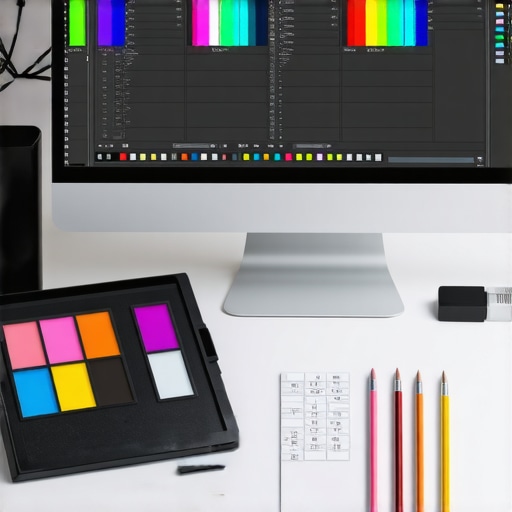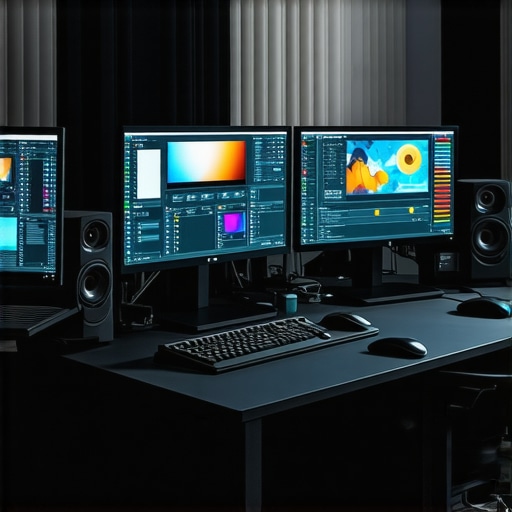
Calibrated 4K Monitors for Color Accuracy and Creative Professionals 2024
Elevating Visual Fidelity: The Critical Role of Calibrated 4K Monitors in Creative Workflows
In the fast-evolving domain of digital artistry and professional content creation, the pursuit of absolute color accuracy and visual consistency is paramount. As 4K resolution becomes the standard benchmark for high-quality visuals, calibrated 4K monitors emerge as indispensable tools. They enable creatives—photographers, videographers, designers, and digital artists—to achieve and maintain the fidelity necessary for professional-grade output. This article explores the nuanced landscape of calibrated 4K monitors in 2024, emphasizing their technical advancements, selection criteria, and strategic integration into complex workflows.
Advanced Calibration Technologies: Pioneering the Future of Color Precision
Modern calibrated 4K monitors leverage cutting-edge calibration hardware and software, including integrated colorimeters and spectrophotometers, to deliver an unprecedented level of accuracy. These devices facilitate fine-tuned adjustments of gamma, white point, and color gamut, ensuring that the displayed colors align precisely with industry standards such as DCI-P3 and Rec. 709. Notably, the advent of hardware calibration tools embedded within high-end displays allows for persistent calibration states, reducing drift over time and providing reliable consistency across sessions.
Why Professional Creatives Must Prioritize Color Management
Color management is the backbone of professional-grade visual production. A calibrated 4K monitor minimizes discrepancies between digital and print or broadcast outputs, ensuring that what designers see is what they get. According to a white paper published by the International Color Consortium, accurate color reproduction reduces rework, accelerates project timelines, and enhances client satisfaction. For instance, graphic designers working on branding assets require absolute fidelity to brand colors, which can only be assured through meticulous calibration and profiling of their display environment.
Key Selection Criteria for Expert-Grade 4K Monitors in 2024
Selection of a calibrated 4K monitor involves multiple technical considerations. Paramount among these are color gamut coverage, uniformity, hardware calibration support, and calibration stability. Monitors with near-100% coverage of Adobe RGB and DCI-P3 are preferred for professional workflows. Additionally, the panel technology—IPS for wide viewing angles and excellent color consistency—remains the industry standard. Advanced calibration software compatibility, such as CalMAN or DisplayCAL, further enhances the monitor’s ability to maintain precision over time.
What are the trade-offs between hardware and software calibration in professional setups?
Hardware calibration offers superior accuracy and stability by adjusting the monitor’s internal LUTs (Lookup Tables), whereas software calibration relies on external profiling tools and can be susceptible to drift. Professionals often prefer hardware calibration for critical color workflows, despite the higher initial investment, as it ensures persistent calibration states that maintain fidelity over extended periods. For detailed insights, refer to this comprehensive guide.
To further refine your setup, consider consulting expert reviews and technical datasheets to identify models with proven calibration stability, such as the top-rated calibrated 4K monitors for 2024.
Interested in expanding your knowledge? Explore our ultimate guide to calibrated monitors for creative professionals and discover how to optimize your color workflow for maximum accuracy and efficiency.
Unlocking the Full Potential of 4K HDR Monitors: Beyond Basic Calibration
While calibration is fundamental, understanding the intricate interplay between hardware capabilities and software tools unlocks new levels of precision. For example, high-end monitors equipped with internal LUTs (Lookup Tables) can be hardware calibrated for sustained accuracy, whereas software calibration offers flexibility but may suffer from drift over time. This distinction is vital for professionals aiming to maintain consistent output across demanding projects.
Integrating Calibrated Monitors into Complex Workflows
In professional environments, calibrated 4K HDR monitors serve as central hubs in multi-device workflows. Ensuring seamless color consistency across displays, printers, and broadcast systems requires meticulous profiling and calibration routines. Consider employing advanced color management systems, such as those supported by industry-standard calibration software like CalMAN or DisplayCAL, which facilitate consistent color reproduction from capture to output. For a detailed understanding of these integrations, explore our comprehensive guide.
What is the Future of HDR and Color Accuracy in Professional Monitors?
As display technology advances, the line between consumer and professional-grade HDR monitors blurs, driven by innovations like quantum dot backlights and OLED panels. These improvements promise wider color gamuts, higher contrast ratios, and more precise tone mapping, pushing the boundaries of what’s achievable in creative workflows. According to recent insights from this in-depth review, the future of HDR in professional monitors will focus on delivering true-to-life visuals with minimal latency and maximum dynamic range, essential for critical editing tasks.
Are you leveraging the latest calibration tools and monitor technologies to achieve your creative goals? Share your experiences or ask for tailored recommendations in the comments below. For those eager to deepen their expertise, exploring top-rated calibrated HDR monitors can provide new insights into elevating your setup.
Unlocking the Nuances of Spectrophotometric Calibration: Precision Beyond the Basics
In the realm of high-end display calibration, spectrophotometers represent the gold standard for achieving ultra-precise color measurements. Unlike traditional colorimeters, spectrophotometers analyze reflected light across the entire visible spectrum, enabling detailed profiling of complex display technologies such as OLED and quantum dot panels. This comprehensive spectral data allows for meticulous calibration, ensuring that every hue, saturation, and luminance level conforms to industry standards like DCI-P3 or Rec. 2020 with minimal deviation.
Implementing spectrophotometric calibration requires sophisticated software tools such as ArgyllCMS or CalMAN Ultimate, which facilitate spectral matching and profiling. When integrated with high-precision monitors, this approach reduces color drift over time, a critical factor for post-production houses and visual effects studios where consistency is non-negotiable. As display technology continues to evolve, the capacity to perform spectral calibration is increasingly becoming a necessity, not a luxury, for professionals demanding uncompromising accuracy.
Handling Color Gamut Expansion: Navigating the Challenges of Ultra-Wide Color Spaces
With the advent of displays supporting color gamuts exceeding 100% of Adobe RGB and DCI-P3, professionals face the complex task of managing these expansive color spaces without sacrificing fidelity. The challenge lies in accurately reproducing color data that extends beyond the traditional spectrum, which necessitates advanced calibration algorithms capable of handling high-gamut displays without clipping or banding artifacts.
One innovative solution involves the use of multi-dimensional LUTs (Lookup Tables), which can map the extended gamut onto the display’s native color capabilities while preserving perceptual uniformity. This process often involves iterative profiling and soft-proofing, employing tools like LightSpace or CalMAN Studio, to ensure that the final output remains true to source material. Mastering this balance is essential for professionals working in HDR mastering, digital cinema, and high-end photography, where color precision directly correlates with storytelling impact.
What are the best practices for maintaining calibration stability in ultra-wide color gamut monitors?
Ensuring long-term calibration stability in ultra-wide gamut displays requires not only initial precise calibration but also ongoing maintenance routines. Regular re-calibration—preferably weekly or bi-weekly—using hardware calibration tools embedded in the monitor or external calibrators, helps mitigate drift caused by temperature fluctuations and panel aging. Additionally, employing environmental controls such as stable room lighting and avoiding prolonged display idle periods can significantly extend calibration accuracy. For critical workflows, integrating calibration software with automated scheduling and reporting features ensures consistency over extended periods.
According to industry experts, such as those documented by the Society for Information Display (SID), a disciplined calibration routine combined with high-quality hardware ensures that these advanced displays remain reliable workhorses for critical color tasks.
Integrating AI-Driven Calibration: The Future of Color Management
Emerging AI and machine learning algorithms are poised to revolutionize calibration processes, offering predictive adjustments based on display usage patterns and environmental conditions. These intelligent systems can dynamically optimize color accuracy, reduce calibration time, and alert users to potential drift or hardware issues before they impact output quality. For instance, AI-enhanced calibration tools analyze historical data to suggest optimal calibration schedules, improving workflow efficiency and reducing human error.
Leading industry brands are increasingly incorporating AI into their calibration ecosystems, promising a future where high-precision color management becomes more accessible and less labor-intensive. For professionals, adopting these innovations could mean maintaining near-perfect fidelity with minimal manual intervention, thereby elevating the quality of creative output across demanding projects.
Are you ready to embrace AI-powered calibration solutions? Explore the latest advancements and share your experiences by engaging with industry forums and expert communities. To stay ahead in the rapidly evolving world of display technology, continual education and adaptation are paramount. Dive deeper into these innovations with resources from authoritative sources like the Society for Information Display and leading calibration software providers.
Exploring the Impact of Panel Aging and Environmental Factors on Calibration Longevity
In the pursuit of sustained color accuracy, understanding the subtle influences of panel aging and ambient conditions becomes crucial. As displays operate over extended periods, their internal components undergo minor degradation, leading to calibration drift. Factors such as temperature fluctuations, humidity, and prolonged usage can accelerate this process. Implementing rigorous environmental controls and scheduled recalibrations mitigates these effects, ensuring consistent output. Industry insights from the Society for Information Display emphasize the importance of controlled environments and routine maintenance to preserve calibration integrity over time.
Advanced Techniques for Ensuring Calibration Reproducibility Across Production Cycles
Achieving reproducible calibration results across multiple sessions and devices demands meticulous procedures. Utilizing hardware calibration tools with internal LUTs, combined with standardized workflows, reduces variability. Additionally, employing calibration verification tools like test charts and spectral measurement devices before critical projects ensures the display maintains its calibrated state. Integrating these practices into a comprehensive color management system enhances reliability, particularly in collaborative environments where consistency is non-negotiable. This meticulous approach aligns with the best practices recommended by leading calibration software providers such as CalMAN and LightSpace.
How Will Emerging Quantum Dot and OLED Technologies Transform Professional Color Gamut Management?
Quantum dot backlights and OLED panels are revolutionizing the display landscape by offering unprecedented color volume and contrast. These advancements facilitate the expansion of color gamuts beyond traditional standards, enabling richer, more lifelike visuals. However, managing these expansive color spaces introduces complex calibration challenges. Advanced multi-dimensional LUTs and spectral calibration techniques become essential to accurately reproduce colors within these wider gamuts without artifacts. As highlighted in recent industry analyses from the Society for Information Display, mastering these technologies requires a sophisticated understanding of spectral physics and calibration methodologies, pushing professionals to adopt more precise, spectral-based calibration workflows.
Expert Insights & Advanced Considerations
1. Precision Calibration as a Differentiator
High-end calibrated 4K monitors employ spectral calibration techniques that significantly reduce color drift over time, ensuring consistent output essential for post-production and professional workflows. Leveraging spectral data analysis with spectrophotometers enhances accuracy beyond traditional methods.
2. The Growing Role of AI in Calibration
Integrating AI-driven calibration tools allows for predictive adjustments based on usage patterns and environmental factors, dramatically improving long-term stability and reducing manual intervention. This technological evolution pushes the boundaries of color fidelity management.
3. Managing Ultra-Wide Gamut Displays
Advanced calibration algorithms utilizing multi-dimensional LUTs facilitate accurate color reproduction within expanded gamuts like Rec. 2020, enabling professionals to harness the full potential of OLED and quantum dot panels without sacrificing fidelity or introducing artifacts.
4. Environmental Controls and Maintenance Practices
Implementing strict environmental controls—such as stable temperature, humidity, and lighting—combined with routine recalibration schedules, are critical for maintaining calibration stability, especially in high-precision workflows involving aging displays and complex color spaces.
5. Spectrophotometry as a Gold Standard
Spectrophotometers offer unparalleled spectral analysis capabilities, essential for ensuring that display outputs align with industry standards like DCI-P3 and Rec. 2020. Adoption of spectral calibration is increasingly vital for achieving uncompromising accuracy in professional settings.
Curated Expert Resources
- Society for Information Display (SID): Provides authoritative research and updates on display technology advances, including calibration and spectral analysis techniques.
- CalMAN Software: Industry-leading calibration software offering advanced tools for spectral and multi-gamut calibration, widely used by professionals.
- ArgyllCMS: Open-source spectral profiling software that supports detailed spectral measurements and calibration workflows for high-precision displays.
- Lighting and Environmental Control Guidelines: Published by industry standards organizations, these guidelines help optimize display longevity and calibration stability.
- Research Papers on Spectrophotometry: Academic and industry papers exploring cutting-edge spectral calibration methodologies for OLED and quantum dot displays.
Final Expert Perspective
In the realm of professional color management, calibrated 4K monitors stand as the cornerstone of visual fidelity, especially as display technologies evolve with ultra-wide gamuts and spectral capabilities. Mastery of spectral calibration, AI integration, and environmental stability ensures that creatives and technologists can push the boundaries of accuracy and consistency. Engaging with authoritative resources and adopting best practices in calibration is not just recommended—it is imperative for those committed to excellence in visual workflows. Have you explored the latest spectral calibration techniques or integrated AI solutions into your setup? Share your insights or seek tailored advice by connecting with industry experts and participating in professional forums. To deepen your expertise, consider reviewing detailed industry standards and software solutions that continue to shape the future of high-precision display calibration.
About the Author

![3 Calibrated Monitors That Solve 2026 OLED Black Crush [Tested]](https://monitors.workstationwizard.com/wp-content/uploads/2026/03/3-Calibrated-Monitors-That-Solve-2026-OLED-Black-Crush-Tested.jpeg)