Unlocking the Power of Precision: Elevate Your Creative Workflow with the Best Monitors
In the fast-paced world of digital artistry and design, achieving impeccable color accuracy is not just a luxury—it’s a necessity. Whether you’re a photographer, videographer, or graphic designer, the tools you choose directly influence your output quality. This guide explores how mastering color accuracy through top-tier professional monitors can transform your creative process, ensuring every hue and shade is represented with absolute fidelity.
Why Color Accuracy Is the Cornerstone of Creative Excellence
Picture this: a photographer meticulously editing a portrait, only to find the final print looks drastically different from what they saw on their calibrated monitor. Such discrepancies highlight the importance of color precision. High-end professional monitors equipped with advanced color calibration features ensure that what you see on screen is an accurate representation of your final product. According to International Color Consortium, color management is critical for consistent output across devices and media.
Choosing the Right Professional Monitor: Features That Matter
Color Gamut and Bit Depth
For creatives aiming for true-to-life visuals, monitors supporting wide color gamuts like Adobe RGB or DCI-P3 are essential. These extend the range of reproducible colors, making your work more vibrant and precise. Additionally, a higher bit depth (10-bit or more) ensures smoother gradations and reduces banding, critical for subtle tonal shifts in photography and video editing.
Calibration and Hardware Validation
Automatic calibration tools and hardware validation features help maintain consistent color accuracy over time. Regular calibration ensures your monitor stays aligned with industry standards, avoiding costly errors or reworks. For an in-depth understanding, explore our calibrated monitors explained guide.
Top Picks: Monitors That Set the Standard
When selecting a monitor for professional use, consider models like the LG UltraFine OLED Pro, BenQ SW271, or Eizo ColorEdge series. These displays are renowned for their superior color fidelity, factory calibration, and robust build quality. They serve as the cornerstone for any dedicated creative workspace, allowing artists to trust their visual feedback implicitly.
Can Monitors Alone Guarantee Perfect Color Matching?
While a high-quality monitor is vital, achieving perfect color matching also involves proper workspace management, including lighting conditions and consistent calibration routines. It’s a holistic process that combines hardware excellence with disciplined workflows. For more insights, see our comprehensive ultimate guide to 4K monitors for professional visuals.
Engage with this content—share your experiences or ask questions below. For those eager to deepen their understanding, exploring specialized calibration tools and techniques can further elevate your work.
Beyond the Basics: The Nuances of Color Management in Professional Monitors
While selecting a monitor with a wide color gamut and high bit depth is fundamental, understanding how to effectively manage and calibrate these displays is equally crucial. Advanced color management involves not only hardware calibration but also software workflows that ensure consistency across different devices and output mediums. For instance, color profiles embedded in images and videos must be carefully maintained and correctly interpreted by your monitor and editing software. This comprehensive approach minimizes discrepancies, ensuring your work remains true to your creative vision from initial edit to final print or digital publication.
How Do Hardware Calibration Tools Transform Creative Accuracy?
Hardware calibration tools, such as colorimeters and spectrophotometers, serve as the bridge between your monitor’s factory settings and industry-standard color accuracy. These devices measure how your display reproduces colors and then apply precise adjustments to correct any deviations. Regular calibration—monthly or even weekly—can prevent drift caused by ambient temperature changes, aging components, or prolonged usage. For creatives working on high-stakes projects, investing in professional calibration tools can be a game-changer, ensuring that every hue, shadow, and highlight is faithfully represented throughout your workflow. For more insights, explore our calibrated monitors explained guide.
Creative Dilemmas: How Can You Balance Display Quality with Practical Workflow?
One often-overlooked aspect is the balance between high-end display features and practical usability. Monitors with expansive color gamuts and high bit depths can sometimes introduce complexities, such as longer rendering times or the need for more powerful hardware. Additionally, managing multiple calibrated displays across a workspace can become challenging. An effective strategy involves establishing a consistent calibration routine, setting up your workspace with optimal lighting conditions, and choosing monitors that blend top-tier performance with user-friendly interfaces. This way, you optimize both accuracy and efficiency, enabling you to focus on the creative process without technical distractions.
Can Monitors Alone Guarantee Perfect Color Matching?
While a high-quality monitor is vital, achieving perfect color matching also involves proper workspace management, including lighting conditions and consistent calibration routines. It’s a holistic process that combines hardware excellence with disciplined workflows. For more insights, see our comprehensive ultimate guide to 4K monitors for professional visuals.
Engage with this content—share your experiences or ask questions below. For those eager to deepen their understanding, exploring specialized calibration tools and techniques can further elevate your work.
Innovating the Frontiers of Color Fidelity: Cutting-Edge Display Technologies for Creative Professionals
While traditional calibration methods have served as the backbone of accurate color representation, recent advancements in display technology are redefining what’s possible in professional creative workflows. Quantum dot displays, OLED advancements, and HDR innovations now offer unprecedented color depth, contrast, and luminance levels, enabling artists to visualize their work with a fidelity that closely mimics real-world perception. For example, modern OLED panels provide perfect black levels and infinite contrast ratios, critical for detailed shadow work and nuanced color grading.
How Do Next-Generation Display Technologies Impact Color Accuracy and Workflow Efficiency?
Emerging display technologies, such as microLEDs, promise not only enhanced brightness and contrast but also improved stability over time, reducing the need for frequent recalibrations. These displays utilize self-emitting pixels that eliminate issues like burn-in and color drift, common in older OLED models. Moreover, they support higher color gamuts and bit depths, facilitating more precise color workflows. According to a recent report by Display Daily, microLED displays are poised to become the industry standard for high-end creative work due to their durability and exceptional color performance.
What are the Challenges and Limitations of Integrating New Display Technologies?
Despite their advantages, these advanced displays come with challenges: high costs, compatibility issues with existing calibration hardware, and the need for software updates tailored to their specifications. Additionally, managing multiple high-end displays requires sophisticated color management workflows to ensure consistency across devices. Professionals must stay informed about firmware updates and calibration protocols specific to these new technologies to reap their full benefits. Industry leaders recommend integrating hardware calibration solutions compatible with these emerging displays, such as the latest versions of X-Rite or Datacolor calibration tools.
Future Directions: AI-Driven Color Calibration and Real-Time Color Management
Looking ahead, artificial intelligence and machine learning are beginning to revolutionize color calibration. AI-powered calibration tools can analyze ambient lighting, monitor aging of display components, and automatically adjust settings in real-time to maintain optimal accuracy. Companies like Calibrite and SpectraCal are developing software that leverages AI algorithms to predict and compensate for display drift much more efficiently than manual calibration routines. This evolution not only streamlines workflows but also significantly reduces human error, ensuring that creative professionals can trust their displays to deliver consistent, true-to-life visuals at all times.
Integrating Advanced Display Technologies into Your Creative Ecosystem
To effectively incorporate these innovations, it’s essential to evaluate your workflow needs and budget constraints carefully. Investing in compatible calibration hardware, adopting AI-driven calibration software, and establishing regular maintenance routines will maximize these technologies’ benefits. Furthermore, collaborating with display manufacturers and software developers can provide tailored solutions that fit specific professional requirements.
If you’re eager to stay at the forefront of display technology and elevate your creative precision, consider engaging with industry forums, attending trade shows like NAB or CES, and subscribing to specialized publications such as TechCrunch Display Tech. These resources will keep you informed about the latest breakthroughs, ensuring your work remains both innovative and impeccably accurate.
Deciphering the Impact of Quantum Dot and MicroLED Technologies on Color Fidelity
Recent advancements in display technology, notably quantum dot and microLED displays, are revolutionizing color management for professionals. Quantum dot displays utilize nanocrystals to produce pure, vibrant colors with exceptional efficiency, significantly expanding the color gamut and improving energy consumption. Meanwhile, microLED technology offers self-emitting pixels with unparalleled contrast ratios, brightness, and longevity, addressing previous limitations of OLEDs such as burn-in and color drift.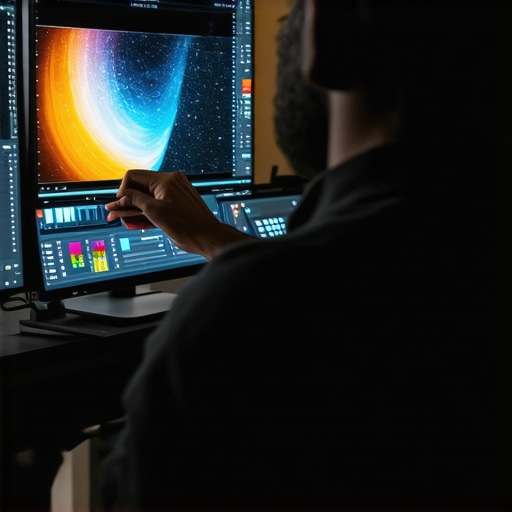
How Do AI-Enhanced Calibration Algorithms Push the Boundaries of Color Consistency?
Artificial intelligence and machine learning are now integral to dynamic calibration solutions. These systems continuously analyze ambient lighting conditions, display aging, and user workflows to perform real-time adjustments, ensuring persistent color accuracy. Companies like Calibrite and SpectraCal are pioneering AI-driven calibration software that preemptively compensates for hardware deviations, thereby maintaining visual fidelity without manual intervention. This evolution not only streamlines creative processes but also elevates the reliability of color-critical projects.
Can Multimonitor Calibration Strategies Harmonize Color Across Diverse Display Ecosystems?
In professional environments where multiple monitors are essential, synchronized calibration becomes paramount. Advanced calibration tools can now create unified color profiles tailored to each display’s unique characteristics, ensuring consistent visual output. Techniques such as hardware LUT (Lookup Table) calibration and color management workflows that incorporate ICC profiles facilitate seamless color harmony across disparate devices, mitigating the risk of discrepancies that compromise project integrity.
What Role Does HDR and High Dynamic Range Play in Enhancing Creative Precision?
HDR technology markedly improves the depth and realism of visual content by expanding luminance and contrast ranges. When integrated with wide color gamuts like DCI-P3 and Adobe RGB, HDR displays enable creators to perceive finer tonal nuances and achieve more accurate grading. Mastering HDR workflows requires understanding the calibration of luminance, gamma settings, and mastering color spaces to exploit these displays fully, thereby elevating the fidelity of digital art, video production, and print preparation.
How Can Future Display Innovations Address the Challenges of Color Calibration and Workflow Complexity?
Emerging innovations aim to simplify calibration processes and enhance display stability through self-calibrating hardware and integrated sensors. Researchers are exploring adaptive display materials that respond dynamically to environmental variables, reducing the need for frequent recalibration. Additionally, the integration of cloud-based calibration management and AI analytics promises to provide real-time, remote support for maintaining color accuracy across large-scale creative operations. These developments could dramatically streamline workflows, reduce technical overhead, and ensure unwavering color fidelity in demanding professional contexts.
Engage with Cutting-Edge Visual Technologies to Elevate Your Artistic Mastery
Staying at the forefront of display innovation requires continuous education and strategic investments. Explore industry conferences, such as NAB and CES, and consult authoritative sources like Display Daily for in-depth analyses of upcoming trends. Embracing these technological breakthroughs not only enhances your technical expertise but also empowers you to deliver work of unprecedented precision and impact. Dive deeper into the intricacies of next-generation displays and calibration practices to redefine your creative potential.
Frequently Asked Questions (FAQ)
How often should I calibrate my professional monitor for optimal color accuracy?
For maintaining peak color fidelity, it is recommended to calibrate your monitor at least once a month. However, environments with fluctuating ambient light or monitors used intensively may require more frequent calibration, such as weekly, to ensure consistent accuracy.
What is the significance of color gamut in choosing a professional monitor?
Color gamut defines the range of colors a monitor can reproduce. A wider gamut, such as Adobe RGB or DCI-P3, allows for more vibrant and accurate color representation, which is crucial for professional tasks like photography, video editing, and print production where color precision impacts final output quality.
Can hardware calibration tools correct all display issues?
Hardware calibration tools are highly effective in optimizing color accuracy by adjusting the display’s settings to match industry standards. However, they cannot fix underlying hardware limitations or defects. Regular calibration ensures consistency but should be used alongside quality hardware and proper workflow management.
Are OLED monitors better than LCDs for creative professionals?
OLED monitors offer superior contrast, perfect black levels, and vibrant colors, making them excellent for detailed visual work. Nonetheless, they can be more expensive and may have issues like burn-in over time. The choice depends on your specific needs, budget, and workflow, but OLEDs are often favored for high-end color grading and detailed imagery.
What emerging display technologies should I watch for in the future of creative monitors?
Future innovations such as microLED displays, AI-driven calibration, and self-adjusting display materials promise enhanced stability, brightness, and color accuracy. These advancements aim to reduce calibration frequency, improve longevity, and deliver more lifelike visuals, transforming creative workflows and output fidelity.
Trusted External Sources
- International Color Consortium (ICC): Defines standards for color management, essential for understanding calibration and color profiles in professional workflows.
- Display Daily: Offers in-depth analysis and updates on the latest display technologies, including microLED and OLED advancements relevant to creative professionals.
- Journal of Imaging Science and Technology: Provides peer-reviewed research on display technology, calibration methods, and color science, serving as a scholarly resource for industry practitioners.
- IEEE Transactions on Image Processing: Features cutting-edge research on image processing, color management algorithms, and display technology innovations.
- Society for Information Display (SID): Hosts conferences and publishes findings on display innovations, including upcoming trends in professional-grade monitors.
Conclusion: Summing Up and Moving Forward
In the realm of digital creativity, precision is paramount. Selecting a high-quality monitor equipped with advanced color management features, coupled with diligent calibration routines, forms the backbone of professional-grade visual work. Emerging display technologies like microLED and AI-driven calibration are poised to revolutionize the creative process, offering unprecedented fidelity and efficiency. Staying informed through reputable sources and investing in the right tools will empower you to produce work that not only meets but exceeds industry standards. Embrace these technological advancements to elevate your artistic mastery—share your insights, explore related content, and apply this knowledge to achieve new heights in your creative endeavors.