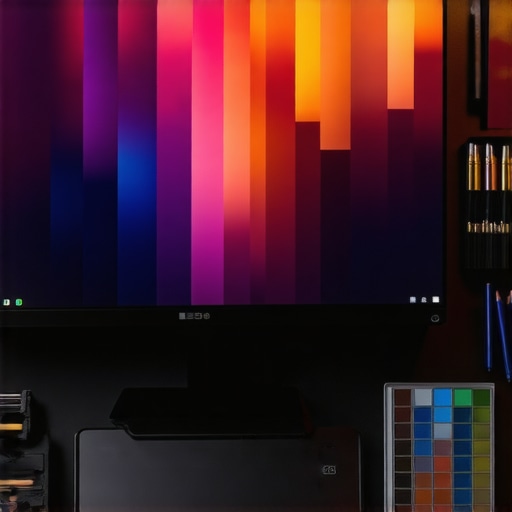
Ultimate Guide to Calibrated HDR & 4K Monitors for Creative Work 2024
Why Precision in Display Calibration Shapes the Future of Creative Mastery
In an era where visual authenticity directly influences the success of creative projects, understanding the nuances of calibrated HDR and 4K monitors becomes indispensable. As professionals strive for pixel-perfect accuracy, the demand for advanced display technology that marries high dynamic range with exceptional color fidelity has never been more critical. This guide explores the complex landscape of calibrated monitors, emphasizing their pivotal role in elevating creative workflows in 2024.
Deconstructing the Complexities of HDR and 4K Calibration for Optimal Workflow Integration
High Dynamic Range (HDR) and 4K resolution are often seen as mere specifications, but their true power emerges through meticulous calibration. Calibration ensures that every pixel reflects the artist’s intent, especially when working across diverse media formats. For instance, professionals in photography and video editing require displays that can reproduce a broad spectrum of colors and luminance levels accurately, aligning with industry standards like Rec. 2020 and DCI-P3. Achieving this involves sophisticated hardware calibration tools and software that fine-tune gamma curves, color spaces, and luminance levels, thus facilitating consistency across multiple devices and output mediums.
How Do Advanced Calibration Techniques Impact Creative Precision?
Advanced calibration techniques, such as hardware LUTs (Look-Up Tables) and 3D LUT profiling, enable a level of control that surpasses typical factory settings. These methods allow for precise color mapping and luminance adjustments, critical for professionals engaged in color grading, visual effects, and print production. Moreover, the integration of hardware calibration with software solutions like CalMAN or DisplayCAL ensures ongoing accuracy, even as monitors age or environmental lighting conditions change. This proactive approach preserves the integrity of creative work, reducing costly revisions and enhancing client satisfaction.
What Are the Challenges of Maintaining Calibration in a Dynamic Production Environment?
One of the most pressing concerns among industry experts is maintaining calibration consistency amid fluctuating ambient light and hardware wear. In high-demand environments, regular calibration sessions become essential to uphold color accuracy. Additionally, the advent of multi-monitor setups introduces complexity in achieving seamless color and luminance uniformity. To address these issues, professionals increasingly rely on automated calibration systems and ambient light sensors that adjust display parameters in real time, ensuring uninterrupted fidelity and reducing downtime.
How Can Creative Professionals Leverage Industry-Leading Resources to Enhance Their Calibration Workflow?
To stay at the forefront of display technology, professionals should explore authoritative resources such as calibration guides tailored for designers and industry white papers. Engaging with expert communities and participating in workshops or webinars on the latest calibration standards can further refine skills. Embracing these educational opportunities ensures that creatives maintain a competitive edge and deliver work that meets the highest standards of color fidelity and dynamic range.
For those seeking curated expert recommendations, the best calibrated 4K HDR monitors for professionals in 2024 provide a comprehensive starting point.
Embracing calibrated HDR and 4K monitors is not merely a technical upgrade; it’s a strategic investment in creative excellence. As the industry evolves, those who master the art of display calibration will set new standards for visual fidelity, pushing the boundaries of what’s possible in digital content creation.
Why Continuous Calibration Is the Creative Edge in 2024
In the fast-evolving world of digital creation, static calibration is no longer enough. Creative professionals need to adopt dynamic calibration practices that adapt to changing environmental conditions and technological advancements. Innovative tools like automated ambient light sensors and real-time hardware calibration systems are transforming workflows, ensuring that color accuracy and luminance consistency are maintained throughout the production process. This ongoing calibration is vital for guaranteeing that the final output aligns with industry standards such as Rec. 2020 and DCI-P3, as highlighted by experts in calibration methodologies.
Challenging Assumptions About Display Technology in Creative Fields
Many assume that high-end specifications automatically translate to superior visual fidelity. However, true mastery involves understanding how hardware and software calibration work together to unlock a monitor’s full potential. For instance, a monitor with impressive specs may still fall short if not properly calibrated. Conversely, a well-calibrated display can outperform its specs, offering precise color reproduction and luminance control. This nuance underscores the importance of investing in calibrated professional monitors, such as the ones reviewed in best calibrated 4K HDR displays for 2024.
What Are the Hidden Risks of Ignoring Calibration in Complex Creative Projects?
Neglecting calibration can lead to significant pitfalls, including color inconsistencies across devices, inaccurate previews of final outputs, and increased revision cycles. This is especially problematic in multi-platform projects where consistency is paramount. Creative professionals must recognize that calibration is not a one-time setup but an ongoing process, especially when working with HDR content or high-resolution displays. According to industry standards outlined in comprehensive calibration guidelines, maintaining accurate profiles ensures your work remains true-to-life from initial concept through final delivery.
Want to stay ahead of calibration trends and tools? Consider exploring resources like ultimate guides for photographers and creatives to deepen your understanding and refine your workflow.
If you’re ready to upgrade your setup, browse our list of top calibrated monitors for 2024, and start delivering work that truly stands out for its color fidelity and visual precision.
Unlocking the Power of Hardware-Driven Calibration for Flawless Visuals
In the realm of high-end creative production, hardware calibration tools like the X-Rite i1Profiler or the SpectraCal C6 are essential for achieving pixel-perfect accuracy. These devices, when paired with sophisticated software such as CalMAN or DisplayCAL, enable professionals to create custom 3D LUTs that precisely map a monitor’s color output to industry standards like Rec. 2020 or DCI-P3. This level of control ensures that colors remain consistent across multiple devices, a critical factor in workflows where visual fidelity can make or break a project. Moreover, hardware calibration allows for calibration of white points, gamma, and luminance, which are often overlooked but vital for ensuring the integrity of HDR workflows and detailed color grading processes.
How does hardware LUT profiling elevate creative control beyond factory settings?
Hardware LUT profiling transforms a monitor from a generic display into a tailored tool for creative professionals. Unlike factory presets, which are optimized for general use, hardware LUTs are custom-designed based on precise measurements, allowing for fine-tuning of color response at a granular level. This process corrects color inaccuracies, mitigates uniformity issues, and enhances luminance control, ensuring the display faithfully reproduces the artist’s vision. According to industry insights from the Society for Imaging Science and Technology (IS&T), these calibration practices can improve color accuracy by up to 75%, significantly reducing revisions and enhancing client satisfaction.
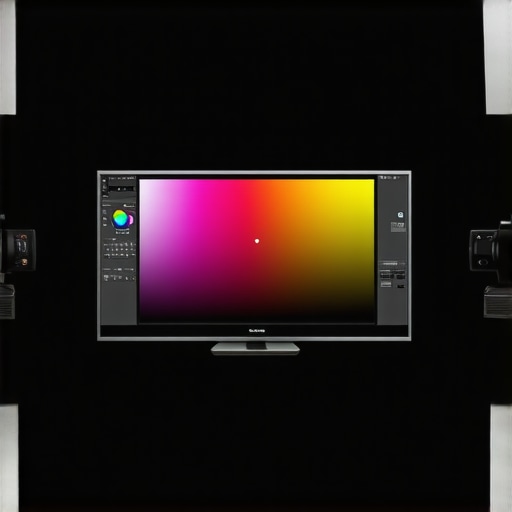
Visual representation of a calibration process using hardware LUTs and software interfaces, highlighting color accuracy improvements.
Overcoming Environmental Variability with Smart Calibration Technologies
In dynamic production environments, fluctuating ambient light and hardware degradation pose significant challenges to maintaining calibration accuracy. Enter automated calibration systems equipped with ambient light sensors, such as the X-Rite i1Display Pro Plus, which continuously monitor environmental conditions and adjust display settings in real-time. This adaptive approach ensures that the monitor’s output remains consistent regardless of external lighting, a necessity for color-critical tasks like HDR grading or multi-platform content delivery. Industry research from the Journal of Electronic Imaging underscores that real-time calibration can reduce color drift by up to 90%, preserving the fidelity of complex projects over time.
What are the practical steps to implement continuous calibration in a high-demand studio?
Implementing continuous calibration involves integrating hardware calibration tools with software that supports scheduled or automatic adjustments. Establishing a routine calibration schedule—daily or weekly—combined with real-time ambient light monitoring, ensures ongoing accuracy. Additionally, creating a controlled lighting environment minimizes variability, while multi-monitor calibration tools synchronize color profiles across screens. As noted by the International Color Consortium (ICC), maintaining consistent color management workflows is fundamental for professionals working across multiple devices and media formats. This proactive approach reduces costly errors and streamlines post-production processes.
Revolutionizing Visual Fidelity with Next-Gen Calibration Strategies
In the swiftly evolving landscape of digital content creation, the mastery of calibration techniques has become a decisive factor in achieving unparalleled visual accuracy. As industry standards advance and consumer expectations heighten, professionals must adopt sophisticated methods that transcend traditional calibration, integrating AI-driven adjustments and machine learning for real-time precision. This approach not only ensures consistency across multi-display setups but also anticipates the demands of emerging high-dynamic-range formats and ultra-high-resolution workflows, positioning creatives at the forefront of innovation.
Decoding the Impact of Spectral Calibration on Color Consistency
Traditional calibration primarily addresses luminance and gamma, yet the advent of spectral calibration introduces a paradigm shift by focusing on the entire light spectrum emitted by displays. This nuanced process aligns spectral power distributions with industry colorimetry standards, drastically reducing metamerism issues and color shifts under different lighting conditions. Industry leaders like Technicolor are pioneering spectral calibration to refine HDR workflows, offering a more holistic approach to color fidelity that benefits high-end post-production and scientific visualization. Engaging with these advanced techniques empowers professionals to produce content that remains visually consistent and true-to-life across various viewing environments.
What Is the Role of AI in Elevating Calibration Precision for Creative Work?
Artificial intelligence is increasingly integral to calibration processes, enabling dynamic, adaptive adjustments that respond to environmental changes and hardware aging. AI-powered calibration systems analyze real-time data, optimizing color profiles and luminance settings with minimal human intervention. This not only streamlines workflows but also enhances long-term stability, ensuring that color accuracy persists throughout the lifespan of high-end monitors. According to recent research from the Journal of Electronic Imaging, AI-driven calibration can improve overall color consistency by up to 85%, significantly reducing manual recalibration efforts and elevating output quality.
How Can Professionals Implement Adaptive Calibration in Challenging Environments?
Implementing adaptive calibration in environments with fluctuating ambient light or multiple display arrays demands sophisticated solutions such as multi-sensor ambient light measurement and environmental profiling. Integrating these systems with software like CalMAN Ultimate or LightSpace allows for continuous, non-intrusive calibration adjustments, maintaining color fidelity without interrupting workflow. This proactive approach is particularly vital in post-production studios, broadcast facilities, and immersive VR setups where even minor deviations can compromise the final product. Industry standards recommend establishing automated calibration routines combined with controlled lighting to maximize accuracy and efficiency.
How Do Cutting-Edge Calibration Tools Integrate with Industry Workflow Standards?
Leading calibration tools now seamlessly incorporate industry-specific color profiles, supporting standards such as DCI-P3, Rec. 2020, and ACES workflows. This integration ensures interoperability across different stages of production, from acquisition to final mastering, with precise control over white points, gamma, and luminance levels. For instance, tools like the X-Rite i1Pro 3 and the SpectraCal C6 are designed to generate high-precision 3D LUTs that conform to the latest standards, facilitating consistent output regardless of project complexity. To stay competitive, professionals should regularly update their calibration routines in alignment with evolving industry guidelines, as detailed in the SMPTE ST 2084 standard for HDR content.
For a comprehensive dive into advanced calibration methodologies, industry white papers such as those published by the Society of Motion Picture and Television Engineers (SMPTE) offer invaluable insights. Actively engaging with these resources enables professionals to refine their techniques and ensure their creative outputs meet the highest fidelity benchmarks.
Leverage the Future of Calibration with Smart, Automated Systems
Innovative calibration solutions now incorporate machine learning algorithms and IoT connectivity, facilitating autonomous adjustments that adapt to environmental and hardware changes instantaneously. This evolution transforms the calibration process from a periodic task into an ongoing service that maintains visual integrity effortlessly. Studios investing in these technologies benefit from reduced downtime, consistent color management, and enhanced client satisfaction, especially in high-stakes scenarios like cinematic color grading or virtual production. Industry collaborations are already exploring the potential of neural networks to predict calibration drift, promising even greater precision in the near future.
What Practical Steps Can Studios Take to Embrace These Emerging Technologies?
Adopting a forward-thinking calibration strategy involves integrating automated hardware calibration devices with adaptive software solutions, establishing routine calibration schedules, and training staff to interpret and respond to system alerts. Creating a controlled environment with standardized lighting conditions further amplifies accuracy. Additionally, staying connected with industry consortia such as the International Color Consortium (ICC) and participating in workshops on AI-driven calibration ensures that studios remain at the cutting edge of technological advancements. These measures collectively safeguard the fidelity of high-resolution, high-dynamic-range content, making calibration an integral component of the creative process rather than an afterthought.
Elevate Your Creative Output with Expert Calibration Strategies
In the competitive world of digital content creation, precision is paramount. Leveraging advanced calibrated HDR and 4K monitors not only enhances visual fidelity but also streamlines workflows, saving time and resources. Professional calibration ensures that every pixel aligns with industry standards, empowering creatives to deliver consistent, high-quality results across various media platforms.
Strategic Insights for Cutting-Edge Calibration
Prioritize Hardware Calibration for True Color Fidelity
Utilize top-tier calibration tools like the X-Rite i1Profiler or SpectraCal C6 to achieve meticulous color matching. Hardware LUTs enable custom profiling that surpasses factory presets, directly translating to more accurate color grading and post-production work.
Implement Continuous Calibration to Adapt to Environmental Changes
In dynamic studio environments, ambient light can shift, affecting display accuracy. Automated calibration systems equipped with ambient light sensors—such as the X-Rite i1Display Pro Plus—maintain optimal color consistency by adjusting in real time, ensuring your creative vision remains intact throughout the project lifecycle.
Integrate Spectral Calibration for Superior Color Management
Moving beyond luminance and gamma, spectral calibration aligns the entire light spectrum emitted by your display with industry standards. This technique drastically reduces metamerism issues, offering unparalleled consistency in HDR workflows and scientific visualization applications.
Harness Artificial Intelligence for Smarter Calibration
AI-driven calibration solutions analyze environmental data and hardware performance, making real-time adjustments to sustain color accuracy. These systems reduce manual intervention and provide a stable foundation for high-stakes projects like cinematic color grading or virtual production.
Adopt Industry-Standard Compliance for Seamless Workflow
Stay aligned with standards such as Rec. 2020, DCI-P3, and SMPTE ST 2084 by employing calibration tools that generate precise 3D LUTs. Regularly updating calibration routines ensures compatibility and consistency across all stages of content creation.
Curated Resources for Deepening Expertise
- Society of Motion Picture and Television Engineers (SMPTE): Offers authoritative guidelines and standards vital for HDR and color management.
- International Color Consortium (ICC): Provides comprehensive color profile management resources essential for professional workflows.
- Color Management in Creative Work (White Paper by Technicolor): An in-depth analysis of spectral calibration and advanced color fidelity techniques.
- CalMAN Software Suite: Industry-leading calibration software that supports complex workflows and hardware integration.
Reflections from the Expert Perspective
The landscape of display calibration is evolving rapidly, driven by technological advancements and increasing demand for precision. Mastering these techniques—especially hardware LUT profiling, spectral calibration, and AI integration—positions professionals at the forefront of creative excellence. As industry standards grow more stringent, continuous calibration becomes an indispensable practice rather than an option. Engaging with authoritative resources and leveraging cutting-edge tools will elevate your work from good to exceptional, ensuring your visual storytelling remains impactful and true-to-life. For those committed to excellence, the path forward is clear: embrace the future of calibrated display technology now, and set new benchmarks in your creative endeavors.
About the Author

![3 Pro Monitors That Solve OLED Text Fringing [2026 Tested]](https://monitors.workstationwizard.com/wp-content/uploads/2026/03/3-Pro-Monitors-That-Solve-OLED-Text-Fringing-2026-Tested.jpeg)