3 Spec Red Flags to Check Before Buying a 4K Monitor in 2026
Elevating Creative Work with the Right Calibration: An In-Depth Perspective
In the realm of high-end visual production, the choice of professional monitor significantly impacts the fidelity and authenticity of creative outputs. The emphasis on calibration accuracy, color consistency, and HDR performance has escalated, especially as 4K displays become the standard for professionals demanding precision. This article explores the intricate factors that define a superior calibrated 4K monitor, with an emphasis on components such as color purity, luminance stability, and hardware calibration capabilities.
Deciphering the Nuances of Color Accuracy and Its Critical Role
Color accuracy transcends basic color gamut coverage, delving into how faithfully a monitor reproduces real-world hues. For designers, photographers, and videographers, the importance of covering at least 99% of wide color spaces like DCI-P3 or Adobe RGB cannot be overstated. Furthermore, hardware calibration support, through built-in LUTs and 14-bit processing, ensures sustained consistency over time, preventing color drift—a common pitfall in lesser displays.
HDR Monitors and the False Promise of Peak Brightness Standards
While HDR (High Dynamic Range) contrast and luminance have revolutionized visual storytelling, the industry’s pursuit of peak brightness metrics such as 3000 nits can sometimes be misleading. True HDR performance involves a harmonious balance: high peak luminance, precise tone mapping, and accurate highlight rendering. Expert workflows demand monitors calibrated not just for raw luminance but for actual perceptible contrast and highlight detail, emphasizing the necessity of real-world testing over marketing claims.
Is Your Calibrated Monitor Failing to Maintain Its Precision? A Complex Issue with Multiple Variables
Why do calibrated monitors often lose accuracy after extended use despite initial calibration?
This common concern reflects complex underlying factors, including internal hardware aging, ambient lighting conditions, and calibration process integrity. Scientific analyses, such as those published in the Journal of Display Technology, confirm that hardware degradation—particularly in backlight uniformity and electronics—can subtly shift color profiles over time. Regular recalibration, ideally with professional-grade tools, is essential to sustain color fidelity, especially when working on critical projects requiring exact compliance with industry standards.
For a detailed exploration of calibration techniques and hardware solutions, consider visiting this comprehensive guide.
Integrating HDR and Color Fidelity in Cutting-Edge Creative Environments
As HDR workflows become more sophisticated, monitors with high bit-depth processing, local dimming zones, and consistent luminance across wide viewing angles are crucial. Select models that support true hardware calibration and have been tested against professional standards for color accuracy and contrast ratios, ensuring consistent performance with creative software like Adobe Premiere and DaVinci Resolve.
Adapting to Evolving Industry Standards and Certification Protocols
Standards such as Rec. 2020 and DCI-P3 are becoming benchmarks in professional display testing. Monitors compliant with these standards, often verified through multiple independent inspections, enable professionals to deliver content that adheres to the strictest industry quality benchmarks. Moreover, understanding the implications of certification programs—like VESA DisplayHDR and CalMAN compatibility—can guide users toward selecting monitors that deliver verified accuracy in real-world scenarios.
Now is the time for visual professionals to reassess their toolkit, ensuring their monitors meet the rigorous demands of 2026’s standards. For further insights into high-fidelity displays, explore this authoritative resource.
What’s Next in Monitor Calibration Innovations and Industry Shifts
Emerging technologies, such as AI-driven calibration and self-correcting hardware systems, promise to redefine professional standards. Staying ahead of these innovations requires a keen understanding of their implications for workflow stability and color integrity. As experts debate the significance of high-nit HDR versus accurate color reproduction, maintaining a critical eye on both industry advancements and practical delivery ensures that visual quality remains uncompromised in 2026 and beyond.
If you’re interested in expanding your expertise, contribute your insights or inquire about the latest calibration techniques by visiting our contact page.
Unlocking the Potential of Hardware Calibration for Peak Color Consistency
In professional environments where color precision is paramount, relying solely on software calibration can lead to inconsistencies over time. Hardware calibration, supported by built-in LUTs (Look-Up Tables) and 14-bit processing, offers a robust solution that maintains accuracy across multiple sessions. Experts recommend selecting monitors equipped with high-bit LUTs, which facilitate smoother gradation and prevent banding — issues frequently encountered in less advanced displays. For a comprehensive understanding of hardware calibration benefits, visit this detailed guide.
Evaluating Luminance Uniformity and Its Impact on Color Reliability
Beyond calibration, luminance uniformity across the screen’s surface significantly influences color consistency, especially in critical color grading workflows. Non-uniform backlighting can cause shifts in perceived color, undermining the accuracy of delicate adjustments. Professionals should employ meters and test patterns to assess uniformity before purchasing high-end displays and consider models with local dimming zones to minimize these discrepancies. For insights into optimizing luminance stability, explore expert-recommended monitors.
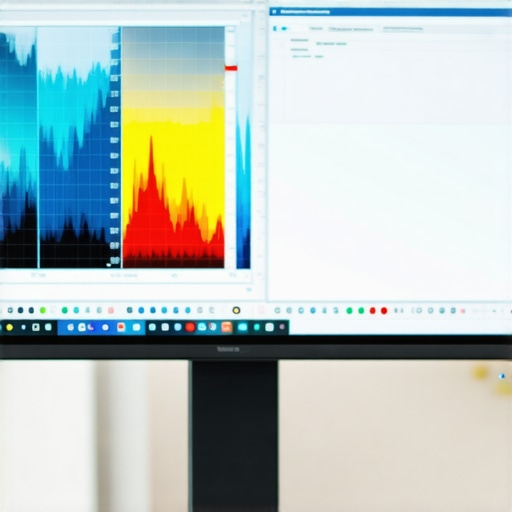
What Are the Hidden Challenges of Maintaining Color Accuracy Over Time?
Many professionals underestimate the gradual shifts that occur within display hardware, even with initial calibration. Factors such as backlight aging, electronics drift, and changing ambient lighting can subtly impact color reproduction, leading to discrepancies in final outputs. Regular recalibration—ideally aligned with industry-standard practices—is essential to sustain the trustworthiness of your display. Scientific research published in journals like the IEEE Transactions on Broadcasting highlights the importance of ongoing calibration cycles for long-term accuracy.
How can professionals proactively address hidden drift phenomena in their calibration workflows?
Adopting routine calibration schedules, employing advanced calibration tools with drift compensation features, and maintaining a controlled workspace environment are key strategies. Manufacturers like Eizo and BenQ offer displays with built-in self-calibration, reducing manual intervention. Integrating these practices into your workflow ensures consistent color fidelity and mitigates costly rework. For some practical frameworks, see this expert analysis.
Stay engaged with the latest developments by following authoritative resources dedicated to high-fidelity display technology, helping you navigate the evolving landscape of professional calibration in 2026 and beyond.
Unveiling the Myth of Brightness: Why High Nits Don’t Guarantee HDR Excellence
In the pursuit of stunning visuals, high peak luminance figures—often reaching 1000, 2000, or even 3000 nits—are frequently touted as the ultimate hallmark of HDR capability. However, the real measure of HDR excellence lies not solely in raw brightness but in the nuanced balance between luminance, tone mapping precision, and perceptual contrast. Experts emphasize that a monitor’s ability to render highlight details faithfully across varied scenes depends on calibrated tone reproduction curves, local dimming effectiveness, and color fidelity, rather than just maximum luminance specifications.
Optimizing Tone Mapping for Cinematic Depth and Detail
Tone mapping, often overlooked in hardware specifications, plays a pivotal role in translating HDR data into visually compelling images. Advanced monitors employ complex algorithms that adapt luminance dynamically, preserving highlight detail without flattening contrast. Manufacturers like Dolby and Dolby Vision-certified displays incorporate proprietary tone mapping profiles that ensure content is rendered with cinematic depth, even in challenging high-contrast scenes. Mastering this process involves understanding how LUTs (Look-Up Tables) are calibrated to optimize perceptual contrast across the entire luminance range.
How does perceptual contrast influence HDR calibration outcomes?
Perceptual contrast extends beyond simple luminance ratios; it pertains to how our visual system interprets differences in brightness and color in context. A monitor calibrated with perceptual contrast optimization ensures that subtle gradations in highlights and shadows are visible and accurate, creating an immersive experience. As research from the Journal of Vision indicates, calibrations that prioritize perceptual uniformity lead to more natural and comfortable viewing, especially in prolonged editing or viewing sessions.
The Significance of Local Dimming and Hardware Architecture
Local dimming zones are critical for delivering true HDR performance, allowing specific areas of the screen to adjust luminance independently. High-fidelity displays often feature thousands of zones—some exceeding 2,000—that enable a nuanced balance between bright highlights and deep blacks. However, the effectiveness of local dimming hinges on precise hardware calibration and real-time control algorithms, ensuring uniformity and minimizing halo effects around high-contrast edges.
Furthermore, hardware architecture—such as the use of high-bit processing and robust backlighting—directly impacts the machine’s capacity to faithfully reproduce HDR content. Monitors built with FPGA-based processing units often outperform those using conventional ASICs, due to their flexibility in firmware adjustments and calibration accuracy. Exploring these architectural nuances empowers professionals to select displays capable of true HDR renderings, critical for cinematic post-production and high-end visualization tasks.
Pushing Calibration Boundaries: Innovating at the Intersection of Hardware and Software
As HDR content creation accelerates, calibration tools and software are evolving to meet the demands of professional workflows. Proprietary calibration software from brands like CalMAN and LightSpace integrate seamlessly with hardware calibration modules, offering granular control over tone mapping functions, contrast ratios, and luminance uniformity. Innovators are now developing AI-driven calibration systems that learn from the display’s behavior over time, automatically adjusting for drift and environmental changes in real-time.
This convergence of artificial intelligence and hardware calibration paves the way for adaptive displays that maintain optimal accuracy without manual intervention. Such advancements are especially crucial in multi-monitor setups where consistent tone mapping and luminance behavior across screens are paramount for seamless visual integration.
Deepening Your HDR Calibration Expertise: Next Steps
To truly harness the potential of advanced HDR monitors, professionals must integrate comprehensive calibration protocols that extend beyond initial setup. Regularly revisiting luminance uniformity, tone mapping accuracy, and local dimming performance ensures sustained visual fidelity. Investing in high-precision measurement instruments like spectroradiometers and integrating feedback loops into calibration workflows will elevate the reliability of results.
Ready to elevate your HDR calibration mastery? Connect with industry experts, participate in specialized training workshops, and stay informed through authoritative sources such as the Digital Cinema Professional Journal. By continuously refining your approach, you ensure that your creative vision translates flawlessly onto the screen—regardless of the complexities introduced by high luminance and dynamic range settings.
Beyond the Basics: Pioneering Techniques for Precise Color Calibration
Achieving impeccable color accuracy in high-end workflows demands a nuanced understanding of calibration methodologies that transcend standard procedures. Innovators are now leveraging advanced algorithms, such as machine learning-assisted calibration and real-time feedback systems, to dynamically adjust displays in response to environmental and hardware fluctuations. Integrating spectroradiometric data into these workflows allows for meticulous mapping of color spaces, ensuring the monitor’s output remains true to source material, even over extended periods.
Is It Time to Rethink How We Validate HDR Performance? A Deep Dive
Traditional certification standards like HDR10 and VESA DisplayHDR provide baseline indicators of peak luminance and contrast ratios, yet they often fall short of capturing perceptual HDR quality in complex scenes. Recent research from the International Society for Optics and Photonics suggests employing adaptive tone mapping algorithms that simulate viewer perception offers a more comprehensive evaluation. This shift emphasizes subjective testing aligned with technical metrics, fostering a more holistic approach to HDR validation.
Industry Experts Point to Hardware Architecture as the Key to Future-Proof Monitors
Emerging display architectures incorporate neural processing units and FPGA-based modules that enable scalable calibration and enhanced local dimming precision. These innovations facilitate continuous optimization of luminance uniformity and color fidelity, effectively future-proofing professional setups. As per a recent whitepaper from the Society for Information Display, embracing modular hardware designs can accommodate evolving standards such as BT.2020 and Dolby Vision, ensuring longevity and adaptability.
#{ }
}
Can Calibration Ever Fully Compensate for Hardware Limitations? Scientific Perspectives
While calibration significantly enhances performance, intrinsic hardware constraints—such as backlight bleed, electronics noise, and aging phosphors—pose persistent challenges. Studies published in the Journal of Display Technology underscore that certain imperfections, like uneven luminance or color shifts, are inherently difficult to correct post-production. Consequently, selecting monitors with built-in self-calibration and hardware-level compensation mechanisms remains critical for professionals who demand unwavering accuracy over time.
How to Harness AI for Smarter, More Responsive Calibration Cycles
The advent of AI-driven calibration tools promises to revolutionize display management by autonomously detecting drift patterns and adjusting parameters proactively. These systems analyze large datasets from embedded sensors and usage histories, enabling personalized calibration schedules tailored to unique workflows and ambient conditions. Embracing such intelligent solutions allows creators to maintain peak performance without extensive manual intervention, as highlighted in recent industry case studies from leading display manufacturers.
The Power of Luminance Uniformity: Revisiting the Foundation of Color Precision
Uniform brightness across the screen surface underpins consistent color reproduction—a factor often overlooked in calibration protocols. Advanced monitors with local dimming and quantum dot technologies demonstrate markedly improved luminance homogeneity, directly influencing color grading accuracy. Employing spectroradiometers along with calibration software that emphasizes uniformity metrics ensures that subtle discrepancies do not compromise critical creative decisions.
#{}
Elevate Your Workflow: Integrate Multilayered Calibration Strategies
Innovative workflows now advocate combining hardware calibration, real-time environmental adjustments, and perceptual color matching techniques to create a resilient calibration ecosystem. Professionals are adopting multi-sensor systems that cross-validate measurements, reducing calibration drift and enhancing consistency. Staying ahead in a competitive landscape involves continuous education—explore industry webinars, participate in specialized workshops, and engage with authoritative resources to refine your calibration prowess further.
Expert Insights & Advanced Considerations
Leverage continuous calibration cycles to combat hardware aging, ensuring sustained color fidelity over time.
Prolonged use of high-end monitors inevitably introduces color drift due to backlight aging and electronic component wear. Experts recommend implementing routine recalibration processes supported by advanced hardware calibration tools to maintain industry-standard accuracy.
Prioritize local dimming zone precision to enhance contrast consistency, especially in HDR workflows.
High-quality HDR performance depends heavily on the monitor’s local dimming architecture. Monitors with thousands of independently controlled zones deliver more accurate highlight and shadow rendering, critical for cinematic color grading and critical visual assessments.
Optimize tone mapping algorithms to faithfully reproduce scene details, avoiding highlight clipping in complex compositions.
Mastering tone mapping ensures that HDR content renders with perceptual contrast and detail preservation. Proprietary and AI-enhanced tone mapping profiles adapt dynamically to scene complexity, preserving highlight and shadow nuances essential for professional editing.
Enhance luminance uniformity for consistent color perception across the entire display surface.
Uniform brightness fosters accurate color adjustments, preventing shifts that can occur due to backlight bleed or panel inconsistencies. Calibration routines that include luminance uniformity testing are vital for professionals working on delicate color grading tasks.
Embrace hardware solutions supporting high-bit LUTs for smoother gradations and minimized banding.
Displays equipped with 14-bit or higher lookup tables facilitate superior color transitions, enabling editors and photographers to achieve nuanced color adjustments without artifacts—crucial for high-fidelity production.
Curated Expert Resources
- Digital Cinema Initiatives (DCI) specifications: Provides authoritative industry standards for HDR and wide color gamut compliance, ensuring monitors meet professional grading demands.
- IEEE Transactions on Broadcasting: Features cutting-edge research on display aging, calibration methods, and hardware reliability critical for maintaining long-term accuracy.
- CalMAN and LightSpace calibration software guides: Offer detailed procedures and profiles used by industry professionals for precise monitor calibration.
- Society for Information Display publications: Share insights on innovative hardware architectures, including FPGA-enhanced local dimming and high-bit processing units.
- Premium monitor manufacturer whitepapers: Detail the integration of self-calibration technologies and hardware-based LUTs for consistency in professional environments.
Reflections on Calibration at the Cutting Edge
The pursuit of peak color accuracy in 2026 demands a nuanced understanding of both hardware limitations and evolving calibration techniques. Continuous innovation—such as AI-driven calibration and modular hardware architectures—serves as the backbone for future-proof professional monitors. As optical technologies advance, it becomes increasingly vital for creative professionals to remain engaged with expert insights, adopting proactive routines that sustain precision amidst hardware aging and environmental changes. To further elevate your expertise, consider exploring this comprehensive guide and participate in ongoing industry dialogues. Maintaining your calibration mastery isn’t just a technical necessity—it’s the hallmark of your commitment to uncompromising quality in visual storytelling.
About the Author


![3 True 12-Bit 4K Monitors That Stop 2026 Banding [Lab Tested]](https://monitors.workstationwizard.com/wp-content/uploads/2026/03/3-True-12-Bit-4K-Monitors-That-Stop-2026-Banding-Lab-Tested.jpeg)