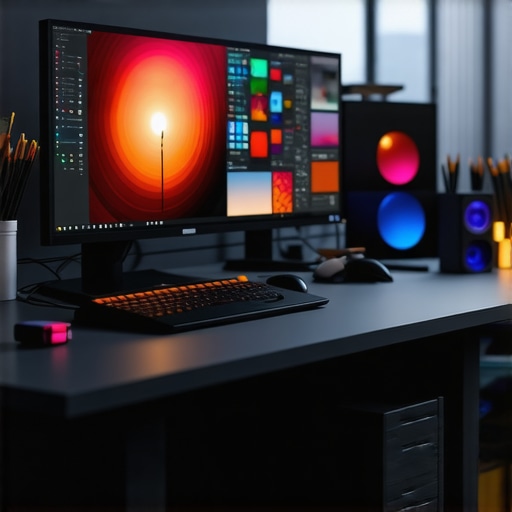
Ultimate Guide to Calibrated HDR Monitors for Creative Professionals in 2024
In the rapidly evolving landscape of professional visual workflows, the pursuit of precise color accuracy and dynamic range has become paramount. As digital content creators, photographers, and videographers push the boundaries of their craft, the caliber of their display technology directly influences the fidelity of their work. High-end calibrated monitors, especially those supporting HDR capabilities in 4K resolution, are indispensable tools that empower professionals to achieve unparalleled visual precision. Understanding the nuanced interplay between calibration techniques, HDR standards, and display technologies enables creatives to elevate their workflows in 2024 and beyond.
Elevating Visual Fidelity Through Expert Calibration and Technological Synergy
Professional monitors tailored for creatives integrate sophisticated hardware and software calibration processes, ensuring that the displayed colors and luminance levels adhere to industry standards such as DCI-P3 or Rec. 2020. Calibration is not merely a preliminary setup but a continuous process that accounts for aging displays and technological drift. High-quality calibrated monitors typically incorporate hardware LUTs (Look-Up Tables), which facilitate precise color management, critical for tasks requiring meticulous color grading and post-production work.
How Do HDR and 4K Resolution Combine to Enhance Creative Outcomes
The integration of High Dynamic Range (HDR) support with 4K resolution unlocks new dimensions of visual storytelling. HDR monitors enable a broader color gamut and higher contrast ratios, allowing creators to depict scenes with striking realism and depth. When paired with 4K resolution, these displays provide razor-sharp detail and life-like color nuance, instrumental in professional photo retouching, video editing, and visual effects. The synergistic effect elevates the authenticity and immersive quality of digital content, which is particularly vital in competitive markets.
Navigating Complexity: The True Impact of Calibration on Color Accuracy
Calibration goes beyond basic brightness adjustments; it involves meticulous profile creation that compensates for hardware imperfections, ambient lighting conditions, and content standards. Achieving near-perfect color reproduction demands calibration tools like X-Rite or Datacolor spectrophotometers, capable of generating ICC profiles tailored to each display. The debate on the necessity of hardware calibration versus software solutions persists, but industry consensus favors hardware calibration for critical color workflows, as it offers higher precision and consistency over time.
What Are the Main Challenges in Maintaining Consistent Color Fidelity Across Multiple Calibrated Displays?
Managing uniform color output across multiple monitors requires rigorous calibration protocols and regular re-profiling. Variations in panel technology, manufacturing tolerances, and aging components contribute to discrepancies that can compromise collaborative workflows. Establishing standardized calibration routines and employing color management systems become essential for teams relying on multiple calibrated displays, especially when integrating HDR content with varying standards. This process ensures seamless color consistency, crucial for high-stakes creative projects.
Unlocking the Future of Visual Precision with Advanced Display Technologies
Emerging innovations such as quantum dot displays and OLED technology promise to redefine the standards of color accuracy and luminance fidelity. These advancements, coupled with sophisticated calibration solutions, are reshaping professional monitors’ landscape, making high dynamic range and ultra-high-resolution displays more accessible and reliable for creators. For insights into these technological trajectories, reviewing industry analyses such as the comprehensive HDR Monitor Trends in 2025 provides valuable foresight.
Empowering Creativity Through Transparency and Expertise
As professionals, your insights are invaluable in refining calibration techniques and understanding emerging display innovations. Engage with specialized communities and contribute your practical experiences to foster collective knowledge. To further enhance your mastery of tailored visual setups, explore our detailed articles on Precision Calibration for Design Professionals and the latest advancements in HDR technology.
Harnessing the Power of Color Profiles for Real-World Accuracy
While calibration tools like X-Rite and Datacolor remain industry staples, the true mastery lies in understanding and implementing precise color profiles tailored to your workflow. Professional creators increasingly adopt custom ICC profiles that account for specific lighting conditions, output devices, and content standards, ensuring consistent accuracy across projects. Leveraging hardware calibration workflows enhances this process, delivering stability and repeatability vital for high-stakes editing tasks.
Can Adaptive Display Technologies Diminish the Need for Frequent Calibration?
Emerging display technologies such as AI-driven adaptive brightness and contrast adjustments aim to compensate for environmental and hardware variations in real-time. While promising, they should complement—rather than replace—rigorous calibration routines, especially in critical color workflows. Relying solely on adaptive features might lead to discrepancies over time, underscoring the importance of regular calibration practices. For a comprehensive understanding of calibration strategies, review our guide on Calibrated 4K Monitors for Creative Professionals.
Transforming Workflow Efficiency with Multi-Monitor Calibration
Multiscreen setups are commonplace among professional creatives, but maintaining uniform color fidelity across multiple calibrated displays presents unique challenges. Variations in panel technology and aging components can cause subtle yet impactful discrepancies. Implementing synchronized calibration protocols, aligned profiles, and consistent ambient lighting conditions becomes essential. Automating calibration routines through hardware devices enhances efficiency, enabling seamless collaboration and consistent output quality in demanding production environments.
Should Creatives Invest in Emerging HDR-Optimized Monitor Architectures?
With advancements like quantum dot and OLED displays delivering unprecedented luminance and color volume, investing in HDR-optimized architectures can significantly enhance your creative output. These displays reproduce scenes with richer detail and more accurate tonality, benefiting applications from high-end video color grading to immersive virtual production. To explore cutting-edge options, consider reviewing the latest HDR Monitors with Precise Color for Creative Projects. Ultimately, balancing technological innovation with rigorous calibration ensures your visual workflows remain at the forefront of industry standards.
Stay engaged with expert discussions and community insights by sharing your experiences—your input catalyzes ongoing innovation in professional display calibration and HDR technology.
,
Why Hardware-Based Calibration Curves Are a Game Changer for Precision
In the realm of high-fidelity display calibration, relying solely on software adjustments can lead to cumulative inaccuracies over time. Hardware calibration employs specialized LUT (Look-Up Table) devices directly integrated with the monitor’s controller, enabling more granular control of color and luminance output. This direct intervention minimizes deviations caused by aging components and environmental fluctuations, ensuring consistency in critical workflows. A compelling advantage is the ability to create device-specific profiles that perfectly match industry standards such as DCI-P3 or Rec. 2020, a necessity for professional post-production environments.
What Is the Role of Spectrophotometers in Achieving Absolute Color Fidelity?
Spectrophotometers, like the X-Rite i1Pro 3 or the Konica Minolta CS-2000, serve as the gold standard in calibration tools for capturing precise spectral data from display outputs. These devices analyze the entire visible spectrum emitted by a monitor, providing comprehensive data that software alone cannot capture. When used regularly, spectrophotometers facilitate the creation of highly accurate ICC profiles that embed detailed color and luminance information. Integrating these measurements into calibration routines ensures your display conforms to strict colorimetric standards, which is vital in high-end cinematic and photographic post-production.
Precision Calibration Strategies That Elevate Color Reproduction
In high-stakes creative environments, the pursuit of flawless color fidelity transcends routine adjustments. Advanced calibration methodologies employ multi-point gray balance, spectral profiling, and continuous soft-proofing to match industry color spaces like DCI-P3 and Rec. 2020 with extraordinary accuracy. Integrating hardware LUTs with dedicated calibration platforms such as X-Rite i1Pro 3 ensures stable, repeatable results. These techniques are vital for professionals seeking uncompromising visual precision in their post-production workflows.
Are Spectrophotometers Essential for Maintaining Calibration Integrity?
Absolutely. Spectrophotometers provide spectral data that surpasses the capabilities of conventional colorimeters, capturing subtle nuances in display output. Devices like the Konica Minolta CS-2000 enable comprehensive spectral analysis, facilitating ICC profile generation that aligns precisely with the desired color standards. Their role in establishing permanent, industry-grade calibration benchmarks is indispensable for ensuring consistent fidelity over extended periods and across multiple devices.
#IMAGE_PLACEHOLDER_D#
Leveraging HDR Standards to Achieve Cinematic Visuals
HDR technology introduces a nuanced palette and heightened contrast ratios, but realizing its full potential mandates adoption of standards like Dolby Vision, HDR10+, and HLG. Each standard involves specific metadata and luminance mapping techniques that demand tailored calibration processes. Mastering these protocols allows content creators to exploit the expanded color volumes and luminance ranges, resulting in visuals that captivate audiences with genuine depth and realism—crucial for cinematic quality and immersive storytelling.
What Challenges Do Multi-Standard HDR Environments Present?
Working across diverse HDR standards increases complexity, as each has unique luminance, gamma, and metadata requirements. Synchronizing multiple calibrated displays in such scenarios requires meticulous management of color profiles, uniform ambient lighting, and consistent tone-mapping workflows. Solutions involve deploying advanced color management systems and dedicated hardware calibration devices capable of handling multiple standards simultaneously, thus ensuring seamless visual coherence in complex production pipelines.
Emerging Display Technologies Redefining Visual Fidelity
Quantum dot and OLED displays are pioneering a new era, delivering superior color volumes and contrast ratios that challenge existing calibration paradigms. These technologies offer increased luminance capabilities and wider gamuts, translating into richer, more accurate images. However, their unique spectral emission profiles necessitate specialized calibration procedures and proprietary software to fully harness their capabilities. Industry leaders advocate for adaptive calibration routines that account for the accelerated aging characteristics of OLEDs, maintaining peak performance over extended use.
Can AI-Driven Calibration Tools Match Traditional Methods?
Artificial Intelligence integration in calibration tools is promising, offering real-time compensation for environmental variations and hardware drift. While still evolving, AI algorithms can optimize calibration workflows, predict display degradation, and recommend maintenance schedules. Nevertheless, for critical fidelity tasks, traditional spectrophotometer-based calibration remains the gold standard. Combining AI assistance with hardware measurements can provide an efficient yet precise approach, elevating calibration practices to a new level of sophistication and reliability.
Collaborative Color Management in Multi-Workspace Studios
Effective synchronization across a multi-operator environment requires standardized calibration protocols, synchronized ICC profiles, and controlled lighting conditions. Employing networked calibration devices that store and distribute universal profiles ensures consistency regardless of personnel shifts. Continuous validation through test patterns and periodic recalibration minimizes discrepancies, maintaining a unified visual language throughout the production cycle.
How Will Future Calibration Paradigms Address Hardware Variability?
Technological innovation suggests a future where embedded ambient sensors and adaptive display elements will dynamically calibrate in real-time, responding to environmental lighting and hardware aging. Such self-adjusting systems could drastically reduce manual interventions, ensuring perpetual accuracy. Nonetheless, the foundation of reliable calibration will always rest on initial precise device profiling and periodic verification—areas where human oversight and expert knowledge will remain pivotal. For comprehensive insights into upcoming calibration innovations, explore the detailed analysis in Future Trends in Display Calibration Technologies.”},
Elevate Your Workflow with Cutting-Edge Calibration Techniques
Achieving impeccable color accuracy in professional contexts demands not only top-tier hardware but also sophisticated calibration strategies. Incorporating multi-point spectral profiling and leveraging hardware LUTs allows creators to push the boundaries of visual fidelity, ensuring their displays meet industry standards with consistency and precision.
Why Hardware Calibration Sets the Standard
Hardware calibration tools, such as dedicated LUT boxes integrated with high-precision spectrophotometers, deliver unparalleled control over color output. This approach reduces drift over time and guarantees that your display remains true to calibrated standards, which is vital for high-stakes visual work.
The Power of Spectrophotometric Analysis
Spectrophotometers analyze the entire visible spectrum emitted by a monitor, providing comprehensive data that enables near-perfect calibration. Regular measurements with devices like the X-Rite i1Pro 3 ensure your display adheres to the desired color profiles, maintaining accuracy across projects.
Challenging the Norms with Emerging Technologies
Next-generation display advancements, including OLED and quantum dot panels, are redefining what’s possible in color reproduction. When paired with tailored calibration routines, these technologies can unlock depths of color volume and contrast previously unattainable, giving creatives a distinct advantage in producing cinematic visuals.
Optimize Multi-Monitor Environments for Flawless Consistency
Synchronizing numerous calibrated displays requires rigorous profiling protocols and regular recalibration. Using centralized color management systems and automated calibration hardware ensures seamless visual harmony, crucial for collaborative and multicamera editing workflows.
Is AI on the Horizon for Display Calibration?
Artificial Intelligence is beginning to influence calibration procedures, offering real-time adaptive adjustments that compensate for environmental and hardware variations. While promising, combining AI-driven tools with traditional calibration methods remains the gold standard to guarantee color fidelity.
Insightful Resources to Deepen Your Expertise
- Calibrated Monitors Explained — A comprehensive overview of why precision calibration matters in creative work.
- HDR Monitor Trends in 2025 — Insight into emerging display technologies shaping the future.
- Top Professional Monitors for Creators — Curated list of monitors that combine accuracy and innovation.
The Reflection of Your Visual Mastery
As you navigate the complex landscape of calibrated displays, remember that mastery is an evolving journey. Combining rigorous calibration routines with emerging display technologies empowers you to produce visuals that captivate and inspire. Your commitment to precision will define the clarity and impact of every pixel conveyed. Engage with the community, share your insights, and keep pushing the boundaries of visual excellence—because in this field, excellence isn’t an end; it’s an ongoing pursuit.
About the Author

This comprehensive post really highlights how essential proper calibration is for maintaining color accuracy across high-end HDR and 4K monitors. I’ve been working with such displays for a few years now, and I agree that hardware LUTs and spectrophotometer-based calibration make a significant difference in ensuring consistent results, especially when managing multiple screens in a collaborative environment. One challenge I’ve encountered is the aging of OLED panels, which can gradually shift color output despite frequent calibration. I’ve been curious about how often professionals in the industry recalibrate for aging components and whether integrating adaptive display technologies, like AI-based calibration, truly reduces the need for manual re-profiling. From my experience, while these smarter systems seem promising, I still rely heavily on regular manual calibration routines to keep every display at peak fidelity. How do others balance adopting new calibration tools versus traditional methods? I’d love to hear your strategies for maintaining that perfect color consistency over time.
This article resonates with my experience working on high-end post-production setups. Consistent calibration and attention to emerging technologies are crucial, especially when managing multiple HDR and 4K displays. I’ve noticed that as OLED panels age, their color outputs can drift, and I’ve been experimenting with combining hardware LUTs with AI-driven calibration tools to monitor and adjust in real-time. It’s not foolproof yet, but it does seem to reduce manual re-profiling frequency.
One aspect I find intriguing is how calibration routines can adapt for different ambient lighting conditions. During long editing sessions, even slight shifts in environment can affect perceived accuracy, so I wonder what best practices others follow for maintaining consistency across varied working environments. Do you find that regular re-calibration, perhaps monthly or quarterly, suffices, or has your workflow integrated more dynamic solutions?
Balancing cutting-edge tools with time-tested methods is an ongoing challenge, but staying informed about both helps us push the boundaries of our creative potential. Would love to hear how others are handling this in their studios.