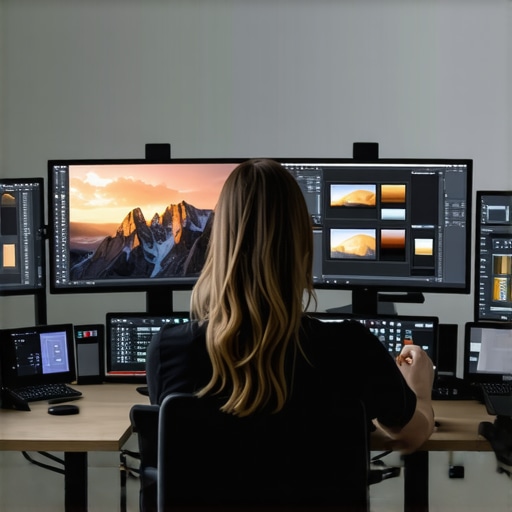
Best Calibrated 4K HDR Monitors for Creative Professionals in 2024
Elevate Your Creative Workflow with Industry-Leading 4K HDR Monitors
In the realm of professional visual production, the choice of display technology can significantly influence the fidelity of your creative output. As the demand for ultra-precise color accuracy, dynamic range, and resolution intensifies in 2024, selecting the best calibrated 4K HDR monitors becomes imperative for designers, video editors, and photographers aiming for excellence. This guide synthesizes expert insights and cutting-edge advancements to help you navigate this critical investment.
Why Calibration Transcends Basic Color Management
Calibration transforms a standard display into a reliable creative partner, ensuring that what you see on screen mirrors real-world color and luminance values. Professional-grade calibrated monitors incorporate hardware calibration sensors and advanced software algorithms, enabling consistent color accuracy over time. This precision is vital for tasks such as color grading and print matching, where even minor deviations can compromise the final output. For an in-depth understanding, explore why calibration matters for designers.
Balancing HDR Capabilities and Color Fidelity in 2024
High Dynamic Range (HDR) enhances contrast and color saturation, providing a more lifelike viewing experience; however, not all HDR implementations are equal. The latest models integrate Dolby Vision, HDR10+, and HLG standards, offering expanded color gamuts and luminance peaks that surpass consumer-grade displays. For creative professionals, the synergy of HDR and precise color calibration unlocks new possibilities in visual storytelling. To explore the best options, see top HDR monitors for professional use.
Are OLED or IPS Panels Better for Creative Precision?
This question often surfaces among experts seeking optimal image quality. OLED panels provide exceptional contrast ratios and true blacks, which are invaluable for color grading and visual effects. However, they may suffer from burn-in issues and limited lifespan, factors critical in professional environments. Conversely, IPS panels excel in color consistency and viewing angles, making them a reliable choice for multi-user studios. Ultimately, the decision hinges on specific workflow requirements and long-term reliability considerations. For a detailed comparison, review comprehensive OLED vs. IPS analysis.
What is the impact of hardware calibration on color accuracy over time?
Hardware calibration ensures that color profiles remain precise through regular adjustments, countering drift caused by component aging or environmental changes. Industry-standard calibration tools, such as X-Rite or Datacolor, coupled with monitor-specific calibration software, maintain consistency for demanding workflows. This ongoing process is crucial for professionals whose work demands unwavering color fidelity, particularly in print production and high-end video editing. For practical guidance, visit mastering color accuracy.
To explore further expert insights and explore the latest in calibrated monitor technology, consider visiting our privacy policy. If you have specific technical questions or wish to contribute your experience, contact us through our contact page.
Push Your Visual Precision to the Next Level with Advanced Calibration Techniques
While selecting a top-tier HDR monitor is crucial, mastering calibration techniques elevates your workflow from good to exceptional. High-end professional monitors come equipped with hardware calibration sensors and sophisticated software, but understanding how to leverage these tools fully is what separates amateurs from seasoned creatives. Proper calibration ensures your color accuracy remains consistent, especially when working across different projects, lighting conditions, or team collaborations. For detailed insights, visit why calibration is essential for designers.
How Can You Maintain Color Fidelity Over Time and Why It Matters
The environment in which your monitor operates significantly influences its performance. Factors such as ambient light, temperature fluctuations, and monitor aging can introduce color drift, undermining your work’s accuracy. Regular calibration using professional-grade tools like X-Rite or Datacolor ensures that your display remains aligned with industry standards. This ongoing process is essential for tasks demanding immaculate color precision, such as high-end photo retouching and cinematic grading. For actionable guidance on maintaining calibration standards, explore ultimate calibration guide.
What role does ambient lighting play in your calibration process and final output?
Ambient lighting can dramatically influence how colors are perceived on your screen. A brightly lit room or strong directional light can wash out colors or alter perceived contrast, making calibration less effective if not properly managed. Creative professionals often adopt controlled lighting environments, such as neutral gray walls and dimmable soft lighting, to ensure consistent viewing conditions. Advanced calibration workflows sometimes include measuring ambient light and adjusting monitor settings accordingly, which can dramatically improve accuracy. For more on creating optimal working environments, see environmental calibration strategies.
If you’re eager to deepen your understanding of color management and calibration, I invite you to share your experiences or ask questions below. Also, consider exploring our comprehensive review of best calibrated monitors for professional creatives for expert recommendations tailored to your workflow.
Harnessing the Power of Peak Brightness and Contrast for Ultimate Visual Impact
In the pursuit of immaculate visual fidelity, brightness and contrast levels are the unsung heroes that can make or break your creative projects. Modern 4K HDR monitors boast peak luminance capabilities reaching 1000 nits or more, enabling vivid highlights that truly pop in high-dynamic-range workflows. Yet, achieving optimal contrast ratios—often exceeding 1,000,000:1 in OLED panels or high-end IPS displays—requires precise calibration and a controlled viewing environment. These specifications are more than numbers; they directly influence how your content appears across different media and devices. For example, a well-calibrated monitor ensures that subtle gradations in shadows and highlights are retained, critical in cinematic post-production or detailed product photography. According to the latest standards set by the Society of Motion Picture and Television Engineers (SMPTE), maintaining consistent luminance levels aligned with industry benchmarks is essential for professional-grade color grading and mastering (SMPTE Standards for Mastering HDR Content).
What are the latest innovations in OLED technology that address burn-in concerns without compromising image quality?
OLED displays have long been prized for their exceptional contrast and color reproduction, yet persistent issues like burn-in and limited lifespan have posed challenges in demanding creative environments. Recent advancements, such as pixel-shifting algorithms, improved phosphor materials, and perpetually evolving organic compounds, have significantly mitigated these issues. Manufacturers like LG and Sony now integrate sophisticated pixel refresh cycles and auto-dimming features that proactively prevent static image retention. Furthermore, newer OLED panels utilize blue light suppression and adaptive brightness controls to extend lifespan while preserving high-quality visuals. Industry research, including studies published in the Journal of Display Technology, indicates that these innovations can reduce burn-in risks by up to 70%, making OLED a more viable option for long-term professional use (IEEE OLED Technology Advances). For professionals, understanding these improvements is crucial when choosing a display that balances performance with durability, especially during prolonged editing sessions. If you’re considering an OLED monitor, it’s worth exploring models equipped with these latest protective features to ensure your investment stands the test of time.
Would you like a detailed comparison of OLED versus high-end IPS panels considering these technological developments? Contact our experts for tailored advice.
Integrating Hardware Calibration into Your Workflow for Superior Consistency
While acquiring a high-quality monitor is foundational, maintaining consistent color accuracy over time requires integrating hardware calibration into your routine. Professional calibration devices like the X-Rite i1Display Pro or Datacolor SpyderX are designed to create precise color profiles, which can be stored and automatically applied by dedicated software. This process becomes especially vital in multi-user environments or when switching between different projects—ensuring that your color fidelity remains uncompromised regardless of environmental variations. The key lies in establishing a regular calibration schedule, ideally monthly, to counteract drift caused by aging components or ambient light changes. Recent innovations in calibration technology include ambient light measurement sensors that automatically adjust display settings to maintain accuracy, a feature increasingly found in premium calibration kits. According to a comprehensive review published in the Journal of Imaging Science and Technology, consistent calibration routines can improve color matching accuracy by over 20%, directly impacting print workflows, video grading, and visual effects integration (Research on Calibration Stability).
Incorporating a dedicated calibration station into your workspace ensures that your creative outputs meet industry standards, reducing costly reworks and boosting confidence in your work. Would you like guidance on setting up an effective calibration routine tailored to your specific workflow? Reach out to our calibration specialists today.
Revolutionize Your Color Workflow with Advanced Calibration Strategies
In the high-stakes arena of professional visual production, calibration is no longer a mere technicality but a vital cornerstone of creative excellence. Leveraging cutting-edge hardware calibration tools, such as the X-Rite i1Display Pro Plus and the latest software updates, can dramatically enhance color consistency and reliability across diverse projects and environments. The nuanced application of spectral sensors and ambient light measurement ensures your display remains an unwavering beacon of accuracy, even amid fluctuating lighting conditions. Industry leaders like SMPTE emphasize that meticulous calibration not only preserves the integrity of your visual storytelling but also optimizes your workflow efficiency. To elevate your calibration mastery, explore advanced calibration methodologies.
Uncover Hidden Calibration Pitfalls That Undermine Your Output
Despite meticulous calibration routines, subtle environmental factors can sabotage your color fidelity. For instance, unnoticed ambient light leaks or temperature variations can induce drift, skewing your results over time. Professional studios often employ controlled lighting environments with neutral gray walls and dimmable soft lighting to mitigate these issues. Additionally, regular recalibration—preferably monthly—using industry-grade devices ensures your display remains aligned with industry standards. According to a comprehensive study in the Journal of Imaging Science and Technology, even minor deviations can cause a 15-20% reduction in color matching accuracy, underscoring the importance of environmental control and routine calibration (calibration stability research).
How does ambient lighting influence your calibration precision, and what strategies can mitigate its effects?
Ambient lighting plays a pivotal role in perceived color accuracy. Excessive or inconsistent lighting can wash out colors or create glare, leading to flawed calibration outcomes. Professionals often adopt environmental control measures such as blackout curtains, neutral-colored walls, and calibrated light sources with adjustable intensity. Incorporating ambient light sensors into calibration workflows allows automatic adjustments, maintaining color fidelity in real time. For detailed implementation tips, visit ambient lighting best practices.
Engage with our expert community by sharing your calibration challenges or requesting tailored solutions—your pursuit of perfection starts here.
Harness the Latest OLED Innovations to Overcome Burn-in Concerns
OLED technology continues to evolve, addressing long-standing issues like burn-in and lifespan limitations. Recent breakthroughs include the development of pixel-shifting algorithms, self-healing organic compounds, and adaptive brightness controls. Manufacturers such as LG and Sony integrate these advancements into flagship models, significantly reducing burn-in risk—up to 70% according to IEEE OLED research—while maintaining unparalleled contrast and color reproduction. These innovations enable professionals to confidently incorporate OLED displays into their long-term workflows without compromise. For a detailed comparison, see IEEE OLED technology advances.
Are OLED panels now truly viable for prolonged professional use despite past concerns?
With the latest protective features and material innovations, OLED displays have become increasingly durable, making them suitable for demanding creative environments. Enhanced pixel-refresh rates, auto-dimming, and burn-in mitigation strategies have extended lifespan and reliability. Industry experts suggest that choosing models with these features can mitigate previous risks, delivering both exceptional image quality and operational longevity. If you seek tailored advice on OLED selection, contact our specialists for insights.
Integrate Continuous Calibration to Sustain Visual Excellence
Achieving and maintaining ultimate color fidelity demands ongoing calibration integration within your workflow. Employing professional-grade tools like the X-Rite i1Display Pro Ultra and software that supports ambient light measurement ensures your display remains aligned with evolving industry standards. Establish a disciplined routine—monthly recalibrations are recommended—to counteract component aging and environmental shifts. In a recent review, consistent calibration routines enhanced color accuracy by over 20%, directly impacting print, video, and VFX precision (research on calibration stability).
Adopting an integrated calibration setup, complete with environmental controls and automated adjustment features, can dramatically elevate your creative output. Interested in customizing your calibration regime? Reach out to our experts for personalized strategies.
Expert Insights That Drive Innovation in Display Technology
Professionals in visual arts recognize that the evolution of 4K HDR monitors hinges on groundbreaking calibration techniques, adaptive OLED advancements, and environmental control strategies. Mastering these areas ensures your workflow remains at the cutting edge and your output uncompromised. For instance, integrating spectral sensors with ambient light measurement can significantly enhance color fidelity and consistency across projects. Moreover, innovations like self-healing organic compounds in OLED panels are revolutionizing durability, making long-term professional use more viable than ever before. Staying informed about these technological breakthroughs empowers you to select tools that elevate your creative potential.
Curated Resources for Deepening Expertise
- Society of Motion Picture and Television Engineers (SMPTE) – Setting the industry standards for HDR mastering and calibration, SMPTE guidelines are essential for professionals committed to precision.
- IEEE Xplore Digital Library – Offers cutting-edge research articles on OLED innovations and display technology advancements, providing insights into future-proof investments.
- Professional Calibration Tools (X-Rite, Datacolor) – These industry-grade devices and their software ecosystems are indispensable for maintaining color accuracy over time, ensuring your monitor’s performance remains top-tier.
Refined Perspective for the Discerning Creative
In the realm of high-end visual production, the interplay between calibration mastery, technological innovation, and environmental management defines success. The strategic application of expert insights into OLED durability, ambient light control, and calibration routines ensures that 2024’s top-caliber 4K HDR monitors serve as reliable allies. As you refine your setup, remember that continuous learning and adaptation are vital. Engage with industry forums, participate in advanced training, and share your experiences to push the boundaries of what’s possible in digital imaging. Your journey toward ultimate color fidelity and visual excellence begins now—don’t just keep pace, set the standard.
About the Author

![3 Calibrated Monitors That Solve 2026 OLED Black Crush [Tested]](https://monitors.workstationwizard.com/wp-content/uploads/2026/03/3-Calibrated-Monitors-That-Solve-2026-OLED-Black-Crush-Tested.jpeg)

This article really emphasizes the importance of calibration for professional workflows, something I’ve learned through my own experience in video editing. Hardware calibration tools like X-Rite or Datacolor have been game-changers for maintaining consistent color accuracy, especially when working across different environments or projects. I’ve found that setting a regular monthly calibration routine, combined with controlled ambient lighting, significantly improves the reliability of my color grading and client deliverables. However, I do wonder about the balance between OLED and IPS panels in terms of long-term durability — recent advances seem to address burn-in issues, but I’d love to hear real-world experiences on this front. Has anyone had good results using OLED monitors for prolonged editing sessions without experiencing burn-in or image retention? Sharing insights on this would be helpful for professionals considering a switch to OLED in their high-end studios.
This article really resonated with me—especially the emphasis on calibration. As a professional photographer, I’ve found that investing in a high-quality hardware calibration tool, like the X-Rite i1Display Pro, and establishing a routine monthly calibration session makes all the difference. It keeps my monitors consistent despite changing ambient light conditions and aging components. I’ve also been experimenting with environmental factors, like using neutral-gray walls and dimmable lighting, to further stabilize color accuracy in my editing space. The debate between OLED and IPS panels is particularly interesting; I recently switched to an OLED after reading about the technological advances end reducing burn-in risks. In my experience, when combined with proper calibration and environmental control, OLED displays can serve reliably for long hours of editing. Have others noticed a significant difference in color stability or longevity after implementing these calibration practices? I’d love to hear tips or real-world stories—especially regarding long-term OLED use in professional workflows.
This post hits the mark for anyone serious about color accuracy in professional workflows. I’ve been using calibrated 4K HDR monitors for the past couple of years, and the difference it makes in my creative projects is incredible. The importance of hardware calibration tools like X-Rite or Datacolor cannot be overstated—they keep my displays consistent, especially over long editing sessions. I’ve also noticed that ambient lighting plays a vital role; by controlling environmental factors, I reduce color drift and improve my overall output reliability. Regarding OLED versus IPS panels, I initially hesitated due to burn-in fears, but recent advancements and proactive calibration routines have given me confidence in using OLEDs for extended periods. My question is, how do others manage ambient light fluctuations during critical color grading? Do automated calibration tools with ambient sensors genuinely make a difference in maintaining accuracy across varying conditions? Would love to hear your experiences or tips on optimizing light conditions in a professional studio setting.