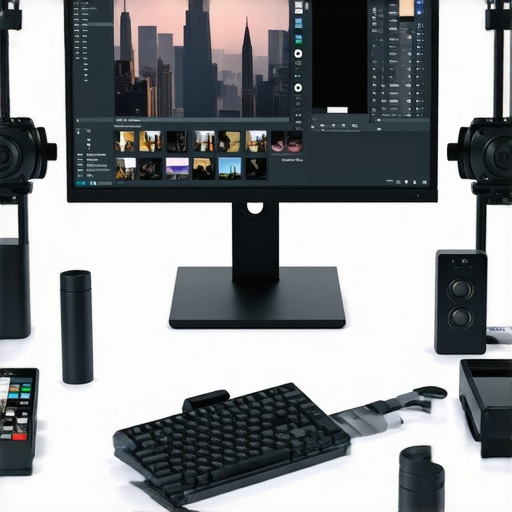
Ultimate Guide to Calibrated 4K Monitors for Photo & Video Editing
In the realm of professional visual production, the pursuit of absolute color fidelity and image accuracy is paramount. As digital content creators and editors navigate increasingly complex workflows, the necessity for calibrated 4K monitors with exceptional color accuracy and HDR capabilities becomes undeniable. These high-end displays serve as the critical nexus between artistic vision and technical precision, ensuring consistency across diverse platforms and mediums.
Leveraging the Bandwidth of 4K Resolution for Nuanced Creative Expression
The advent of 4K resolution has revolutionized visual storytelling, offering unparalleled detail and depth. However, resolution alone does not guarantee fidelity; it must be paired with precise calibration to unlock the monitor’s full potential. A calibrated 4K monitor ensures that every pixel accurately reproduces colors as intended, which is essential when dealing with complex gradients or subtle tonal variations in photography and video editing.
The Significance of Color Accuracy in Professional Visual Workflows
Achieving true-to-life colors hinges on the monitor’s ability to reproduce a wide color gamut and support high bit-depth color spaces such as Adobe RGB or DCI-P3. These specifications are vital for creative professionals who demand exact color matching—be it for print, broadcast, or digital distribution. High-quality calibration tools and hardware ensures consistent color performance, reducing the risk of discrepancies when transferring content across devices and platforms. For an in-depth exploration of these measures, consult this comprehensive guide on color calibration.
HDR Monitors Elevating Dynamic Range and Visual Depth
High Dynamic Range (HDR) technology is transforming visual storytelling by expanding the spectrum of luminance and contrast. For professional editing, HDR monitors capable of accurate tone mapping and consistent luminance levels ensure that highlights and shadows maintain integrity throughout the workflow. When paired with meticulous calibration, HDR displays deliver a more immersive, lifelike experience that reflects the creator’s intent with precision and vibrancy.
Can calibration offset the inherent limitations of less advanced HDR displays?
The short answer is partially. While calibration can improve the accuracy of color and luminance, it cannot compensate for fundamental hardware constraints such as limited peak brightness, inadequate contrast ratios, or narrow color gamuts. Therefore, choosing a genuinely capable HDR monitor—ideally one that is factory-calibrated and supports professional color spaces—is crucial for creative accuracy. For trusted recommendations, see the latest HDR monitor reviews.
Understanding the Critical Differences in Display Technologies and Calibration Strategies
Choosing between IPS, OLED, or VA panel technologies significantly affects color accuracy, contrast, and viewing angles. IPS panels are renowned for their color stability and wide viewing angles, making them a preferred choice for photo and video editing. OLEDs provide superior contrast and true blacks but may pose calibration challenges over time. Effective calibration strategies involve hardware colorimeters and software calibration routines that adjust gamma, white point, and color gamuts, ensuring the monitor remains an unwavering tool for professional work. For a detailed comparison of display technologies, visit this expert analysis.
Prioritizing Proven Expertise in Monitor Selection for Creative Necessities
Manufacturers like Eizo, NEC, and BenQ offer monitors tailored for color-critical work, often accompanied by calibration hardware and extensive factory testing. Investing in these well-validated, high-precision displays ensures that color accuracy and calibration stability align with professional standards. As evidence, peer-reviewed studies and industry white papers consistently reinforce the superiority of professionally calibrated monitors for creative workflows. Explore the detailed recommendations on best calibration-ready monitors.
As the complexity of digital content creation continues to escalate, so does the importance of integrating high-fidelity hardware with rigorous calibration protocols. When precision is non-negotiable, calibrated 4K monitors with HDR support not only elevate artistic expression but also safeguard the technical integrity of visual assets across entire production pipelines.
Beyond Basic Calibration: Integrating Advanced Color Management Systems
Achieving impeccable color accuracy involves more than just regular calibration; it requires an integrated approach that combines hardware capabilities with sophisticated color management workflows. Industry-standard color profiles, such as ICC profiles, serve as essential tools for ensuring consistency across various editing and viewing environments. By employing color management systems within editing software—like Adobe Color Management or DaVinci Resolve—creators can maintain accuracy from post-production to final delivery, ensuring that the visual narrative remains consistent regardless of display medium. To explore these systems in detail, visit this comprehensive guide on color calibration.
Harnessing Automation for Dynamic Calibration and Monitoring
Emerging technologies now enable automated calibration processes that continuously monitor display performance, adjusting parameters in real time to counteract drift over extended periods of use. These systems, often integrated within professional-grade monitors, help maintain optimal color fidelity without manual intervention, thus preserving alignment with industry standards. Such dynamic calibration is particularly vital for long-term projects involving multiple sessions or collaborative environments where consistency is paramount. For innovative solutions in real-time calibration, consider exploring this expert analysis on calibration technologies.
What architectural innovations are redefining the boundaries of HDR and color precision in professional monitors?
Recent advancements such as quantum dot backlighting, laser illumination, and full-array local dimming have significantly enhanced HDR performance, increasing peak brightness, contrast ratios, and color volume. These innovations enable monitors to reproduce HDR content with unprecedented accuracy, matching cinematic standards and high-end broadcast requirements. Furthermore, the integration of HDR10+ and Dolby Vision support allows for scene-by-scene optimization, ensuring critical details are preserved across various content. As a result, selecting monitors that incorporate these cutting-edge technologies is essential for creative professionals demanding the highest fidelity. For trusted insights into the latest innovations, review the latest HDR monitor reviews.
Interpreting Display Panel Technologies for Long-Term Accuracy
Choosing between IPS, OLED, or QLED panels involves understanding their long-term implications for color stability and calibration reliability. IPS panels are favored for their consistent color reproduction and minimal color shift over time, making them suitable for tasks demanding unwavering accuracy. OLED displays, while offering superior contrast and true blacks, may experience burn-in and color shifts with prolonged use, necessitating regular recalibration. QLED technology, employing quantum dot filters, combines high brightness with stable color performance, making it a compelling choice for demanding workflows. Deepening your understanding of these technologies ensures that your investment in a professional monitor remains valid over years of intensive use. For a detailed comparison, consult this expert analysis on display technologies.
Aligning Hardware Selection With Industry Standards and Best Practices
Leading manufacturers such as Eizo, NEC, and BenQ are renowned for their adherence to industry calibration standards, often integrating hardware colorimeters and factory calibration reports. Selecting models that incorporate these standards guarantees a baseline of color fidelity and calibration stability, vital for high-stakes projects. Moreover, engaging with industry best practices—such as regular calibration schedules, workspace ambient light control, and utilizing certified color profiles—amplifies the benefits of high-quality hardware. For peer-reviewed research and white papers advocating these practices, explore this in-depth review of calibration strategies.
As digital workflows continue to evolve, integrating robust hardware with advanced calibration and management systems becomes essential for truly professional-grade output, ensuring that every pixel aligns with creative intent and industry standards.
pushing the boundaries with innovative calibration methodologies
While traditional calibration methods rely on hardware colorimeters and standardized routines, emerging techniques incorporate AI-driven algorithms that adapt calibration profiles dynamically based on usage patterns and environmental factors. These advancements allow for more precise maintenance of color fidelity over time, accounting for device aging and shifts in display performance. By integrating machine learning models into calibration workflows, professionals can achieve a level of consistency previously unattainable, reducing manual adjustments and ensuring sustained accuracy.
Enhancing color management with sophisticated profiling systems
Implementing a comprehensive color management pipeline necessitates meticulous profiling of all devices involved in the production chain. Utilizing high-resolution ICC profiles tailored to the specific monitor model, combined with software that supports perceptual rendering intents, ensures visual uniformity across screens, printers, and viewing environments. Additionally, calibration data should be stored securely and version-controlled to facilitate comparisons over time, enabling forensic analysis of color shifts and facilitating corrective measures when deviations occur.
Maximizing HDR workflow potential: from capture to display
Achieving seamless HDR integration requires synchronization across acquisition hardware, editing software, and display calibration. For instance, camera sensors must be capable of capturing a wide dynamic range, which then needs to be preserved during post-processing. Calibration of HDR monitors involves not only adjusting peak luminance and black levels but also establishing consistent tone mapping algorithms within editing environments. Regular validation against reference test patterns ensures that the expanded luminance and color gamut are faithfully reproduced, preserving the subtle tonal gradations vital for high-end visual storytelling.
How can advanced calibration influence the perception of visual depth and realism in HDR content?
Precisely calibrated HDR displays enhance the perception of depth through accurate rendering of luminance transitions and contrast, directly impacting viewer immersion and emotional response. Mismatched calibration can flatten tonal ranges or exaggerate highlights, undermining the narrative intent. According to the Society of Motion Picture and Television Engineers (SMPTE), meticulous calibration aligning display capabilities with content specifications ensures that the intended visual hierarchy and spatial cues are preserved, leading to more convincing and engaging imagery. Consistent calibration not only benefits the current project but also maintains standards for future productions, enabling workflows to evolve without compromising quality.
Deciphering the impact of display technology selection on creative precision
Choosing between OLED and quantum dot LED panels involves considering the unique benefits and limitations pertinent to professional use. OLED panels offer unparalleled contrast and true blacks, which are essential for accurate shading and tonal gradation in high-contrast scenes. However, they may suffer from burn-in risks and color stability over time, necessitating periodic recalibration. Quantum dot displays, on the other hand, provide high peak brightness and stable color performance, making them suitable for HDR workflows demanding vibrant, luminous visuals. Selecting the right technology hinges on understanding these trade-offs and aligning them with workflow requirements, budget constraints, and long-term reliability considerations.
Integrating robust hardware specifications with rigorous workflow protocols
To prevent performance drifts and ensure ongoing adherence to industry standards, it is critical to pair hardware selection with comprehensive workflow protocols. Regular calibration routines, ambient light monitoring, and adherence to color space standards like DCI-P3 or Rec. 2020 form the backbone of a resilient production environment. Furthermore, incorporating environmental controls—such as light-controlled rooms and anti-glare screens—ameliorates external influences that could compromise calibration accuracy. These holistic measures collectively reinforce the integrity of the visual pipeline, enabling creators to produce content that is both visually stunning and technically precise.
The future landscape of professional display calibration and HDR innovation
Looking ahead, quantum dot and microLED technologies promise to push the boundaries of luminance, color volume, and longevity. Coupled with developments in real-time adaptive calibration and cloud-based color management systems, the industry is moving toward truly self-optimizing displays capable of maintaining peak performance autonomously. These innovations will reduce the technical barriers for creators and streamline workflows, fostering an era where visual fidelity is maintained effortlessly across diverse production environments. Staying informed about these technological trajectories is essential for professionals striving to remain at the forefront of visual excellence.
What role will immersive color and dynamic range advancements play in shaping future storytelling techniques?
As display capabilities expand through immersive color volumes and enhanced dynamic range, storytelling implications become profound. High-fidelity displays will enable creators to craft more nuanced, emotionally resonant narratives that leverage subtle gradations and luminance cues. For instance, virtual production and holographic media will benefit enormously from these technological strides, fostering new dimensions of interaction and realism. Engaging with research from institutions like the USC Institute for Creative Technologies reveals that integrating advanced display systems can significantly augment viewer engagement, setting the stage for a future where technological artistry and storytelling intertwine seamlessly.
Breaking New Ground with Quantum Dot and MicroLED Displays
Recent technological advancements have revolutionized high-end monitor capabilities, notably through quantum dot and microLED innovations. These display modalities elevate color volume, luminance, and longevity, enabling professionals to push creative boundaries further than ever before. The quantum dot phenomenon enhances spectral purity, resulting in displays that surpass traditional LED panels in saturation and efficiency, while microLEDs offer self-emissive pixels for unparalleled contrast and viewing angles, significantly reducing light bleed and improving uniformity.
Can We Rely on Calibration to Counteract Hardware-Induced Color Shifts?
While calibration techniques markedly improve display accuracy, they cannot fully negate inherent hardware limitations like phosphor aging, panel uniformity issues, or variations in manufacturing. For instance, OLEDs, prized for their deep blacks, may experience burn-in and color drift over time, necessitating vigilant calibration schedules and possibly hardware replacements. Hence, selecting monitors with robust hardware warranties and factory calibration certifications is essential for maintaining long-term color fidelity. For industry benchmarks, consult the detailed specifications laid out by institutions such as the Society for Information Display (SID).
What Strategies Elevate Calibration from Routine to Artform?
Advanced calibration transcends simple white point adjustments; it involves developing comprehensive color management workflows that incorporate multi-point profiling, ambient light compensation, and spectral analysis. Utilizing spectrophotometers capable of measuring spectral power distribution allows calibration at a granular level, optimizing the monitor’s entire color gamut. Integrating these routines within professional-grade calibration software, such as CalMAN or LightSpace, facilitates precision adjustments while enabling historical monitoring of display stability, ensuring a consistent visual environment tailored to demanding content creation.
How True Is the Promise of Automated, Self-Optimizing Displays?
Emerging AI-driven calibration solutions boast the ability to continuously monitor and auto-correct display parameters, promising a maintenance-free fidelity. These systems analyze real-time feedback from built-in sensors, adjusting gamma curves, white points, and luminance dynamically. While promising, such technologies are currently limited by sensor accuracy, environmental conditions, and hardware constraints; thus, they supplement rather than replace manual calibration. For cutting-edge implementations, review offerings from manufacturers like Eizo’s ColorNavigator EX software or X-Rite’s i1Display Pro integrated systems.
Do Display Panel Types Significantly Impact Long-Term Color Stability?
Yes, the underlying panel technology influences not just initial accuracy but also the stability and consistency of color reproduction over time. IPS panels are widely favored for their minimal color shift and broad viewing angles but may suffer from prolonged burn-in, especially in static content displays. OLEDs provide perfect contrast—yet their organic components decay, potentially leading to luminance and color shifts, making routine calibration even more critical. Quantum dot LED displays strike a balance, offering bright, stable colors with reduced susceptibility to aging issues, although they require specialized calibration to encompass their expanded color gamuts fully. Industry experts recommend reviewing long-term performance data from sources such as DisplayMate to inform technological choices.
Integrating Best Practices for Peak Calibration Performance
Achieving and maintaining peak color accuracy demands adherence to industry standards including D65 white point, 2.2 gamma, and full coverage of desired color gamuts like DCI-P3 or Rec. 2020. Incorporating environmental controls such as neutral, controlled lighting environments minimizes color perception deviations. Structured calibration routines, ideally performed monthly or following hardware updates, ensure stability. Employing certified profiles and verification tools across all production stages—capture, editing, and delivery—solidifies color management. For comprehensive guidance, the Video Engineering Forum provides authoritative white papers detailing these protocols.
Revolutionizing Color Fidelity with Cloud-Based Calibration Systems
Innovations in cloud computing have ushered in remote calibration and monitoring platforms, enabling centralized management of multiple high-fidelity monitors across geographically dispersed workspaces. These systems leverage machine learning algorithms to assess display performance remotely, suggest calibration adjustments, and log data for quality audits. Such solutions not only streamline operations but also facilitate compliance with industry standards in collaborative environments, an increasingly vital aspect for global content production teams. Industry leaders like Calman Cloud and Gainward’s CloudSync exemplify this trend, promising a new era of effortless calibration and consistency.
What Future Technologies Will Define the Next Generation of Professional Monitors?
Looking forward, advancements in quantum dot and microLED display architectures, coupled with neural network-based calibration algorithms, promise to redefine industry standards. These innovations will enable self-healing displays capable of compensating for aging while providing dynamic, scene-specific tone mapping. Furthermore, integration with augmented reality (AR) and virtual reality (VR) systems will demand even higher precision in color and luminance reproduction, blending digital and physical visual worlds seamlessly. Keeping abreast of these emerging trends will be crucial for professionals committed to maintaining artistic and technical excellence in a rapidly evolving landscape.
In the dynamic landscape of professional visual production, the pursuit of impeccable color fidelity and image accuracy is relentless. Advanced calibration techniques and high-end monitor technologies converge to empower creators with unprecedented control over their outputs. From hue consistency to luminance precision, understanding the nuances of calibrated 4K monitors unlocks new horizons in artistic expression and technical excellence.
Push Your Visual Boundaries with Cutting-Edge Calibration Methods
Implementing sophisticated calibration protocols, such as spectral measurements and AI-assisted routines, ensures that your display maintains peak accuracy over time. These methods go beyond basic white point adjustments, enabling fine-tuning across the entire color gamut and luminance range. Such rigor facilitates confidence in color-critical tasks like HDR grading and detailed photo editing, where even minor deviations can compromise quality.
Choose the Right Display Technology for Long-Term Reliability
Panel selection profoundly impacts sustained accuracy. IPS panels excel in color consistency and viewing angles, making them ideal for collaborative workflows. OLED screens, with their superior contrast, demand vigilant calibration to counteract burn-in and drift. Quantum Dot (QLED) displays strike a compelling balance, offering high brightness alongside stable color reproduction, especially beneficial in HDR applications. Familiarity with these technologies, supported by trusted industry benchmarks, informs optimal hardware investments.
Leverage Industry Standards for Ultimate Color Confidence
Standards such as DCI-P3 and Rec. 2020 set the foundation for high-fidelity display calibration. Employing ICC profiles and hardware calibration tools aligned with these standards ensures your monitor’s output aligns with cinematic and broadcast requirements. Continuous verification and adjustment sustain this alignment, especially when working across multiple devices in complex production pipelines.
Embrace Future-Forward Technologies for a Visual Edge
Emerging innovations like microLED, quantum dot enhancements, and AI-powered calibration herald a new era of smart displays capable of self-optimization. These advancements promise to reduce downtime and manual calibration, providing creators with reliable tools that adapt to aging hardware and environmental changes. Staying abreast of such developments equips professionals to lead and innovate within their fields.
Expert Insights & Advanced Considerations
Prioritize hardware that supports wide color gamuts and high bit-depths; this foundation is critical for achieving true color accuracy in HDR workflows.
Implement multi-point calibration using spectrophotometers to ensure uniformity across the entire display surface, preventing tonal discrepancies that can undermine professional grading.
Incorporate real-time monitoring systems that adjust luminance and color balance automatically, maintaining consistency during long editing sessions or collaborative projects.
Utilize color management workflows within editing software, employing ICC profiles and perceptual rendering modes to preserve visual fidelity from capture to final delivery.
Stay connected with industry thought leaders through authoritative resources such as this comprehensive calibration guide or the latest HDR monitor reviews.
Curated Expert Resources
- Mastering Color Accuracy offers in-depth techniques and benchmarking standards to elevate your calibration game, ensuring your monitor’s output remains precise across varied sessions.
- HDR Monitors Unveiled dives into the technological breakthroughs and practical applications of HDR displays, empowering creators to select displays that meet their demanding needs.
- Industry White Papers from prominent associations outline best practices, standards, and validation procedures crucial for maintaining fidelity in professional settings.
Final Perspective for a Visual Connoisseur
As the realm of professional monitor calibration continues to evolve, it’s evident that achieving true visual fidelity hinges on a blend of sophisticated hardware, rigorous standards, and adaptive workflows. Mastery of these elements transforms a simple display into a strategic asset—one that faithfully serves your creative vision with unwavering precision. For practitioners committed to excellence, engaging deeply with advanced calibration practices and harnessing innovative technologies is not just advisable; it’s essential. Transparent dialogue with peers and ongoing education through trusted resources will sustain your edge in this high-stakes arena.
About the Author

![3 Calibrated Monitors That Solve 2026 OLED Black Crush [Tested]](https://monitors.workstationwizard.com/wp-content/uploads/2026/03/3-Calibrated-Monitors-That-Solve-2026-OLED-Black-Crush-Tested.jpeg)

This comprehensive guide really highlights the critical importance of meticulous calibration when working with 4K HDR monitors. I’ve seen firsthand how even slight deviations in calibration can impact final color grading, especially in high dynamic range content. It’s fascinating how emerging technologies like AI-driven calibration and cloud-based management are making it easier to maintain consistency across multiple devices and environments. Personally, I’ve started integrating spectral measurement routines into my workflow, and the difference in color accuracy is remarkable. However, I wonder how small studios or individual creators can keep up with the latest advancements without hefty budgets. Do you think that consumer-grade calibration tools still hold value in such settings, or is investing in professional hardware the only way to truly ensure fidelity? I’d love to hear how others manage calibration challenges on a tighter budget.
The post echoes what I’ve experienced firsthand in my own workflow. Especially when working on high-resolution projects, calibration becomes more than just a technical step; it’s integral to ensuring that the creative intentions come through accurately across different platforms. I’ve found that investing in a good hardware calibrator and following a scheduled calibration routine significantly reduces discrepancies. That said, for small studios or freelance editors, budget constraints can make this challenging. In these cases, I’ve seen some success with professional-grade software calibration tools combined with consumer-grade calibrators, which can be surprisingly effective if used regularly and in a controlled environment. However, I’m curious — have others found reliable ways to calibrate on a tight budget without sacrificing too much accuracy? Are there specific hardware or software solutions that strike a good balance for less intensive users? It’s always interesting to hear how different professionals tackle these practical challenges while aiming for high fidelity.