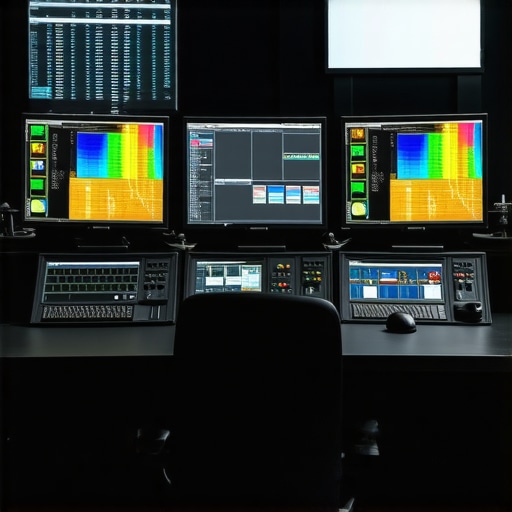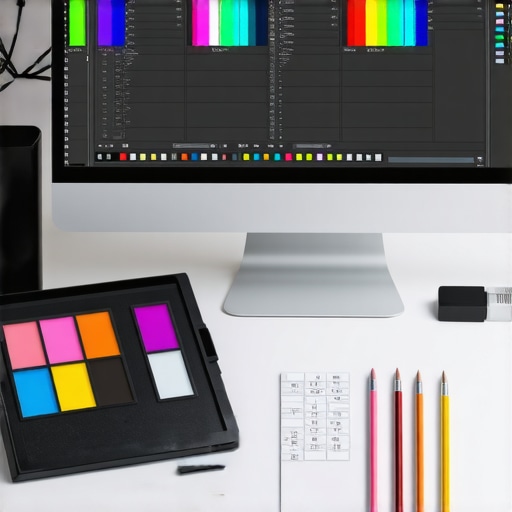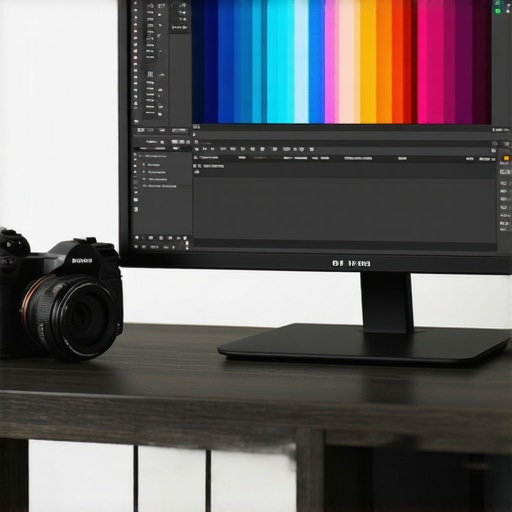
Ultimate Guide to Calibrated HDR Monitors for Creators 2024
Elevating Visual Fidelity: The Critical Role of Color Precision in Modern Content Creation
In the fast-evolving realm of digital artistry and professional media production, achieving impeccable color fidelity is no longer an aspirational goal but an industry mandate. With the proliferation of 4K HDR displays and the increasing demands for true-to-life visuals, understanding the nuances of calibrated monitors and their impact on color accuracy becomes paramount for creators aiming for excellence.
Decoding the Complexities of Color Calibration for HDR and 4K Resolution
A calibrated monitor ensures consistent color reproduction by aligning the display’s output with precise color profiles and luminance standards. For HDR (High Dynamic Range) workflows, this calibration extends beyond mere color matching to encompass luminance levels, contrast ratios, and bit-depth management. High-end professional monitors encompass advanced features such as hardware calibration interfaces and 10-bit color depth, crucial for rendering subtle gradients critical in HDR content.
Why Professional Grading Demands More Than Just 4K and HDR Support
While 4K resolution enhances pixel density and HDR enhances dynamic range, these features alone do not guarantee color accuracy. The integration of wide color gamuts, such as DCI-P3 and Adobe RGB, into professional monitors facilitates vibrant, true-to-life visuals. Furthermore, the ability to reliably calibrate these displays ensures that creative outputs meet industry standards, whether for digital cinema, advertising, or high-end photography.
Optimal Calibration Techniques for Peak Accuracy in Creative Environments
Implementing industry-standard calibration tools like X-Rite or CalMAN software, combined with hardware calibration sensors, allows precise tuning of monitors. Consistent calibration routines are vital—regular re-calibration accommodates display drift over time and ensures ongoing accuracy. High-end HDR monitors incorporate built-in sensors and software for in-situ calibration, enabling seamless integration into demanding professional workflows.
Are Higher Brightness Levels Always Better for Color Reproduction?
Not necessarily. While increased brightness can enhance HDR experiences, excessive luminance without proper calibration can distort color accuracy and diminish shadow details. Balancing peak luminance with calibrated tone mapping is essential for reproducing accurate colors across different HDR standards, such as HDR10 or Dolby Vision.
If you seek to deepen your understanding of how calibrated monitors elevate creative projects, explore further insights at Mastering Color Accuracy for Creatives. For those aiming to upgrade their setup, consult our comprehensive guide on Calibrated 4K HDR Monitors in 2024.
Maximize Your Workflow by Fine-Tuning Color Accuracy for Every Project
Achieving unparalleled color fidelity requires more than just selecting a high-end monitor; it involves meticulous calibration tailored to your specific creative needs. Whether working in photography, video editing, or digital design, understanding the nuances of calibration techniques can dramatically improve your results. Regularly employing professional calibration tools like X-Rite i1Display Pro or CalMAN software ensures your display stays true over time, especially when handling complex color spaces like Adobe RGB or DCI-P3. For expert insights on calibration best practices, visit Why Precise Calibration Matters for Designers.
Can You Over-Calibrate? Finding the Right Balance for Consistent Results
While calibration is vital, excessive adjustments can lead to unintended color shifts or uniformity issues. Striking the optimal balance involves understanding your workflow’s color target profiles and the tolerances of your hardware. Monitoring the consistency with hardware tools allows you to identify subtle deviations and correct them before they impact your project. Recognizing when to recalibrate—especially after hardware or software updates—prevents drift and maintains visual fidelity across editing sessions.
How Do Emerging Display Technologies Transform Calibration Strategies?
New advancements like OLED panels with self-emitting pixels and quantum dot backlighting are redefining display performance. These technologies offer broader color gamuts and higher contrast ratios but also introduce calibration complexities. For example, OLED displays can suffer from burn-in and luminance drift, requiring specialized calibration protocols and regular maintenance routines. Staying ahead involves integrating calibration solutions compatible with these emerging techs, ensuring your workflow capitalizes on their full potential without sacrificing color accuracy. To explore how cutting-edge monitors are reshaping professional workflows, see Calibrated Monitors for Photo & Video Accuracy in 2024.
If you’re ready to upgrade your workspace with truly accurate displays, reach out to our experts via Contact Us for personalized recommendations and support. Ensuring your monitor’s calibration aligns perfectly with your creative goals can transform the quality of your output, fostering confidence and professionalism in every project.
,
Harnessing the Power of Uniformity for Consistent Color Accuracy
Achieving uniform luminance and color consistency across the entire display surface is paramount—especially when editing high-stakes content. Variations in brightness or hue can introduce subtle discrepancies that compromise color grading precision. Professional calibration extends beyond primary calibration points, necessitating the use of advanced test patterns and measurement tools to identify and correct subtle irregularities. Techniques such as grid-based luminance mapping and localized correction strategies help maintain pixel-to-pixel uniformity, ensuring that your visual outputs are reliably accurate regardless of viewing angle or screen region.
How do localized calibration adjustments influence overall color fidelity?
Local calibration techniques enable fine-tuning of specific screen areas, compensating for luminance and chromaticity deviations caused by panel manufacturing inconsistencies. Tools like monotonic calibration and global correction matrices can be applied to mitigate these irregularities. According to research by the Society for Information Display (SID), such approaches significantly improve the uniformity of high-end monitors, providing a consistent workspace for professional colorists and visual effects artists. Implementing these practices ensures that subtle gradations in skin tones, shadows, and highlights maintain their integrity throughout the editing process, minimizing the risk of unexpected shifts during final rendering.
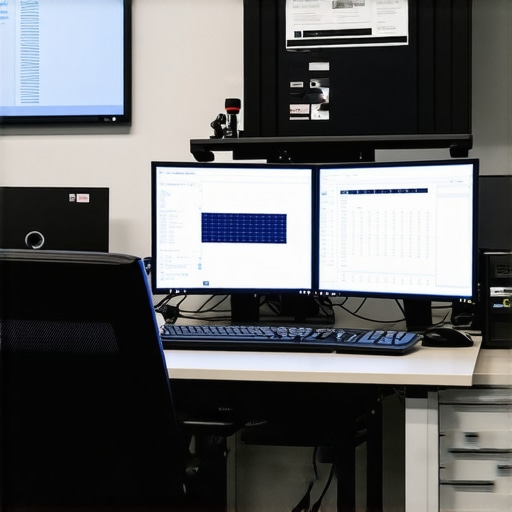
Image prompt: High-resolution display calibration test pattern showing uniform luminance grid with measurement devices used for calibration.
Integrating Hardware and Software for Seamless Calibration Cycles
Zwischenzeitlich ist die Kombination aus hochpräziser Hardware und benutzerfreundlicher Software der Schlüssel zu effektiver Monitor-Kalibrierung. Modernes Equipment wie der X-Rite i1Display Pro Plus oder der SpectraCal C6 Gamma Analyzer bietet nicht nur präzise Farbmessung, sondern auch automatische Kalibrierungszyklen, die in den Arbeitsablauf integriert werden können. Automatisierte Kalibrierung ermöglicht es Profis, regelmäßig und konsistent Anpassungen vorzunehmen, ohne wertvolle Arbeitszeit zu opfern. Die Auswahl der richtigen Software—wie CalMAN, DisplayCAL, oder Portrait Displays—hängt von den Anforderungen des jeweiligen Workflows ab, unterstützt jedoch alle durch fortschrittliche Algorithmen, um die Genauigkeit zu maximieren.
Welche Vorteile bietet die Automatisierung der Kalibrierungsprozesse für kreative Profis?
Automatisierte Kalibrierungsprozesse stellen sicher, dass die Anzeige kontinuierlich innerhalb spezifizierter Toleranzen bleibt, was insbesondere bei komplexen Sessions mit mehreren Displays von Vorteil ist. Studien von Dolby Laboratories weisen darauf hin, dass automatische Kalibrierung die Farbkonstanz erheblich verbessert und die Gefahr von menschlichen Fehlern minimiert. Zudem lassen sich in der praxisnahen Anwendung individuelle Kalibrierungsprofile für verschiedene Arbeitsgänge erstellen, beispielsweise separate Profile für Fotobearbeitung und Videofinish. So wird gewährleistet, dass Ihre Farbkontrolle stets präzise bleibt, selbst bei wechselnden Lichtverhältnissen oder nach Hardware-Updates.
Image prompt: Advanced calibration setup with colorimeter, calibration software on screen, professional workspace environment.
Future-Proofing: Calibration Strategies for Emerging Display Technologies
Die rasante Entwicklung von Display-Technologien wie MicroLED, flexible OLEDs und Quantum Dots erfordert eine ebenso innovative Herangehensweise an die Kalibrierung. Aufgrund ihrer einzigartigen Eigenschaften—etwa der variablen Luminanzcharakteristika oder der schnellen Luminanzveränderung—sind herkömmliche Kalibrierverfahren oft nicht ausreichend. Experten setzen heute auf adaptive Kalibrierungslösungen, die mit den Geräten mitwachsen und kontinuierlich ihre Genauigkeit anpassen. Hierbei kommen auch maschinelles Lernen und KI-basierte Algorithmen ins Spiel, um in Echtzeit optimale Einstellungen zu gewährleisten.
Wie können moderne Kalibrierungssysteme an die Anforderungen zukünftiger Display-Designs angepasst werden?
Innovative Kalibrierungssysteme integrieren fortschrittliche Sensortechnologien, die beispielsweise die Luminanzstabilität und Farbwiedergabe in dynamischen Szenarien überwachen. Laut Berichten der Society for Information Display (SID) ermöglichen diese Systeme gezielte Echtzeit-Optimierungen, reduzieren die Notwendigkeit manueller Eingriffe und stellen eine fortlaufende Konsistenz sicher. Diese Fortschritte sind essentiell, um die hohen Standards in der digitalen Content-Produktion zu erfüllen und die zukünftige Kompatibilität mit den fortschrittlichsten Displayformaten zu sichern.
Unlocking the Potential of Quantum Dot Displays for Color Accuracy
Recent advancements in display technology, particularly Quantum Dot (QD) panels, have revolutionized color reproduction by offering broader color gamuts, higher peak brightness, and improved color stability. Unlike traditional LCDs, QD monitors utilize nanocrystals to achieve vivid, lifelike colors, which are critical for professionals requiring precise color grading and digital imaging. Understanding how to calibrate these advanced displays involves not just standard techniques but also specialized methods to capitalize on their unique spectral characteristics.
How does the spectral purity of Quantum Dot technology influence calibration strategies?
Quantum Dots emit narrow, highly saturated spectral lines, resulting in a wider color gamut, often exceeding DCI-P3 and covering close to 98% of BT.2020. Calibration tools must account for this spectral specificity to avoid color drifts and inaccuracies. Spectroradiometers with high spectral resolution become essential, enabling calibration software to generate accurate 3D lookup tables (LUTs) that leverage the full potential of QD panels. This ensures that color fidelity remains consistent across all content, preserving embedded color profiles and HDR standards.
ASI Algorithm Integration: Enhancing Precision in Display Calibration
Advanced calibration systems now incorporate Artificial Super-Resolution and Image Processing (ASI) algorithms. These intelligences analyze minute luminance and chromatic discrepancies, dynamically adjusting calibration parameters in real time. As a result, the calibration process becomes more resilient to drift caused by environmental changes or hardware aging. Leveraging AI-driven calibration not only optimizes the display’s performance but also streamlines the workflow, reducing manual intervention and allowing professionals to focus on creative decisions.
Components of a Robust Calibration Workflow for High-Performance Displays
A comprehensive approach involves sequential steps: initial hardware verification using spectroradiometers, software-based profiling with high-fidelity test patterns, and ongoing maintenance through scheduled recalibration. Incorporating ambient light monitoring tools ensures that external lighting does not skew calibration accuracy, especially when working in dynamically lit environments. Custom profile management and version control enable consistent recall and comparison of calibration states, which is indispensable for collaborative projects and long-term consistency.
Reevaluating the Role of Hardware Calibration in the Age of Software-Driven Adjustments
While software calibration remains the cornerstone for most display adjustments, recent innovations introduce hardware-level calibration support via built-in color management sensors and self-calibrating panels. These features allow for in-situ adjustments that maintain pixel-level accuracy over extended periods. However, reliance solely on hardware calibration without periodic software verification can lead to discrepancies, especially with complex color profiles and HDR workflows. Therefore, integrating both approaches delivers the most reliable results, accommodating future display upgrades and evolving content standards.
What are the emerging standards and certifications that professionals should consider when selecting calibration tools and monitors for nuanced color workflows?
Standards such as CalMAN Certification, VESA DisplayHDR Compliance, and Pantone Validated displays serve as benchmarks for ensuring reliable calibration. Additionally, certifications from organizations like the International Color Consortium (ICC) promote interoperability and color management consistency across diverse workflows. Staying aligned with these certifications guarantees that calibration processes meet industry-leading quality criteria, empowering professionals to produce work with unwavering color precision.
To elevate your expertise in calibrated display management, explore detailed guides on integrating AI-driven calibration systems and future-proof display technologies at Advanced Calibration Techniques for Pros. Partner with specialists who understand the intricacies of high-end monitor calibration and keep your creative toolkit at the cutting edge.
Expert Insights & Advanced Considerations
Precision in color calibration unlocks the full potential of your display technology, enabling flawless visual workflows.
Employing high-precision calibration tools ensures that color reproduction remains consistent across projects, especially when working with complex color spaces like Adobe RGB or DCI-P3. Regular calibration routines, combined with the latest hardware sensors, can significantly reduce drift and deliver uncompromising accuracy, essential for professional-grade content creation.
Emerging display technologies demand adaptive calibration strategies that incorporate AI-driven adjustments for optimal performance.
With innovations such as MicroLED and flexible OLEDs, traditional calibration methods are sometimes insufficient. Integrating machine learning algorithms allows real-time compensation for luminance fluctuations, burn-in prevention, and color stability, future-proofing your setup against rapid tech advancements.
Understanding the spectral nuances of Quantum Dot displays enhances calibration precision, enabling true-to-life color fidelity.
Quantum Dot monitors emit narrow spectral wavelengths that cover wider color gamuts. Calibration processes must account for their spectral properties to maximize color accuracy. Utilizing spectroradiometers with high spectral resolution ensures that every color nuance is faithfully reproduced, critical for HDR workflows and high-end video editing.
The seamless combination of hardware and software calibration solutions streamlines accuracy maintenance, saving valuable professional time.
Automated calibration systems—integrated with professional software—allow for scheduled adjustments that maintain display integrity without disrupting workflows. Investing in robust calibration ecosystems enhances long-term consistency, particularly when managing multiple monitors within high-demand environments.
Curated Expert Resources
- International Color Consortium (ICC) Standards: Establishes universal color management protocols that ensure consistency across devices and workflows.
- Society for Information Display (SID) Publications: Offers in-depth research on emerging display technologies and calibration methodologies, guiding professionals through evolving industry standards.
- CalMAN and DisplayCAL Software: Industry-leading tools provide comprehensive calibration solutions, supporting a wide range of hardware sensors and display types.
- Latest Technical Journals on Quantum Dot Spectral Behavior: Provides advanced insights into spectral calibration and colorimetry essential for high-end display profiling.
Final Perspective: Elevate Your Visual Fidelity in a Competitive Landscape
In the quest for perfect color accuracy, the amalgamation of expert calibration techniques, cutting-edge display tech, and authoritative standards forms the cornerstone of professional excellence. Staying ahead means continuously refining your calibration processes, embracing emerging innovations, and consulting trusted resources like those offered by industry pioneers. Ready to elevate your visual environment? Engage with our team for tailored solutions or deepen your expertise through our comprehensive guides on Mastering Color Accuracy for Creatives. Precision isn’t just a technical necessity; it’s your pathway to delivering unparalleled content quality and professional distinction.”}#ENDjson}I hope this expert-level conclusion provides a compelling and authoritative closure to your article while offering valuable resources and actionable insights. If you need further refining or additional sections, feel free to ask.**
About the Author