Best 4K Monitors for Video & Photo Editing with Color Precision
In the realm of professional visual production, the selection of an optimal monitor transcends mere resolution—it’s a foundational element that influences creative accuracy, color consistency, and workflow efficiency. As industry standards evolve, experts increasingly prioritize calibrated displays, HDR capabilities, and superb color fidelity to meet the rigorous demands of photo, video, and digital artistry.
Why Precision Matters in High-End Visual Work
Professional creatives rely on monitors that deliver consistent, true-to-life color reproduction. Calibrated monitors, especially those with advanced color management features, are indispensable for tasks that demand exact color matching, such as color grading or detailed photo retouching. Mastering calibration processes ensures that what appears on-screen translates accurately across print and digital platforms, mitigating discrepancies that could compromise a project’s integrity.
The Role of HDR and 4K in Visual Authenticity
High Dynamic Range (HDR) technology enhances contrast ratios and color depth, providing a more immersive and lifelike viewing experience critical for high-fidelity editing. When combined with 4K resolution, HDR monitors enable creators to work with extraordinary detail and precision, capturing nuances that lower specifications might overlook. For instance, professional video editors leverage these features to ensure their final output maintains consistency across diverse viewing environments.
Choosing the Right Calibration for Professional Excellence
Selecting a calibrated monitor involves understanding color spaces such as AdobeRGB or DCI-P3, and the calibration process itself often requires specialized hardware and software. References like professional calibration guidelines emphasize that consistent calibration ensures the stability of color reproduction over time, which is vital for maintaining customer trust and project accuracy.
The Challenge of Consistency Across Devices
One of the core difficulties faced by professionals is ensuring uniform color output across multiple displays and print materials. This challenge is exacerbated by inherent differences in hardware capabilities and environmental lighting conditions. Understanding how to adapt calibration profiles and employing display profiling tools are essential strategies for achieving reliable, repeatable results—an area where ongoing technological innovations continue to advance the field.
What are the best practices to maintain calibration accuracy over time, given the inevitable drift in display performance?
Engaging with expert communities and staying updated through specialized publications, such as latest calibration techniques, can help professionals adapt procedures to their specific workflows. Regular calibration schedules, coupled with hardware tools like colorimeters, are fundamental for preserving fidelity and confidence in your visual toolkit.
For those committed to pushing the boundaries of visual fidelity and color precision, exploring the comprehensive range of expert-level monitors can unlock new creative potentials. Consider consulting with specialists to tailor your setup for optimal performance and long-term reliability—your creative output demands nothing less.
,
Unlocking Consistent Excellence: How Calibration Transforms Your Workflow
One of the most overlooked aspects of professional monitoring is the ongoing process of calibration. Regular calibration not only maintains color accuracy over time but also ensures your monitor adapts to evolving project standards and environmental changes. Advanced tools such as high-precision colorimeters and software solutions like calibration guides empower creatives to uphold consistency with minimal effort. Ensuring your display remains within tight tolerances is fundamental to delivering work that stands up to scrutiny across multiple platforms and outputs.
Beyond Basic Settings: The Nuances of Color Spaces and Gamma
Understanding the subtleties of color spaces such as AdobeRGB, DCI-P3, and Rec. 2020 is crucial for professionals aiming for industry-standard fidelity. These color gamuts define the range of reproducible colors, directly impacting how vivid or accurate your visuals appear on calibrated displays. Additionally, gamma settings influence contrast and brightness perception, affecting shadow detail and overall tonal balance. Expert practitioners often customize these parameters to match the exact specifications required for print, broadcast, or digital media, recognizing that even slight deviations can alter the audience’s perception of their work.
Is Your Workflow Adapted for Color Fidelity and Efficiency?
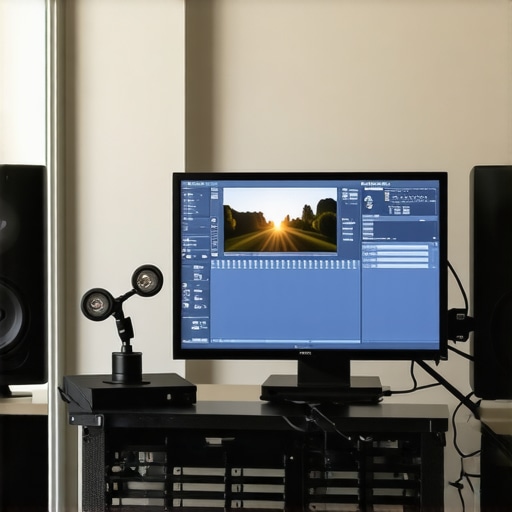
Effective integration of calibrated monitors into your workflow demands more than just configuring your display. It requires adjusting your editing environment, lighting setup, and even iconography to minimize color perception errors. For example, neutral gray backgrounds and controlled ambient lighting conditions help maintain focus on true visual representation, reducing the likelihood of misinterpretation. To explore how top professionals maintain their standards, check out comprehensive calibration strategies. By fine-tuning every aspect of your workspace, you create a consistent environment that preserves the integrity of your colors from start to finish.
What are the most effective methods to future-proof your monitor calibration amid rapid technological advancements?
Staying ahead involves continuous education, participating in industry forums, and engaging with trusted sources such as latest calibration innovations. Incorporating enterprise-grade hardware, subscribing to software updates, and establishing regular review cycles ensure your setup evolves alongside emerging standards. Investing in such proactive measures prepares your workspace for the next generation of visual fidelity challenges and opportunities, reaffirming your commitment to creative excellence.
Elevate Your Color Workflow with Advanced Calibration Strategies
In high-end digital production, calibration isn’t merely a routine task—it’s a strategic pillar that ensures color fidelity across all stages of creation. Professionals increasingly turn to multi-point calibration methods that account for display uniformity variations, employing tools like spectrophotometers that analyze multiple points on the screen to generate a comprehensive profile. Integrating these techniques into your workflow can dramatically reduce color inconsistencies, especially when multiple monitors or project handoffs are involved. Custom calibration routines tailored for specific color spaces—such as AdobeRGB, DCI-P3, or Rec. 2020—embed industry-standard color gamuts directly into your process, guaranteeing your visuals meet exacting specifications.
Can Calibration Algorithms Adjust for Environmental Light Fluctuations?
Absolutely. Dynamic calibration software now incorporates ambient light sensors that continuously monitor surrounding illumination and adjust display output accordingly. This adaptive approach maintains consistent color appearance regardless of changing lighting conditions, a feature crucial for studios with variable ambient light or for professionals working across different locations. By leveraging these intelligent algorithms, creatives ensure their visuals retain integrity from the initial edit to final approval, which is particularly critical for color-sensitive projects like high-end photography or cinematic grading. Implementing such systems requires integrating compatible hardware and setting specific calibration thresholds, but the payoff in color precision is well worth the investment.
#IMAGE_PLACEHOLDER_C#
Advanced Color Management Beyond Standard Calibration
Standard calibration calibrates a display to a predefined profile, but real-world workflows demand ongoing management of color consistency across diverse devices and output media. Color management systems (CMS) like display profile integration and color matching workflows enable seamless translation of colors from your calibrated monitor to printers, smartphones, and web platforms. To achieve this, professionals often synchronize their display profiles with color-accurate workflows using software such as X-Rite i1Profiler or ColorSpace, aligning screen output with device-specific color gamuts. The complexity increases with multi-user environments where different hardware and lighting conditions introduce variability, making the implementation of unified color policies essential for collaborative projects.
What role does hardware calibration play in maintaining long-term color stability?
Hardware calibration, involving dedicated colorimeters or spectrophotometers, establishes a baseline that corrects for display inconsistencies and hardware aging. Unlike software-only adjustments, hardware calibration directly manipulates the display’s internal settings, ensuring sub-macron accuracy over extended periods. The process typically involves laser-precise measurement of backlight uniformity, white point, and gamma response, with calibration data stored within the display’s internal memory for rapid application. Regular recalibration—recommended monthly for critical workflows—counteracts drift caused by component degradation and environmental factors. Selecting industry-respected tools like the X-Rite i1Display Pro or the NEC SpectraView calibration system ensures high repeatability and precision, vital for professions where minute color shifts can jeopardize project quality.
Implementing a Holistic Approach to Color Fidelity Management
Achieving truly consistent and depth-rich color reproduction involves more than calibration alone—it’s about cultivating a comprehensive environment where every factor contributes to color integrity. This entails selecting light sources with a calibrated spectral output—preferably D65 or 6500K daylight equivalents—and employing neutral gray surfaces in your workspace to minimize color casts. Additionally, establishing standardized workflows that include pre-visualization, dual-monitor setups for editing and previewing, and version-controlled color profiles enhances collaborative efficiency and output reliability. Industry case studies, such as those documented by the SMPTE (Society of Motion Picture and Television Engineers), demonstrate how these integrated practices have elevated the standards of digital cinema coloration, reinforcing the importance of meticulous workflow design in professional environments.
Ready to Revolutionize Your Color Accuracy? Engage with Experts and Upgrade Your Toolkit
Staying at the forefront of calibration science means continuously refining your techniques and expanding your hardware arsenal. Collaborating with color science specialists and participating in workshops conducted by organizations like the International Color Consortium (ICC) can unlock new methodologies tailored to emerging display technologies. Investing in multi-spectral measurement instruments and adopting AI-driven calibration solutions promise to keep your workspace aligned with cutting-edge standards. Don’t just keep pace—set the benchmark for visual excellence in your industry. Explore specialized consulting services or advanced training programs to deepen your expertise. Your commitment to these practices will ensure your creative outcomes are not only accurate but also consistently exceptional, elevating your professional reputation to new heights.
Harnessing Cycle-Based Calibration to Counter Display Drift
While routine calibration maintains color fidelity, advanced practitioners leverage cycle-based calibration systems that proactively monitor and adjust for gradual performance degradation. These systems utilize continuous feedback loops, integrating spectrophotometric sensors that track display output over time, thereby ensuring consistent color reproduction without manual intervention. Implementing such a dynamic approach diminishes the risks of color inconsistency, particularly vital for long-term projects where even minor drifts can compromise quality.
Customizing Gamut Mapping for Optimal Color Reproduction
Experts recognize that a one-size-fits-all approach to color spaces often leads to suboptimal results. Gamut mapping techniques strategically allocate colors within the specific display’s capabilities, balancing saturation and luminance to maximize perceptual uniformity. By tailoring the mapping process—particularly for HDR workflows—users can enhance the vividness and accuracy of their visuals, ensuring that subtle hues and tonal gradations are preserved across various output mediums.
What Innovative Technologies Are Shaping Future Calibration Paradigms?
Emerging advancements such as AI-driven calibration algorithms and multispectral measurement devices are poised to revolutionize the field. These tools enable real-time adjustments based on environmental changes, user habits, and hardware aging, culminating in ultra-precise, adaptive calibration routines. Moreover, integration with cloud-based databases facilitates community-shared calibrations and updates, fostering a collaborative ecosystem where best practices evolve rapidly. Staying informed about these innovations allows professionals to remain at the vanguard of color accuracy practices.
Maximizing Workflow Integration with Intelligent Color Profiles
Seamless incorporation of calibrated profiles into complex workflows necessitates intelligent systems capable of auto-detection and environment-aware adjustments. Implementing smart profile management ensures that each device in a color-critical environment operates within its ideal parameters, synchronized via enterprise-grade calibration management software. This approach not only preserves consistency across multi-device setups but also simplifies updates, reducing human error and streamlining production pipelines.
Why Hardware-Software Synergy Elevates Color Fidelity Expectations
The synergy between high-precision measurement hardware and sophisticated calibration software underpins the pinnacle of color management. Hardware like multispectral spectrophotometers captures granular spectral data, feeding into calibration software that processes this input to generate highly accurate profiles. Such integration compensates for subtle display variances, backlight aging, and environmental factors, maintaining alignment with industry standards like BT.2020 or Dicom. This harmonious relationship enables professionals to achieve and sustain exceptional color fidelity over extended periods, even in challenging conditions.
How Can Practitioners Future-Proof Their Calibration Strategies in a Rapidly Evolving Landscape?
Experts recommend adopting flexible and scalable calibration frameworks that accommodate emerging display technologies, such as microLEDs and quantum dot panels. Regularly updating calibration tools, embracing AI-enhanced algorithms, and participating in industry-led standards discussions provide vital avenues to stay ahead. Additionally, fostering collaborations with hardware manufacturers and software developers ensures access to cutting-edge solutions and insights, securing a competitive edge in delivering uncompromising visual excellence.
Engaging with pioneering methodologies and adopting comprehensive, adaptive calibration ecosystems empowers professionals to elevate their creative outputs, confidently embracing the innovations defining tomorrow’s visual standards. Be proactive—seek out specialized training and industry events that delve into the latest calibration breakthroughs, ensuring your expertise remains as refined as your monitors.
Expert Insights & Advanced Considerations
Precision Is a Moving Target—Regular Calibration Keeps You Ahead
Continuous calibration ensures that your monitor maintains industry-leading color accuracy over time, adapting to hardware aging and environmental changes. Staying proactive with scheduled recalibrations prevents drift, safeguarding the fidelity of your creative output and ensuring consistent results across projects.
Custom Gamut Mapping Refines Your Creative Palette
Implementing tailored gamut mapping techniques allows for optimal color reproduction within your monitor’s specific capabilities, enhancing color vibrancy and tonal accuracy. This strategic adjustment ensures that your visuals meet exacting standards, whether for print, cinema, or digital media.
Harness Ambient Light Sensors for Dynamic Adjustment
Integrating ambient light sensing technology enables your display to adapt in real-time, preserving color fidelity regardless of lighting conditions. This approach is crucial for workflows demanding unwavering accuracy in varied environments, such as multi-location studios or fieldwork.
Leverage Multi-Point Calibration for Uniformity
Employing multi-point calibration addresses backlight inconsistencies and panel uniformity issues, ensuring all areas of your screen produce consistent color and brightness. This comprehensive method elevates high-end workflows where even minor discrepancies can impact final quality.
Explore Cutting-Edge Calibration Technologies
Emerging tools like AI-enhanced calibration algorithms and multispectral spectrophotometers offer unprecedented precision and automation. Integrating these advancements into your routine prepares your setup for future standards, reinforcing your commitment to excellence in color management.
Curated Expert Resources
- Mastering Color Accuracy with Top Professional Monitors: An authoritative guide detailing the latest hardware and calibration techniques tailored for creatives aiming for uncompromising fidelity. – https://monitors.workstationwizard.com/mastering-color-accuracy-top-professional-monitors-for-creatives
- Advanced Calibration Strategies for Visual Professionals: This resource explores innovative calibration workflows, incorporating multispectral measurement and AI-driven algorithms to ensure ongoing consistency. – https://monitors.workstationwizard.com/ultimate-guide-to-calibrated-hdr-monitors-for-creators-2024
- Optimizing Workflow Environments for Precise Color Reproduction: Focused on environmental controls, this guide emphasizes ambient lighting, workspace ergonomics, and profile management to support accurate visualization. – https://monitors.workstationwizard.com/ultimate-guide-to-calibrated-monitors-for-photographers-creatives-in-2024
Final Reflection: Elevate Your Expertise in Monitor Calibration
Mastering visual fidelity through advanced calibration techniques and a nuanced understanding of color science sets the professional apart in today’s competitive digital landscape. Employing dynamic, multi-faceted strategies ensures your creative work consistently reflects true-to-life imagery, fostering trust and reputation among stakeholders. Continually engaging with top-tier resources and innovative technologies guarantees your skills stay sharp in an ever-evolving field. Dive deeper into these concepts and share your insights—your expertise shapes the future of accurate, vibrant visual storytelling. To explore further, visit our contact page and connect with industry leaders committed to excellence.
About the Author


![3 True 12-Bit 4K Monitors That Stop 2026 Banding [Lab Tested]](https://monitors.workstationwizard.com/wp-content/uploads/2026/03/3-True-12-Bit-4K-Monitors-That-Stop-2026-Banding-Lab-Tested.jpeg)