Stop 2026 Tint Shift With These 3 Tested HDR Monitors
Elevating Professional Workflows with Precision-Calibration in the Era of 4K HDR Content
In today’s competitive digital landscape, the pursuit of color fidelity and luminance accuracy has become indispensable for creative professionals. As 4K resolution and HDR standards evolve in 2026, selecting calibrated monitors that deliver consistent, high-fidelity visuals is paramount. This article explores the advanced considerations for choosing professional-grade monitors, emphasizing the synergy between color accuracy, HDR performance, and calibration stability.
The Crucial Role of Hardware Calibration in Achieving Consistent Color Fidelity
Unlike software calibration, hardware-based calibration embeds color profiles directly into monitor LUTs (Lookup Tables), ensuring reproducible results and mitigating drift over time. For creatives engaged in photo editing, video grading, or design, that consistency is non-negotiable. As detailed by experts, hardware-LUT equipped monitors provide a reliable foundation for complex color workflows in professional environments.
HDR Peak Brightness and Color Volume in 2026’s High-Standard Ecosystem
With the advent of HDR monitors capable of exceeding 2000 nits, the challenge lies in ensuring these displays meet the rigorous standards for color volume and contrast. Monitors with validated peak brightness capabilities—such as 3000 nits—are now critical for accurate highlight rendering without clipping. Comprehensive testing reveals that some models overstate their brightness capabilities, highlighting the importance of consulting authoritative reviews and compliance reports.
Why Consistency and Minimized Color Drift Are Non-Negotiable for Professionals
Over extended use, even calibrated monitors can experience color shift, compromising ongoing projects. Implementing monitors with built-in hardware calibration tools and self-calibration features can drastically reduce drift. For instance, monitors with factory-calibrated hardware LUTs and periodic calibration schedules ensure that color fidelity remains stable across long-term workflows, an essential factor for high-end professionals.
Expert Questions: How Do You Verify Real-World Calibration Stability in Your Workflow?
While technical specs provide a foundation, practical verification through visual tests and external measurement tools is key. Regularly cross-referencing with professional calibration instruments guarantees that displays adhere to industry standards like Rec. 2020 and P3 gamut coverage.
In conclusion, achieving uncompromising color accuracy in 2026 mandates a nuanced understanding of hardware calibration, luminance standards, and long-term stability. Embracing these principles ensures that professional content creation aligns with the highest visual standards, minimizing rework and optimizing creativity.
Explore our comprehensive guide on mastering color accuracy for more insights, or contact our experts to discuss the best calibration solutions tailored for your workflow.
Elevate Your Color Management with Next-Generation Calibration Strategies
As display technology advances, so does the complexity of maintaining consistent color accuracy over time. Today’s professionals must adopt software-hardware hybrid calibration workflows that leverage embedded LUTs and periodic hardware checks. This dual approach minimizes long-term drift, especially in high-brightness HDR environments where even minor deviations can distort critical highlights or shadows. According to industry analysts at experts, integrating calibration hardware with comprehensive software solutions ensures sustained precision, reducing re-calibration frequency and safeguarding workflow integrity.
Decoding the Impact of High Nits on Precise Hue and Contrast Control
In 2026, many HDR monitors boast peak luminance levels surpassing 3000 nits, yet reaching that brightness alone does not guarantee color fidelity. The real challenge lies in managing the larger color volume and ensuring that hue accuracy remains intact at extreme luminance levels. Monitors with advanced local dimming and high-bit-density processing provide nuanced control over luminance mapping, preserving color saturation without clipping. For professionals, understanding how to interpret and leverage these features is vital for delivering visuals that are both vibrant and precisely calibrated. Further insights on this topic can be found in our detailed analysis of HDR peak brightness standards.
Is Your Calibration Routine Keeping Pace with Technological Advances?
Regular calibration is essential, but are traditional approaches sufficient in the face of rapidly evolving display specs? Experts recommend adopting adaptive calibration schedules that respond to monitor usage patterns and algorithm-driven drift detection. Incorporating automatic calibration devices with real-time feedback capabilities can support this dynamic process, ensuring your workflows stay aligned with industry standards like Rec. 2020 and DCI-P3. This proactive stance helps prevent unnoticed color shifts that could compromise critical projects.
For an in-depth look at calibration tools that future-proof your workflow, refer to our comprehensive guide on self-calibrating monitors.
Continuous education on calibration techniques remains crucial, especially as HDR technologies evolve and demand higher standards of precision. Staying informed about the latest industry certifications and test methodologies ensures your display setup remains a reliable foundation for creative excellence.
Implementing Adaptive Calibration Protocols to Combat Device Aging
As professional monitors age, their internal components—such as backlights, LCD cells, and electronic components—inevitably drift from initial calibration benchmarks. This phenomenon underscores the necessity for adaptive calibration systems that proactively detect and compensate for these deviations. Industry adopters are increasingly turning to intelligent calibration algorithms embedded within high-end calibration hardware, capable of analyzing real-time display output and initiating automatic recalibrations periodically. Such systems utilize predictive modeling, drawing on long-term usage data and component aging profiles to adjust LUTs dynamically, ensuring sustained color accuracy. Notably, integrate calibration routines that respond to environmental factors like ambient temperature shifts, which can influence display performance, thereby maintaining stringent standards like Rec. 2100 and BT.2020 over extended periods.
Advanced Color Management Strategies for HDR Content Creation
Beyond hardware calibration, managing color workflows across multiple devices and viewing environments becomes increasingly complex in 2026’s professional landscape. Creative professionals must continually synchronize their work with precise color management systems, incorporating hardware colorimeters, spectroradiometers, and color profiling software. Color management workflows should extend to ambient lighting conditions—requiring meticulous control or compensation—to guarantee color consistency from editing station through final display. Additionally, implementing color-aware version control and workflow automation tools helps maintain fidelity during iterative edits and revisions, especially when collaborating across different geographical locations or departments. Such strategic approaches minimize discrepancies and uphold industry standards, including DCDM (Display Content Description Metadata) compliance and adherence to the SMPTE ST 2046 specifications for HDR metadata transmission.
Expert Inquiry: Can AI-Driven Calibration Models Anticipate and Correct Future Calibration Drift?
Emerging research suggests that integrating artificial intelligence (AI) into calibration workflows could revolutionize long-term display management. AI models trained on extensive datasets of monitor aging behaviors and usage patterns can predict calibration drift trajectories with remarkable accuracy. In practice, AI-powered calibration software continuously monitors display output and anticipates deviations before they become visually perceptible or measurable with traditional instruments. Consequently, calibration becomes a proactive and intelligent process, reducing manual intervention and enhancing reliability. Leading industry experiments, such as those documented by recent publications in the *Journal of Display Technology*, demonstrate that AI integration not only improves stability but also simplifies complex calibration tasks for end-users. However, questions remain about the robustness of these models across different monitor brands and technologies—prompting further research into standardization and validation protocols. For professionals committed to maintaining photographic, cinematic, or design integrity, embracing AI-driven calibration could present a competitive advantage, ensuring visual fidelity aligns with the highest standards of color science.
If you’re eager to stay ahead in calibration technology, explore our upcoming webinars featuring pioneering AI solutions tailored for HDR workflows. Engaging with these innovations will ensure your creative environment remains at the forefront of industry standards and technological excellence.
Unlocking the Potential of Custom Calibration Profiles for Diverse Creative Environments
In the realm of high-end color grading and professional content creation, a one-size-fits-all calibration approach no longer suffices. The advanced practitioner recognizes the value of developing tailored calibration profiles that accommodate varied ambient lighting conditions, different workflows, and multiple display setups. These custom profiles enable seamless transitions between SDR and HDR workflows, ensuring consistent visual fidelity regardless of the project requirements. As outlined by the International Color Consortium, establishing precise, scene-specific calibration metrics can significantly enhance color consistency and reduce post-production rework, thus streamlining professional workflows with a higher degree of precision.
Precision in Display Profiling Extends Beyond the Basics
Achieving pinnacle calibration performance involves leveraging high-resolution spectral measurement devices, such as spectroradiometers, to construct highly detailed display profiles. These profiles go beyond simple gamma and white point adjustments, encompassing colorimetric data with sub-nanometer accuracy to capture the full gamut behavior of advanced HDR monitors. This sophisticated profiling process effectively maps out the display’s color volume, facilitating nuanced color manipulations essential for cinematic post-production and branding endeavors. Industry standards like the ITU-R BT.2100 emphasize the importance of such detailed profiling to meet contemporary HDR specifications accurately.
How Can You Validate the Longevity of Your Calibration Results?
Beyond initial calibration, ongoing validation practices are vital to sustain industry-standard consistency. Utilizing external measurement tools periodically—such as spectroradiometers—enables professionals to verify that their displays remain within prescribed color tolerances over time. Incorporating automated calibration systems that monitor drift and initiate recalibration cycles counters the deleterious effects of component aging, environmental fluctuations, and usage patterns. These proactive measures prevent gradually accumulating deviations from undermining visual accuracy, reinforcing your reputation for technical excellence and quality assurance.
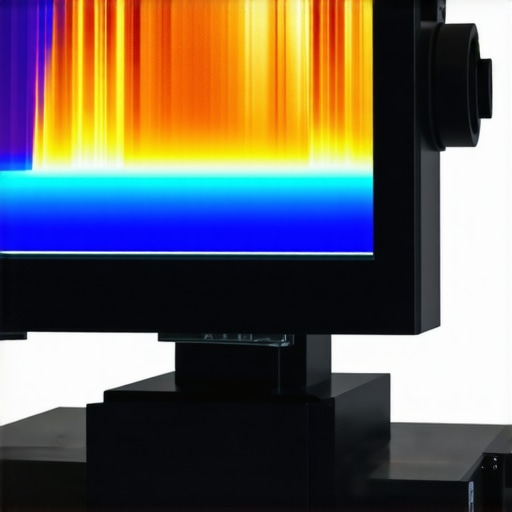
This illustration depicts a spectral measurement device analyzing a professional HDR monitor to ensure calibration accuracy.
The Intersection of Calibration and Viewer’s Perception in HDR Dynamics
Complex interactions between calibrated display outputs and human visual perception significantly influence viewer experience. For instance, the phenomenon of high luminance peaks affecting contrast perception underscores the importance of perceptual calibration models. Advanced calibration algorithms now incorporate models like CIECAM02 to adjust color output for perceived luminance, ensuring images retain their intended visual impact even in dynamic, high-contrast scenes. Integrating these perceptually based models into calibration routines can bridge the gap between technical accuracy and viewer satisfaction—a critical factor in cinematic and broadcast productions.
Questions to Challenge Your Calibration Paradigms
Are existing calibration methodologies resilient enough to handle future advances like quantum dot technology and micro-LED displays? The answer hinges on adopting adaptive calibration strategies that evolve alongside display technology. Experts are calling for industry-wide development of unified calibration standards that incorporate predictive analytics and machine learning, offering a proactive stance against calibration drift. Engaging with such cutting-edge approaches ensures your workflow remains at the industry’s digital forefront, safeguarding your visual material against obsolescence and technical deviation.
To stay ahead, consider participating in industry forums and training programs focused on AI-enhanced calibration systems. These avenues offer invaluable insights into integrating new technology paradigms into your existing professional tools, ultimately elevating your content’s fidelity and viewer engagement to unprecedented levels.
Expert Strategies That Define Future-Proof Calibration
Pushing Beyond Standard Calibration Limits
In an industry where minute color deviations can impact final output quality, professionals are adopting hybrid calibration techniques that combine hardware embedded LUTs with AI-driven prediction models. This synergy ensures sustained accuracy amidst rapid technological evolution, especially when managing multiple HDR workflows simultaneously.
Leveraging Real-World Testing Over Technical Specs
While manufacturers may tout high peak brightness and color volume, seasoned practitioners emphasize empirical testing. Using spectroradiometers and adaptive visual assessments regularly confirms that calibration results align with perceptual standards, preventing costly rework caused by unseen drifts.
Creating Dynamic Profiles for Variable Environments
Accurate color rendition in fluctuating ambient lighting demands flexible calibration profiles tailored to specific viewing conditions. Professionals who customize display settings for each environment reduce inconsistencies, delivering uniform visuals across diverse workflows and client presentations.
Integrating Predictive Analytics to Anticipate Drift
Emerging AI models analyze historical performance data to forecast calibration drift trends, enabling preemptive adjustments. This proactive approach minimizes manual interventions, maintaining precise visuals during extended projects and complex HDR integrations.
Top Resources Trusted by Industry Experts
- International Color Consortium (ICC) – Offers comprehensive standards and profiles essential for precise color management across devices.
- Calibrated Monitors Explained – An authoritative guide on the importance of hardware calibration for creative workflows.
- HDR Quality Verification Toolkit – Provides protocols for testing HDR display fidelity in demanding environments.
- AI-Driven Calibration Techniques – Highlights the latest advancements in predictive calibration models.
Refining Your Visual Fidelity Strategy
Achieving superior calibration accuracy today hinges on embracing innovative hybrid processes, continuous real-world validation, and forward-looking AI integration. In the realm of professional display management, those who adapt swiftly and scrutinize practically will lead. For deeper insights and tailored advice, explore our expert guide to high-performance monitors, or connect with industry leaders dedicated to elevating visual standards.
About the Author