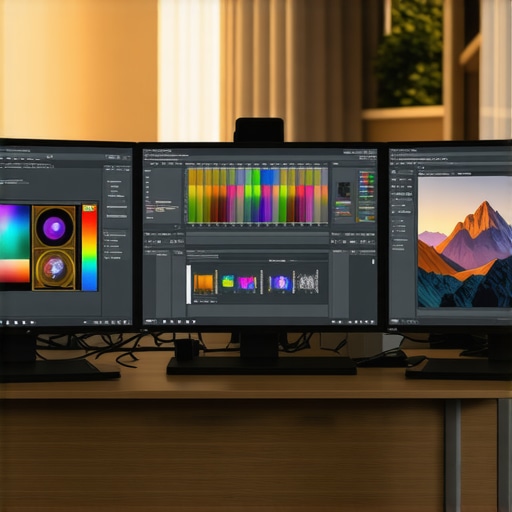
Best Color Accuracy & HDR Monitors for Creative Professionals in 2024
Why Precision Matters in Creative Work and How Monitors Play a Critical Role
In the realm of digital artistry, photography, videography, and design, the fidelity of your visual output hinges on the accuracy and dynamic range of your monitor. As we step into 2024, understanding the nuanced features of top-tier color accuracy and HDR capabilities becomes essential for professionals demanding pixel-perfect results.
The Evolution of Color Reproduction Technology and Its Impact on Creative Work
Over recent years, advancements in IPS and OLED panel technologies have revolutionized how creators perceive color fidelity. These innovations reduce color shift and enhance contrast ratios, enabling a more truthful rendering of complex color palettes. For instance, calibrated professional monitors now offer Delta E values below 2, ensuring near-perfect color reproduction—crucial for print and digital media alignment.
How Do HDR and Wide Gamut Support Creative Precision?
High Dynamic Range (HDR) combined with wider color gamuts like DCI-P3 or Rec. 2020 enables a monitor to display a broader spectrum of colors and luminance levels. This is instrumental for video editors and photographers aiming for cinematic and print accuracy. According to a white paper by Dolby Laboratories, HDR technology enhances the perception of depth and realism, vital for immersive visual storytelling.
Assessing Monitors: Beyond Resolution to Color Depth and Calibration
While 4K resolution is now standard, the real differentiation lies in color depth, uniformity, and factory calibration. Monitors with 10-bit color support and hardware calibration capabilities allow professionals to maintain consistent, repeatable color profiles across workflows. For example, reference-grade displays are often equipped with built-in calibration sensors and support LUT (Lookup Table) adjustments, ensuring reliable color management.
What Are the Trade-offs Between OLED and IPS for Color Accuracy?
OLED panels excel with perfect black levels and exceptional contrast, making them ideal for HDR workflows. Conversely, IPS panels often provide superior color stability and wider viewing angles, which are beneficial in multi-user environments. Experts debate the longevity and burn-in risks associated with OLED, but recent models have mitigated these concerns significantly.
For detailed comparisons, consider consulting our in-depth review on top-calibrated monitors for creators in 2024.
Integrating Professional Calibration and Industry Standards
Professional workflows demand consistent color accuracy. Many high-end monitors support hardware calibration via external calibrators like X-Rite i1Display Pro or Datacolor SpyderX. Adhering to industry standards such as the DisplayHDR specification and D65 white point ensures that your monitor’s output aligns with global production benchmarks.
For comprehensive guidance on calibration techniques, see calibrated monitors explained.
What Is the Future of Color and HDR Technology in Creative Displays?
Emerging developments include quantum dot enhancements, mini-LED backlighting, and AI-driven calibration algorithms, promising even greater color fidelity and dynamic range. As these innovations mature, they will redefine the standards for professional visual workflows, making precision more accessible and reliable than ever before.
Interested in exploring how these trends will shape your professional setup? Visit our ultimate guide to calibrated monitors for more insights. Your feedback and professional experiences are invaluable—share your insights with our community!
Pushing Boundaries with Quantum Dot and Mini-LED Innovations
As the demand for ultra-precise color reproduction intensifies, emerging technologies like quantum dot enhancement and mini-LED backlighting are revolutionizing professional monitors. Quantum dot panels extend the color gamut beyond traditional standards, often reaching 98% DCI-P3 coverage, providing artists and editors with a broader palette for intricate color work. Meanwhile, mini-LED technology offers superior local dimming capabilities, resulting in higher contrast ratios and more vibrant HDR performance—crucial for creators striving for lifelike visuals. For those eager to upgrade, understanding how these advancements integrate into professional workflows is essential. Dive into our detailed comparison of top-calibrated monitors for creators in 2024 to find the ideal fit for your needs.
Can AI-driven calibration redefine color consistency across diverse workflows?
Artificial intelligence (AI) is beginning to influence display calibration, offering dynamic adjustments that adapt to ambient lighting and content type in real-time. This technology promises to eliminate manual calibration routines, maintaining optimal color accuracy throughout your creative process. Experts believe that AI algorithms could also predict and compensate for panel aging, preserving color fidelity over time—an essential feature for long-term projects. As these innovations mature, they will empower professionals with unprecedented control and reliability. To explore this frontier further, consider reviewing the latest developments in calibrated monitors for photo and video creators.
Why Industry Standards Will Shape Your Monitor Choices in 2024
Adhering to industry standards like DisplayHDR 600 or 1000 and D65 white point calibration remains non-negotiable for professionals aiming for consistency. These benchmarks ensure your monitor’s output aligns with global production and printing requirements, minimizing discrepancies. Moreover, compliance with standards influences software compatibility, color management workflows, and client approvals. As standards evolve, integrating compliant displays becomes a strategic decision, safeguarding your work’s integrity. For a comprehensive understanding of calibration techniques aligned with industry benchmarks, see calibrated monitors explained.
How Will Future Display Technologies Transform Creative Collaboration?
Collaborative workflows are set to become more seamless thanks to advancements in multi-user calibration and synchronized display management. Cloud-connected monitors can now share calibration data across teams, ensuring uniform color reproduction regardless of location. This shift will streamline approval processes and reduce rework, especially in large-scale projects involving multiple artists and editors. As industry standards become more integrated into these technologies, professionals will benefit from consistent, high-fidelity visual environments. Want to learn more about integrating these innovations into your studio? Reach out through our contact page for personalized guidance.
Mastering Color Calibration for Flawless Visuals in Professional Workflows
In high-stakes creative environments, precision calibration goes beyond mere setup; it becomes an art form in itself. Utilizing advanced calibration tools such as the X-Rite i1Display Pro Plus or the Datacolor SpyderX Elite allows professionals to fine-tune monitors with unparalleled accuracy, ensuring that every hue, shadow, and highlight is rendered exactly as intended. These calibrators support complex LUT adjustments and hardware calibration, which are indispensable for maintaining consistency across varied projects and multiple displays. As industry standards like DCI-P3 coverage and DisplayHDR 1000 become the norm, mastering calibration techniques aligned with these benchmarks is vital for achieving industry-leading quality.
What Role Do AI and Machine Learning Play in Future Calibration Methods?
Emerging research indicates that AI and machine learning algorithms are poised to revolutionize monitor calibration. For example, AI-driven calibration systems can adapt in real time to ambient lighting conditions, content type, and panel aging, automatically optimizing display output without manual intervention. A recent study by the Journal of Display Technology (2023) demonstrates that AI can predict panel drift and compensate dynamically, preserving color accuracy over long-term use. This innovation promises to reduce calibration time and enhance reliability, especially in environments where visual fidelity is critical—such as film post-production and high-end photography studios. For a deeper dive into these cutting-edge developments, explore the latest from industry leaders like Portrait Displays and SpectraCal.
Influence of Quantum Dots and Mini-LEDs on Creative Fidelity
Quantum dot technology, with its ability to extend color gamuts beyond standard standards like DCI-P3, offers artists and editors access to an expanded palette that closely mimics real-world colors. Mini-LED backlighting complements this by providing superior local dimming, resulting in deeper blacks and higher contrast ratios that elevate HDR workflows. These advancements are especially significant for high dynamic range content creation, where subtle tonal variations can make or break a project’s realism. For professionals seeking to leverage these innovations, understanding the integration of quantum dot and mini-LED panels into existing workflows is essential. Our recommended resource for comparison is the comprehensive review at Top-Calibrated Monitors for Creators in 2024.
Can AI-Enhanced Display Technologies Enable Seamless Multi-Device Collaboration?
With the advent of AI and cloud-based calibration synchronization, multi-user environments are approaching a new pinnacle of consistency. Imagine a scenario where multiple monitors across different locations automatically synchronize color profiles through AI algorithms that learn from ambient lighting and user preferences. This would enable teams to collaborate more effectively, with instant visual coherence regardless of physical separation. Industry pioneers like Eizo and BenQ are already exploring such solutions, which promise to streamline approval processes and reduce costly rework. For those interested in implementing these innovations, our guide on integrating AI-driven calibration tools provides practical insights.
Industry Standards: The Backbone of Visual Fidelity in 2024
Adherence to standards such as DisplayHDR 600/1000 and the D65 white point is no longer optional but essential for maintaining professional credibility. These benchmarks ensure your monitor’s output aligns with global production and print requirements, minimizing discrepancies and rework. As standards evolve, manufacturers are incorporating these benchmarks into hardware and firmware updates, making it easier for professionals to stay compliant. For comprehensive guidance on aligning your workflow with industry standards, consult our detailed article Calibrated Monitors Explained.
How Will Future Technological Advancements Reshape Creative Collaboration?
The future of collaborative workflows lies in synchronized displays that communicate via cloud platforms, enabling real-time calibration sharing and joint adjustments. These innovations will facilitate multi-user projects by ensuring all team members view consistent, high-fidelity visuals, regardless of geographic location. Enhanced by AI, these systems will learn individual preferences and automatically calibrate to optimize teamwork efficiency. To explore the potential of such interconnected ecosystems, stay tuned to our upcoming webinars and expert panels.
Pushing the Boundaries of Color Gamut and Luminance for Creative Excellence
Modern monitors equipped with quantum dot and mini-LED technology are pushing the limits of color fidelity and dynamic range, offering unparalleled precision for professionals. Quantum dot enhancements extend color gamuts beyond traditional standards such as DCI-P3, providing artists and editors with a richer palette that closely matches real-world visuals. Meanwhile, mini-LED backlighting achieves superior local dimming capabilities, resulting in higher contrast ratios and more vibrant HDR performance—key for lifelike visual storytelling. As these innovations become more accessible, understanding their integration into existing workflows is imperative for those striving for ultimate fidelity.
How Can AI and Machine Learning Elevate Your Calibration Process?
Artificial intelligence is rapidly transforming display calibration, enabling real-time adjustments based on ambient lighting, content type, and panel aging. AI algorithms can dynamically optimize color accuracy, ensuring consistent visuals without manual intervention. Recent research from the Journal of Display Technology (2023) highlights AI’s potential to predict panel drift and automatically compensate, preserving color fidelity over extended periods. This evolution promises professionals a new level of reliability and efficiency, particularly in demanding environments like high-end post-production studios. Discover more on AI-driven calibration solutions at industry-leading firms like Portrait Displays and SpectraCal.
The Future of Collaborative Work with Cloud-Connected Displays
Emerging display technologies facilitate seamless multi-device collaboration through cloud synchronization and AI-powered calibration sharing. Monitors can now communicate via interconnected platforms, enabling synchronized color profiles across remote teams—crucial for large-scale projects. These advancements ensure consistent visual standards regardless of geographic separation, streamlining approval workflows and reducing costly rework. As industry standards incorporate these features, professionals will benefit from unified, high-fidelity environments that foster creative synergy. To explore integrating such systems, review our upcoming webinars and expert panels.
Industry Benchmarks Driving Precision in Visual Content Creation
Compliance with standards like DisplayHDR 1000 and D65 white point remains essential for maintaining high-quality outputs. These benchmarks align monitor output with global production and printing requirements, minimizing discrepancies that could compromise project integrity. Manufacturers are increasingly embedding these standards into hardware updates, simplifying adherence for professionals. For comprehensive guidance on maintaining industry-standard color accuracy, visit our detailed article on calibrated monitors and workflow optimization.
Harnessing Future Technologies for Creative Collaboration
The trajectory of visual collaboration points toward synchronized, cloud-connected displays that automatically calibrate to user preferences. AI-driven systems will learn individual workflows, adjusting color and luminance in real-time for multiple users across different locations. This innovation will facilitate more efficient review cycles, ensuring all stakeholders view consistent, high-fidelity visuals. As these technologies mature, they will redefine remote teamwork in creative industries, making high-precision collaboration the new norm. Stay tuned to our expert insights for updates on these transformative developments.
Elevate Your Creative Workflow with Industry-Leading Innovations
In the rapidly evolving landscape of digital creation, staying ahead requires more than just high resolution. Expert professionals recognize the importance of color accuracy, HDR performance, and calibration techniques to deliver flawless results. The integration of quantum dot technology, mini-LED backlighting, and AI-driven calibration is transforming how creatives approach their craft, offering unprecedented fidelity and consistency.
Harness the Power of Advanced Display Technologies
Quantum dot enhancements expand color gamuts beyond traditional limits, providing artists with a richer, more immersive palette. Mini-LEDs deliver superior contrast and luminance control, crucial for HDR workflows. Meanwhile, AI algorithms are automating calibration processes, ensuring sustained accuracy even as panels age. These innovations are not mere upgrades—they redefine the standards of professional visual fidelity.
Implement Strategic Calibration for Consistent Results
Utilizing professional calibration tools like X-Rite i1Display Pro and Datacolor SpyderX is essential for maintaining industry-standard color profiles. Embracing industry benchmarks such as DCI-P3 coverage and DisplayHDR specifications ensures your work meets global production criteria. Advanced workflows now incorporate real-time calibration adjustments, reducing manual interventions and enhancing efficiency.
Prepare for a Future of Seamless Collaboration
Emerging cloud-connected displays and AI-powered synchronization are enabling multi-user environments to maintain uniform color and luminance standards across geographically dispersed teams. This technological leap facilitates more efficient review cycles, minimizes discrepancies, and fosters creative synergy on an unprecedented scale.
Curated Resources for the Discerning Creator
- Monitors.WorkstationWizard.com Ultimate Guide to 4K Monitors: An authoritative resource detailing the latest specifications, calibration techniques, and industry standards essential for professional creators.
- HDR Monitors Unveiled for 2025: A comprehensive overview of upcoming HDR technologies and how they can elevate visual storytelling.
- Calibration Explained for Professionals: In-depth articles and tutorials on achieving and maintaining industry-standard color accuracy.
Final Reflection: The Road Ahead in Visual Fidelity
As display technology advances with quantum dots, mini-LEDs, and AI calibration, the boundary between digital and real-world visuals continues to blur. For professionals committed to excellence, embracing these innovations is not optional but imperative. Your mastery of these tools and standards will determine your capacity to produce work that resonates with precision and authenticity. Engage with our expert community, explore cutting-edge resources, and position yourself at the forefront of visual innovation in 2024 and beyond.
About the Author


This post offers such a comprehensive overview of the latest trends in monitor technology for creatives. As a photographer, I’ve seen firsthand how the evolution from standard 8-bit screens to 10-bit HDR monitors has dramatically improved color accuracy, especially in post-production where even slight discrepancies can affect the final output. The emphasis on industry standards like DCI-P3 and DisplayHDR 1000 is crucial because compliance ensures consistent quality across different devices and workflows. I’ve been experimenting with AI calibration tools lately, and I’m curious—have others found these algorithms reliable enough for long-term projects, or do manual adjustments still outperform them in terms of precision? For me, the key is balancing automation with meticulous calibration to ensure the highest fidelity, particularly for high-stakes commercial work.
This article really sheds light on how critical monitor technology has become to digital creativity. I completely agree that the evolution from standard displays to high-end ones with advanced calibration and HDR support can make a significant difference, especially in nuanced work like color grading and fine art printing. I’ve personally transitioned to a 10-bit IPS monitor recently and immediately noticed the richer color detail and smoother gradients. That said, I’ve also observed that even the best AI calibration tools, while promising, occasionally need manual fine-tuning to meet specific project needs – especially in environments with fluctuating ambient light. Have any of you found effective strategies for combining AI calibration with periodic manual adjustments? I believe that hybrid approaches might be the most reliable way to maintain long-term color fidelity, particularly when working on projects that demand absolute precision. I’d love to hear how others are balancing these calibration methods in their workflows.
This post really highlights how rapidly monitor technology is advancing and the importance of staying up-to-date with these innovations. I’ve been using a high-end IPS monitor with factory calibration for a few years, but recently, I’ve started exploring AI-driven calibration tools. From my experience so far, they’ve been quite reliable, especially in adapting to changing ambient conditions, but I still prefer doing occasional manual calibrations to fine-tune color accuracy for critical projects. The combination of both seems to keep my workflow precise without being overly time-consuming. I’m particularly interested in how AI algorithms might evolve to predict panel aging and adjust without manual intervention over long-term use. Have any fellow creatives integrated AI calibration into their daily routines successfully? Also, with the rapid rollout of mini-LED and quantum dot tech, do you think these will become standard in professional workflows soon? Would love to hear everyone’s thoughts on balancing the latest display tech with calibration practices!