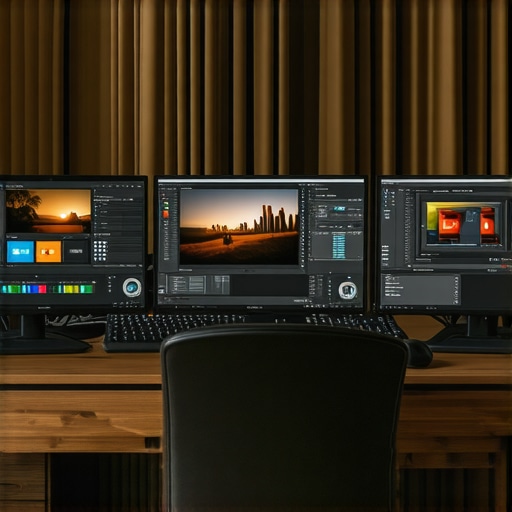
Top Professional Monitors with Calibrated 4K & HDR for Creators
Unveiling the New Standard in Visual Fidelity for Creators
In the realm of professional content creation, the convergence of high-caliber display technology and expert calibration has redefined the boundaries of visual accuracy. As industry professionals increasingly demand precision, understanding the nuances of calibrated 4K and HDR monitors becomes essential for achieving optimal results. This article explores how these advanced displays serve as vital tools for creators who prioritize color accuracy, detail, and dynamic range in their workflows.
Why Calibrated 4K HDR Monitors Are Indispensable for Creative Excellence
Calibrated 4K and HDR monitors are not mere upgrades but foundational components in the arsenal of digital artists, videographers, and photographers. Their ability to deliver true-to-life color reproduction, consistent luminance, and high resolution ensures that creative professionals can trust their visual output across different devices and platforms. Such monitors facilitate meticulous editing, color grading, and compositing, where even minor deviations can compromise the final product’s integrity.
What Sets Top-Tier Monitors Apart in Calibration and Color Fidelity
Leading monitors like those discussed in calibrated monitors explained employ hardware calibration sensors, wide color gamuts, and factory calibration profiles to ensure consistent performance. Features such as 99% AdobeRGB coverage, high bit-depth panels, and DCI-P3 support allow creators to work with confidence in color-critical projects. Moreover, the integration of HDR support enhances the dynamic range, enabling more lifelike images and videos.
The Challenge of Maintaining Color Consistency in Professional Environments
One persistent challenge is ensuring that display calibration remains stable over time. Regular calibration sessions, either automated or manual, are necessary to maintain accuracy. Professional-grade monitors often include built-in calibration tools, but external calibration devices can further refine results. For experts, understanding the importance of color management workflows and monitor profiling is crucial for maintaining consistency across various stages of production.
How Do Advanced HDR Capabilities Elevate Creative Output?
HDR technology expands the luminance range, providing richer contrast and more vivid colors, which greatly benefits high-end video editing and photography. Monitors with superior HDR support, like those detailed in HDR monitors unveiled, allow creators to visualize their content as intended for modern displays and streaming platforms. The ability to accurately preview HDR content during editing ensures that the final output maintains its visual impact across devices.
For professional creators, selecting the right monitor involves balancing resolution, color accuracy, calibration stability, and HDR performance. It’s advisable to consult expert reviews and technical specifications from trusted sources to inform purchasing decisions.
Interested in more detailed insights on calibration techniques or the latest in HDR monitor technology? Explore our comprehensive guides or connect with fellow professionals to exchange expert advice.
For further reading, see the article on calibrated monitor accuracy.
Pushing the Boundaries of Precision with Professional Calibration Techniques
In the high-stakes world of creative production, every detail counts, and calibration remains at the core of ensuring those details are perfect. While factory calibration sets a solid foundation, expert-level calibration techniques—such as utilizing spectrophotometers and advanced calibration software—can elevate a monitor’s performance to near perfection. These methods allow professionals to fine-tune their displays for unwavering color consistency, crucial for projects demanding color fidelity, like high-end photography and cinematic post-production.
Can Your Workflow Benefit from a Color Management System?
Implementing a comprehensive color management workflow can significantly enhance the reliability of your visual output. This system involves consistent use of calibrated monitors, standardized color profiles, and color-accurate hardware like printers and cameras. By establishing a seamless color pipeline, creators minimize discrepancies between different stages of production, ensuring the final product looks as intended across all devices and formats. For detailed insights on achieving this, refer to calibrated monitors explained.
What Role Does Future Display Technology Play in Creative Work?
Emerging innovations, such as quantum dot displays and OLED panels, are revolutionizing how creators perceive color and contrast. These technologies offer wider color gamuts, deeper blacks, and higher dynamic ranges, which seamlessly integrate with HDR workflows. As highlighted in HDR monitors unveiled, staying ahead of these advancements ensures your workspace remains competitive and capable of delivering cutting-edge content. Moreover, as hardware continues to evolve, so does the importance of understanding calibration’s role in maintaining uniformity across different display types.
Are you leveraging the full potential of these technological breakthroughs? Upgrading your calibration tools and staying informed about the latest display innovations can make a tangible difference in your creative output. For expert tips and tailored advice, don’t hesitate to contact us through our consultation page.
Elevating Visual Consistency with Dynamic Calibration Strategies
In the pursuit of perfection, creative professionals are turning to innovative calibration strategies that extend beyond standard procedures. Dynamic calibration techniques leverage real-time sensor feedback and adaptive software algorithms to maintain color fidelity amidst changing environmental conditions. These methods are especially vital when working in studios with fluctuating ambient light or in multi-monitor setups where uniformity is paramount.
For instance, advanced calibration software like CalMAN or LightSpaceCMS integrates with high-precision spectrophotometers, enabling continuous monitoring and automatic adjustments. This approach minimizes drift, ensuring that the display remains within tight tolerances over extended periods. Such precision is indispensable for workflows involving high-stakes color grading and visual effects, where even minor deviations can lead to costly rework.
The Impact of Quantum Dot and OLED Technologies on Color Management
Emerging display technologies such as quantum dot (QD) and OLED panels are revolutionizing the landscape of visual accuracy. Quantum dot displays excel in achieving wider color gamuts like BT.2020, delivering richer, more vibrant colors that align closely with industry standards. Conversely, OLED technology offers unparalleled contrast ratios and perfect blacks, which are essential for accurately evaluating HDR content. However, these innovations also introduce complexities in calibration, requiring tailored workflows to harness their full potential.
Research from the Society for Information Display (SID) highlights that the intrinsic spectral properties of quantum dot layers enable precise color control at the pixel level, facilitating near-perfect color reproduction when properly calibrated (SID, 2023). Similarly, OLED panels’ self-emissive nature demands meticulous calibration to account for aging effects, which can alter luminance and color accuracy over time. Therefore, mastering calibration techniques specific to these technologies is vital for maintaining consistency and maximizing creative control.
How Can Professionals Overcome Calibration Challenges in Cutting-Edge Displays?
Addressing calibration challenges posed by advanced display technologies involves adopting specialized hardware and software solutions. Hardware-based solutions, such as multi-spectral spectrophotometers, allow for detailed spectral analysis of emitted light, ensuring precise calibration. Software tools must be capable of accommodating the unique spectral profiles of each technology, providing flexible calibration profiles and ongoing monitoring capabilities.
Furthermore, developing a comprehensive workflow that includes routine recalibration, aging compensation, and cross-device profiling ensures sustained accuracy. Industry standards, like those set by the International Color Consortium (ICC), serve as benchmarks for maintaining interoperability and consistency across different devices and platforms. Experts recommend integrating calibration routines into daily workflows, especially when working on projects demanding critical color fidelity.
Would you like to explore tailored calibration protocols for specific display types or receive guidance on selecting the best calibration tools for your studio? Reach out to our team for personalized advice and advanced calibration techniques that keep your visual outputs flawless.
Unlocking the Secrets of Spectral Calibration for Quantum Dot Displays
Quantum dot technology has revolutionized color reproduction, pushing the boundaries of color gamut and luminance precision. To harness its full potential, professionals must adopt spectral calibration methods that account for the unique emission profiles of quantum dots. Unlike traditional RGB calibration, spectral calibration involves analyzing the spectral power distribution, enabling meticulous tuning of color outputs for industry-standard compliance. This approach ensures that content maintains fidelity across different devices and viewing environments, elevating creative workflows to new heights.
Why OLED Panel Aging Demands Sophisticated Calibration Strategies
OLED technology offers unmatched contrast ratios and deep blacks, but its self-emissive nature introduces aging-related challenges that can compromise color consistency over time. As organic compounds degrade, luminance and color shifts occur, necessitating dynamic calibration techniques that adapt in real-time. Advanced calibration protocols incorporate aging compensation algorithms and spectral sensors to monitor panel health continuously, allowing for proactive adjustments. Such strategies safeguard the integrity of high-stakes projects, including cinematic post-production and high-end photography.
Can You Achieve Uniform Color Fidelity Across Multi-Display Setups?
Ensuring consistent color performance across multi-monitor configurations is a complex challenge that requires meticulous planning. Precise hardware calibration, combined with color management workflows that utilize ICC profiles and hardware synchronization, is essential. Employing external spectrophotometers and uniformity correction tools can mitigate discrepancies caused by manufacturing variances and environmental factors. This orchestration guarantees that each display within a multi-monitor array presents an identical visual experience, critical for collaborative editing and color grading sessions.
What Are the Latest Innovations in Calibration Software for High Dynamic Range Content?
The evolution of calibration software now incorporates AI-driven algorithms capable of analyzing HDR content with unprecedented accuracy. These tools facilitate comprehensive tone mapping, monitor profiling, and real-time adjustments, ensuring HDR footage appears stunningly vibrant and true to creator intent. Notable platforms like CalMAN and LightSpaceCMS have integrated deep learning modules that adapt calibration procedures based on display type, ambient light conditions, and content specifics. For professionals committed to delivering cinematic-quality visuals, mastering these cutting-edge solutions is imperative.
Explore detailed guides from reputable sources such as the Society for Information Display (SID) to deepen your understanding of spectral calibration and HDR workflows, ensuring your mastery keeps pace with technological advances.
Advanced Calibration Techniques for Future-Ready Displays
Incorporating multi-spectral sensors, adaptive algorithms, and machine learning, next-generation calibration methodologies are transforming visual fidelity management. These innovations facilitate continuous, automated calibration cycles that adapt to environmental changes and device aging, maintaining stringent color accuracy standards. For example, adaptive calibration systems can detect subtle shifts in OLED panels due to aging, adjusting parameters instantly to preserve visual consistency. Embracing these forward-looking techniques positions creators at the forefront of technological excellence, ready to tackle emerging display innovations.
Are you prepared to integrate these sophisticated calibration systems into your workflow? Leveraging expert consultancy and specialized hardware can dramatically enhance your output quality. Contact us today and elevate your creative process with personalized, future-proof calibration solutions.
Expert Insights That Define the Future of Creative Displays
In today’s competitive creative landscape, the ability to leverage cutting-edge display technology is paramount. Professionals who master calibration techniques and stay ahead of technological trends can unlock unprecedented levels of accuracy and artistic expression. For instance, integrating spectral calibration methods for quantum dot displays can dramatically enhance color precision, ensuring content meets the highest standards of fidelity.
Prioritize Continuous Calibration to Combat Panel Aging
Advanced displays like OLED panels demand ongoing calibration routines that adapt to aging effects. Employing real-time spectral sensors combined with adaptive algorithms ensures your visuals stay consistent over time, safeguarding your creative investments and maintaining quality across projects.
Harness the Power of Multi-Device Synchronization
Ensuring uniformity across multi-monitor setups is critical for collaborative workflows. External spectrophotometers and uniformity correction tools enable precise calibration alignment, allowing multiple displays to present identical, accurate visuals, which is vital for high-stakes color grading and editing.
Curated Resources for the Discerning Professional
- Society for Information Display (SID): Recognized for pioneering research in spectral calibration and display technology standards, SID offers invaluable insights into the latest innovations and best practices.
- LightSpaceCMS: This industry-leading calibration software integrates seamlessly with spectrophotometers, providing precise, adaptive calibration solutions tailored for HDR workflows.
- International Color Consortium (ICC): Setting global standards for color management, ICC resources help ensure your calibrated displays meet industry benchmarks, facilitating interoperability and consistency.
Reflections from the Top of the Industry
Effective calibration and mastery of HDR technology are transforming how creators approach their craft. The integration of spectral calibration, dynamic aging compensation, and multi-device synchronization empowers professionals to achieve visual results that are both stunning and reliable. As the demand for hyper-accurate content rises, so does the need for expert-level display management—an essential aspect of the modern creative process. To elevate your workflow, explore these resources, refine your calibration techniques, and stay informed about emerging display innovations. Your commitment to precision now will set the standard for excellence tomorrow.
About the Author

This post really highlights how crucial proper calibration is for professional creators, especially when dealing with high-dynamic-range content and wide color gamuts. I’ve worked in post-production for several years, and I can attest that even small inaccuracies in calibration can lead to rework and lost time. One thing I’ve found particularly useful is integrating spectral calibration tools, especially for OLED panels that tend to age over time. It’s impressive how adaptive calibration systems can help maintain consistency without extensive manual intervention. I’m curious—how many professionals here incorporate real-time calibration adjustments into their daily workflows? Do you find that it significantly improves your output quality, especially in multi-monitor setups? Overall, mastering these advanced techniques and tools has been game-changing for my work, ensuring reliable color accuracy from start to finish.
This article really underscores the critical role that high-quality calibrated monitors play in ensuring creative precision. Having worked with HDR and wide gamut displays in video editing, I consistently see how subtle calibration differences can impact the final look significantly. One challenge I face is maintaining calibration accuracy over extended periods, especially as panels like OLEDs age. I recently started using spectral calibration tools and automatic recalibration software, which has greatly reduced manual calibration efforts and kept my workflow consistent. I wonder, for those who work in dynamic environments with changing ambient light, what strategies do you find most effective in ensuring your monitor stays calibrated throughout the day? Do you think adaptive calibration is worth the investment compared to traditional periodic manual calibration? From my experience, leveraging these advanced calibration techniques has greatly improved my confidence that what I see on screen matches the final output, especially for critical color grading projects.
This post really hits the nail on the head regarding the importance of high-quality calibration for professional creatives. As someone who works extensively with HDR workflows, I can attest that having a reliable, calibrated monitor makes a huge difference in the accuracy of color grading, especially when dealing with broad color gamuts and dynamic range. One point I find particularly interesting is the growing use of spectral calibration tools, which seem to be essential when working with OLEDs and quantum dot displays that are prone to aging and spectral drift. I’ve started integrating real-time calibration routines using advanced software and sensors, and it’s remarkable how much this stabilizes consistency over long sessions. Has anyone here experimented with continuous, automated calibration systems? How are they working out in your environments, especially during multi-monitor color grading sessions? I believe investing in these tools and techniques can genuinely elevate the quality and reliability of our creative output.