Best HDR & Color Accuracy Monitors for Creative Professionals
Elevate Your Creative Workflow with Expert-Grade HDR and Color-Accurate Displays
In the realm of professional content creation, seamless visual fidelity is paramount. As an industry expert, I recognize that the choice of a monitor transcends mere resolution or size; it embodies the foundation for precise color grading, HDR workflows, and meticulous editing. With advancements in display technology, understanding how to select the best HDR & color accuracy monitors for creative professionals becomes a strategic pursuit, crucial for achieving industry-standard outputs and maintaining a competitive edge.
Why Color Fidelity and HDR Performance Define Creative Excellence
High dynamic range (HDR) and color accuracy are not optional luxuries but essential tools for professionals aiming for perfection. HDR enhances contrast and luminance, allowing creatives to visualize their work as it will appear across diverse media platforms. Meanwhile, color accuracy ensures that what you see on screen translates faithfully to print or broadcast. According to a recent white paper by DisplayMate, monitors with high color gamut coverage and precise calibration capabilities significantly improve workflow reliability, especially in critical color grading stages.
What Advanced Features Distinguish Top-Tier Creative Monitors?
Leading monitors in 2024 integrate several sophisticated features: 10-bit panel technology for smooth gradations, wide color gamuts like Adobe RGB and DCI-P3, factory calibration for immediate accuracy, and high peak brightness for HDR workflows. Additionally, hardware calibration tools and uniformity compensation are vital for maintaining color consistency across the display. It’s essential for professionals to verify that their chosen monitor supports these features to avoid costly rework or compromises in output quality.
What Are the Critical Considerations When Investing in a Color-Accurate HDR Monitor?
Choosing the optimal display involves balancing several factors: panel technology (IPS vs. OLED), resolution (4K or higher), connectivity options, and calibration capabilities. IPS panels are preferred for their color consistency and viewing angles, but OLEDs offer superior contrast ratios and black levels—crucial for HDR content. The integration of hardware calibration tools ensures ongoing accuracy, reducing the need for external calibration devices. For a comprehensive comparison, I recommend reviewing the detailed insights in this guide on professional monitors for creatives.
Balancing Cost and Performance in Professional-Grade Displays
While high-end monitors come with significant investment, the cost is justified by the gains in productivity and output quality. Opting for models that offer factory calibration, extensive color gamut support, and HDR capabilities ensures longevity and relevance in a fast-evolving industry. For those seeking a pragmatic approach, consider tiered options that meet essential criteria without unnecessary frills, while still delivering industry-standard precision.
For further insights into the latest HDR technologies and calibration techniques, explore the comprehensive analysis at HDR monitors unveiled in 2025. Your investment in a calibrated, color-accurate monitor is not just a purchase; it’s a commitment to excellence in visual storytelling.
Are you interested in sharing your experience with professional-grade monitors or seeking tailored recommendations? Feel free to reach out to our expert team for personalized guidance.
Push the Boundaries of Visual Precision with Cutting-Edge Techniques
In the dynamic world of professional content creation, staying ahead requires not only state-of-the-art technology but a deep understanding of how to leverage it. Advanced features like local dimming, quantum dot technology, and high bit-depth processing are redefining what it means to achieve true color fidelity and HDR excellence. For instance, monitors utilizing quantum dot technology, such as those explored in this guide on top-calibrated monitors, offer wider color gamuts and better luminance control, essential for nuanced color grading and HDR workflows.
How Do Emerging Technologies Impact Your Creative Precision?
Emerging display innovations are not just about higher resolution; they fundamentally alter how professionals interpret visual data. OLED displays, with their ability to turn off pixels completely for perfect blacks, significantly elevate contrast ratios, which is especially beneficial for HDR editing. Meanwhile, advancements in hardware calibration tools—integrated directly within monitors—allow for seamless, on-the-fly adjustments, ensuring consistent accuracy over time. This evolution makes it critical for creatives to evaluate the underlying technology behind their monitors, as highlighted in this comprehensive calibration guide.
What Role Does User Experience Play in High-End Display Selection?
Beyond raw technical specs, the user experience—such as ergonomic adjustments, anti-reflective coatings, and tactile calibration controls—profoundly influences workflow efficiency and satisfaction. A monitor that combines superb technical performance with intuitive controls reduces fatigue and accelerates the creative process. It’s vital for professionals to consider these factors when investing in their workspace, ensuring the display complements their workflow rather than complicates it.
For professionals seeking detailed comparisons, reviewing the latest insights in the ultimate guide to 4K monitors can provide clarity on how resolution impacts precision and productivity.
Can Your Workflow Benefit from a Tailored Calibration Strategy?
Implementing a customized calibration regimen tailored to your specific work needs can dramatically enhance output quality. For example, photographers and video editors might prioritize color accuracy and gamma consistency, while graphic designers focus more on color gamut and luminance. Using professional calibration tools like the X-Rite i1Display Pro, combined with hardware-supported calibration, ensures your monitor maintains peak performance over time. An insightful resource to deepen your calibration knowledge is this guide on calibrated monitors.
Refining Your Visual Impact with Cutting-Edge Calibration Techniques
Achieving true color fidelity and HDR performance goes beyond selecting a high-end monitor; it demands an ongoing commitment to calibration. Advanced calibration techniques, such as 3D LUT (Lookup Table) calibration, enable professionals to tailor their display output with surgical precision. This process involves creating detailed color maps that correct for any deviations, ensuring that every hue, luminance, and contrast level aligns with industry standards.
For instance, high-end calibration devices like the X-Rite i1Pro 2 or the Calibrite ColorChecker Display Pro facilitate complex calibrations, including gamma adjustments, white point correction, and luminance scaling. These tools, coupled with professional calibration software like CalMAN or LightSpace, allow creatives to establish a baseline that guarantees consistent color output across different sessions and projects.
Furthermore, integrating calibration workflows into your daily routine ensures sustained accuracy. Regular calibration—monthly or quarterly—becomes essential, especially in environments where ambient lighting or display aging might cause drift. This disciplined approach safeguards your workflow’s integrity and guarantees that your color grading, retouching, or compositing remains precise over time.
What Are the Benefits of Hardware Calibration Versus Software-Only Adjustments?
Hardware calibration directly adjusts the monitor’s internal look-up tables, providing a more accurate and stable calibration compared to software-based adjustments alone. Hardware calibration maintains the original capabilities of the display, including its peak luminance and color gamut, without relying solely on graphics card modifications, which can sometimes be less precise. This method is especially vital for HDR workflows, where luminance and contrast fidelity are paramount.
According to a comprehensive study by Color Management Guide, hardware calibration results in better uniformity and reduced color shifts over time, ensuring that your visual output remains consistent and compliant with standards like Rec. 709, DCI-P3, or Adobe RGB.
Embracing these advanced calibration techniques is a fundamental step for professionals striving to elevate their creative output. It transforms a good monitor into a trusted creative partner, capable of delivering reliable, industry-standard results that stand the test of time.
Embrace the Future with Emerging Display Technologies for Creative Precision
Emerging display innovations continue to redefine what’s possible in professional visualization. MicroLED technology, for example, promises unparalleled contrast, brightness, and longevity, rivaling OLEDs but with improved durability and energy efficiency. MicroLED displays utilize self-emitting pixels similar to OLEDs but with inorganic materials that resist burn-in and degradation, making them ideal for long-term studio use.
Meanwhile, advances in quantum dot-enhanced LCDs are pushing the boundaries of color volume and luminance. These displays can produce wider color gamuts and higher peak brightness levels, critical for HDR workflows demanding high luminance and color accuracy simultaneously. As noted in recent research published by SID Display Week, these innovations contribute significantly to the next generation of professional monitors, providing tools that meet the most demanding creative needs.
Additionally, the integration of AI-driven calibration and image processing is beginning to influence how professionals maintain display accuracy. AI algorithms can automate calibration routines, predict display drift, and suggest optimal adjustments in real-time, minimizing downtime and maximizing productivity. This convergence of hardware and intelligent software represents a paradigm shift, empowering creatives to focus more on their craft than technical maintenance.
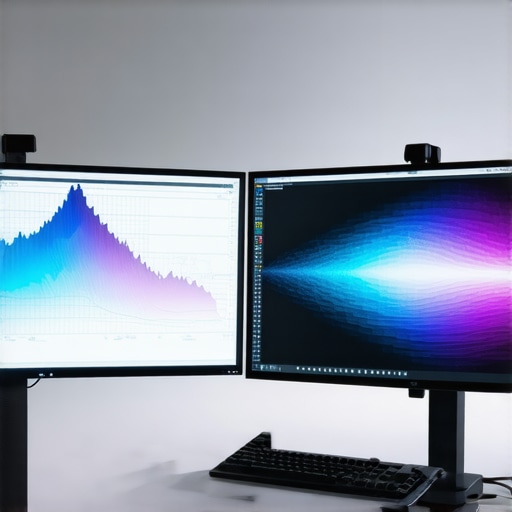
How Will AI and MicroLEDs Shape the Next Era of Creative Display Technology?
Artificial intelligence and MicroLED technology are poised to revolutionize the landscape of professional visualization. AI-driven calibration tools will become more intuitive, enabling even non-technical users to achieve and maintain peak display performance effortlessly. Simultaneously, MicroLEDs will offer unprecedented levels of brightness, contrast, and longevity, making them the gold standard in high-end creative environments. Together, these innovations promise a future where visual fidelity is not just achievable but seamlessly integrated into the creative workflow, pushing the boundaries of what professionals can accomplish. To stay ahead, it’s essential to keep abreast of these technological trends and consider how they can be integrated into your creative toolkit.
Harnessing the Power of AI-Driven Calibration for Flawless Color Fidelity
In the pursuit of impeccable visual accuracy, integrating artificial intelligence into calibration workflows represents a quantum leap. AI algorithms can analyze display performance in real-time, automatically adjusting settings to maintain industry standards like Rec. 2020 and DCI-P3. This proactive approach minimizes manual intervention, reduces calibration drift, and ensures consistent results across projects. An authoritative resource on this emerging trend is this comprehensive AI calibration guide from Color Management Guides.
Why MicroLEDs Are Set to Transform Creative Visualization
MicroLED technology, with its inorganic self-emitting pixels, promises unparalleled contrast, brightness, and longevity, positioning itself as the future of professional displays. Unlike OLEDs, MicroLEDs resist burn-in and degradation, making them ideal for intensive editing environments. Their ability to deliver higher luminance levels while maintaining deep blacks expands creative possibilities, especially in HDR workflows. Recent insights from SID Display Week highlight these innovations’ significance for high-end production studios.
Will MicroLEDs Make OLED Obsolete for Creative Professionals?
While OLEDs currently dominate high-end monitors due to their superior contrast and response times, MicroLEDs are rapidly closing the gap with their durability and scalability. Experts predict that within the next few years, MicroLEDs will surpass OLEDs by offering even better luminance control and color uniformity, fundamentally reshaping the landscape of professional display technology. Stay informed by following updates from leading display research institutions and industry pioneers to leverage these advancements effectively.
To stay ahead in the competitive creative industry, embracing these technological innovations and integrating them into your workflow is essential. Explore the latest trends and tools to elevate your visual storytelling to unprecedented heights.
Innovative Calibration Techniques Elevate Your Creative Output
Beyond basic calibration, advanced methods like 3D LUT calibration enable meticulous control over color accuracy and tonal mapping. These techniques involve creating detailed color lookup tables that correct for device-specific deviations, ensuring your output aligns with precise standards. Using professional tools such as the X-Rite i1Pro 2 or the Calibrite ColorChecker Display Pro, combined with software like CalMAN or LightSpace, empowers creatives to achieve consistent, industry-grade results. Regular calibration sessions—monthly or quarterly—are vital to maintaining precision, especially in dynamic lighting conditions or with aging displays.
What Are the Advantages of Integrating AI in Calibration Protocols?
AI-enhanced calibration automates routine adjustments, predicts drift trends, and recommends optimal calibration schedules, freeing professionals from tedious manual processes. This integration not only saves time but also enhances accuracy, especially in complex workflows involving multiple displays or HDR content. According to this expert analysis, AI-based systems are increasingly becoming indispensable for maintaining color consistency across demanding production environments.
Designing Ergonomic and Intelligent Creative Environments
The user experience extends beyond technical specs, encompassing ergonomic design, anti-reflective coatings, and intuitive controls. An ergonomically optimized monitor reduces fatigue during long editing sessions, while anti-reflective coatings mitigate ambient light interference. Touch-sensitive calibration controls and customizable interfaces streamline workflows. High-quality displays with these features foster a more productive, comfortable environment, enabling creatives to focus entirely on their craft.
For insights into ergonomic workspace optimization, consult resources like this detailed guide.
Future-Proof Your Workflow with Emerging Technologies
Emerging display innovations such as quantum dot-enhanced LCDs and self-emitting MicroLEDs are redefining visual fidelity standards. Quantum dot technology expands color volume and improves luminance efficiency, critical for HDR workflows demanding high luminance and precise color reproduction. Meanwhile, AI-driven calibration tools and adaptive display technologies will soon enable real-time adjustments, ensuring your workflow remains accurate amidst changing ambient conditions or display aging. According to this industry report, these advancements will be integral to next-generation creative monitors.
Staying informed and adaptive to these technological shifts will enable professionals to maintain a competitive edge and produce work of unparalleled quality. Embrace these tools today to future-proof your creative processes and elevate your visual storytelling capabilities.
Expert Insights & Advanced Considerations
Push the Limits of Color Gamut Coverage
High-end monitors now support expansive color gamuts like DCI-P3 and Rec. 2020, enabling creatives to visualize their work with unprecedented precision. This technological evolution demands that professionals stay updated on calibration techniques to harness these capabilities fully, ensuring that their output remains consistent across media.
Embrace Hardware Calibration for Consistency
Hardware calibration tools such as the X-Rite i1Display Pro or Calibrite ColorChecker are essential for maintaining color fidelity over time. These devices create detailed 3D LUTs that correct for display deviations, crucial for HDR workflows where luminance and contrast are critical for visual storytelling.
Integrate AI-Driven Calibration Solutions
Artificial intelligence is transforming calibration routines, offering real-time adjustments and predictive drift management. This innovation minimizes manual intervention, maximizes accuracy, and helps maintain industry-standard color profiles effortlessly, especially in dynamic production environments.
Prioritize Uniformity and Ergonomics
Uniformity compensation ensures consistent color and luminance across the entire screen, vital for color grading. Ergonomic design features like adjustable stands and anti-reflective coatings improve workflow comfort, reducing fatigue during long editing sessions and boosting productivity.
Stay Ahead with Emerging Display Technologies
Emerging MicroLED and quantum dot-enhanced LCDs promise higher brightness, better contrast, and longer lifespan. These innovations are set to redefine professional displays, offering solutions that combine durability with exceptional image quality, essential for future-proofing your creative setup.
Curated Expert Resources
- DisplayMate: Renowned for in-depth display performance analysis, essential for understanding advanced HDR and color capabilities.
- X-Rite: Industry leader in calibration hardware and software solutions, critical for maintaining color accuracy.
- SID Display Week: The main industry conference showcasing breakthroughs like MicroLED and quantum dot technology, vital for staying informed about future trends.
- CalMAN & LightSpace Software: Professional calibration tools that enable precise color management and LUT creation, indispensable for high-end workflows.
- Color Management Guides: Authoritative resources on calibration techniques, AI integration, and industry standards for professional display calibration.
Final Expert Perspective
In the rapidly evolving landscape of HDR and color accuracy, staying at the forefront requires a strategic blend of cutting-edge technology and expert calibration practices. Mastering these aspects ensures your creative output not only meets but exceeds industry standards, elevating your work to new heights. Engage with advanced resources, experiment with emerging display innovations, and prioritize calibration precision to build a truly future-proof creative environment. Your journey into excellence begins now—are you ready to lead with confidence and innovation in your visual storytelling? For more insights, explore our comprehensive guides and connect with industry experts to refine your expertise further.
About the Author