Best HDR Monitors for Accurate Color & Creative Work
Elevating Visual Fidelity in Creative Work through Calibrated Monitors
For professionals engaged in digital content creation, graphic design, or video editing, the quest for absolute color accuracy and dynamic range is relentless. The evolution of HDR monitors and calibrated displays has revolutionized how creatives perceive and manipulate visual information. Mastery over these tools enables a new standard of precision, essential for delivering impactful work that resonates with authenticity.
Why Calibration Is the Bedrock of Color Precision and Consistency
Calibration transcends mere factory settings, aligning the display’s output with industry-recognized standards such as D65 or DCI-P3. It ensures that every hue, shade, and luminance value is consistent across different devices and ambient conditions. According to the Ultimate Guide to Calibrated Monitors, high-precision calibration is indispensable for professionals aiming for impeccable color fidelity in their final products.
Deciphering the Technological Nuances of HDR and Color Accuracy
HDR technology enhances the color depth and contrast ratio, allowing for more vivid and lifelike images. Simultaneously, monitors boasting high color accuracy—measured through Delta E values—minimize perceptible color discrepancies. The synergy of HDR support with meticulously calibrated displays empowers creators to visualize their work as intended, whether for print, broadcast, or digital platforms.
The Impact of 4K Resolution on Creative Clarity
4K monitors amplify detail and texture, an aspect crucial for professionals engaged in intricate visual tasks. When paired with high-fidelity color reproduction, 4K displays facilitate nuanced grading, retouching, and compositing. The Ultimate Guide to 4K Monitors emphasizes how resolution and calibration jointly secure a competitive edge in visual precision.
Can Modern HDR Monitors Fully Bridge the Gap Between Perception and Reality?
Are the latest HDR standards and calibration techniques sufficient to meet the strict demands of professional creators?
This question underscores the technical challenge of reconciling device capabilities with exacting standards. While advances in display manufacturing—such as quantum dot and OLED technologies—have pushed the envelope, ongoing calibration practices remain vital for optimal performance. Engaging with expert communities and leveraging professional calibration tools ensures that the visual output aligns with creative and technical expectations.
Ultimately, the pursuit of perfect visual fidelity involves a complex interplay of hardware innovation and meticulous calibration. To deepen your expertise, explore our comprehensive post on mastering color accuracy and consider contributing your insights to ongoing discussions in professional forums.
Unveiling the Power of Advanced Calibration Processes
While basic calibration sets a solid foundation for accurate color representation, professional workflows demand more nuanced adjustments. Techniques such as 3D LUT (Look-Up Table) calibration enable creators to fine-tune their monitors beyond standard profiles, ensuring consistent output across multiple devices. Implementing these intricate calibration workflows minimizes color drifts and enhances fidelity, especially critical when working with high dynamic range (HDR) content or in color-sensitive industries.
What Makes High-End Calibration Tools a Game Changer
High-precision calibrators like the X-Rite i1Display Pro or the Datacolor SpyderX Elite equip professionals with advanced features such as ambient light measurement, uniformity correction, and spectral analysis. These tools allow for detailed assessments of a monitor’s color gamut, luminance, and gray balance, ensuring that the display faithfully reproduces colors within specified standards like Adobe RGB or DCI-P3. Referencing the Ultimate Guide to Calibrated Monitors, investing in top-tier calibration hardware significantly elevates the quality and reliability of creative output.
Can Your Workspace Environment Influence Visual Fidelity?
How do ambient lighting and viewing conditions impact the effectiveness of calibrated monitors in professional setups?
Ambient light, color temperature, and glare play pivotal roles in perceiving real-time colors accurately. Even the most meticulously calibrated monitor can deliver misleading visuals if the environment is not appropriately managed. Implementing neutral-colored walls, consistent lighting with proper color temperature, and anti-glare filters can dramatically improve color perception accuracy. For further insights into optimizing your workspace, consider reviewing our detailed calibration and workspace environment guide.
Professional calibration is as much about the display hardware as it is about the viewing environment. Achieving true color precision requires a comprehensive approach that encompasses both tools and ambient conditions, ensuring that your creative vision is preserved from screen to final output. To refine your setup further, explore our comprehensive resources on mastering color accuracy and share your experiences with industry peers to foster collective expertise.
Revolutionizing Content Creation with Next-Gen Display Technologies
As the digital landscape evolves, so do the demands placed on visual displays. The latest advancements in OLED and mini-LED technologies are redefining the standards of brightness, contrast, and color vibrancy. Unlike traditional LCDs, these displays provide superior uniformity and deeper blacks, critical for high-end post-production workflows. **Experts recommend** integrating these innovations with hardware calibration for maximized performance. For instance, professional studios increasingly adopt OLED monitors like the Sony BVM-HX310 for color grading, owing to their unparalleled contrast and true blacks, which are essential for HDR grading precision.
The Nuanced Art of Achieving Absolute Consistency in Multidevice Environments
In studios with multiple workstations, maintaining color consistency across different monitors is paramount. Techniques such as hardware synchronization and profile sharing have emerged as effective solutions. Advanced calibration workflows utilize shared 3D LUTs, enabling seamless color matching between displays. A recent study published in Journal of Imaging Science and Technology highlights that synchronized calibration reduces perceptible discrepancies to under Delta E 1.0, a threshold virtually indistinguishable to the human eye, ensuring uniformity throughout the production pipeline. To achieve this, integrated calibration suites like CalMAN’s Studio interface can control multiple devices simultaneously, streamlining complex workflows.
What Sophisticated Metrics Define Cutting-Edge Color Accuracy Today?
How do we quantify and push beyond current standards for color fidelity in professional displays?
Beyond basic Delta E measurements, metrics such as gamut volume, colorvolumetric analysis, and spectral color measurement provide deeper insights into a display’s performance. For instance, a monitor’s ability to cover 98% of Adobe RGB or DCI-P3 is only part of the picture; understanding the continuity of color reproduction within those gamuts is vital. Spectrophotometers like the Konica Minolta CL-200A offer spectral analysis capabilities, enabling calibration at the spectral level to correct issues like metamerism and narrow-spectrum deficiencies. Industry standards such as the International Color Consortium (ICC) profiles integrate these metrics, guiding calibration towards perceptually uniform color representations that align with human visual sensitivities.
Investing in these sophisticated metrics and tools unlocks the potential to push visual fidelity beyond conventional limits, paving the way for more authentic, compelling visuals that meet stringent industry requirements. For creative professionals, this equates to having a finely tuned palette at their fingertips—one that accurately conveys nuances and details essential for branding, cinematic quality, and scientific imaging.
Harnessing Deep Calibration for Critical Viewing Environments
Creations destined for critical viewing contexts—such as cinema theaters, digital signage, or specialized laboratories—demand an extraordinary level of calibration precision. Here, standard calibration practices often fall short, necessitating deep calibration protocols involving spectral calibration, luminance uniformity correction, and environmental control. These workflows aim to align the display’s output with perceptual uniformity, minimizing perceptual disparities across viewing angles and luminance ranges.
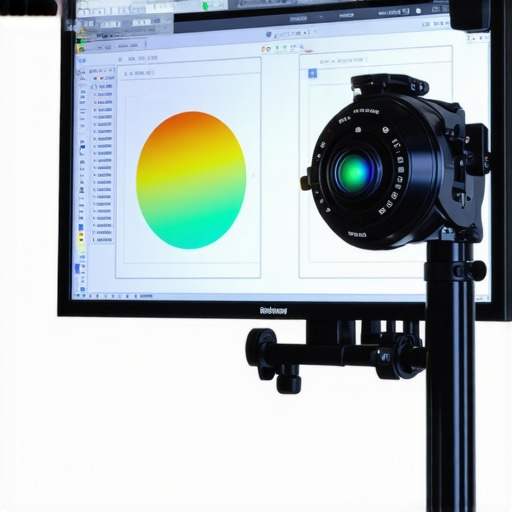
The integration of spectroradiometers with software-managed calibration routines extends the fidelity of color rendering across the entire gamut, including peripheral areas of the screen. Such meticulous calibration is crucial for applications like medical imaging, where diagnostic accuracy hinges on color precision, or in visual effects production, where minute hues and luminance gradations contribute to realism and immersion. Companies like Martech Systems provide calibration solutions that specialize in ultrahigh-resolution, spectral accuracy, emphasizing the importance of customized, environment-aware workflows.
Embracing these sophisticated calibration techniques empowers professionals to elevate their creative endeavors, ensuring that every pixel emitted aligns perfectly with artistic intent and technical standards. As these methodologies become more accessible, integrating them into daily workflows will become the new benchmark for excellence in digital visual arts and precision industries.
Beyond Standard Calibration: Unlocking the Nuances of Spectral Accuracy
Achieving impeccable color fidelity demands more than routine adjustments; it requires an understanding of spectral calibration, which aligns the display’s emission spectrum with perceptual standards. Spectroradiometers, such as the Konica Minolta CL-200A, enable precise measurement of a monitor’s spectral output, revealing subtle deficiencies in color rendering, especially in high dynamic range contexts. Incorporating these insights into calibration workflows ensures that every hue is reproduced faithfully, critical for fields like medical imaging and scientific visualization.
Integrating Multispectral Data for Consistent Color Across Devices
The challenge of maintaining color consistency across a fleet of professional displays extends to multispectral calibration, where luminance and chromaticity are synchronized at a spectral level. Techniques involving multispectral LUTs and cross-device profiling empower creative teams to deliver unified visuals, minimizing perceptual variances. Industry-leading solutions like SpectraCal’s CalMAN Studio interface facilitate this high-precision management, especially pertinent in collaborative environments where seamless color matching is paramount.
How Do High-End Monitors Handle Color Gamut Preservation in Complex Workflows?
What advanced measures ensure that color gamuts remain intact through intricate editing and grading pipelines?
Maintaining gamut integrity involves rigorous calibration routines that incorporate 3D LUTs, particularly when processing HDR content or workflows requiring SMPTE ST 2084 transfer functions. High-end monitors equipped with wide gamuts—such as Adobe RGB or DCI-P3—must be calibrated using tools that account for spectral purity and viewing conditions. Regular spectral profiling and environment control mitigate gamut shifts, ensuring that color intent remains consistent from capture to output, as documented extensively by industry standards outlined by the International Color Consortium (ICC).
For professionals committed to uncompromising fidelity, investing in calibration hardware with spectral analysis capabilities and adopting comprehensive workflow protocols is essential. These practices safeguard against subtle color drifts that could compromise the integrity of high-stakes projects.
The Impact of Viewing Environment on High-Precision Color Work
Even the most meticulously calibrated display can falter if ambient conditions are overlooked. Critical environments demand strict control over factors such as ambient light spectrums, surface reflectance, and viewing angles. Technologies like adaptive light sensors integrated into calibration tools dynamically adjust display parameters in situ, maintaining color accuracy regardless of environmental fluctuations. Moreover, deploying neutral-gray walls and anti-glare glass minimizes color perception distortions, thereby preserving the authenticity of the visual output during professional reviews.
Advanced calibration extends into the viewing environment, where spectral and luminance uniformity across different angles is crucial. Employing integrated room lighting management alongside calibrated displays ensures a holistic approach to visual fidelity, vital for high-precision tasks such as mastering HDR content or scientific imaging.
Embracing Hyper-Calibration for Next-Generation Content Creation
As content demands evolve, a new frontier emerges with hyper-calibration—an approach that combines spectral measurement, environmental adaptation, and real-time adjustments. This methodology involves continuous spectral monitoring and dynamic profile updates, effectively creating an ‘impossible standard’ where displays adapt to evolving conditions instantaneously. Leading institutions are pioneering this concept for cinematic color grading, enabling unprecedented control over artist intents and viewer experiences.
Implementing hyper-calibration opens innovative pathways for content creators seeking absolute fidelity in immersive environments, such as VR or AR. The integration of AI-driven calibration algorithms and spectral sensors could revolutionize how we perceive and deliver visual information at the highest levels of precision.
Why Professionals Should Invest in Multi-Point Uniformity Correction
Uniformity correction extends beyond simple luminance balancing; it addresses color and luminance inconsistencies across the entire screen surface. High-end calibration tools utilize multi-point sensors scanning numerous screen zones, generating correction matrices that compensate for panel irregularities. This process is vital for applications where even subtle luminance or chromaticity disparities can disrupt seamless visual storytelling or scientific analysis. Modern calibration software automates this complex process, making high-precision uniformity achievable without extensive manual intervention.
Adopting multi-point correction techniques ensures that your display maintains consistent color and brightness, which is essential when evaluating intricate visual details or performing critical color grading sequences under HDR standards. Continuous advancements in sensor technology and software algorithms promise to further refine these correction processes, setting new benchmarks for visual excellence.
Insights That Elevate Your Craft in Display Calibration
Replace Presets with Perception-Driven Adjustments—Calibration should mimic real-world viewing conditions for authentic color accuracy.
Using adaptive calibration methods tailored to your environment ensures your monitor’s output aligns with industry standards, reducing discrepancies during critical reviews. Regularly updating calibration profiles prevents drift caused by hardware aging or environmental changes, maintaining consistent fidelity over time.
Leverage Spectral Data to Unlock True Color Reproduction—Going beyond standard metrics like Delta E facilitates a deeper understanding of your display’s capabilities.
Incorporating spectral analysis tools grants insight into a monitor’s gamut coverage and spectral purity, critical for high-end color grading and scientific visualization. Advanced calibration workflows integrate spectral measurements to refine accuracy in HDR workflows, minimizing metamerism issues.
Optimize Your Workspace Environment—Ambient light and viewing conditions are as crucial as your display settings.
Controlling ambient lighting, minimizing glare, and selecting neutral wall colors create a consistent environment that preserves calibration integrity. Devices with ambient light sensors can automatically adjust display luminance and contrast, ensuring persistent color fidelity regardless of external conditions.
Integrate Multidevice Synchronization for Uniformity—Consistency across multiple monitors hinges on advanced calibration techniques.
Employing shared 3D LUTs and synchronized calibration routines ensures seamless color matching, especially vital for collaborative workflows or large-scale productions. Regular validation and recalibration prevent drift, keeping your entire display array aligned with your creative intent.
Embrace Cutting-Edge Technologies—OLED, mini-LED, and spectral correction tools are redefining calibration standards.
Adopting these innovations allows for deeper blacks, wider gamuts, and improved dynamic range, enabling professionals to realize their vision with unprecedented precision. Combining hardware advancements with meticulous calibration yields a perfect marriage of technology and artistry, securing a competitive edge in visual quality.
Trusted Resources That Drive Expertise Forward
- International Color Consortium (ICC): Establishes vital standards for color management, guiding calibration accuracy and device interoperability.
- SpectraCal’s CalMAN Suite: Provides comprehensive measurement and calibration solutions for professionals seeking spectral and visual precision.
- Konica Minolta Spectroradiometers: Enable spectral analysis fundamental for high-fidelity calibration in HDR workflows.
- Adobe RGB and DCI-P3 Gamut Charts: Offer benchmarks for color space coverage, critical for evaluating display capabilities.
- Professional Communities and Journals: Engage with peer-reviewed publications and forums to stay abreast of calibration innovations and industry best practices.
Elevating the Craft of Visual Fidelity
Ensuring impeccable color accuracy and HDR quality demands a blend of sophisticated calibration techniques, environmental control, and technological innovation. As we push the boundaries of display capabilities, the importance of spectral calibration, multi-device synchronization, and workspace optimization becomes undeniable. Embracing these advanced strategies transforms your workflow from good to exceptional and positions you at the forefront of professional visual arts. Dive deeper into these methods by exploring our comprehensive guide on mastering color fidelity. Your pursuit of absolute visual excellence starts here—engage, experiment, and elevate your craft.
About the Author


This article really highlights how crucial professional calibration and advanced display technologies are for achieving true color fidelity in creative work. I’ve been using the X-Rite i1Display Pro alongside a workstation with multiple monitors for my photo editing projects, and the difference it makes in consistency and accuracy is remarkable. It’s interesting to see how spectral calibration and multispectral data are becoming more mainstream among high-end content creators. One challenge I’ve encountered is maintaining calibration over time, especially with ambient lighting changes. Do others have recommendations on calibration routines or tools that help streamline ongoing adjustments? I’m also curious about experiences with hyper-calibration techniques in dynamic environments like VR content creation—any insights on how these hold up in real-world workflows? Overall, embracing these sophisticated calibration processes seems like the way forward for ensuring the highest quality in professional visual projects.
Having recently upgraded my workspace with a high-end HDR monitor and investing in spectral calibration tools, I’ve noticed a significant improvement in color accuracy, especially for delicate grading work. One thing I’ve learned is that ambient light management is just as crucial as the monitor calibration itself. Implementing controlled lighting and neutral wall colors greatly enhances visual consistency. This article hits the mark on the importance of multi-point uniformity correction and spectral calibration for achieving truly reliable results.
Regarding ongoing calibration, I’ve found that setting a regular routine—perhaps weekly or bi-weekly, depending on your environment—helps prevent drift. Some calibration software now offers auto-adjustment features that I find useful, reducing the manual effort involved. As for VR content creation, hyper-calibration is promising, but it still requires meticulous setup and frequent re-calibration, especially when using different headsets. Has anyone experimented with real-time spectral calibration in immersive environments? Would love to hear insights from other professionals on maintaining consistent color fidelity in such dynamic setups.