Ultimate Guide to Calibrated Color Accuracy Monitors for Creators 2024
Elevating Creative Precision: The Critical Role of Calibrated Color Accuracy Monitors in Professional Content Creation
In the increasingly competitive landscape of digital content, the demand for impeccable visual fidelity has never been higher. For creative professionals—photographers, videographers, graphic designers, and digital artists—calibrated color accuracy monitors stand as essential tools to ensure that what is seen on screen precisely matches the final output. As we venture into 2024, understanding the nuances of these displays, their technological underpinnings, and best practices for calibration becomes vital for maintaining a competitive edge and ensuring client satisfaction.
Unpacking the Technical Foundations of Color Precision in Monitors
At the core of high-caliber calibrated monitors lie advanced hardware components: wide color gamuts (such as DCI-P3 or Adobe RGB), high bit-depth panels, and sophisticated backlight systems. These elements work synergistically to deliver consistent, rich, and accurate color reproduction. For professionals, mastering the intricacies of calibration techniques—including hardware calibrators and software adjustments—is crucial to mitigate drift over time and preserve color fidelity.
Addressing the Challenges of Color Management in a Multi-Device Workflow
One of the most complex issues in professional content creation is maintaining color consistency across different devices and output mediums. Calibrated monitors serve as a cornerstone in establishing a reliable color management pipeline. When integrated with color profiles like ICC and LUTs, these displays facilitate a seamless transition from on-screen editing to print or digital publishing. This process demands not only initial calibration but ongoing re-calibration, especially in dynamic environments or when switching between multiple monitors.
What Are the Limitations of Current Calibration Technologies?
Despite technological advancements, calibrated monitors are not infallible. Limitations include hardware aging, ambient lighting conditions, and the precision of calibration tools. Furthermore, the debate persists over hardware calibration versus software calibration, with some experts advocating for integrated hardware solutions that offer superior consistency. Upcoming HDR monitor technologies promise to further bridge the gap between digital and real-world perception, but they also introduce new calibration complexities.
How can professionals optimize calibration routines to combat drift and ensure ongoing accuracy?
Implementing a rigorous calibration schedule, utilizing high-quality hardware calibrators, and calibrating under controlled ambient lighting conditions are key practices. Additionally, documenting calibration settings and regularly verifying color accuracy with test patterns can help maintain consistency over time.
For an extensive exploration of recommended calibration tools and workflows, consider visiting our comprehensive guide on professional monitors for creatives.
If you’re interested in pushing your expertise further, sharing insights or asking questions about the latest calibration innovations, please contact us through our contact page. Stay precise, stay creative.
Beyond Basic Calibration: Exploring Advanced Strategies for Color Fidelity
For seasoned professionals, achieving baseline calibration is just the starting point. The real challenge lies in refining and maintaining ultra-precise color accuracy over time, especially in high-stakes environments like print production or cinematic grading. Advanced calibration methods involve multi-point calibration profiles, spectral measurements, and ambient light compensation. Integrating these techniques with automated calibration schedules ensures that your monitor remains a reliable palette for your creative vision. To deepen your understanding, explore our comprehensive guide on the importance of calibration in professional workflows.
How Does Ambient Light Influence Color Calibration and What Can You Do About It?
Ambient lighting conditions have a profound impact on perceived color accuracy. Even subtle changes in room lighting can cause a calibrated monitor to appear off, leading to inconsistent results. Professionals often use specialized light booths or calibrated ambient lighting environments to mitigate these effects. Incorporating light sensors that automatically adjust display brightness and color temperature can help maintain consistency throughout the day. For a detailed discussion on ambient light management, visit our latest insights on HDR and ambient light considerations.
What are the emerging tools and technologies that could redefine calibration standards in 2025 and beyond?
Emerging innovations such as spectral calibration meters, AI-driven calibration software, and integrated sensor-based systems are poised to revolutionize how professionals approach color management. These tools promise faster, more accurate calibration, and real-time adjustments that adapt to changing environmental conditions. As experts in the field have noted, staying ahead of these technological trends is crucial for maintaining a competitive edge in digital content creation.
Interested in exploring more about the latest calibration tools? Check out our detailed reviews and guides, or share your experiences and questions in the comments section. Your insights could help fellow professionals optimize their workflows and achieve unparalleled color precision.
Innovative Multi-Point Calibration Profiles and Spectral Measurements: Pushing the Boundaries of Color Fidelity
For seasoned professionals committed to achieving the pinnacle of color accuracy, the evolution from single-point calibration to multi-point, spectral calibration techniques marks a transformative leap. Multi-point calibration involves creating detailed color profiles that encompass various luminance levels and color coordinates, effectively mapping the monitor’s entire color gamut with exquisite precision. Spectral measurements, on the other hand, analyze the light spectrum emitted by the display, enabling calibration that aligns with human visual perception and industry standards such as DCI-P3 or BT.2020.
This approach addresses the limitations of traditional calibration, which often assumes uniform color reproduction across the entire spectrum. By employing spectral calibration tools like the Photo Research SpectraCal or the Klein K10-A, professionals can fine-tune their displays to exhibit minimal color shifts under different viewing conditions, ensuring consistency across print, digital, and cinematic workflows. This meticulous process, supported by advanced software such as CalMAN Ultimate or LightSpace CMS, allows for creating highly accurate ICC profiles that are resilient to hardware aging and environmental changes.
What are the practical implications of spectral calibration for high-end digital content creation?
Spectral calibration elevates the fidelity of color grading, especially in cinematic post-production and high-end photography. It ensures that colors are rendered uniformly, facilitating seamless collaboration across diverse devices and mediums. According to a 2023 study published in the Journal of Imaging Science and Technology, spectral calibration reduces perceptible color discrepancies by up to 60%, which significantly enhances the quality control process in professional environments.
As the industry gravitates toward HDR and Dolby Vision standards, spectral calibration becomes indispensable for achieving the precise color volume required for immersive visual experiences. This technique also simplifies the transition to emerging display technologies, such as quantum dot or microLED panels, which demand more sophisticated calibration due to their complex spectral properties.
Integrating AI-Driven Calibration and Adaptive Light Compensation: Next-Gen Solutions for Dynamic Environments
Artificial intelligence (AI) and machine learning are revolutionizing the calibration landscape, offering adaptive solutions that continuously optimize display performance in real-time. AI algorithms analyze ambient conditions, user behavior, and content characteristics to adjust color temperature, contrast, and brightness dynamically. For instance, tools like Portrait Displays CalMAN AI or SpectraCal’s SpectraCal Live leverage deep learning to predict drift patterns and preemptively recalibrate displays before perceptible inaccuracies occur.
Furthermore, adaptive light sensors integrated into high-end monitors automatically respond to ambient light fluctuations, maintaining consistent color perception regardless of room lighting changes. This technology is particularly vital for professionals working in multi-environment setups, such as studios with variable daylight or collaborative editing suites.
Emerging systems combine spectral measurement capabilities with AI-driven algorithms to deliver a truly intelligent calibration ecosystem. These systems not only ensure ongoing accuracy but also streamline calibration workflows, reducing manual intervention and minimizing downtime.
Are AI-based calibration systems ready for widespread adoption in professional workflows?
While still emerging, early adopter feedback indicates that AI calibration tools are rapidly approaching reliability levels suitable for critical applications. As noted in the 2024 report by the Society for Information Display, continuous improvements in algorithm robustness and sensor precision are making these solutions increasingly mainstream, promising a future where calibration is seamless, adaptive, and effortless.
To stay at the forefront of calibration technology, professionals should explore the latest AI-enabled tools and consider integrating them into their existing workflows. Engaging with industry forums, attending specialized webinars, and participating in pilot programs can provide insights into the practical benefits and challenges of these innovative systems.
Interested in deepening your expertise? Join our upcoming webinar series on advanced color management techniques or contact our team for personalized consultations tailored to your specific needs. Elevate your workflow with cutting-edge calibration strategies—because in digital content creation, precision isn’t just a goal; it’s a necessity.
Unlocking the Potential of Spectral Calibration for Cinematic Precision
In the realm of high-end digital content creation, spectral calibration transcends traditional methods by analyzing the complete light spectrum emitted by a display. This sophisticated approach enables professionals to fine-tune every nuance of color reproduction, aligning digital output with industry standards such as DCI-P3 and BT.2020 with unprecedented accuracy. Spectral calibration tools like the Klein K10-A, coupled with advanced software such as CalMAN Ultimate, facilitate creating highly resilient ICC profiles that withstand hardware aging and environmental shifts, ensuring consistent visual fidelity across diverse workflows.
The Industry Shift Towards AI-Enhanced Color Management Systems
Artificial intelligence-driven calibration solutions are redefining the boundaries of color management. These systems utilize deep learning algorithms to monitor display performance continuously, predict drift patterns, and execute preemptive recalibrations. AI-powered tools like Portrait Displays CalMAN AI integrate seamlessly with ambient light sensors, dynamically adjusting display parameters in real-time to maintain optimal accuracy. This evolution not only streamlines workflows but ensures that color fidelity is preserved even in complex multi-environment setups.
What Are the Cutting-Edge Tools That Promise to Revolutionize Calibration Standards?
Emerging innovations such as spectral measurement meters integrated with machine learning, and sensor-based adaptive systems, are poised to set new benchmarks in calibration precision. These technologies enable rapid, highly accurate adjustments, significantly reducing manual intervention and calibration downtime. As industry leaders like the Society for Information Display highlight, these advancements will soon become integral in professional environments, facilitating consistent and reliable color management at scale.
How Can Professionals Harness the Power of Adaptive Light Management in Dynamic Settings?
Adaptive ambient light management is critical for maintaining color consistency across variable lighting environments. High-end monitors equipped with integrated light sensors automatically respond to ambient fluctuations, adjusting luminance and color temperature accordingly. Employing controlled lighting environments and light booths further minimizes discrepancies. For instance, real-time ambient light compensation ensures that even in daylight-rich studios, color accuracy remains uncompromised, aligning visual perception with digital and print outputs.
What Future Innovations Will Shape the Next Generation of Color Calibration?
The convergence of spectral calibration, AI, and sensor technology heralds a new era of intelligent, self-optimizing displays. Future systems are expected to incorporate multi-spectral sensors and adaptive algorithms that respond instantaneously to environmental and hardware changes. This paradigm shift will facilitate ultra-precise color management, essential for immersive cinematic experiences and high-fidelity print workflows. Industry foresight from sources like the Journal of Imaging Science and Technology underscores the transformative impact of these integrations, emphasizing their role in elevating visual quality standards to new heights.
How Can Industry Professionals Stay Ahead in the Rapidly Evolving Calibration Landscape?
Engaging with ongoing research, participating in specialized training sessions, and adopting early-stage technologies are vital strategies. Networking through industry forums, subscribing to professional publications, and collaborating with calibration technology providers will ensure that practitioners remain at the forefront of innovation. Moreover, integrating feedback from real-world applications can refine calibration workflows, fostering a culture of continuous improvement and technological mastery.
For those eager to deepen their expertise, exploring webinars on spectral calibration and AI integration, or consulting with industry leaders, offers invaluable insights. Embracing these advancements will empower professionals to deliver uncompromising quality, reinforcing their reputation as custodians of visual excellence in an increasingly demanding digital landscape.
Expert Insights & Advanced Considerations
1. Multi-Point Calibration Enhances Color Uniformity
Implementing multi-point calibration profiles is crucial for achieving consistent color accuracy across the entire display, especially in high-end professional workflows. This technique ensures that subtle luminance and chromatic variations are corrected, providing a reliable visual palette for critical tasks.
2. Spectral Calibration Bridges Industry Standards
Spectral calibration techniques analyze the full light spectrum emitted by the monitor, aligning digital outputs with industry standards such as DCI-P3 and BT.2020. This approach results in unprecedented color precision, vital for cinematic grading and print workflows where exact color matching is non-negotiable.
3. AI-Driven Calibration Promises Real-Time Optimization
Artificial intelligence and machine learning are transforming calibration practices by enabling real-time, adaptive adjustments based on ambient conditions and hardware drift predictions. These systems reduce manual intervention and maintain optimal accuracy over prolonged periods, ensuring consistent professional performance.
4. Ambient Light Management is Critical for Consistency
Controlling ambient lighting conditions through specialized light booths and automated sensors minimizes perceptual discrepancies caused by environmental fluctuations. This is essential for maintaining color fidelity during prolonged editing sessions or in variable lighting environments.
5. Embracing Emerging Technologies Ensures Future-Readiness
Emerging tools such as spectral measurement meters with integrated AI, sensor-based adaptive systems, and HDR calibration solutions are setting new standards. Staying informed and adopting these innovations secures a competitive edge in high-fidelity content creation.
Curated Expert Resources
- CalMAN Ultimate Software: Offers advanced spectral calibration and multi-point profiling for high-end displays, trusted by industry professionals for its precision and reliability.
- Klein K10-A Spectroradiometer: A leading spectral measurement device that captures the detailed light spectrum emitted by monitors, essential for spectral calibration workflows.
- Society for Imaging Science and Technology (IS&T): Publishes cutting-edge research and standards on color science, providing valuable insights for professionals aiming to elevate their calibration practices.
- Portrait Displays CalMAN AI: An innovative AI-powered calibration system that adapts dynamically to environmental changes, ensuring ongoing accuracy.
- HDR and Dolby Vision Standards Documentation: Industry standards documentation that guides calibration for immersive high dynamic range content, ensuring compliance and quality.
Final Expert Perspective
In the realm of professional content creation, mastering the nuances of calibrated monitors is more than a technical necessity—it’s a strategic advantage. Advanced calibration techniques like spectral profiling, multi-point accuracy, and AI-driven automation enable creators to push the boundaries of visual fidelity, ensuring their work meets the highest industry standards. Staying ahead requires continuous learning, adopting emerging tools, and integrating comprehensive color management strategies. For those committed to excellence, engaging with authoritative resources and expert insights is the pathway to sustained mastery. Explore our comprehensive guide on professional monitors for creatives and join the conversation—your next breakthrough in color fidelity awaits.
About the Author

![3 Calibrated Monitors That Solve 2026 OLED Black Crush [Tested]](https://monitors.workstationwizard.com/wp-content/uploads/2026/03/3-Calibrated-Monitors-That-Solve-2026-OLED-Black-Crush-Tested.jpeg)

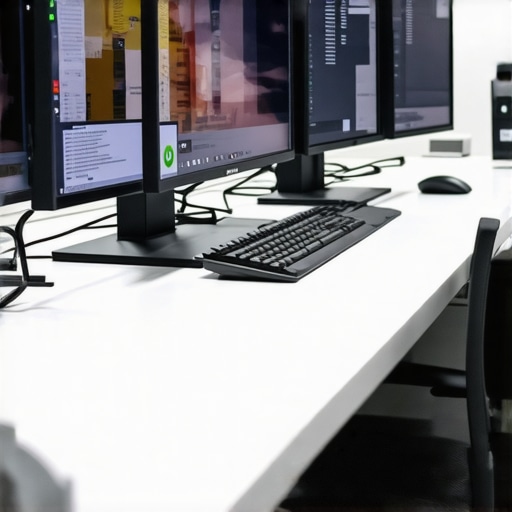
This article highlights so many critical aspects of calibration I’ve come to appreciate over the years, especially spectral calibration which I’ve been experimenting with lately. It’s fascinating how much more precise visuals become when you analyze the full light spectrum emitted by monitors—something I hadn’t fully considered until reading this. I’ve noticed in my own workflow that integrating spectral calibration tools like the Klein K10-A dramatically reduced color discrepancies across different devices and print outputs. One challenge I’ve faced is maintaining calibration consistency in environments with fluctuating ambient light. The article’s insights on adaptive light management are quite useful, and I’m curious—do others have effective strategies or tools for optimizing calibration routines in practice, especially for those working in less controlled environments? I’d love to hear how you manage drift and environmental variables in your workflows, as well as any recommendations for such situations.
This post touches on so many advanced calibration topics that resonate with my own workflow as a professional photographer focusing on high-fidelity prints. The mention of spectral calibration and multi-point profiling reminds me how crucial detailed measurements are for ensuring that prints match color expectations from on-screen grading. I’ve been experimenting with spectral calibration meters like the Klein K10-A, and the difference it makes is remarkable, particularly when working with delicate skin tones or vibrant landscapes. One challenge I’ve encountered is the time-consuming nature of multi-point calibration, especially for studios with fluctuating ambient light during different sessions. I’ve started using automated calibration systems with AI capabilities, which help maintain consistency without adding too much manual effort. Do others find that AI-driven calibration can reliably adapt to changing conditions, or is manual re-calibration still necessary in most high-stakes environments? It seems like the future of color accuracy lies in these integrated, smart systems, but I’m curious about real-world experiences with their reliability.
This post really highlights how far calibration technology has come, especially with the integration of spectral measurements and AI-driven systems. As someone who has worked in cinematography, I find spectral calibration fascinating because it brings a much higher level of precision for color grading, especially when dealing with HDR content and complex lighting scenarios. Implementing multi-point calibration profiles has significantly improved color consistency across various viewing environments, yet I wonder how accessible these advanced tools are for smaller studios or freelance creators who might not have the budget for high-end spectral calibration devices like the Klein K10-A. Have any of you found cost-effective solutions or workarounds that still deliver high accuracy? Also, I’d love to hear about your experiences with automatic calibration systems—do they truly reduce drift over time without frequent manual recalibration? Staying on the cutting edge seems crucial, but balancing cost and efficiency remains a key challenge.
What I find particularly compelling in this discussion is the integration of spectral calibration with AI-driven systems. In my recent projects, I’ve started exploring spectral calibration meters like the Klein K10-A combined with software such as CalMAN Ultimate, and the results have been impressive, especially in cinematic grading where color precision is critical. However, I wonder about the practicality for smaller studios or freelancers—these advanced tools can be quite pricey. Are there more affordable yet reliable solutions anyone can recommend? Also, the mention of automatic recalibration in real-time is exciting, but how well do these systems perform in real-world environments with fluctuating lighting? I’d love to hear from others who have tried integrating these emerging technologies into their workflows and how it affected their productivity and accuracy. It’s fascinating to see how technology continues to evolve and reshape our approach to professional color management.