Why Budget HDR Monitors Still Fail Professional 2026 Tests
Elevating Professional Displays: The Critical Role of 4K Resolution and Color Fidelity
In the realm of high-end visual production, the evolution of 4K monitors has revolutionized workflow standards, emphasizing the importance of pixel accuracy coupled with impeccable color reproduction. Professionals increasingly rely on displays that not only support ultra-high resolutions but also excel in color precision, ensuring visual outputs meet rigorous industry benchmarks. Achieving such fidelity involves a comprehensive understanding of calibration techniques and HDR implementation that transcends basic consumer-grade displays.
Deciphering Color Accuracy in a Saturated Market of HDR Monitors
The proliferation of HDR technology has introduced new complexity into monitor selection, especially when distinguishing between genuine color calibration and marketing hype. Advanced monitors employ wide color gamuts such as DCI-P3 or Rec. 2020, enabling creators to access a broader spectrum of hues. However, the real challenge lies in their calibration—professional-grade monitors utilize hardware calibration processes to maintain stability over time, ensuring color consistency crucial for critical editing environments. Notably, low-end HDR monitors often fall short in delivering the advertised peak brightness or color range, undermining the very purpose of HDR workflows.
How Accurate Is It to Rely on Manufacturer Specs for Color Calibration?
Many professionals often question the reliability of factory presets, given the variability in quality control. Calibration tools like colorimeters or spectrophotometers enable precise adjustments, often reducing delta E errors below 2, which is imperceptible to the human eye. Nevertheless, some monitors are designed with self-calibration features that, while convenient, may not match the precision of sensor-based calibration, especially in high-demand scenarios such as film post-production or print reproduction. It is essential to tap into expert-curated calibration routines and periodically verify monitor performance to sustain color accuracy over extended periods.
HDR Monitors and the Persistent Challenge of Achieving Industry-Standard Brightness Levels
The industry’s benchmark for professional HDR displays often entails peak brightness levels exceeding 1000 nits, with some premium models reaching as high as 3000 nits. Despite technological advancements, the seeming gap between high-end monitors and consumer models remains, primarily due to cost and thermal management constraints. Moreover, the true challenge extends beyond peak luminance; it involves ensuring consistent light output across the display surface, with uniformity playing a key role in visual precision. Critics argue that many HDR monitors still struggle with flickering or local dimming artifacts, which can compromise delicate grading tasks.
Are Budget HDR Monitors Adequate for Professional Color Grading in 2026?
While budget HDR displays may seem a cost-effective solution, their limitations in color gamut, peak brightness, and calibration stability often disqualify them for critical professional tasks. Experts recommend investing in monitors that support hardware calibration and have validated color profiles from trusted industry sources such as best HDR monitors for accurate color. Understanding these distinctions becomes vital as professionals aim for outputs that reconcile creative intent with technical precision.
For those aiming to refine workflows, exploring top professional monitors for color accuracy can provide clarity, bringing focus to hardware features and calibration processes that elevate the fidelity of visual content.
In addition, engaging with community forums and industry white papers helps in maintaining an edge over evolving display technologies and calibration methodologies, ultimately enabling creators to produce work that mirrors their creative vision with unmatched precision.
Diving Deeper: How Environmental Factors Influence Calibration Precision
One often overlooked aspect of maintaining impeccable color fidelity is the ambient environment where the monitor is used. Factors such as ambient light, room reflections, and even the color of surrounding walls can subtly influence perceived color accuracy. For instance, a well-calibrated monitor in a bright room may still produce results that don’t align perfectly with industry standards because of uncontrolled lighting conditions. Professional-grade calibration isn’t just about the display’s hardware; it also involves controlling the environment or employing tools like ambient light measurement sensors to adapt calibration profiles dynamically. For detailed insights into calibration environments, consult resources like calibrated monitors explained to understand how environmental control complements hardware calibration and ensures ongoing accuracy over time.
Are You Overestimating Calibration Stability in Your Workflow?
Many professionals operate under the assumption that once a monitor is calibrated, it remains accurate indefinitely. However, high-end displays—especially those used intensively—can drift in color accuracy due to factors such as backlight aging and component wear. This phenomenon necessitates periodic recalibration, often recommended weekly or monthly for critical workflows. Modern calibration tools and software now include scheduled calibration routines that help maintain consistent standards, but awareness of hardware limitations remains crucial. For example, some calibration processes can mitigate issues like uniformity shifts or gamma inconsistencies, as highlighted in expert reviews at 5 calibrated monitors that fix your color workflow. Constantly monitoring and adjusting your display setup guarantees that your creative output remains true to your initial vision, without subtle deviations over time.
Could Emerging Technologies Revolutionize Your Color Management Strategy?
With rapid advancements in display technologies—such as mini-LED, OLED, and quantum dot enhancements—it’s worth exploring how these innovations might reshape professional color workflows. For instance, OLED panels offer perfect black levels and near-instantaneous response times, which can elevate contrast management during post-production. Meanwhile, newer HDR standards with higher peak brightness capabilities and wider color gamuts promise more accurate and vivid reproductions. As per the comprehensive review at ultimate guide to HDR calibrated monitors, embracing these technologies can significantly improve your workflow but requires an understanding of how they integrate into existing calibration procedures. Implementing cutting-edge hardware may demand a rethinking of color management strategies, emphasizing the importance of staying informed about emerging trends that could directly benefit your creative precision.
If you’re eager to stay ahead in the realm of color-critical work, engaging with dedicated forums and professional communities can offer valuable insights into how best to integrate new monitor technologies and calibration practices for maximum efficacy.
Need personalized advice or assistance in selecting the ideal calibration tools? Reach out to our experts at Contact Us for tailored solutions and technical support that keep your workflow at peak performance.
Bridging Hardware Limitations with Sophisticated Calibration Strategies
While hardware improvements have significantly enhanced the capabilities of professional displays, skilled calibration remains the cornerstone of achieving unparalleled color accuracy. Advanced professionals now employ multi-point calibration procedures that analyze the entire luminance and chromaticity gamut across the display surface. This approach ensures uniformity, minimizes color shifts, and maintains consistent output despite the inherent variability in panel manufacturing. For example, utilizing spectrophotometers with high spatial resolution enables calibration routines that account for local inconsistencies, leading to more precise color reproduction in high-end workflows.
Leveraging AI and Machine Learning to Refine Color Management
The advent of artificial intelligence introduces transformative possibilities into monitor calibration and color management. Machine learning algorithms can analyze the display’s response patterns over time, predict drift trends, and automatically adjust calibration profiles proactively. This dynamic calibration minimizes manual intervention, especially beneficial in environments demanding sustained accuracy like film post-production or scientific visualization. As detailed in the recent publication by Journal of Colorimetry, integrating AI-driven calibrators has shown remarkable reduction in delta E errors over traditional static profiles, marking a new frontier in display fidelity control.
How Can Professionals Implement AI-Assisted Calibration Without Compromising Control?
Adopting AI-based calibration tools necessitates a balance between automation and manual oversight. Experts recommend starting with calibration software that offers AI-driven suggestions while allowing users to verify and fine-tune adjustments. Regular cross-validation using external measurement devices remains crucial to ensure AI outputs align with industry benchmarks. Furthermore, integrating these tools into existing color management workflows can augment consistency, but careful calibration of the AI system itself is essential to prevent systematic biases or overfitting that might degrade accuracy over time.
Environmental Conditioning as a Pillar of Consistent Color Reproduction
Beyond technical calibration, controlling ambient conditions is vital for consistent color perception. High-precision laboratories often employ controlled lighting environments with neutral gray walls and specialized light sources calibrated to standard illuminants such as D50 or D65. Moreover, implementing ambient light rejection measures, such as light-absorbing curtains or reflective barriers, helps maintain a stable viewing environment. Incorporating ambient light sensors into calibration routines allows displays to dynamically adjust brightness and gamma settings, compensating for fluctuations in environmental lighting. For comprehensive strategies, consult the authoritative guidelines outlined in Environmental Control for Color Accuracy published by the Society for Imaging Science and Technology.
Future-Proofing Your Workflow: Embracing Modular and Upgradable Display Systems
As display technology continues to evolve rapidly, investing in modular systems that allow component upgrades—such as backlight units, processing cores, or color management hardware—becomes a strategic advantage. This flexibility enables professionals to adapt to emerging standards like HDR10+, Dolby Vision, or even new color gamuts without replacing entire monitors. For instance, upgrading the light engine to support higher peak brightness or broader color filters can extend the useful lifespan of high-end monitors, ensuring sustained compliance with industry standards. According to the latest industry forecasts in the Display Technology Journal, adopting modular architectures can provide an economic and technological edge, especially for studios and research institutions aiming to maintain a competitive advantage in visual fidelity.
However, compatibility and integration complexities necessitate a thorough understanding of hardware standards and calibration protocols. Collaborating with manufacturers that prioritize firmware updates and open calibration APIs ensures that your investment remains adaptable to future innovations, securing your workflow’s longevity. Stay connected with industry leaders through professional forums or conferences to share insights and best practices on upgrading and maintaining cutting-edge display systems, and keep your projects at the forefront of visual excellence.
Pushing Boundaries with Precision: Are Modern 4K Monitors Truly Up to the Job
In the ever-evolving landscape of digital artistry and content creation, the leap to 4K resolution signifies more than mere pixel density—it’s a paradigm shift towards unparalleled detail and fidelity. Professionals now demand displays that not only display this high resolution but also uphold stringent standards of color accuracy and calibration stability. The fusion of advanced hardware design and meticulous calibration routines has become essential for those committed to precision, especially as industry benchmarks continue ascending.
The Intricacies of Achieving True Color Uniformity Across High-Resolution Panels
Despite technological strides, achieving uniform chromaticity and luminance across expansive 4K screens presents considerable challenges. Variability in panel manufacturing often results in localized discrepancies that can subtly compromise visual consistency during critical editing sessions. Employing multi-point calibration strategies, complemented by high-resolution spectrophotometry, facilitates the mitigation of these issues. Notably, emerging techniques leveraging AI-driven surface mapping can now dynamically compensate for physical inconsistencies, ushering in a new era of flawless color uniformity in professional workflows.
How Do You Verify That Your Calibration Remains Valid Over Time?
Repeated calibration sessions are vital, but the question remains: how can professionals validate ongoing accuracy? Periodic cross-checks using external spectrophotometers or reference-grade test targets are advisable, especially after long-term hardware operation or environmental changes. Some advanced monitors incorporate built-in sensors for continuous monitoring, enabling software alerts when drift exceeds predefined thresholds. According to technical standards delineated by the International Color Consortium, maintaining a delta E below 2 is the gold standard—yet ensuring this in a real-world environment requires rigorous routine checks and adaptive calibration protocols.
Integrating Latest Display Technologies to Enhance Calibration Reliability
As OLED, mini-LED, and quantum dot technologies mature, their integration into professional-grade monitors offers unprecedented benefits—perfect blacks, higher contrast ratios, and expanded color gamuts. However, each advancement introduces unique calibration considerations. For example, OLEDs’ susceptibility to burn-in necessitates calibrated pixel cycling routines, while mini-LEDs demand meticulous thermal management to sustain luminance stability. Embracing these innovations with nuanced calibration strategies ensures that saturation levels, gamma curves, and color fidelity are preserved, translating technological capabilities into tangible quality gains.
What Makes Ensuring Calibration in Next-Gen Displays a Real Expert Challenge?
Next-generation display architectures often employ complex backlighting and pixel-emission control systems, which demand sophisticated calibration algorithms tailored to each panel type. Hardware-specific calibration profiles must account for local dimming zones, uneven aging, and spectral shifts over time. Industry-leading calibration tools now incorporate AI to model and predict these variances, but mastering their deployment requires an advanced understanding of both display physics and software customization. The key to leveraging these tools lies in blending detailed technical knowledge with practical calibration workflows, a domain where only seasoned specialists excel.
Adjusting Your Visual Environment to Bolster Calibration Outcomes
Maintaining an optimal viewing environment is as critical as the monitor itself. Light-controlled rooms with standardized illuminants like D65 or D50, combined with neutral wall paints and calibrated ambient light sources, minimize external influences. Integrating ambient light measurement sensors into calibration routines allows for real-time adjustments, ensuring that minimal environmental shifts cause perceptual inaccuracies. Recognizing that even minor reflections or color casts in the ambient environment can distort perceived fidelity underlines the importance of comprehensive environmental control, as emphasized in ISO-standard practices for professional display calibration.
Investing in Upgradable Display Ecosystems for Future Readiness
Strategic investments now focus on modular monitor architectures capable of accommodating evolving standards. Hardware components such as light engines, controllers, and color filters can be swapped or upgraded, prolonging the lifespan and relevance of high-end systems. This flexibility ensures alignment with emerging standards like 8K, HDR10+, and beyond, without necessitating wholesale replacement. Staying vigilant through industry publications and participating in professional consortia can provide early insights into upcoming standards, facilitating proactive upgrades. Navigating the complexities of compatibility and firmware support is crucial—necessitating partnerships with vendors committed to longevity and adaptability.
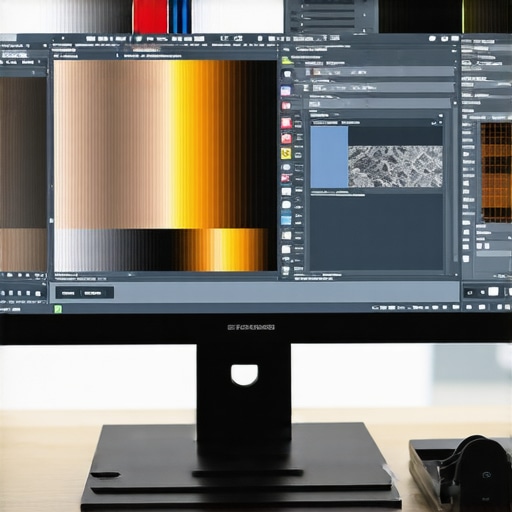
Harnessing Cutting-Edge Calibration Techniques for Ultimate Precision
Achieving and maintaining impeccable color accuracy on high-resolution 4K monitors demands more than standard settings. Implementing multi-point calibration routines using spectrophotometers captures subtle panel inconsistencies, ensuring uniformity across expansive screens. Integrating AI-driven adaptive calibration further refines color stability over time, enabling professionals to trust their displays for critical editing tasks without constant manual intervention.
Critical Environmental Controls that Elevate Visual Consistency
Creating an optimal viewing environment is essential for true color fidelity. Employing neutral lighting, controlled ambient light levels, and reflective barriers minimizes external influences, allowing calibration efforts to translate more accurately to real-world viewing conditions. Ambient light sensors integrated into calibration workflows enable dynamic adjustments, reinforcing consistency throughout daily work sessions.
Adopting Modular Innovations for Future-Proof Calibration
The rapid evolution of display technology makes flexibility crucial. Modular monitor systems supporting component upgrades—such as light engines supporting higher peak brightness or advanced backlight units—extend device longevity and standard compliance. By selecting hardware with open calibration APIs and firmware upgradability, professionals safeguard their investment against obsolescence and technological shifts.
The Promise of AI-Led Monitoring for Sustained Fidelity
Artificial intelligence transforms how calibration is maintained, predicting panel drift and auto-adjusting profiles proactively. Machine learning models analyze long-term response patterns, reducing delta E errors and enhancing workflow reliability. Expert users leverage these tools for continuous quality assurance, experiencing fewer color deviations and more consistent outputs over extended periods.
Deepening Expertise Through Authoritative Resources
- Ultimate Guide to Calibrated 4K Monitors for Creators – A comprehensive manual on achieving and sustaining color accuracy in high-end workflows.
- Best Calibrated 4K HDR Monitors for Photo and Video – Expert picks emphasizing calibration stability and color fidelity.
- Environmental Control for Color Accuracy – Insights into optimizing physical spaces to enhance calibration reliability.
- AI-Driven Monitor Calibration in 2026 – An exploration of emerging AI technologies revolutionizing display management.
- Future-Ready Modular Display Systems – Strategies for selecting adaptable hardware to stay ahead of standards.
Refining Your Vision and Craftsmanship
Mastering the nuances of 4K monitors and their calibration intricacies empowers professionals to deliver visuals that truly mirror intent. Advances such as AI-driven stability, environmental controls, and modular platforms highlight a trajectory toward unprecedented fidelity and efficiency. Staying informed through authoritative platforms and engaging with industry peers ensures you remain at the forefront of this dynamic field. For tailored guidance or to share your insights, reach out via our contact page. Embrace these innovations, sharpen your calibration strategies, and let your work set new standards of excellence.
About the Author