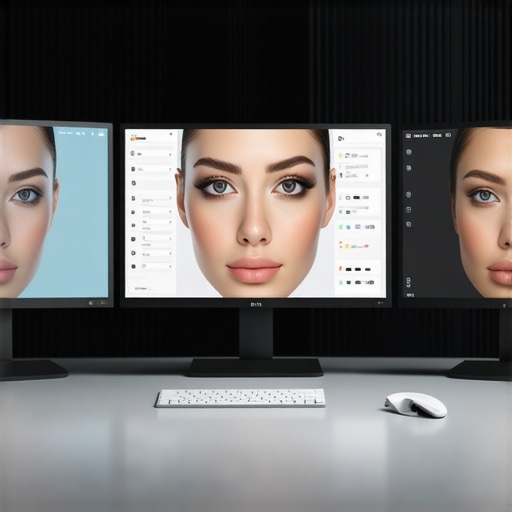
3 Monitors With Built-In Sensors That Finally End the Skin Tone Guessing Game
Elevating Visual Precision in Professional Workflows
In the realm of high-end digital content creation, a nuanced understanding of monitor technology becomes paramount. The convergence of 4K resolution, HDR capabilities, color accuracy, and calibration techniques forms the backbone of professional-grade visual fidelity. As professionals navigate complex standards such as Rec. 2020 and DCI-P3, it becomes essential to select and maintain displays that uphold these exacting standards, ensuring your visual outputs are both accurate and consistent.
The Critical Role of 4K Resolution in Creative Industries
With the advent of 4K monitors, content creators benefit from unprecedented detail and clarity. This resolution enhances editing precision, especially in post-production workflows involving high-resolution videos and images. However, resolution alone does not suffice; it must be complemented by superior HDR performance and precise color calibration to truly unlock the potential of high-resolution displays.
HDR Monitoring: Beyond Brightness for Artistic Expression
High dynamic range technology has revolutionized visual storytelling by enabling monitors to display a broader luminance range. Modern HDR monitors boasting peak brightness levels of 4000 nits or more are capable of rendering subtle tonal differences in highlights and shadows, vital for colorists and visual effects artists. Nevertheless, true HDR mastery depends on consistent tone mapping and the ability of the display to hold brightness without thermal throttling, which requires in-depth hardware optimizations.
Ensuring Color Accuracy Consistency in Professional Environments
Color fidelity is non-negotiable for professionals. Calibrated monitors that implement 14-bit LUTs and self-correcting algorithms can maintain calibration across extended periods, reducing drift and ensuring repeatability. For instance, multi-monitor calibration solutions are critical in complex setups, preventing color discrepancies during color grading and print preparation. Regular calibration routines, combined with advanced hardware design, mitigate typical issues such as skin tone shifts or gamut clipping.
Can the Integration of Built-In Sensors Resolve Skin Tone Variability?
One of the most debated topics among color professionals relates to the reliability of monitors with integrated sensors for skin tone calibration. While these sensors can dynamically adjust display output, their effectiveness in high-precision environments remains under scrutiny, especially concerning skin tone accuracy across diverse lighting conditions. It’s advisable to compare sensor-based calibration with traditional probe-based methods for critical tasks.
What Are the Limitations of Existing Color Management Systems in High-Resolution HDR Environments?
Despite advances, current color management systems (CMS) often struggle with complex workflows involving HDR and wide-gamut displays, leading to inconsistencies across software and hardware platforms. Addressing these limitations requires an understanding of display profile management, gamut mapping algorithms, and GPU color pipeline optimizations—areas extensively discussed in recent industry white papers from organizations like the Society for Imaging Science and Technology.
Explore detailed technical insights and share your professional experiences with calibrated monitors at our contact page to foster community-driven solutions.
Refining Color Calibration Techniques to Match Industry Standards
Achieving optimal color accuracy isn’t solely about initial calibration; it requires ongoing calibration routines tailored to dynamic workflows. Modern professional monitors equipped with 14-bit LUTs and self-correcting algorithms can significantly reduce drift over extended periods, ensuring consistent performance. Incorporating multi-monitor calibration workflows, especially in complex editing environments, minimizes discrepancies and enhances collaborative workflows, as discussed in this comprehensive guide to calibration.
Understanding How Gamut Mapping Influences Final Output
Gamut mapping algorithms play a pivotal role in translating colors from source footage to the display’s color space, directly impacting the fidelity of skin tones and subtle color gradations. In high-end HDR workflows, improper mapping can introduce undesired color clipping or shift, especially when working with Rec. 2020 or DCI-P3 standards. Industry-leading solutions incorporate adaptive gamut management, which adjusts dynamically based on content and display capabilities, mitigating common issues like gamut clipping or tone compression, as explained in recent gamut mapping optimization studies.
How Can Hardware Design Minimize HDR Peak Brightness Fluctuations?
Ensuring stable peak brightness levels during prolonged HDR grading sessions involves advanced hardware thermal management and backlight consistency. Modern monitors utilize innovative cooling solutions and power regulation circuits to maintain thermal equilibrium, preventing brightness throttling that hampers grading precision. While software adjustments can mitigate some issues, hardware breakthroughs are essential for true stability, especially in professional environments where every luminance detail counts. Exploring these innovations reveals why hardware choices are critical, as outlined on this in-depth review of HDR monitor design.
To further enhance your understanding, we encourage sharing your experiences with hardware-induced brightness variability and discussing potential solutions with our community. Visit our contact page to connect with industry experts and peers alike.
Implementing Advanced Calibration Workflows for Unparalleled Accuracy
In high-stakes professional environments, simple calibration routines are no longer sufficient. Embracing automated, periodic calibration with integrated hardware tools ensures consistent fidelity over time, especially crucial during extended projects. Such systems leverage 14-bit LUTs and self-correct algorithms to adapt dynamically to display aging, temperature shifts, and ambient lighting conditions. These practices not only enhance precision but also streamline workflow management for creative teams.
Are Your Calibration Methods Keeping Pace with Industry Demands?
Recent studies suggest that static calibration can succumb to drift as displays age or hardware components degrade, leading to visual inconsistencies and misguided decisions in color grading or print matching. Professionals should invest in continuous calibration solutions, incorporating hardware sensors and software automation, to sustain the integrity of their monitor’s output, as highlighted by authoritative industry white papers from the International Color Consortium (ICC). This proactive approach minimizes costly rework and reinforces the fidelity of critical visual elements.
Optimize your calibration strategy with state-of-the-art tools that ensure your display remains within industry color standards.
Unveiling the Next Generation of Calibration Techniques for Precision Imaging
As the demand for impeccable color accuracy escalates in high-end visual production, industry experts are turning to innovative calibration methodologies that transcend traditional routines. These avant-garde processes leverage machine learning algorithms and spectral profiling to adapt dynamically to monitor aging and environmental shifts, ensuring unwavering fidelity. Adopting such advanced solutions can significantly diminish calibration drift, maintaining consistency across multi-monitor setups in complex post-production workflows.
The Intersection of Hardware Engineering and Calibration Fidelity
Emerging hardware innovations are pivotal in refining calibration outcomes, particularly through the integration of ultra-precise light sensors and thermal regulation systems. Manufacturers are now embedding spectral measurement capabilities directly into displays, facilitating real-time, automated calibration adjustments with minimal user intervention. These developments exemplify a synergy between hardware design and software intelligence, closing the feedback loop for optimal color reproduction.
Which Calibration Paradigm Best Serves High-Gamut, High-Dynamic-Range Environments?
Within environments demanding extensive color gamuts like DCI-P3 and Rec. 2020, calibration protocols must account for the complex interplay between display capabilities and content standards. Experts advocate for spectral calibration techniques that profile the exact spectral output of each unit, enabling precise gamut mapping and tone reproduction. This approach minimizes issues such as gamut clipping and halo effects, especially critical during HDR grading sessions characterized by rich luminance and chromatic nuances.
Harnessing Industry Standards: Moving Beyond ISO to Achieve Superlative Benchmarks
While ISO standards provide a foundational framework, progressive professionals pursue compliance with more stringent protocols like the Pantone Validated system or the Blu-ray specifications, tailored for critical color workflows. These benchmarks demand meticulous calibration, validation, and ongoing quality assurance, often necessitating specialized hardware and software that can validate spectral accuracy, luminance stability, and color uniformity in real time. Staying aligned with these standards positions professionals at the forefront of quality assurance.
Unlocking the Potential of Neural Network-Assisted Calibration
Recent breakthroughs incorporate neural network models to predict and correct display output anomalies proactively. These systems analyze vast datasets of spectral and luminance measurements, learning to compensate for hardware degradation and environmental influences. The result is a calibration process that evolves, becoming more precise over time. Integrating such AI-driven tools into existing workflows can drastically reduce manual calibration efforts while elevating accuracy to unprecedented levels.
Embed Continuous Feedback for Durable Color Consistency
Implementing real-time feedback loops that monitor display output during critical operations can preemptively flag deviations before they impact final outputs. Sensors embedded within or attached to the monitor can track luminance, color temperature, and spectral emission, relaying data for instantaneous correction. This proactive stance not only enhances precision but also fosters a culture of continual quality improvement, vital for high-stakes content creation.
Engage with Industry Thought Leaders to Stay Ahead of Calibration Innovation
Leading-edge practices and equipment are constantly evolving, often emerging from collaborative research and field trials led by corporations and academic institutions. Engaging with these communities—through webinars, white papers, and professional networks—ensures that calibration strategies remain aligned with the latest standards and technological breakthroughs. Connecting with experts and sharing experiences accelerates industry-wide progress in achieving impeccable color fidelity.
Embrace these sophisticated calibration insights to push the boundaries of visual accuracy, solidifying your status as an industry trailblazer. For personalized guidance on integrating these innovations into your workflow, reach out to our specialists today.
Innovate Your Calibration Strategy for Consistent Precision
Embracing automated calibration tools paired with spectral profiling enhances long-term stability, ensuring your monitor maintains fidelity despite aging components and environmental shifts. Such proactive strategies become crucial in high-stakes workflows, reducing drift and minimizing rework.
Prioritize Hardware-Software Harmony to Elevate HDR Performance
Integrating advanced hardware with intelligent software algorithms can stabilize peak brightness levels during intensive HDR grading. This synergy allows professionals to work seamlessly, confidently trusting their displays to deliver consistent luminance without thermal throttling or color shifts.
Harness spectral calibration for wider gamuts and richer colors
Employing spectral profiling techniques refines color accuracy within DCI-P3 and Rec. 2020 standards. Precise spectral calibration minimizes gamut clipping and tonal inconsistencies, empowering professionals to realize their creative vision with unmatched fidelity.
Leverage industry standards for absolute confidence in output
Beyond ISO benchmarks, adopting Pantone Validated systems or Dolby Vision IQ ensures rigorous validation of color and luminance performance. Such certifications provide a trusted baseline, elevating your workflow and assuring clients of uncompromising quality.
Explore authoritative resources for advancing monitor mastery
- Mastering Color Accuracy in Professional Monitors: Offers comprehensive strategies and latest innovations in calibration techniques. – https://monitors.workstationwizard.com/mastering-color-accuracy-top-professional-monitors-for-creatives
- 4K Monitors for Creative Precision: Delve into the latest in 4K display technology and its implications for high-end workflows. – https://monitors.workstationwizard.com/the-ultimate-guide-to-4k-monitors-for-professional-visuals
- HDR Monitor Technologies and Best Practices: Stay ahead with insights into HDR peak brightness and tone mapping. – https://monitors.workstationwizard.com/hdr-monitors-unveiled-elevate-your-visual-experience-in-2025
Looking Forward: Elevate Your Workflow with Confidence
Achieving flawless visual fidelity in professional environments hinges on a nuanced understanding of calibration, hardware integration, and industry standards. By staying informed through authoritative resources and embracing innovative calibration practices, you position yourself at the forefront of precision display management. Engage with our community or reach out via our contact page to exchange insights and elevate your craft.
About the Author


The focus on high-precision calibration techniques truly resonates with my experience in post-production. Especially in complex multi-monitor setups, consistency in color and luminance is crucial for professional grading, and the latest spectral profiling methods seem promising. I’ve struggled with calibration drift over long editing sessions, and automated spectral calibration could be a game-changer. It’s fascinating to see how emerging hardware innovations, like embedded spectral sensors, can provide real-time adjustments and maintain fidelity. However, I wonder about the practical implementation—are these spectral sensors widely available yet, or are they still mainly in the research phase? Also, how do they integrate with existing calibration workflows and software? For creative teams working on HDR content, maintaining stable peak brightness and accurate color mapping remains a challenge, but these technological advancements give hope for more reliable, streamlined processes. I’d love to hear from others who’ve experimented with these new hardware tools or approaches in their workflows.