How to Calibrate for Web Delivery vs. Broadcast Standards
Elevating Visual Fidelity in Professional Workspaces
In the realm of high-end digital content creation, the differentiation between average and expert-level visualization hinges on the capabilities of your display technology. The convergence of 4K resolution, high dynamic range (HDR), and meticulous calibration procedures empowers professionals to realize their creative visions with impeccable accuracy and consistency.
Why 4K Monitors Have Become the Standard for Precision and Detail
With a pixel count quadrupling that of traditional 1080p screens, 4K monitors afford artists, designers, and videographers the granularity necessary for intricate editing and fine-tuned color grading. These displays, especially when paired with HDR support, facilitate a broader luminance spectrum and enhanced contrast ratios, which are indispensable in simulating real-world lighting environments. For instance, HDR-enabled 4K monitors such as those discussed in our HDR monitor guide demonstrate a leap toward lifelike reproduction.
The Critical Role of Color Accuracy and Systematic Calibration
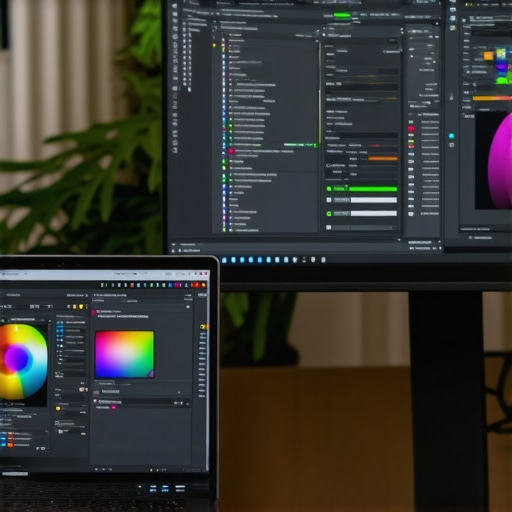
Color precision becomes paramount in professional workflows where clients rely on true-to-life representations. Calibrated monitors, tailored through hardware and software adjustments, ensure that the colors displayed align within industry-standard tolerances. Experts often employ colorimeter tools to achieve consistent results, as elaborated in our comprehensive calibration strategies. Furthermore, maintaining calibration across multiple displays enhances multi-monitor setups, thereby preventing visual inconsistencies during complex editing sessions.
HDR Monitors in the Context of High Dynamic Range Content Creation
HDR monitors extend the visible luminance and color gamut, enabling creators to work within the parameters of upcoming broadcasting standards and immersive media formats. Notably, HDR panels must manage gamut mapping and prevent clipping artifacts; areas where many displays falter. As digital content shifts towards HDR delivery, professionals need monitors that maintain true brightness and color fidelity during prolonged editing, which highlights the importance of advanced hardware solutions discussed at HDR performance benchmarks.
How To Calibrate Monitors to Match Broadcast Standards Without Compromising Creative Intent
Is it possible to reconcile Web Delivery and Broadcast Calibration Benchmarks during critical grading sessions?
Indeed, balancing the technical specifications of web delivery standards (like sRGB, Rec. 709) with broadcast standards (Rec. 2020, DCI-P3) requires a nuanced approach. Professional calibrators utilize color profiling and look-up tables (LUTs) to adapt monitors for different output targets while preserving maximum color accuracy. For example, precise calibration not only enhances compliance but also minimizes viewer discrepancies, which is essential when final outputs are expected across diverse platforms. For detailed methodologies, see our calibration explainer.
Staying at the forefront of display technology involves continuous assessment of hardware capabilities, calibration techniques, and adherence to evolving standards. Professionals are encouraged to share insights or inquire about specific workflows by reaching out through our contact page.
Deciphering the Discrepancy Between Specs and Actual Performance
Despite manufacturers touting impressive specifications, many professionals encounter significant divergences when evaluating monitors in real-world workflows. For instance, a monitor’s claimed HDR brightness or color gamut coverage often falls short during extended editing sessions, especially under demanding lighting conditions. This incongruity underscores the necessity of understanding the limitations of specifications, as highlighted in our analysis of industry claims versus practical performance. Recognizing these gaps enables experts to make more informed purchasing decisions and calibration strategies, ultimately ensuring higher fidelity in their deliverables.
Does Your Calibration Routine Address the Nuances of Gamut Mapping and Tone Mapping?
Traditional calibration processes often focus on grey balance, gamma, and white point adjustments. However, advanced workflows require clinicians to delve deeper into gamut mapping and tone mapping intricacies, ensuring that colors are preserved accurately across diverse media standards. For example, mastering the complexities of P3-to-Rec. 709 mappings is essential for seamless content transfer between creative, broadcast, and cinema environments. Resources such as our guide on HDR gamut management provide actionable insights. Furthermore, employing high-precision LUT calibration can mitigate issues like color clipping or banding, enhancing consistency throughout the production pipeline.
< >
>
How Can Monitoring Setup Counteract Subtle Color Shifts During Long Projects?
Long-duration projects expose displays to thermal effects, backlight aging, and environmental factors that subtly influence color accuracy over time. Implementing continuous calibration solutions, such as self-correcting monitors discussed in our selection of self-correcting displays, helps maintain steadfast precision. Moreover, leveraging ambient light sensors ensures that monitor luminance adjusts dynamically, preventing unwanted color shifts caused by fluctuating room conditions. Expert workflows incorporate regular calibration intervals, combined with real-time monitoring tools, to safeguard against drift and uphold visual integrity through exhaustive editing cycles.
Professionals striving for ultimate accuracy should consider consulting with calibration specialists or using advanced color management software to fine-tune their setup. To explore tailored calibration strategies or discuss your specific workflow needs, contact us through our contact page. Staying ahead of these calibration nuances ensures that your visual storytelling remains compelling and true to the creator’s intent at every stage.
Synchronizing Color Profiles: Achieving Uniformity in Multiplatform Deployment
One of the most nuanced challenges faced by professionals in digital content creation is ensuring that color accuracy remains consistent across various distribution channels and devices. Whether your content is destined for the cinematic screen, broadcast television, or web streaming, each platform adheres to different color standards—such as Rec. 2020 for ultra-high-definition broadcasts or sRGB and DCI-P3 for digital cinema and online platforms. Harmonizing these standards requires a sophisticated understanding of color management workflows, particularly the role of ICC profiles and LUTs in maintaining fidelity.
Advanced practitioners leverage calibration workflows that embed precise ICC profiles tailored to specific color spaces. For example, when exporting content for DCI-P3 compliance, ensuring your monitor’s profile aligns with the output device’s color gamut minimizes discrepancies. Integrating hardware colorimeters with calibration software like CalMAN or LightSpace allows for the creation of device-specific LUTs that compensate for display characteristics, even in multiple monitor setups. This process, though intricate, is vital for ensuring that your final deliverables appear consistent, whether viewed on a professional reference monitor or an end-user device.
Automation and Validation: Keeping Calibration in Check Over Time
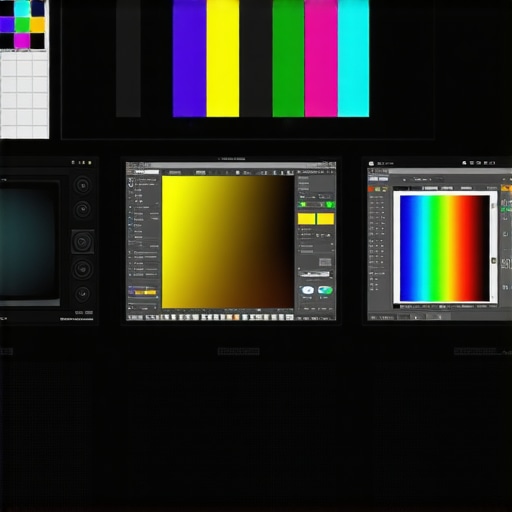
Calibration is not a one-off task—it’s an ongoing process that benefits from automation and rigorous validation routines. Emerging solutions such as self-calibrating monitors utilize built-in sensors to perform periodic adjustments, assuring stable performance without manual intervention. Additionally, routine validation with color checkers and test patterns verifies that calibration remains effective over weeks or months, preempting color drift that could jeopardize project fidelity. As highlighted in industry case studies like those presented by the Society for Imaging Science and Technology, implementing scheduled calibration checkpoints can improve consistency and reduce post-production revisions.

Beyond Visuals: Impacts of Color Management on Quantitative Analysis and Quality Assurance
Accurate color reproduction does more than enhance aesthetics—it also plays a critical role in quality assurance protocols, particularly in industries like medical imaging, scientific research, and manufacturing, where precise color metrics are crucial. Implementing standardized color management workflows ensures that quantitative analyses, such as color difference measurements and spectral reflectance evaluations, are reliable and reproducible. For instance, in high-stakes environments like pharmaceutical packaging, deviations in color can signify contamination or errors; thus, adherence to strict calibration standards becomes a legal and ethical necessity.
Furthermore, adopting color management best practices facilitates seamless collaboration across teams and geographic locations. In multi-site production environments, exporting calibrated profiles and calibration data allows remote collaborators to maintain consistency, provided that their display hardware supports the requisite color fidelity. As noted in the ASICS publication on color science standards, aligning on established workflows minimizes subjective interpretation and enforces objective quality control, leading to more reliable outputs and reduced client revisions.
Is Your Workflow Ready for the Demands of Future Media Standards?
Looking ahead, the evolution of media standards—such as the adoption of HDR10+, Dolby Vision, and wider color gamuts—demands that professionals remain adaptable. Emerging technologies like quantum dot displays and OLED panels continue to push the boundaries of color volume and dynamic range, but they also introduce new calibration challenges. To stay ahead, experts should monitor advancements in color measurement tools and software, ensuring their workflows can incorporate real-time, high-precision calibration adjustments. The integration of machine learning algorithms into calibration devices promises to detect subtle shifts in display behavior, enabling preemptive corrections before discrepancies impact content quality.
Continued engagement with industry standards organizations, specialized workshops, and peer-reviewed research will empower professionals to navigate this rapidly evolving landscape confidently. If you’re eager to explore how to future-proof your calibration routines or want personalized guidance, reach out through our contact portal for tailored recommendations and comprehensive training options.
Elevate Your Calibration Expertise with Cutting-Edge Techniques
In highly specialized professions where color fidelity is paramount, standard calibration routines often fall short of the nuanced demands posed by emerging display technologies and industry standards. To truly refine your visual environment, you must delve into sophisticated calibration methodologies that incorporate multi-dimensional LUT adjustments, spectral measurement integration, and adaptive ambient light control systems. These tools collectively ensure that every nuance of color and luminance is faithfully reproduced, aligning perfectly with rigorous production and archival specifications.
How Do Spectral Color Measurements Influence Calibration Fidelity?
Traditional colorimeters primarily focus on CIE XYZ and sRGB spectrums, but modern professional workflows demand an even deeper spectral understanding. Spectroradiometers provide detailed spectral power distribution data, allowing calibration that accounts for the specific spectral characteristics of display phosphors and backlights. Integrating this data into calibration software enables the creation of highly accurate, wavelength-specific LUTs that correct subtle spectral deviations—crucial for applications like digital cinema projection and medical diagnostics. According to the Society for Photographic Documentation, spectral precision directly correlates with reproducible color accuracy across diverse media formats.

Dynamic Gamut Mapping: Beyond Static Calibration for Future-Ready Workflows
Static calibration achieves initial color accuracy, but workflows that incorporate real-time, dynamic gamut mapping are revolutionizing industry standards. This technique involves continuous adjustment of display outputs based on scene requirements, content type, and viewing environment. For instance, high-end color grading suites employ adaptive algorithms that optimize saturation and contrast dynamically, preserving artistic intent without sacrificing technical integrity. Implementing such solutions necessitates a deep understanding of color science and compatibility with emerging standards like Rec. 2020 or DCI-P3, ensuring your workflow remains resilient amidst rapid technological evolution.
Can Your Calibration Process Embrace the Challenges of Multi-Display Ecosystems?
As creative environments grow more complex, managing uniformity across multiple calibrated monitors becomes exponentially challenging. Coordinating color profiles, gamma curves, and luminance levels demands advanced synchronization protocols, often achieved through hardware-managed color synchronization hubs and software-driven profile sharing. Employing cloud-based calibration validation tools further facilitates global consistency, minimizing discrepancies that could compromise project cohesion. Professionals committed to excellence recognize that meticulous multi-display calibration is a cornerstone for ensuring seamless collaboration and content fidelity.
Interactive Tools to Validate and Sustain Calibration Precision
Calibration is an ongoing commitment that benefits greatly from automation and interactive validation mechanisms. High-end calibration suites now incorporate real-time feedback, predictive drift analysis, and AI-powered anomaly detection, which proactively identify and correct subtle deviations. Integrating calibration status dashboards with ambient light monitoring systems offers continuous assurance, particularly vital in environments with fluctuating lighting conditions. Such systems empower technicians to preemptively address calibration drift, ensuring persistent accuracy throughout prolonged production cycles.
The Strategic Role of Color Management in Quality Assurance Ecosystems
Implementing rigorous color management practices extends beyond individual device calibration into overarching quality assurance protocols. In sectors like manufacturing, pharmaceutical packaging, and scientific research, traceability and compliance hinge on standardized workflows that incorporate spectral measurements, ICC profiling, and audit reporting. Establishing hierarchical quality checkpoints, leveraging automated calibration validation, and maintaining detailed calibration logs not only enhance product reliability but also fortify legal and regulatory compliance. For comprehensive insights, consult the authoritative standards outlined by the ISO 3664 for viewing conditions and color management.
Are You Prepared for the Next Generation of Visual Standards?
As display technologies rapidly evolve—ushering in quantum dot, microLED, and holographic interfaces—calibration paradigms must adapt accordingly. Embracing multi-spectral sensors, machine learning algorithms, and immersive calibration environments will become imperative. Forward-thinking professionals actively participate in industry consortiums, beta testing new calibration tools, and engaging with academic research to remain ahead of the curve. To future-proof your workflows and incorporate the latest advances, explore collaboration opportunities with leading calibration technology providers or participate in specialized training programs tailored for next-gen display mastery.
Expert Insights in Calibration and Display Technologies
Pushing Beyond Standard Calibration Protocols
In high-end professional environments, traditional calibration routines often fall short against the demands of ever-evolving display innovations. Incorporating spectral measurement data into calibration workflows allows for wavelength-specific adjustments, ensuring a level of color fidelity that meets the strictest industry standards. Advanced calibration not only mitigates spectral deviations but also enhances the overall consistency across diverse media formats.
The Challenge of Multi-Device Synchronization
Achieving uniformity across multiple calibrated displays necessitates sophisticated synchronization techniques. Leveraging hardware color management hubs and cloud-based profile sharing ensures that each monitor reflects identical color and luminance characteristics, crucial for collaborative workflows and consistent output quality. Regular validation using high-precision test patterns maintains this harmony over extended production periods.
Future-Ready Calibration with Adaptive Technologies
Emerging calibration solutions are increasingly integrating machine learning algorithms, enabling real-time adjustments to counteract display drift caused by thermal effects or backlight aging. These adaptive systems promise to maintain color accuracy with minimal manual intervention, empowering professionals to focus on content creation without calibration concerns.
Top Resources for Deepening Expertise in Display Calibration
- Society for Imaging Science and Technology – Sets industry benchmarks and latest research for spectral measurement techniques.
- CalMAN Calibration Software – Widely adopted for its comprehensive tools catering to high-precision color workflows.
- ISO 3664 Standards – Provides guidelines on viewing conditions and color accuracy essential for calibration validation.
- Research Articles in the Journal of the Society of Motion Picture and Television Engineers – Offer insights into cutting-edge calibration methodologies for HDR and wide color gamut displays.
- Workstation Wizard’s Guides – In-depth articles such as our calibration strategies tailored for professional creatives.
Reflections and Next Steps for Professionals
Implementing advanced calibration techniques and leveraging authoritative resources elevates your mastery over professional display technologies. As HDR monitors and 4K displays become the standard, staying informed and adaptable is vital. Engage with industry communities, participate in specialized training, and continuously evaluate your workflows to ensure your visuals meet the highest standards of accuracy and consistency. For personalized guidance or to exchange insights, connect with us through our contact page. Elevate your craft by embracing the forefront of display calibration—your projects deserve nothing less.
About the Author