The Truth About Why Your Grading Monitor Shifts Blue Mid-Session
Unlocking the True Potential of Professional Calibrated Monitors in Content Creation
In the realm of high-end visual production, the precision of your display setup profoundly influences the quality and consistency of your outputs. Calibrated monitors are not merely tools but essential assets that underpin accurate color reproduction, critical for professionals striving for perfection. As technology advances, mastering the nuances of calibrated monitor performance—especially regarding color accuracy, HDR capabilities, and 4K resolution—becomes indispensable for maintaining a competitive edge.
Advanced Insights into Color Fidelity: Beyond Basic Calibration
Achieving true color fidelity involves more than routine calibration; it requires understanding how professional monitors handle complex color spaces like DCI-P3 and Rec. 2020. These monitors must maintain stable gamma curves and minimal Delta E values throughout extended sessions. Experts increasingly rely on in-depth calibration methodologies, including hardware-based calibration solutions, to ensure that color consistency persists during critical work segments, such as grading or compositing.
Overcoming Limitations in HDR Monitoring: Addressing Brightness and Contrast Challenges
HDR monitors are lauded for their ability to display a broad luminance range, but they often grapple with issues like thermal dimming and metadata lag. While some models claim 4,000-nit peak brightness, real-world performance can suffer from thermal throttling, impacting dynamic range during prolonged sessions. Consequently, selecting HDR monitors with effective heat management and accurate tone-mapping is crucial. Referencing recent white papers from industry leaders underscores the importance of these factors in maintaining color accuracy under demanding conditions.
Why Your Calibration Might Shift During a Session and How to Prevent It
Can Mid-Session Color Shifts Affect Your Critical Visuals?
This phenomenon, often observed in high-end professional environments, can stem from fluctuations in display temperature, power stability issues, or insufficient calibration routines. For instance, calibration profiles that do not account for thermal change may result in shifts towards blue mid-session, compromising consistency. Regular recalibration, using monitors equipped with built-in sensors or self-correcting algorithms, can mitigate this. Studios opting for dual-sensor systems often report improved stability, ensuring color fidelity throughout demanding projects.
Enhancing Workflow Efficiency with Advanced Calibration Devices
Utilizing calibration hardware that offers automatic daily adjustments not only simplifies maintenance but also ensures ongoing accuracy essential for color-critical tasks. Implementing workflows that incorporate comprehensive color management protocols—including ICC profile management across multiple monitors—can greatly enhance workflow consistency. For detailed procedures and best practices, consult trusted industry guides, such as those provided by Workstation Wizard.
The Future of Calibrated Monitors in High-Define Content Production
Emerging technologies, including Nano-LED and quantum dot enhancements, promise to further elevate the capabilities of professional monitors, addressing longstanding challenges like contrast leakage and uniformity. As the industry advances, staying informed about new standards and validation protocols ensures content creators can leverage the full benefits of calibrated displays. Continual engagement with expert content and participating in professional forums remain vital for adapting to rapidly evolving display technologies.
Interested in deepening your understanding? Explore comprehensive analyses on HDR monitors and their breakthroughs, or contribute insights from your own calibration routines to enhance communal knowledge.
Breaking Barriers With Cutting-Edge Calibration Techniques
As display technology continues to evolve at a rapid pace, reliance solely on traditional calibration methods may not suffice for the most demanding professional environments. Advanced calibration techniques, including ambient light measurement and real-time luminance adjustments, can significantly enhance consistency and accuracy. Experts now incorporate spectral measurement tools to verify color fidelity beyond basic sRGB or Adobe RGB standards, ensuring that creative output remains precise across various viewing conditions.
Can Dynamic Display Technologies Keep Up With Creative Demands?
Emerging display advancements—such as OLED, MicroLED, and Quantum Dot panels—are reshaping the visualization landscape. These technologies promise higher contrast ratios, broader color gamuts, and improved uniformity. However, integrating them into professional workflows requires understanding their unique calibration challenges. For instance, MicroLED monitors offer unparalleled brightness and color stability but demand specialized calibration routines and validation protocols to realize their full potential. Industry experts underscore the importance of adaptable calibration workflows that can accommodate these innovations seamlessly, as discussed in recent analyses by Workstation Wizard.

Future-Proofing Your Visual Setup
Preparing for tomorrow’s display standards involves more than adopting the latest hardware. It requires a strategic approach that combines hardware validation with adaptive workflows capable of incorporating new color spaces, bit depths, and HDR standards. Participating in professional forums or subscribing to industry updates ensures your calibration practices evolve in tandem with technological advances, maintaining your competitive edge in high-precision content creation. For deeper insights and expert guidance, consider reviewing comprehensive resources on HDR monitor optimization and calibration best practices.
Injecting Precision: How to Maintain Calibration Consistency Over Time
Maintaining calibration stability demands a proactive approach that extends beyond initial setup. Factors such as ambient light fluctuations, display wear, and software updates can subtly influence color accuracy, leading to discrepancies during critical editing sessions. Implementing automated calibration routines using hardware with ambient light sensors and spectral measurement capabilities ensures your monitor remains true over extended periods. Moreover, scheduling regular recalibration intervals, especially before high-stakes projects, prevents cumulative drift and preserves consistent visual standards.
Crafting Your Workflow for Multi-Monitor Color Harmony
As professionals often rely on multi-display arrays, ensuring consistent color presentation across devices becomes a sophisticated task. This involves creating and managing comprehensive ICC profiles tailored to each monitor, then carefully calibrating each unit to a unified color standard—commonly DCI-P3 or Rec. 2020. Incorporating software solutions that facilitate profile management and synchronization further streamlines this process. Advanced setups may employ hardware calibration tools capable of synchronizing multiple monitors, a practice essential in color-sensitive environments such as film grading or high-end CGI production.
What Does Future-Ready Calibration entail in a Rapidly Evolving Display Ecosystem?
Preparing for forthcoming display technologies entails understanding the implications of emerging standards like 16-bit color depth, HDR10+ enhancements, and spatial audio-visual synchronization. It involves leveraging calibration solutions that are adaptable, capable of validating new color gamuts, and accommodating higher luminance levels without sacrificing accuracy. Engaging with industry consortia such as the Video Electronics Standards Association (VESA)—which develops specifications like DisplayHDR—can provide invaluable insights on upcoming benchmarks. Staying at the forefront requires a blend of technical acumen, hands-on experimentation, and participation in dedicated professional communities.
Bridging the Gap: Calibration and Artificial Intelligence Integration
The integration of AI-driven calibration systems introduces a new dimension of precision and adaptability. These systems analyze real-time performance metrics, predict calibration shifts, and adjust display settings dynamically, thereby minimizing human intervention. For example, AI algorithms can detect subtle changes in color temperature and automatically recalibrate before they become perceptible, ensuring unwavering fidelity during long sessions. While still emerging, such solutions promise to revolutionize calibration protocols and support increasingly complex visual workflows—especially in fields demanding uncompromising accuracy, like virtual reality and medical imaging.
Embracing the Quantum Leap in Display Technologies
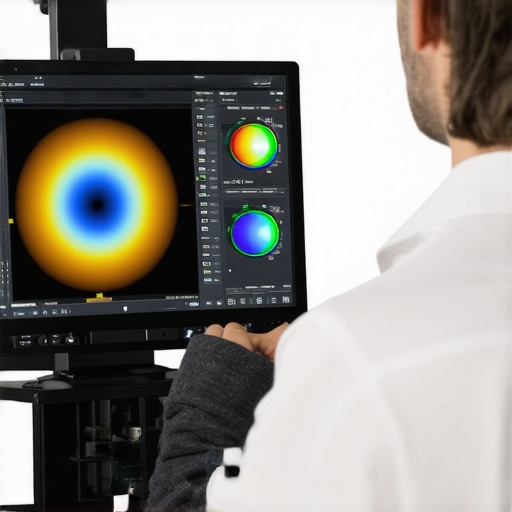
Quantum dot displays exemplify the upcoming frontier, combining nanocrystal technology with existing LCD frameworks to achieve near-perfect color accuracy and brightness uniformity. Mastering calibration in this context requires understanding quantum dot spectral efficiencies and their interaction with different backlight intensities. According to recent reports by industry leader Nanosys, these displays can exhibit a wider color gamut exceeding 120% of BT.709, significantly enhancing HDR workflows. Implementing tailored calibration standards for quantum-dot displays ensures creators maximize their visual potential and meet the most stringent color standards.
Harnessing Spectral Calibration Advances for Flawless Color Reproduction
Recent developments in spectral measurement technology have revolutionized calibration protocols, enabling professionals to verify color accuracy across a multitude of lighting conditions and display aging processes. Spectrophotometers now facilitate pixel-level analysis, allowing for precise adjustment of spectral profiles to match industry-specific standards, such as DCI-P3 and Rec. 2020, with minimal deviation. Integrating these tools into daily calibration routines ensures persistent fidelity, empowering creators to deliver consistently accurate visuals across diverse projects and workflows.
Why Adaptive Brightness Management Elevates HDR Content Creation
Static calibration often falls short in environments where ambient lighting fluctuates or when working with monitors featuring high peak luminance. Adaptive brightness management systems—leveraging real-time sensors and dynamic tone-mapping algorithms—adjust display luminance on-the-fly, preserving intended visual impact without sacrificing color accuracy. This sophisticated approach minimizes the risk of mid-session color shifts and ensures HDR content maintains its integrity from the initial edit to final delivery, adhering strictly to standards outlined by VESA and HDR10+ specifications.
Can Custom Calibration Algorithms Outperform Factory Settings in Professional Workflows?
While factory calibration provides a baseline, bespoke algorithms crafted by calibration specialists—incorporating machine learning and climate-adaptive parameters—offer a tailored solution that accounts for individual display behaviors. These advanced routines analyze thermal patterns, aging effects, and spectral drift over time, adapting calibration curves to uphold precise color rendering. Studies, such as those documented in the Journal of Imaging Science and Technology, confirm that custom calibration significantly reduces Delta E errors, resulting in superior consistency essential for high-stakes applications like digital cinema grading.
Unlocking the Benefits of Multi-Spectral Calibration for Color Consistency
By employing multi-spectral calibration methods, professionals can go beyond RGB standard profiling, measuring across a broader range of wavelengths to detect subtle inconsistencies and spectral leaks. This enables a deeper understanding of how various display technologies—such as OLED and Quantum Dot panels—perform over the full spectral range. Implementing multi-spectral data into ICC profiles ensures harmonious color presentation across multi-monitor setups, vital for complex workflows that demand exacting fidelity, from visual effects to scientific imaging.
Enhancing Calibration Protocols with Industry Standards and Certification Integration
Adhering to emerging validation standards, like those proposed by ISO 12646 and the Imaging Science Society (IS0), ensures calibration processes meet global quality benchmarks. Incorporation of certified calibration workflows fosters trustworthiness and repeatability, which is crucial when delivering high-value content to demanding clients. Leveraging certification tools and industry-recognized protocols not only elevates professional credibility but also aligns workflows with international best practices, as recommended by authoritative bodies like CIE (International Commission on Illumination).
Embracing Continuous Innovation in Display Technology Validation
The rapid evolution of display hardware necessitates ongoing validation strategies that incorporate real-time performance monitoring. Emerging solutions utilize embedded diagnostics and AI-powered analytics to detect early spectral drift or luminance degradation, prompting timely recalibration that preempts quality loss. Engaging with these cutting-edge validation methodologies safeguards the longevity and accuracy of professional monitors, ensuring peak performance in prolonged critical tasks. For an in-depth exploration, consult specialized resources on the latest in display validation protocols from leading industry research institutes.
Leverage Advanced Calibration to Future-Proof Your Studio Environment
Preparing for upcoming standards—such as 12-bit color workflows, wider gamuts, and enhanced HDR metadata—requires a proactive calibration infrastructure capable of adapting seamlessly. Incorporating modular calibration components and software extensibility into your workflow allows for scalable upgrades, avoiding costly hardware replacements. Staying engaged with industry consortium updates, such as VESA’s DisplayHDR specifications, and integrating their validation tools ensures your studio remains at the forefront of technological compatibility, supporting intricate creative demands well into the future.
Optimizing Multi-Display Synchronization for Cohesive Viewing Experiences
In multi-monitor environments, subtle discrepancies in color and luminance can disrupt creative coherence. Sophisticated synchronization involves synchronized calibration routines, uniform gamma correction, and precise ICC profile management across all displays. Leveraging hardware solutions capable of simultaneous calibration enhances efficiency, reducing room for human error. Achieving near-identical spectral responses ensures that multi-panel arrangements function as unified canvases, critical for tasks like virtual production, immersive design, and detailed color grading.
What Next Steps Ensure Your Calibration Outpaces Industry Shifts?
Staying ahead of technological curves involves continuous professional development—attending industry seminars, participating in beta testing of emerging calibration tools, and engaging with expert communities. Investing in adaptive calibration ecosystems that incorporate spectral analysis, real-time monitoring, and AI-driven adjustments provides resilience against future display innovations. Deepening your understanding through authoritative sources like the Society for Information Display (SID) can illuminate the nuances of upcoming display standards, allowing your calibration practices to evolve proactively and maintain unparalleled accuracy.
Expert Strategies for Perfecting Your Display Techniques
Leading professionals recognize that calibrated monitors are not just tools but vital partners in achieving visuals that meet the highest standards. Embrace advanced calibration workflows, integrate spectral measurement tools, and stay informed on emerging display technologies like Quantum Dot and Nano-LED to push your creative boundaries further. Ensuring luminance stability and color consistency across multiple devices requires a proactive approach, including regular recalibration sessions and utilizing monitors equipped with built-in sensors. This dedication to precision empowers your work to stand out in competitive environments.
Discover Key Resources Trusted by Industry Leaders
- Society for Information Display (SID): Offers the latest standards, white papers, and technical insights on display innovations and calibration practices.
- IEEE Transactions on Image Processing: Contains peer-reviewed research on spectral measurement advances and color fidelity algorithms crucial for high-end content producers.
- IMSA (Imaging Science Measurement & Standards Association): Provides guidelines, certifications, and training materials that elevate calibration expertise and workflow consistency.
Why Your Calibration Approach Must Evolve Now
The landscape of high-precision display technology demands continuous learning and adaptation. Mastering spectral calibration, embracing AI-driven adjustments, and understanding emerging color standards ensure your visuals do not just meet but exceed industry benchmarks. Investing in these advancements means your work remains future-proof, capable of adapting seamlessly as standards evolve and new display innovations enter the market. Engage with professional communities and stay connected to authoritative sources to keep your expertise at the forefront.
About the Author