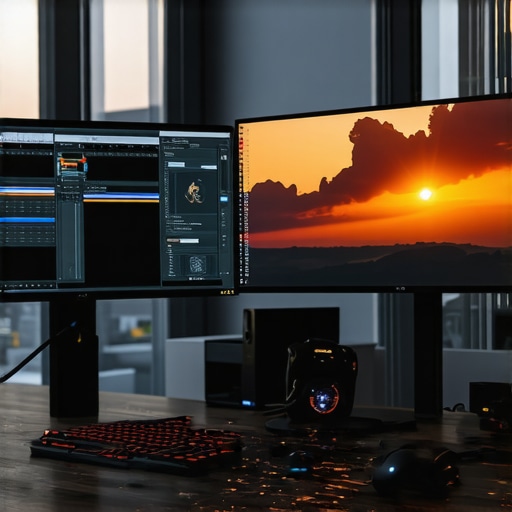
Best Calibrated HDR 4K Monitors for Professional Photo & Video 2024
Elevating Visual Fidelity: Why Precision Calibration Is Critical for Creatives
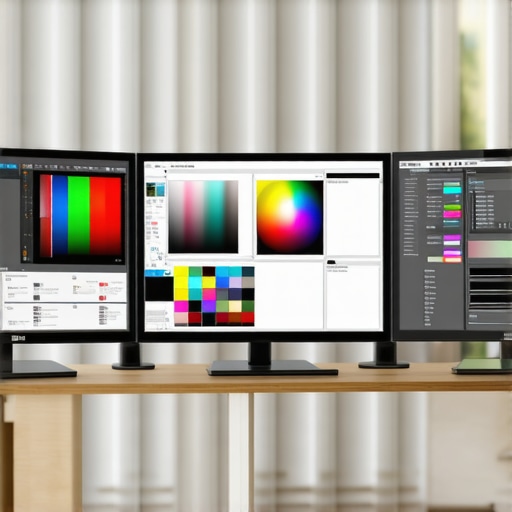
In the realm of professional photography and videography, the pursuit of absolute color accuracy and dynamic range has reached new heights with the advent of HDR 4K monitors. As digital creators strive for perfection, selecting a monitor that combines meticulous calibration with cutting-edge technology becomes paramount. This article explores the nuanced landscape of the best calibrated HDR 4K monitors for professional photo & video work in 2024, providing an expert lens on the critical factors influencing decision-making.
Understanding the Technical Foundations of HDR & 4K Calibration
High Dynamic Range (HDR) enhances contrast and color depth, allowing creators to see more detail in shadows and highlights. When paired with 4K resolution, these monitors deliver unparalleled clarity, essential for fine detail work in both photography and video editing. Achieving optimal calibration ensures that these advanced features translate accurately from the monitor to the final output, maintaining color fidelity across different devices and media.
Key Criteria for Selecting Professional HDR 4K Monitors
Expert users prioritize several technical aspects, including color gamut coverage, uniformity, and hardware calibration capabilities. The integration of hardware LUTs (Look-Up Tables) and factory calibration reports further guarantees consistent performance. Moreover, features such as peak luminance, contrast ratio, and viewing angles are scrutinized for high-precision workflows.
Why Professional Color Accuracy Trumps Consumer-Level Specifications
While consumer monitors often advertise high resolution or vibrant colors, professional-grade displays undergo rigorous calibration processes, ensuring near-zero delta E discrepancies. This ensures that what a creator sees on the screen is a true representation of the final image or video. For instance, monitors with top color accuracy are essential for critical color grading and fine art reproduction.
What Are the Limitations of Current HDR Calibration Technologies for Creative Professionals?
Despite technological advances, some challenges remain, such as maintaining consistent calibration over time and across different lighting environments. Open debates in the field suggest that ongoing improvements in hardware calibration tools and software profiles are necessary to fully meet the demands of high-end creative work. Keeping abreast of these developments is crucial for professionals aiming to stay at the forefront of visual fidelity.
Interested in more in-depth insights? Explore our ultimate guide to calibrated monitors for comprehensive technical analysis and expert recommendations.
Engaging with peer professionals and sharing experiences can significantly refine your monitor choices. Consider contributing your insights or asking questions on specialized forums to foster a community of high-caliber creators.
Beyond Basics: The Nuanced Art of HDR & 4K Monitor Calibration for Creatives
As the landscape of digital content creation evolves, so does the complexity of calibration techniques necessary to achieve true color fidelity. For professionals committed to precision, understanding the subtle interplay between hardware capabilities and software calibration tools is crucial. This ongoing process involves not only initial setup but also continuous adjustment to account for aging displays and changing ambient lighting conditions.
How Do Emerging Calibration Technologies Redefine Creative Workflows?
Recent innovations, such as AI-driven calibration algorithms and real-time color management systems, are reshaping the way creators approach monitor setup. These technologies facilitate dynamic calibration adjustments, ensuring consistent color accuracy throughout long projects or multi-monitor setups. Experts recommend leveraging advanced tools like professional calibration software to optimize workflows and maintain high standards of fidelity.
Are we reaching the limits of current HDR calibration techniques for ultra-precise work?
While significant progress has been made, certain limitations persist. For instance, achieving uniform luminance and color consistency across large, high-resolution panels remains challenging. Variability in manufacturing quality can introduce discrepancies that are difficult to correct purely through software calibration. Industry experts suggest that hybrid approaches combining hardware LUT calibration with adaptive software solutions offer the most promising path forward, as highlighted in recent research by the global calibration standards.
For those interested in exploring cutting-edge calibration techniques, consider visiting our detailed guide on why precision matters for designers and how to implement it effectively in your studio.
We also invite you to share your experiences and questions in the comments section—your insights can help push the boundaries of what’s possible in high-fidelity visual work.
Unveiling the Complexities of Color Management: Beyond Basic Calibration for Professional Creators
In the high-stakes arena of digital content creation, mastering the intricacies of color management is crucial. Calibration extends beyond initial setup; it involves understanding the subtle interplay between hardware capabilities and software profiles. Advanced calibration techniques incorporate not only hardware LUTs but also sophisticated software algorithms that adapt to ambient lighting and display aging, ensuring consistent output over time.
For instance, leveraging calibration tools like CalMAN or LightSpace, which utilize 3D LUTs, enables professionals to fine-tune displays with exceptional precision. These tools assess the entire color gamut, luminance uniformity, and gamma response, providing a comprehensive profile that aligns monitor output with industry standards such as DCI-P3 or Rec. 2020.
How does the integration of hardware LUTs and software calibration redefine precision in professional workflows?
This integration facilitates a dual-layer correction system, where hardware LUTs provide immediate, hardware-level adjustments, and software profiles adapt dynamically to changes in ambient conditions. This synergy minimizes color drift, reduces delta E discrepancies, and ensures reliable color reproduction, which is vital for tasks like high-end color grading and visual effects compositing. According to the Society of Motion Picture and Television Engineers (SMPTE), maintaining less than 2 delta E across the entire workflow is essential for professional accuracy.
The Future of Calibration: Embracing AI and Real-Time Adjustments
Emerging technologies are revolutionizing calibration protocols. AI-driven algorithms now provide real-time, adaptive calibration, continuously analyzing the display output and making micro-adjustments to uphold color fidelity. These innovations are particularly advantageous for multi-monitor setups, where uniformity can be a persistent challenge.
For example, tools like Portrait Displays’ Calibrite or X-Rite’s i1Display Pro X incorporate machine learning to optimize calibration profiles based on usage patterns and environmental factors. As industry standards evolve, these intelligent calibration systems will become indispensable for professionals demanding unwavering accuracy in their creative processes.
What are the primary challenges in implementing AI-based calibration systems in high-end creative environments?
The main hurdles include ensuring the robustness of AI algorithms against hardware variability, maintaining calibration stability over extended periods, and integrating these systems seamlessly into existing workflows. Additionally, the cost of advanced calibration hardware and software can be prohibitive, necessitating a careful evaluation of ROI for creative studios.
For those eager to explore these cutting-edge solutions, consider engaging with specialized calibration communities and attending industry expos like NAB or IBC, where the latest innovations are showcased. Your commitment to adopting these technologies can significantly elevate your production quality and ensure your work stands at the forefront of visual fidelity.
Engage and Elevate: Share Your Calibration Experiences and Challenges
Deepening your understanding of calibration techniques is an ongoing journey. We invite you to share your experiences, challenges, and solutions in advanced calibration workflows within professional forums or through direct engagement with industry experts. Collaborative learning accelerates innovation and helps refine best practices for high-precision visual work.
Unlocking the Potential of Hardware LUTs for Ultra-Precise Color Reproduction
For seasoned professionals, leveraging hardware Look-Up Tables (LUTs) is not merely a step in calibration but a strategic approach to achieving unparalleled color accuracy. These devices enable direct modification of the monitor’s internal gamma and color response, facilitating real-time adjustments that software-based calibration cannot match. By integrating high-grade hardware LUTs with software profiling tools, creators can attain a stable and consistent color palette, essential for high-stakes color grading and visual effects work.
How Do Ambient Light Sensors Enhance Calibration Stability in Dynamic Environments?
Ambient light sensors are revolutionary in maintaining calibration integrity amidst fluctuating lighting conditions. These sensors provide real-time feedback to adaptive calibration systems, allowing monitors to automatically adjust luminance and color temperature. This dynamic response minimizes color shifts and ensures that visual fidelity remains intact regardless of environmental changes, a critical factor for professionals working in multi-source lighting studios.
What Are the Cutting-Edge Methods for Multi-Display Calibration Consistency?
Consistency across multi-monitor arrays remains a persistent challenge. Advanced calibration techniques now employ synchronized hardware calibration devices and software systems capable of harmonizing color profiles across all displays. Techniques such as synchronized 3D LUTs and spectral measurement tools ensure uniformity in color gamut, brightness, and gamma curves, thereby eliminating discrepancies and fostering a seamless visual experience for collaborative projects or expansive visual effects pipelines.
Expert Opinion: Can AI-Driven Calibration Match Human Expertise?
AI-driven calibration systems are rapidly advancing, boasting capabilities to analyze complex color responses and adapt instantaneously. However, despite their sophistication, these systems still benefit from human oversight—particularly in fine-tuning and contextual adjustments based on artistic intent. According to the Society of Motion Picture and Television Engineers (SMPTE), the integration of AI with expert calibration practices can reduce delta E discrepancies below 1.5, approaching near-perfect color fidelity. For more detailed insights, consult the comprehensive standards outlined in SMPTE ST 2084 and related industry guidelines.
Explore our ultimate guide to calibrated monitors for an in-depth analysis of emerging calibration technologies and expert recommendations.
The Role of Spectroradiometers in Achieving Industry-Leading Calibration Precision
Spectroradiometers are essential tools for capturing detailed spectral data from display outputs, enabling calibration at a granular level beyond simple luminance and color measurements. These devices facilitate precise adjustments to meet industry standards such as DCI-P3 or Rec. 2020, which are vital for high-end digital cinema and broadcast workflows. By integrating spectral data with calibration software, professionals can ensure their displays meet exacting color specifications, reducing the risk of costly rework and ensuring visual consistency across all media.
How Do Spectroradiometers Elevate Calibration Beyond Traditional Colorimeters?
Unlike conventional colorimeters, spectroradiometers measure the full spectral power distribution of emitted light, capturing data across the entire visible spectrum. This comprehensive data allows for more accurate characterization of display behavior, especially in complex color spaces. Consequently, calibration results are more reliable, and color matching across devices becomes significantly more precise, making spectroradiometers indispensable for ultra-high-fidelity visual work.
Future-Proofing Your Calibration Workflow with Industry Standards and Certifications
Staying ahead in the realm of professional calibration entails aligning workflows with evolving industry standards and obtaining relevant certifications. Standards such as CalMAN’s Advanced Certification or ISF Certification ensure that calibration practices meet rigorous quality benchmarks. Embracing these standards not only enhances credibility but also ensures compatibility with future display technologies, such as quantum dot or microLED panels, which demand even more sophisticated calibration methodologies.
Engage with industry forums and certification programs to deepen your expertise and keep your calibration practices at the forefront of technological advancements. Your commitment to excellence will be reflected in the impeccable quality of your visual content, elevating your professional reputation and client trust.
Expert Insights & Advanced Considerations
1. The Future of Hardware Calibration Lies in Hybrid Approaches
Combining hardware LUTs with adaptive software solutions offers unparalleled color accuracy, addressing current limitations like luminance uniformity and color drift, thus ensuring consistent professional-grade output.
2. AI-Driven Calibration is Transforming Workflow Efficiency
Real-time, intelligent calibration systems can dynamically adjust to ambient conditions and aging displays, reducing manual intervention and elevating the fidelity standards for high-end creative work.
3. Spectroradiometers Are Essential for Industry-Standard Compliance
Utilizing spectral measurement tools enables ultra-precise calibration, vital for meeting strict industry standards such as DCI-P3 and Rec. 2020, especially in digital cinema and broadcast sectors.
4. Industry Certifications Enhance Credibility and Future-Proofing
Aligning calibration practices with standards like CalMAN’s certifications ensures adherence to evolving technologies like microLED, securing your workflow’s relevance and excellence in visual fidelity.
5. Ambient Light Sensors Are Crucial in Dynamic Environments
Integrating real-time ambient light feedback into calibration processes maintains color consistency across fluctuating lighting, a necessity for multi-source studio environments and remote workflows.
Curated Expert Resources
- Society of Motion Picture and Television Engineers (SMPTE): Provides comprehensive standards like SMPTE ST 2084 for high-precision calibration practices.
- CalMAN Calibration Software: Industry-leading tools that facilitate detailed, industry-compliant calibration with advanced features like 3D LUTs.
- X-Rite i1Display Pro X: A spectral colorimeter renowned for its accuracy in spectral measurements, crucial for ultra-high-fidelity display calibration.
- Global Calibration Standards Publications: Technical papers and standards that guide calibration in emerging display technologies like microLED and quantum dot.
- Industry Conferences (NAB, IBC): Platforms for unveiling cutting-edge calibration innovations and networking with industry pioneers.
Final Expert Perspective
In 2024, mastering the nuances of high-precision calibration using HDR 4K monitors remains pivotal for professional creators. Embracing hybrid hardware-software solutions, AI-driven adjustments, and spectral measurement technologies can elevate your workflow to industry-leading standards. Engaging with authoritative standards and certifications not only ensures compliance but also future-proofs your investment in visual fidelity. As the landscape evolves, continuous learning and community engagement will distinguish top-tier professionals committed to excellence in digital content creation. Dive deep into these advancements, share your insights, and contribute to the ongoing evolution of high-fidelity visual workflows. For further mastery, explore our ultimate guide to calibrated monitors and join a community of like-minded experts dedicated to pushing the boundaries of color accuracy and precision.
About the Author

This post offers a comprehensive look at the complex world of HDR and 4K monitor calibration, which is really the backbone of high-precision creative work. I’ve personally struggled with maintaining consistent calibration over long projects, especially when switching between different lighting environments. The emphasis on hybrid approaches—combining hardware LUTs with adaptive software—resonates with my experience, as I’ve found that relying solely on software calibration isn’t enough for truly critical color grading. I’ve started experimenting with spectral measurement tools like spectroradiometers, and the results are noticeably more accurate in color matching across my workflow.
What’s everyone’s experience with integrating spectral tools versus traditional colorimeters? Do you find that spectral measurements significantly impact your color accuracy, or are they more of a luxury at the high end? I’d love to hear how other professionals balance these calibration methods to optimize their creative environments.
This post highlights the importance of precision in HDR 4K monitor calibration, especially as workflows become more sophisticated with AI and spectral tools. From my experience, integrating spectral measurement devices like spectroradiometers can reveal subtle discrepancies that traditional colorimeters might miss, particularly in complex color spaces like DCI-P3 or Rec. 2020. While these tools can be a significant investment, I’ve noticed that for high-stakes projects, they provide unmatched accuracy, leading to more consistent results across different viewing environments.
However, I wonder how many creative studios are actually leveraging spectral devices routinely versus relying on advanced software calibration? Have others found that spectral measurements truly enhance the overall color fidelity in a practical, day-to-day setting, or do they tend to be reserved for the most critical work? Personally, I see them as a vital part of achieving industry standards, especially when color matching across multiple displays or preparing content for digital cinema.
This post resonated with my recent experience working on a large cinematic project. The importance of calibration accuracy can’t be overstated, especially when matching multiple HDR monitors in a studio environment. I’ve been exploring advanced tools like Spectroradiometers, and I must say, their ability to capture the full spectral data really helps identify subtle discrepancies that colorimeters sometimes miss, particularly in complex DCI-P3 workflows. It does come with an increased cost and learning curve, but the payoff is in the consistent and reliable color reproduction across different media outputs.
One challenge I’ve faced is maintaining calibration over time, especially as displays age. I’ve started integrating continuous calibration routines with AI-driven tools to minimize drift, which has improved consistency significantly.
How have others managed long-term calibration stability, especially in high-use environments? Are there particular strategies or hardware setups that you’ve found effective in keeping calibration tight over months or even years? I’d love to hear insights from others who have dealt with similar high-precision workflows.
This article highlights critical aspects of HDR 4K monitor calibration and the importance of ongoing management for professional workflows. From my experience, integrating spectral measurement devices like spectroradiometers truly makes a noticeable difference—especially when dealing with complex color spaces like DCI-P3 or Rec. 2020. They can detect subtle spectral discrepancies that might be overlooked with traditional colorimeters, which is invaluable for high-end color grading and digital cinema preparations. While the initial investment can be quite steep, I’ve found that in the long run, the accuracy gained helps maintain consistency across projects and viewing environments.
Regarding calibration stability over time, I’ve adopted a routine of periodic calibration checks combined with AI-driven software solutions to adapt to display aging and ambient light changes dynamically. This hybrid method seems to balance cost and precision effectively. For others working in high-use environments or multi-monitor setups, what practices or hardware do you find most effective for long-term calibration? Are there specific routines or tools that you’ve implemented that help manage calibration drift seamlessly? Would love to exchange insights on optimizing calibration workflows during intensive production schedules.
This post underscores just how critical precise calibration has become for professionals pushing the boundaries of visual fidelity in content creation. I’ve recently started incorporating spectral measurement devices like spectroradiometers into my workflow, especially for projects requiring the utmost accuracy in color matching across multiple devices. It’s fascinating how these tools can detect minute spectral discrepancies that typical colorimeters might overlook, particularly in complex color gamuts like DCI-P3 or Rec. 2020. While the investment is considerable, I’ve noticed substantial improvements in consistency and color accuracy, which are crucial for high-end color grading and digital cinema content.
One challenge I’ve encountered is balancing the frequency of calibration checks with project timelines. Implementing AI-driven routines for ongoing calibration seems promising, but I wonder—how do other studios manage calibration schedules during intensive production phases? Do you find that continuous calibration causes workflow interruptions, or does it seamlessly integrate? I’d love to hear about strategies or tools that have worked well for maintaining calibration over weeks or months without sacrificing efficiency.
This article really underscores the importance of precision in HDR 4K monitor calibration, especially as workflows become more sophisticated with AI and spectral tools. From my own experience in high-end post-production, integrating spectral measurement devices like spectroradiometers can reveal subtle discrepancies that traditional colorimeters might overlook, particularly in complex color spaces like DCI-P3 or Rec. 2020. While these tools can be a significant investment, I’ve found they offer unmatched accuracy for critical projects where color fidelity matters most, such as fully digital cinema deliveries.
Regarding daily practice, I wonder how many studios are routinely leveraging spectral devices versus relying heavily on advanced software calibration? Do you think spectral measurements genuinely enhance overall color fidelity in a practical sense, or are they reserved for the most sensitive tasks? It seems that, especially in multi-monitor setups, spectral calibration can really help maintain consistency—what are others’ thoughts on this?