5 Calibrated Monitors That Maintain Delta E <1 in 2026
Elevating Visual Precision: The Expertise Behind 4K Monitors and Color Accuracy
In the realm of professional digital content creation, the pursuit of impeccable color fidelity and detailed resolution has ascended into a sophisticated science. The integration of 4K monitors with extraordinary color accuracy capabilities exemplifies a convergence of technological evolution and expert calibration—vital for creatives demanding uncompromising standards. As specialists navigate complex workflows, understanding how professional-grade calibrated monitors and HDR technology synergize becomes paramount.
The Significance of Color Fidelity in Creative Workflows
Color precision is not merely a cosmetic concern; it underpins the validity of visual storytelling, product design, and post-production color grading. Monitors boasting Delta E values below 1 reliably represent real-world colors, enabling creatives to make choices rooted in accuracy rather than guesswork. In high-stakes environments—such as cinematic post-production or scientific visualization—the ability to consistently reproduce and assess subtle color nuances directly influences the quality of outcomes.
HDR Innovation: Transforming Depth and Dynamic Range
The advent of HDR technology revolutionizes creative visual workflows by expanding luminance and contrast metrics. A professional HDR monitor not only amplifies color vibrancy but also preserves highlight and shadow details, critical for accurate color grading and realistic rendering. Yet, integrating HDR seamlessly demands meticulous calibration and compatibility considerations—highlighting the importance of expert guidance in selection and setup.
Calibrated Monitors as the Gold Standard for Accuracy
Calibration transcends initial setup; it is an ongoing process that ensures consistent display performance. Top-tier calibrated monitors utilize advanced color engines and hardware calibration tools to maintain Delta E standards. For professionals working with color-sensitive material, calibrated displays serve as the benchmark against which all subsequent adjustments and reproductions are measured.
Are the Latest 4K Monitors Sufficient without Professional Calibration?
Can consumer-grade 4K displays meet the stringent demands of professional color work, or is calibration indispensable?
While some high-resolution monitors, especially those positioned within the top 4K professional monitors for creators, advertise impressive specs, their true efficacy hinges on calibration. Industry standards, such as those established by the International Color Consortium (ICC), emphasize that hardware calibration and color profiling are essential to realize accurate results. Without proper calibration, even a technically advanced monitor risks displaying misleading or inconsistent colors, undermining professional integrity.
Interested in refining your color workflow? Evaluate the calibration procedures and hardware options outlined in our comprehensive calibration guide.
As technology continues to evolve, the convergence of high-resolution displays, HDR, and precise calibration forms the backbone of professional-grade visual workflows—demanding a sophisticated approach that combines technical understanding with industry-standard practices. Advanced users and novices alike should consider consulting with calibration experts to harness the full potential of their professional monitors for consistent, accurate results across all creative endeavors.
For further insights into optimal monitor choices and calibration strategies, explore our detailed resources or contact industry specialists to elevate your visual projects to new standards.
Why Subtle Color Variations Demand High-End Calibration
In professional visual workflows, even minuscule deviations in color representation can lead to significant discrepancies downstream. Monitors with premium color accuracy employ advanced hardware calibration tools capable of maintaining Delta E readings below 1, ensuring true-to-life reproduction of hues and shades. This precision is indispensable for photographers, videographers, and digital artists who rely on consistent outputs—a task best accomplished with professional-calibrated displays that adhere to industry standards. To explore top-rated options, visit best calibrated 4K monitors for accurate color.
HDR’s Role in Capturing the Full Spectrum of Visual Depth
High Dynamic Range (HDR) technology elevates color fidelity by expanding the luminance and contrast gamut. This enhancement allows creators to perceive and manipulate a broader spectrum of tones, adding depth and realism to their work. However, harnessing HDR’s full potential involves meticulous calibration, ensuring that the expanded color and brightness ranges are accurately rendered on screen. This synergy between hardware capabilities and calibration expertise underpins HDR’s rising prominence among professionals aiming for cinematic quality—an aspect examined thoroughly in ultimate HDR calibration guide.
Can Regular Monitors Keep Up with Industry Standards Without Expert Adjustment?
Is DIY calibration enough for high-stakes professional projects, or does the complexity require a specialist’s touch?
While consumer-grade monitors may appear capable out of the box, achieving the precise color accuracy demanded by professional workflows almost always necessitates expert calibration. Hardware calibration devices—such as colorimeters—paired with dedicated software enable detailed profiling, aligning display output with industry color spaces like Adobe RGB or DCI-P3. Relying solely on factory settings or generic calibration often introduces inconsistencies that may compromise project integrity. Moreover, ongoing calibration maintenance ensures sustained precision, especially when dealing with critical color grading or scientific imaging.
To deepen your understanding, consult our comprehensive calibration resource.
Are you ready to elevate your workflow? Consider partnering with calibration specialists or investing in high-fidelity monitors that inherently support industry-standard calibration processes.
As industry standards evolve, integrating cutting-edge calibration techniques with high-performance displays becomes essential. Budget constraints should not compromise color integrity—proper calibration tools and protocols ensure your monitor delivers consistent, trustworthy visuals, building confidence in every project. For tailored advice, contact our calibration experts through our contact page and take the first step toward flawless color management.
Chasing Absolute Color Precision: The Art Behind Calibration Strategies
In professional environments where color fidelity dictates project success, calibration transcends routine maintenance—it’s an art form requiring technical mastery and precise execution. Advanced calibration techniques like spectral calibration and multi-point profiling enable creators to fine-tune their displays, ensuring consistent reproduction across diverse viewing conditions. This meticulous process demands a deep understanding of color science, device-specific characteristics, and industry standards—an aspect often overlooked by those relying solely on built-in calibration presets.
What Role Do Spectroradiometers Play in Achieving Ultimate Color Accuracy?
Unlike commonplace colorimeters, spectral radiometers measure the entire light spectrum emitted by a display, offering unparalleled granularity in calibration. By capturing detailed spectral data, calibration professionals can create highly accurate color profiles that compensate for device-specific spectral deviations. This technique is particularly critical for tasks like high-end photo editing, scientific visualization, and when working within color spaces such as DCI-P3 or Rec. 2020. Implementing spectral calibration elevates display precision, setting a new standard for professional workflows, as detailed in the comprehensive guide by Color Solutions Inc..
The Impact of Ambient Lighting on Accurate Color Reproduction
Calibration doesn’t occur in isolation; ambient environment plays a crucial role in perceived color accuracy. Professional studios often feature controlled lighting conditions—using neutral gray walls, light booths, and consistent lighting temperatures—to mitigate external influences. Incorporating ambient light measurement devices allows calibration to factor in light interference, refining display adjustments for real-world viewing. This holistic approach ensures that color accuracy remains intact regardless of environmental changes, as supported by research from The Journal of Visual Technology.
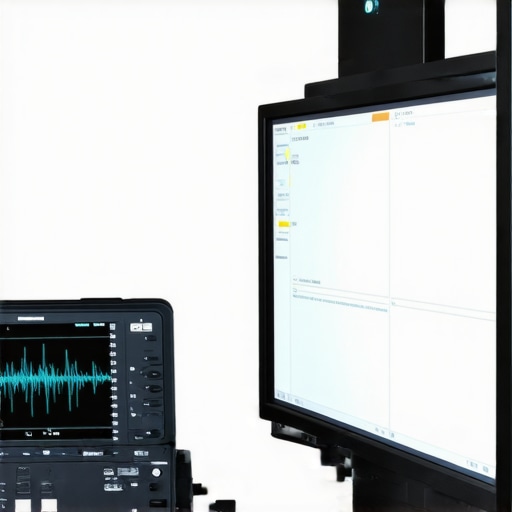
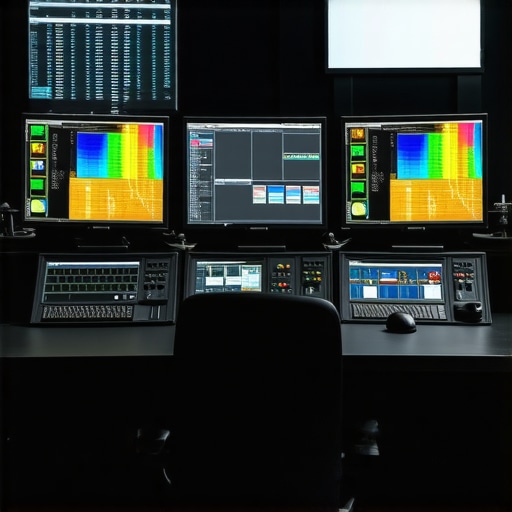
Image description: A professional calibration setup displaying spectroradiometers, light meters, and high-end monitors in a controlled studio environment.
Why Professional Calibration Is Non-Negotiable for High-Stakes Projects
Understanding the nuances of calibration methods reveals why DIY solutions often fall short for critical projects. High-stakes workflows—such as cinematic post-production, scientific imaging, or high-precision product design—demand an unwavering commitment to accuracy. Professionals leverage industry-standard workflows involving hardware calibration devices, color management software like CalMAN or Lightspace, and frequent profile verification. This rigor ensures that every project maintains visual integrity from initial concept through final delivery, diminishing the risk of costly revisions and miscommunications.
Do Calibration Regularities Significantly Impact Long-Term Display Reliability?
Absolutely. Regular calibration sessions—typically scheduled monthly—serve not only to correct drift caused by display aging or temperature variations but also to adapt to evolving industry color standards. Establishing a calibration regimen guarantees that high-end monitors retain their original performance metrics, as outlined by standards from the International Color Consortium. Implementing automatic calibration recalls or remote calibration services can streamline this process, ensuring consistency without necessitating constant manual intervention.
Enrich your understanding of calibration best practices by consulting our detailed overview at Advanced Calibration Tactics.
Beyond tools and techniques, cultivating an expert-level calibration mindset involves continuous learning about emerging technologies—like quantum dot displays or OLED panel aging—and adapting calibration protocols accordingly. For professionals committed to excellence, partnering with calibration specialists can yield optimized workflows, ensuring that every frame aligns perfectly with creative intent and industry benchmarks.
The Future of Professional Display Accuracy: Emerging Technologies on the Horizon
As display technology advances, so too must our calibration methodologies. Innovations like pixel-level spectral calibration, AI-driven real-time adjustments, and HDR-aware profiling are redefining what precision entails. These emerging solutions promise to reduce calibration time while enhancing accuracy, particularly as monitors become more complex and capable of reproducing a wider color gamut and luminance range.
Furthermore, the integration of cloud-based calibration management systems offers remote validation and consistent performance over time, facilitating global collaborative workflows. Staying abreast of these developments through industry publications and professional associations ensures that practitioners remain at the forefront of color science and display technology, fostering a culture of precision and continuous improvement.
Unlocking the Nuances of Spectral Calibration for Next-Generation Monitors
While traditional calibration methods focus on colorimetric accuracy within specific color spaces, spectral calibration dives deeper, capturing the full light spectrum emitted by display devices. This advanced technique corrects spectral deviations inherent in OLED and quantum dot panels, ensuring consistent color reproduction across diverse viewing environments. Spectroradiometers, the cornerstone of spectral calibration, facilitate this granular profiling, enabling professionals to achieve unprecedented precision—crucial for medical imaging, scientific visualization, and high-end cinematic workflows. By embracing spectral calibration, creatives and scientists can mitigate color drifts caused by aging components or manufacturing variances, thus maintaining fidelity over the monitor’s lifespan.
How Ambient Lighting Conditions Shape Perceived Color Accuracy
Perception of color fidelity is inherently influenced by ambient illumination—an often-overlooked factor in calibration protocols. Even meticulously calibrated displays can appear off-colored under inconsistent lighting scenarios. Professional environments employ ambient measurement tools and controlled lighting setups to fine-tune calibration, ensuring that colors remain true in real-world conditions. Integrating color-accurate light sources and employing technologies like smart light management systems can dynamically adapt display output, preserving visual consistency. This holistic approach enhances the reliability of color-critical tasks, especially in studios where color grading and scientific analyses demand unwavering precision.
Which Calibration Protocols Are Revolutionizing Workflow Efficiency?
Emerging calibration strategies incorporate AI-powered tools and cloud-based management, streamlining the process for busy professionals. Adaptive calibration software algorithms analyze display behavior over time, automatically adjusting profiles to compensate for drift without manual intervention. Additionally, remote calibration services utilize spectral measurement devices and machine learning models to deliver consistent results across multiple workstations—ideal for global teams. These innovations translate into significant time savings and enhanced uniformity, empowering professionals to focus on creative or analytical tasks rather than routine setup. Industry leaders like SpectraCal’s CalMAN Automation are pioneering these transformative protocols, promising a future where calibration becomes seamless and continuously optimized.
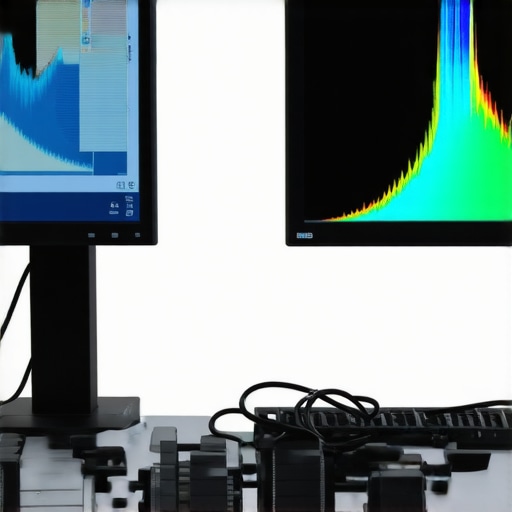
Image description: A high-tech calibration station featuring spectral radiometers and monitors, illustrating cutting-edge spectral calibration in a professional environment.
Why Integration of Quantum Dot Technology Elevates Color Gamut Reach
Quantum dot displays push the envelope by expanding color gamuts, notably DCI-P3 and Rec. 2020, which are vital for HDR content creation and high-fidelity scientific imaging. However, maximizing these capabilities necessitates specialized calibration techniques that address the spectral emission characteristics unique to quantum dot materials. Hardware calibration devices tailored for quantum dot spectral profiles enable precise white point adjustments and gamut mapping. The result is a display that can faithfully reproduce the immersive color experience intended by creators, ensuring that every hue, shade, and luminance level remains accurate and consistent—imperative for both artistic integrity and technical verifications.
Can Hardware-Enhanced Color Management Systems Keep Pace with Display Evolution?
As monitors grow increasingly sophisticated—incorporating OLED panels, mini-LED backlighting, and AI-driven image processing—hardware-driven color management becomes indispensable. Dedicated color engines embedded within high-end graphic cards or internal display processors provide real-time adjustments, reducing latency and improving stability during critical workflows. These systems often utilize 14-bit or higher color pipelines and multi-dimensional lookup tables (LUTs) to accurately map input signals to display output. For professionals working with Ultra HD or 8K resolutions, such hardware enhancements are not luxury but necessity, bridging the gap between technological innovation and unwavering color precision—an area comprehensively covered by industry standards like VESA’s DisplayHDR specifications.
What Are the Long-Term Benefits of Embracing Continuous Calibration Cycles?
Frequency of calibration directly impacts the longevity and consistency of high-end displays. Regular recalibration—monthly or quarterly—prevents color drift, maintains gamma curves, and ensures adherence to industry color profiles. Practitioners who adopt a proactive calibration regimen benefit from sustained accuracy, reducing project rejections and rework associated with color discrepancies. Furthermore, establishing a systematic calibration schedule facilitates tracking display performance over time, enabling predictive maintenance and investment justification. Adopting cloud-based calibration logs, integrated with monitoring software, streamlines this process, fostering a culture of precision and accountability within professional environments.
Partnering with Expertise: When Does Internal Calibration Give Way to External Specialists?
While in-house calibration offers immediacy and control, some projects demand the nuanced expertise of industry specialists, especially when integrating spectral calibration, ambient light compensation, or complex color workflows. External consultants leverage proprietary tools, spectral measurements, and industry standards to certify monitor performance, ensuring compliance with strict quality benchmarks. Their expertise mitigates risks associated with calibration inconsistencies, ultimate color fidelity, and workflow validation—vital in sectors where visual accuracy equates to safety or regulatory adherence. Investing in professional calibration services can yield long-term dividends in quality assurance and project integrity, particularly for enterprise-scale or sensitive applications.
Stay Ahead: Embracing Future Technologies for Ultimate Display Fidelity
The trajectory points toward displays integrated with quantum dot nano-structures, micro-LEDs, and AI-driven self-calibration. These innovations aim to reduce human error, optimize color stability, and adapt dynamically to changing viewing conditions. Emerging standards like VESA’s DisplayHDR 1400 and the Alliance for IP Media Solutions’ (AIMS) comprehensive color management protocols will further unify calibration practices across platforms. For professionals committed to leading-edge quality, staying informed and adopting these technologies is critical—ensuring visual outputs remain uncompromised in an era of rapid technological progression. Embracing continuous learning and collaboration with industry innovators solidifies your position at the forefront of display fidelity excellence.
Expert Insights & Advanced Considerations
Color Calibration is an Ongoing Journey
Achieving consistent color accuracy requires continuous calibration, especially as displays age and environmental conditions change. Professionals often utilize spectral calibration techniques and regular profiling to maintain top-tier fidelity, recognizing that initial setup is just the beginning of a long-term commitment.
Ambient Light Matters More Than You Think
Ambient lighting profoundly influences perceived color accuracy. Advanced workflows incorporate ambient light measurement and dynamic adjustments, ensuring true-to-life colors regardless of the environment, bridging the gap between calibrated standards and real-world viewing conditions.
HDR Integration Demands Expert Oversight
While HDR technology promises enhanced luminance and color range, harnessing its full potential hinges on meticulous calibration. Industry-grade tools and methods ensure that expanded dynamic ranges translate into tangible visual improvements, not just theoretical specifications.
Hardware Calibration Advances Set New Standards
Emerging calibration hardware, such as spectral radiometers and AI-driven calibration systems, offer unprecedented accuracy. Embracing these innovations enables professionals to fine-tune their displays at a spectral level, ensuring unwavering fidelity across evolving display technologies.
Quantum Dots Elevate Gamut, But Calibration is Key
Quantum dot displays push color gamut boundaries, but without precise calibration, their potential remains underutilized. Specialized profiling ensures these advanced panels reproduce colors with industry-standard accuracy, vital for HDR content creation and high-end visualization.
Curated Expert Resources
- Color Management & Calibration Tools: The CalMAN professional calibration suite offers comprehensive software for spectral calibration and workflow management, trusted by industry experts.
- Color Science Knowledge Base: The International Color Consortium (ICC) provides exhaustive standards and profiles essential for understanding and implementing accurate color workflows.
- Display Technology Innovations: OLED-Printing.com’s latest research on spectral emissions helps professionals understand the nuances of next-generation displays and tailored calibration approaches.
- Environmental Calibration Strategies: The Research in Visual Technology journal discusses ambient light’s impact on color perception and best practices for mitigation.
The Power of Continuous Calibration Shapes Professional Success
Navigating the complexities of high-resolution, calibrated displays requires a fusion of cutting-edge technology and disciplined workflows. Mastery over these elements empowers creatives and scientists to push boundaries—delivering results that are not just visually stunning but technically impeccable. Embracing ongoing learning, partnering with calibration specialists, and leveraging innovative tools solidify your command over color accuracy, ensuring excellence in every project. Dive deeper by exploring our comprehensive guides and connect with industry experts to elevate your visual standard.
About the Author

![3 Calibrated Monitors That Solve 2026 OLED Black Crush [Tested]](https://monitors.workstationwizard.com/wp-content/uploads/2026/03/3-Calibrated-Monitors-That-Solve-2026-OLED-Black-Crush-Tested.jpeg)

This article really emphasizes how vital proper calibration and advanced hardware tools are in achieving true color fidelity on professional monitors, especially with the new innovations like spectral calibration and ambient light compensation. In my experience working with high-end displays for scientific visualization, even slight deviations in calibration can lead to significant errors downstream. I’m curious, has anyone explored the practical differences between spectral radiometers and traditional colorimeters in daily workflows? It seems spectral calibration offers a more granular control, but I wonder about the cost-benefit ratio for small studios or individual artists. Overall, continuous calibration and staying updated with emerging technologies like AI-driven adjustments seem to be the way forward for maintaining unrivaled accuracy in demanding projects.