Why Your 2026 4K Monitor Fails 10-Bit Gradients: 3 Pro Fixes
Enhancing Creative Workflows through Advanced Monitor Technologies
In today’s professional environments, the pursuit of unparalleled image accuracy and color fidelity demands more than standard display setups. As 4K monitors become the backbone of visual production, understanding the nuances of HDR implementation, calibration precision, and color accuracy is essential for professionals aiming for excellence.
Deciphering the Complexities of 4K Resolution and HDR Mastery
High-resolution 4K displays, paired with bespoke HDR capabilities, offer a significant leap in visual detail and dynamic range. However, not all monitors leverage these features equally. The disparity in peak luminance, EOTF tracking, and local dimming techniques influences whether a display truly meets professional standards or falls prey to common pitfalls like highlight clipping or black crush.
The Critical Role of Calibration in Achieving Reproducible Color Fidelity
An expertly calibrated monitor transcends generic factory settings, delivering consistent, predictable colors tailored to creative workflows. Hardware LUTs, built-in waveform monitoring, and precise OSD controls are instrumental in ensuring accurate color spaces such as Rec. 2020 and DCI-P3 are faithfully reproduced, which is vital in post-production scenarios where color grading precision is non-negotiable.
Unveiling the Challenges of Maintaining Consistency Over Time
Professional monitors are susceptible to drift caused by factors like backlight aging, thermal fluctuations, and firmware inconsistencies. Regular calibration routines and hardware-based solutions mitigate these issues, allowing professionals to maintain the integrity of their visuals over extended project timelines, as underscored by recent industry white papers.
Can Your HDR Monitor Accurately Render 10-Bit Gradients Without Banding?
This question probes the core of HDR display performance, where the ability to render seamless gradients is paramount to achieving lifelike imagery. Many HDR monitors still struggle with banding artifacts, especially in dark or subtle color transitions, owing to limitations in bit depth processing or inadequate calibration. Investing in models equipped with true 12-bit processing and robust EOTF tracking can significantly diminish gradient artifacts, elevating visual realism. For an in-depth comparison, explore our latest guide on professional-grade monitors.
What Future Innovations Will Define Next-Generation Calibration Techniques?
Emerging technologies like AI-driven calibration, increased hardware LUT precision, and real-time spectral measurements are poised to redefine consistency and ease of calibration in professional monitors. Staying ahead requires continuous engagement with these advancements and adopting models that integrate seamless calibration workflows, ensuring color fidelity remains uncompromised despite the rigors of modern production demands.
For seasoned professionals interested in mastering calibration nuances, our comprehensive articles offer valuable insights. Engage with content such as why calibration accuracy enhances creative output.
Maintaining trust necessitates leveraging high-quality hardware complemented by consistent calibration practices—elements fundamental to delivering reliable, premium content creation experiences in 2026 and beyond.
Why Color Uniformity Across Your Workspace Matters More Than Ever
Consistent color reproduction across multiple calibrated monitors is crucial for collaborative projects and multicamera workflows. Inconsistent color shifts or tint variations can introduce discrepancies that compromise the final output—especially in high-stakes productions like feature films or industrial design. Utilizing uniform calibration standards, leveraging hardware LUTs with real-time compensation, and maintaining an optimal ambient environment help ensure your entire suite of displays remains synchronized. For an in-depth understanding of these practices, check out our guide on preventing studio monitor drift.
Can Your Display Technology Keep Up with the Demands of HDR in 2026?
HDR technology continues to evolve, demanding monitors that can precisely reproduce high luminance levels, subtle shadow details, and color volume—without compromise. While peak brightness is vital, the underlying EOTF tracking, local dimming finesse, and resolution of internal LUTs determine whether HDR content appears vibrant or oversaturated. Advances such as quantum dot filters and Nano-IPS panels are promising but require meticulous calibration to deliver consistent results across different viewing environments. To learn how top-tier HDR monitors are pushing boundaries, explore the latest innovations in HDR display technology.
Choosing the Right Calibration Tools for Long-Term Accuracy
Calibration isn’t a one-time event; it’s an ongoing process that safeguards your workflow’s precision. Hardware-based solutions, like spectrophotometers with spectral measurement capabilities and expanded spectral calibration ranges, provide the accuracy needed for professional environments. Coupled with software that supports advanced calibration routines—such as 3D LUT creation, gamma tracking, and white point stability—you can achieve exceptional color fidelity with minimal drift over time. Expert-reviewed calibration workflows, including regular target verification and environmental controls, are detailed in articles like our comprehensive approach to calibration consistency.
How Will Emerging Technologies Transform Calibration Ease in 2026 and Beyond?
Innovations like AI-automated calibration, spectral fingerprinting, and machine learning algorithms promise to simplify complex calibration routines while enhancing accuracy. These technologies aim to provide real-time feedback and proactive adjustments, reducing manual intervention and minimizing human error. For example, spectral-based calibration tools can account for subtle panel variations, enabling more granular control over color reproduction. Keeping abreast of these developments, such as the integration of hardware LUT algorithms with AI, is vital for professionals committed to unparalleled fidelity. To stay at the forefront, consider exploring expert insights on emerging calibration solutions.
In the high-precision world of professional visual production, leveraging advanced calibration frameworks ensures your monitor setup remains reliable regardless of the workload or environmental changes. Continuous learning and adopting cutting-edge tools are keys to maintaining your edge in 2026 and beyond.
,
Achieving Precise Tone Mapping in HDR Workflows
One of the less obvious yet critical challenges in professional HDR calibration is accurate tone mapping—ensuring that highlights, midtones, and shadows are rendered faithfully across diverse viewing conditions. Advanced calibration involves not only setting static parameters but also dynamically aligning internal EOTFs with ambient lighting scenarios. Techniques such as utilizing spectral measurement devices capable of capturing real-time luminance and chromatic responses allow calibrators to fine-tune display behavior, resulting in more lifelike tonality reproduction. This precision minimizes issues like highlight clipping, which can obscure detail in bright areas, and black crush, where shadow detail is lost, impairing overall image depth.
How does dynamic tone mapping influence professional content creation?
Dynamic tone mapping adapts the display’s output based on scene complexity, but in professional settings, static tone mapping calibrated to standardized profiles (like PQ or HLG) ensures consistency. High-end workflows often incorporate hardware LUTs with spectral feedback loops, enabling the monitor to reliably reproduce the intended luminance mapping, which is essential for accurate grading. Citing industry standards like those defined by the Video Electronics Standards Association (VESA), calibrated tone curves must align with the PQ (Perceptual Quantizer) model—favoring models supported by authoritative documents such as the BT.2100 standard (VESA, 2020). This rigorous approach allows colorists to make confident decisions, knowing the display’s tone rendition matches the original mastering intent.
Illustrate a professional HDR calibration setup with spectral measurement tools and a reference light source, emphasizing the importance of environment control for accurate calibration.
Incorporating Spectral Data for Ultimate Color Consistency
Beyond basic color space calibration, integrating spectral data into your workflow elevates color fidelity to unprecedented levels. Spectroradiometers analyze the full spectral power distribution (SPD) of both the reference light source and display output, enabling a granular understanding of spectral overlaps and deviations. This data-driven method uncovers subtle inconsistencies—such as minor phosphor shifts or wavelength-specific luminance alterations—that traditional tristimulus-based calibration overlooks. Adopting spectral calibration tools aligns with initiatives like the International Color Consortium’s (ICC) standards for spectral profiling, ensuring your display reproduces colors as close to the source material as possible.
Can spectral calibration prevent color shifts across different production environments?
Absolutely. Variances in ambient lighting, panel aging, or even manufacturing imperfections can introduce color shifts that impair the fidelity of your workflow. Spectral calibration provides a robust solution by establishing a spectral fingerprint for your monitor and workspace, creating a stable profile resilient to environmental changes. This practice is particularly vital when transitioning between creative suites, grading rooms, or color correction stations, where consistent color reproduction is paramount. Industry leaders like SpectraCal and X-Rite offer spectral calibration instruments supported by dedicated software, facilitating this advanced level of accuracy—highlighted in technical white papers from the International Organization for Standardization (ISO 16684-1, 2019), which specify best practices for spectral measurements in professional environments.
Pushing Beyond Conventional Calibration Boundaries with AI Integration
The advent of artificial intelligence has begun to revolutionize the calibration landscape for high-end monitors, enabling real-time spectral adjustments that adapt dynamically to environmental changes and panel aging. Unlike traditional routines that require manual intervention, AI-driven algorithms analyze continuous spectral data streams, predicting deviations and compensating proactively. This transformative approach not only enhances color consistency but also significantly reduces calibration time, empowering professionals to focus on creative tasks without compromising accuracy. Industry giants like SpectraCal and X-Rite are pioneering such solutions, promising a future where calibration becomes an intuitive, continuous process, intimately woven into your workflow.
How Will Spectral Profiling Elevate Consistency Across Diverse Production Studios?
Spectral profiling transcends mere color space adherence, delving into the nuanced spectral fingerprints unique to each display. By characterizing the full spectral output of monitors, professionals can establish comprehensive profiles that remain resilient across different lighting conditions and hardware. This granular data enables seamless color matching in collaborative environments—vital for multicamera shoots, remote color grading, and high-fidelity visual effects work. As the industry gravitates toward spectral standards advocated by the International Color Consortium, mastering spectral profiling will be indispensable for studios striving for impeccable consistency and brand-wide color integrity.
What technical pathways are emerging to streamline spectral calibration processes?
Innovations like hyperspectral sensors combined with machine learning algorithms are unlocking new efficiencies in spectral calibration. These tools facilitate rapid, non-invasive measurements, generating spectral data that feeds into adaptive correction models. This synergy reduces calibration time from hours to minutes, minimizes human error, and allows for on-the-fly adjustments tailored to evolving display conditions. As these technologies mature, expect to see integrated spectral calibration modules embedded directly within high-end monitors, enabling instantaneous, perpetual spectral fidelity—making obsolete the traditional, static calibration routines of yesteryear.
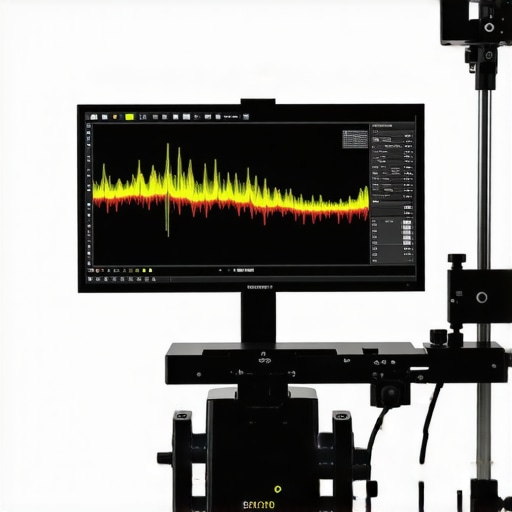
Depict a hyperspectral measurement device analyzing a professional monitor in a controlled studio environment, illustrating state-of-the-art spectral calibration technology.
Exploring the Role of Quantum Dot Enhancements in Color Precision
Quantum dot technology has emerged as a pivotal factor in elevating the spectral range and luminance luminance capabilities of HDR monitors. These nanomaterials optimize backlight emission, broadening color volume and enabling more precise reproduction of the DCI-P3 and Rec. 2020 color spaces. For colorists and visual artists, this translates into richer, more vibrant images with seamless gradients and minimal banding—provided that calibration protocols are meticulously executed to leverage these enhancements fully. Companies integrating quantum dot layers are also focusing on stability and longevity, ensuring that high color fidelity persists over the monitor’s lifespan, aligning with advanced calibration standards.
Real-World Calibration Pitfalls and How to Avoid Them
While technological advancements promise unparalleled accuracy, practical pitfalls such as improper ambient measurement, inconsistent target setting, and firmware discrepancies can undermine calibration efforts. Professionals must adopt rigorous workflows: conducting ambient light assessments, employing certified spectral measurement devices, and verifying calibration results with external reference samples. Additionally, periodic recalibration aligned with panel aging and environmental shifts keeps the monitor’s fidelity intact. For detailed guidance, refer to authoritative standards outlined in ISO 16684-2 and recent white papers published by the Society for Information Display.
Ready to Upgrade Your Calibration Practices? Here’s Your Next Step
Embracing these sophisticated calibration techniques transforms your workspace into a bastion of color precision, ensuring that every project benefits from continued visual fidelity. To stay at the forefront of this evolving field, invest in spectral profiling hardware, explore AI-based calibration solutions, and maintain an ongoing learning regimen—your visual storytelling deserves nothing less. Delve deeper into expert insights and recommended tools by browsing our curated resources and case studies, designed to guide professionals through the complexities of next-generation calibration.
Strategic Investments in Calibration Technology
Leverage Spectral and AI-Driven Solutions to Maintain Peak Performance
To stay ahead in professional visual workflows, integrating spectral measurement tools with AI calibration algorithms ensures ongoing accuracy despite panel aging and environmental shifts. These advancements are no longer optional but essential for uncompromising color fidelity.
Prioritize Workflows That Incorporate Continuous Calibration
Implement routines that support real-time monitoring and adjustment, reducing drift and ensuring consistent results across projects. This approach fosters trust and minimizes costly rework, elevating your production standards.
Choose Monitors with Built-In Hardware LUTs
High-end displays with dedicated hardware look-up tables (LUTs) facilitate precise color management, crucial for matching high dynamic range (HDR) content and complex color spaces like Rec. 2020. Such features empower professionals to execute fine-grained adjustments effortlessly.
Curated Resources for Cutting-Edge Calibration
- International Organization for Standardization (ISO 16684-1): Offers authoritative standards for spectral measurement techniques, necessary for advanced spectral calibration practices.
- Society for Information Display White Papers: Provides industry insights into calibration drift mitigation strategies and emerging technologies.
- Expert Technical Guides from SpectraCal and X-Rite: Practical manuals and case studies detailing the deployment of spectral sensors and AI calibration solutions in professional environments.
Reflections on the Next Frontiers of Display Accuracy
In 2026, the synergy between spectral analysis, AI automation, and hardware advancements promises a revolution in maintaining pristine color fidelity. Recognizing and adopting these technologies ensures your workflows remain resilient against drift, environmental variability, and the ever-increasing demands of high-quality visual production. As the landscape evolves, continuous learning and strategic investment in these tools become indispensable. For those committed to excellence, engaging with emerging standards and expert communities can unlock new levels of precision. Explore our detailed guides and resources to lead your team confidently into the future of professional monitor calibration and color accuracy.
About the Author


This post offers a comprehensive look into the intricacies of calibration and display technology. As someone who works closely with high-end monitors in post-production, I can attest that continuous calibration, especially with spectral tools and AI integration, truly makes a difference in maintaining color accuracy over months of intensive work. One challenge I often face is dealing with ambient lighting variations in different studio rooms. Has anyone found effective ways to automate ambient light compensation without introducing inconsistencies? Also, I’m curious about the long-term stability of quantum dot displays—do they truly hold their calibration over the lifespan, or do they still require regular recalibration? Overall, staying ahead with these advanced calibration techniques is crucial for professional quality, especially as display technology rapidly evolves. Would love to hear strategies others use to manage ambient and hardware drift in everyday workflows.