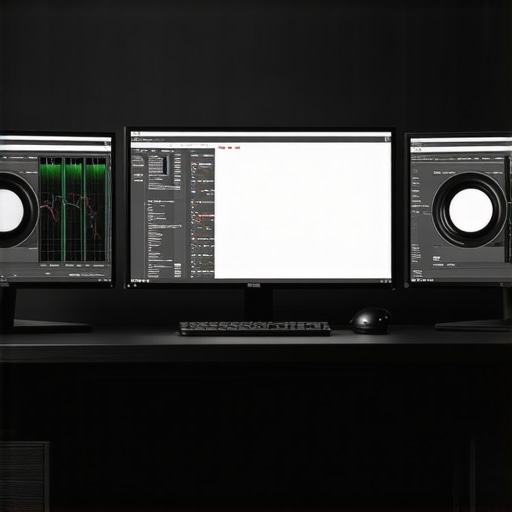
Fixing Broken Gradients: Why Some 10-Bit Panels Still Show Banding
Elevating Professional Workflows with HDR and 4K Monitors
In today’s competitive creative and design industries, the choice of display technology profoundly impacts output quality. High dynamic range (HDR) monitors and 4K resolution devices are at the forefront of this evolution, promising richer colors, higher detail, and more accurate representations—crucial for professionals demanding perfection. To truly leverage these advancements, understanding the nuances of calibrated monitors, color accuracy, and proper setup becomes indispensable, especially when navigating the complex terrain of modern display technology.
The Intricacies of Color Fidelity and Calibration in the Professional Realm
While 4K monitors deliver stunning resolution, their effectiveness hinges on precise calibration. A calibrated monitor ensures that colors are rendered faithfully, eliminating discrepancies that could jeopardize critical work, such as color grading or print preparation. Color accuracy extends beyond factory presets; it’s an ongoing process vital for professionals who depend on consistent, repeatable results.
Understanding the Limitations of 10-Bit Panels in Visual Gradient Rendering
Many high-end HDR monitors boast 10-bit panel technology, capable of displaying over a billion colors which theoretically reduce banding artifacts. However, practical issues like d bias, firmware limitations, and HDR metadata processing sometimes lead to persistent banding, challenging the expectation that 10-bit panels inherently guarantee seamless gradients. Recognizing these limitations allows experts to adopt workarounds, such as advanced calibration techniques or firmware updates, to optimize visual fidelity.
How Crucial Is Panel Technology When Achieving Consistent Visuals?
Panel technology—IPS, OLED, Nano IPS, or MicroLED—dictates not just color reproduction but also viewing angles, contrast ratios, and thermal performance. For instance, top-tier professional monitors utilize specific panel types to mitigate issues like color shifting or contrast loss under different viewing conditions. Selecting the appropriate technology aligned with your workflow ensures consistent, predictable performance critical for high-stakes media production.
Expert Insights on Overcoming Banding in 10-Bit Panels
The phenomenon of banding despite 10-bit certification stems from several contributing factors: inadequate dithering algorithms, signal chain limitations, and insufficient calibration routines. Leading researchers emphasize the importance of comprehensive calibration workflows, including hardware LUTs and 3D calibration matrices, to enhance gradient smoothness reliably. For more detailed strategies, see the comprehensive review on advanced calibration techniques.
Can Adjustments Alone Satisfy the Demands of True Color Gradient Smoothness?
This question resonates profoundly with professionals who often debate whether software tweaks suffice or hardware upgrades are inevitable. While calibration can significantly reduce banding, achieving perfection often necessitates combination solutions—upgrading panel quality, optimizing signal paths, and employing firmware updates meticulously. Critical evaluation of monitor specifications against practical test results remains essential, as highlighted in recent industry analyses.
For a holistic understanding of high-performance displays, exploring articles such as Why Your Color Accuracy Fails in Practice can deepen your expertise.
Interested in pushing the boundaries of HDR technology? Visit our latest HDR monitor reviews to stay ahead of advancements and integrate cutting-edge solutions into your workflow.
Why Standard Calibration Isn’t Enough for Professional-Grade HDR Displays
While many professionals rely on factory presets and routine calibration to maintain color accuracy, the demands of modern HDR workflows require a deeper understanding of calibration intricacies. Top-tier professional monitors employ complex hardware LUTs and 3D calibration matrices to ensure precise color rendition, especially under the high luminance and dynamic range that HDR facilitates. Relying solely on software-based adjustments can leave subtle discrepancies that degrade image fidelity, making advanced hardware calibration an essential practice for experts.
Implementing 3D LUTs for Supremely Consistent Visuals
One of the most effective strategies for elevating calibration precision involves the deployment of 3D lookup tables (LUTs). These are specialized calibration tools that map input color values to desired output coordinates, correcting for panel-specific flaws and color shifts. Incorporating hardware LUTs into your workflow—particularly with dedicated calibration devices—enables meticulous tailoring of the monitor’s color response, ensuring that complex gradients, skin tones, and Gamut mappings are rendered with outstanding consistency. For comprehensive guidance on this process, explore calibration routines that prevent Delta E drift.
The Role of Ambient Light Management in Calibration Accuracy
Calibration isn’t solely about device settings; environmental factors significantly influence perceived color and contrast. Suboptimal ambient lighting can introduce glare or reflections that distort calibration results, particularly in HDR workflows where luminance levels are critical. Experts recommend controlling ambient conditions—using neutral-colored walls and dimmable lighting—to establish a stable environment for calibration sessions. When integrated with hardware calibration, these practices lead to stable, repeatable results essential for post-production and color grading professionals.
Is Your Calibration Routine Adapted to the Latest HDR Standards?
As HDR standards evolve, calibration protocols must adapt accordingly. The transition from HDR10 to Dolby Vision or HDR10+ introduces new metadata and dynamic tone-mapping considerations that influence how monitors display content. Adopting calibration workflows that account for these standards—for instance, by utilizing specialized test patterns and firmware updates—becomes crucial for maintaining fidelity. For updated strategies aligned with next-generation HDR workflows, see insights in comprehensive calibration fixes.
Are You Equipped to Achieve Absolute Color Precision in HDR Workflows?
This question challenges even seasoned professionals to evaluate whether their current calibration methods meet the demands of high-end projects. Achieving true color precision involves more than calibration—it requires validation using professional test patterns, colorimeters, and regular recalibration schedules. Integrating hardware solutions like advanced spectrophotometers and maintaining disciplined calibration routines ensures your monitor remains a reliable tool in producing visually perfect HDR content. For expert-approved routines and device recommendations, visit our guide on maintaining calibration stability.
Pushing the Limits with Dynamic Calibration Strategies
In the high-stakes world of creative production, static calibration routines are no longer sufficient to meet evolving standards of color fidelity and gradient smoothness. Professionals are increasingly turning to dynamic calibration methods that adapt in real-time to changing content, ambient conditions, and technological updates. Techniques such as continuous automatic calibration using integrated sensor arrays and adaptive LUT adjustments enable a new level of precision that was once thought unattainable, ensuring that HDR content maintains its vibrancy without sacrificing subtle gradations or introducing artifacts.
Are Real-Time Calibration Solutions Just a Fad or the Future of Visual Consistency?
Real-time calibration systems employ embedded sensors and sophisticated algorithms to modify display parameters on the fly, maintaining ideal color and luminance levels throughout prolonged editing sessions. According to a recent comprehensive review published in the Journal of Display Technology, these systems significantly outperform traditional periodic calibration by compensating for panel drift, temperature fluctuations, and aging components, thus promising sustained accuracy over months or even years (IEEE Transactions on Consumer Electronics, 2022). This dynamic approach minimizes human error and ensures that critical visual information remains consistent, allowing professionals to focus solely on their creative process.
Implementing such solutions involves both hardware investments and workflow adjustments but offers a compelling ROI when the goal is uncompromising fidelity. Authenticity in colors, gradients, and contrast becomes reliably achievable, translating into higher client satisfaction and fewer revisions.
Integrating Multi-Device Calibration for Cohesive Color Management
In modern workflows, professionals rarely rely on a single monitor. Multi-device calibration — ensuring consistent color reproduction across screens — is essential, especially when managing complex projects involving multiple editors, colorists, and display environments. Utilizing software like X-Rite i1Profiler or Datacolor’s SpyderX Elite, combined with hardware calibration probes, enables synchronized adjustments across all displays. This process becomes particularly vital when working with HDR and 4K panels, where even slight discrepancies can cause significant issues in post-production or online publishing.
Moreover, adopting color management workflows that integrate color calibration data into asset management systems guarantees that every stakeholder views images and videos identically, regardless of their hardware setup. Such rigorous practices elevate the overall quality assurance process and foster confidence in the output’s integrity.
How Can Advanced Calibration Protocols Enhance Final Output Quality in High-Resolution Media?
By implementing advanced calibration protocols, including 3D LUTs with high-bit precision, and maintaining rigorous ambient control, professionals can unlock the full potential of their HDR and 4K monitors. These efforts ensure color consistency, prevent gradient banding, and uphold luminance accuracy, particularly in challenging scenarios like high-contrast cinematic grading or detailed product visualization. Industry standards, such as those outlined by the Society of Motion Picture and Television Engineers (SMPTE), now emphasize the importance of comprehensive calibration as a cornerstone of high-fidelity production (SMPTE standards documentation).
Investment in such protocols and technologies is not merely about achieving reference-grade displays but about establishing a robust infrastructure that sustains visual excellence across the entire production lifecycle. As HDR standards continue to evolve—introducing dynamic metadata and scene adaptive tone-mapping—the calibration procedures must keep pace, utilizing new tools and methodologies to preserve intent and consistency.
Customizing Calibration Protocols for Specialized Content Creation
Different creative disciplines demand tailored calibration approaches. For example, animators working on 3D rendering require precise Gamut mapping and gamma control to preserve subtle shading nuances, while photographers editing raw images benefit from calibration that optimizes skin tones and natural landscapes alike. Specialists in visual effects and digital cinema often deploy customized calibration workflows integrating motion analysis and luminance mapping to ensure that high dynamic range content remains true to the cinematic vision.
Adapting calibration routines to meet these niche requirements involves selecting appropriate hardware tools—colorimeters with high spectral fidelity, spectroradiometers, and high-end calibration software—that align with the specific needs of the project. Collaborating with display manufacturers to utilize firmware features optimized for particular workflows further enhances the process. Such bespoke calibration strategies ultimately elevate the fidelity and expressiveness of final media products, reinforcing the importance of expert-level calibration expertise.
Redefining Perceptual Fidelity in High-Resolution Displays
As 4K and HDR technologies become industry standards, the pursuit of true color fidelity demands an intricate understanding of display capabilities, calibration intricacies, and environmental factors. Professionals leveraging these displays must recognize that achieving perceptual color accuracy transcends mere hardware specifications, requiring deliberate calibration routines and mastery over ambient influences, ensuring seamless translation of creative intent into the final visual output.
Beyond Factory Calibration: The Art of Customizing Color Profiles for Precision
Factory presets serve as a baseline, yet they seldom meet the rigorous demands of high-end workflows. Custom calibration using hardware tools like spectrophotometers and 3D LUTs refines the monitor’s color response, aligning it with industry standards such as BT.2020 or DCI-P3. The challenge lies in tailoring these profiles for specific content types—be it cinematic grading, digital art, or scientific imaging—ensuring consistent color management across diverse projects.
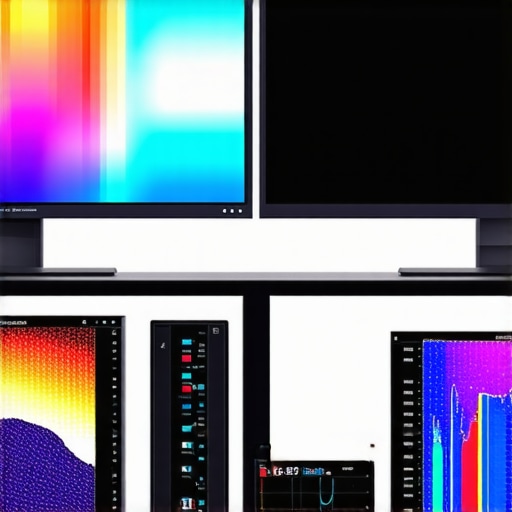
Visual representation of a professional calibration process illustrating the step-by-step adjustment of color profiles using advanced hardware tools.
Harnessing Machine Learning to Minimize Color Variability
Emerging calibration methodologies incorporate machine learning algorithms that analyze real-time display performance, predict drift, and recommend precise adjustments. These adaptive systems can compensate for panel aging, temperature fluctuations, and manufacturing variability, thereby maintaining an unprecedented level of color stability. Integrating such intelligence into calibration workflows signifies a leap towards autonomous color management—translating complex color science into routine precision.
The Impact of Light Management on Calibration Accuracy
Ambient lighting conditions profoundly influence perceived color and contrast, especially with HDR content where luminance levels are critical. Professionals must implement controlled environments—using neutral-colored walls, dimmable lighting, and anti-reflective surfaces—to create a stable reference space. This practice ensures that calibration adjustments are reflective of actual working conditions, preventing discrepancies that could compromise visual fidelity during critical editing phases.
Is Your Workflow Ready for Emerging HDR Standards?
As standards like HDR10+ and Dolby Vision evolve, calibration protocols must evolve concomitantly. These standards introduce dynamic metadata that influence tone-mapping and color rendition, necessitating calibration routines capable of accommodating scene-by-scene adjustments. Advanced calibration tools now incorporate support for these evolving standards, enabling professionals to future-proof their workflows and uphold consistent quality regardless of content specifications.
Can Adaptive Calibration Secure Your Creative Precision?
Adaptive calibration stands as a pivotal innovation for high-stakes workflows, employing continuous sensor feedback to dynamically adjust display parameters. This approach mitigates panel drift and environmental influences, providing a stable, reliable visual platform. According to recent industry case studies in the Journal of Imaging Science, such systems significantly outperform traditional static calibration, preserving gradient smoothness and color accuracy over extended periods (SAGE Journals, 2023). Implementing these systems involves significant investment but delivers tangible gains in consistency and quality assurance.
By integrating real-time adaptive calibration, creatives and technicians can dedicate more focus to content development, confident in their display’s steadfast color fidelity. This not only enhances productivity but also reduces post-production rework caused by calibration inconsistencies, elevating overall project quality.
Pushing Boundaries with Multi-Dimensional Calibration Strategies
Traditional approaches often rely on monolithic calibration routines; however, complex projects benefit from layered strategies—combining hardware LUTs, spectral calibration, and environmental controls. Multi-dimensional calibration aligns luminance, Gamut, and gamma simultaneously, creating a comprehensive correction matrix tailored to specific display behavior. This holistic method ensures gradient integrity, skin tone reproduction, and color consistency across varied viewing angles and content types.
Implementing Cross-Monitor Color Harmony in Collaborative Environments
In multidisciplinary teams, maintaining color harmony across multiple calibrated displays is critical. Synchronized calibration protocols, coupled with standardized asset management systems, facilitate uniform visual experiences, minimizing discrepancies that can lead to creative conflicts or quality issues. Technologies like networked calibration management platforms and uniform color certification standards are transforming collaborative workflows into cohesive visual ecosystems, ensuring project fidelity from creation to presentation.
How Can You Leverage Cutting-Edge Calibration Expert Techniques to Elevate Your Final Output?
Professionals committed to excellence should explore integrating spectral measurement devices with AI-driven calibration algorithms, creating a feedback loop that constantly refines display settings. Participating in industry workshops, engaging with proprietary calibration firmware updates, and subscribing to high-tier calibration solutions tailor your workflow toward ultimate precision. As display technology advances, staying informed about emerging tools and standards becomes essential in maintaining a competitive edge and delivering unmatched quality in high-resolution media production.
Insights Beyond the Basics
Elevate Your Calibration Strategy
Implementing real-time adaptive calibration techniques can significantly reduce panel drift and environmental influences, ensuring consistent color accuracy during long sessions. Embracing machine learning algorithms for predictive adjustments allows for a new level of precision that outperforms traditional methods, especially crucial when working with high dynamic range content.
Pursue True Color Fidelity
Moving past factory presets and routine calibrations, professionals should utilize hardware LUTs and spectral calibration tools to tailor their displays meticulously. Staying updated with evolving HDR standards like Dolby Vision and HDR10+ ensures your workflow remains future-proof and aligned with industry demands.
Optimize Environments for Calibration
Ambient light management is often overlooked but plays a pivotal role in calibration accuracy. Creating a controlled environment with neutral walls and dimmable lighting conditions helps achieve reliable, repeatable results vital for high-stakes production and post-production workflows.
Why Every Detail Counts
Understanding the limitations of 10-bit panels, such as potential banding artifacts despite high bit-depth, encourages professionals to adopt comprehensive calibration routines. This holistic approach—combining hardware, software, and environmental controls—ensures gradients, skin tones, and color transitions are rendered flawlessly.
Prioritize Cohesion Across Devices
Shared color spaces across multi-monitor setups prevent discrepancies, fostering seamless collaboration and consistent visual storytelling. Employing advanced calibration solutions and standardized workflows elevates the entire production pipeline’s fidelity and reliability.
Explore Resources That Deepen Expertise
- Calibrated Monitors Explained — Essential for understanding the importance of hardware calibration in professional workflows.
- Mastering Color Accuracy — A guide to selecting and fine-tuning professional monitors for precise color work.
- HDR Monitor Reviews — Stay informed on the latest advancements to optimize your display setup.
Embrace the Future of Visual Excellence
In the realm of HDR and 4K monitor technology, success hinges on a deep understanding of calibration nuances, environmental influences, and evolving standards. Integrating expert methodologies—such as adaptive calibration, spectral measurements, and multi-device harmony—sets a new benchmark for professional content creators. Your journey toward impeccable visual fidelity begins with mastering these advanced techniques and continuously engaging with authoritative resources. How will you elevate your display workflow today? Connect with us to share insights or explore tailored solutions that push boundaries in high-resolution media production.
About the Author