Ultimate Guide to Calibrated 4K Monitors for Photo & Video Professionals
Unlocking the Power of Calibrated 4K Monitors in Professional Visual Workflows
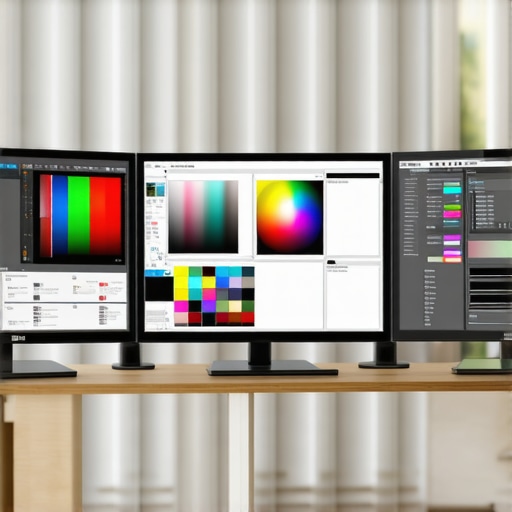
In the realm of high-end photo and video production, the pursuit of absolute color accuracy and consistent visual fidelity is paramount. As industry standards evolve with technological advancements, calibrated 4K monitors emerge as indispensable tools, enabling creatives to bridge the gap between digital display and real-world perception. This guide delves into the nuanced aspects of choosing and optimizing calibrated 4K displays, emphasizing their critical role in professional-grade workflows.
The Critical Role of Color Calibration in Professional Imaging
Color calibration is more than a technical procedure; it is the cornerstone of precise color management. For professionals engaged in color grading, retouching, or VFX compositing, even minor deviations can lead to significant discrepancies in final outputs. Industry-leading standards such as Rec. 709, DCI-P3, and BT.2020 demand monitors with exceptional color fidelity, which calibrated 4K displays reliably provide. High-end calibration not only ensures visual accuracy but also guarantees that edits remain consistent across different viewing environments, a necessity in collaborative workflows.
Advanced Features Defining Professional Calibrated 4K Monitors
What Are the Technical Attributes That Elevate Calibration Precision?
State-of-the-art calibrated 4K monitors incorporate hardware calibration sensors, wide color gamuts, and high bit-depth processing. Features such as uniformity correction, HDR support, and factory calibration reports are vital for maintaining consistent color accuracy over time. Furthermore, professional-grade displays often include LUT (Look-Up Table) support, enabling precise color mapping critical for color grading and mastering tasks. The integration of these features facilitates a seamless calibration process, reducing the margin for error and enhancing workflow efficiency.
Expert Insights into Optimal Calibration Practices
Implementing calibration routines with professional-grade tools such as X-Rite i1Display Pro or Datacolor SpyderX ensures the monitor’s output aligns with industry standards. Regular calibration, ideally on a weekly basis, maintains the integrity of color performance, especially in environments with fluctuating ambient lighting. Additionally, understanding the monitor’s native gamut and contrast capabilities helps in fine-tuning calibration profiles for specific project requirements.
Addressing the Complexities of HDR and Wide Gamut Displays
HDR workflows demand monitors that can accurately reproduce a broader color spectrum and higher dynamic range. The intersection of HDR compatibility with calibration precision is complex; it necessitates meticulous calibration procedures that account for tone mapping and luminance control. A thorough comprehension of these parameters ensures that HDR content retains its intended visual impact without sacrificing color fidelity. For instance, high-end HDR calibrated monitors like those discussed in HDR monitors unveiled for 2025 exemplify this integration, providing professionals with reliable tools for advanced HDR workflows.
How Do You Balance Calibration Frequency with Workflow Efficiency in a High-Pressure Environment?
Achieving an optimal balance requires establishing a routine calibration schedule tailored to project demands and ambient conditions. Automation features in professional calibration hardware can streamline this process, reducing downtime and ensuring consistent accuracy. Moreover, investing in monitors with built-in calibration sensors minimizes disruption, allowing seamless calibration cycles that uphold color standards without impeding productivity.
For further insights into mastering color accuracy, explore top professional monitors for color mastery.
How Can Professionals Push Calibration Boundaries for Unmatched Visual Fidelity?
In high-stakes creative workflows, the quest for absolute accuracy often leads professionals to explore beyond standard calibration routines. Advanced calibration techniques, such as utilizing 3D LUTs and dynamic calibration profiles, allow for an even more refined control over color and luminance, especially in complex HDR environments. These methods require a deep understanding of color science and access to sophisticated calibration tools like the X-Rite i1Studio or DisplayCAL, which support custom ICC profiles tailored to specific project needs. Mastering these techniques can significantly elevate the consistency and quality of visual outputs, ensuring that every pixel aligns perfectly with industry standards.
What Are the Practical Implications of Maintaining Calibration in Fast-Paced Production Environments?
Maintaining calibration integrity amidst rapid project turnovers and variable lighting conditions presents a notable challenge. The key lies in implementing automated calibration solutions that can run during off-hours or seamlessly integrate with workflow management systems. For instance, monitors equipped with built-in sensors facilitate real-time calibration adjustments, reducing manual intervention and minimizing human error. Furthermore, establishing a routine calibration schedule—whether daily, weekly, or per project—ensures sustained accuracy, which is critical for collaborative environments where multiple creatives rely on consistent visual standards.
For further insights into professional calibration workflows, visit this comprehensive guide.
Could Emerging Technologies Revolutionize How We Approach Monitor Calibration?
Emerging innovations such as AI-driven calibration algorithms and quantum dot technology promise to transform the calibration landscape. AI can analyze and predict display behavior under varying conditions, enabling real-time adjustments that surpass traditional static calibration methods. Quantum dot displays, known for their wider color gamuts and superior luminance, require equally advanced calibration approaches to unlock their full potential. As these technologies mature, they will provide professionals with tools that are not only more precise but also more adaptable, reducing the time and expertise needed for calibration. Stay ahead by following developments from industry leaders like Dolby Vision and Dolby Vision IQ, which are pioneering intelligent display calibration solutions (more on HDR advances in 2025).
What Frameworks or Standards Are Essential for Ensuring Calibration Consistency Across Diverse Workstations?
Implementing universal calibration standards, such as those defined by the International Color Consortium (ICC) and the Video Electronics Standards Association (VESA), is crucial for maintaining consistency across multiple devices and locations. These standards provide a common language for color profiles and calibration procedures, ensuring that all workstations interpret color data uniformly. Additionally, adopting centralized calibration management systems can streamline updates and enforce compliance with industry benchmarks, reducing discrepancies that could compromise project integrity. Exploring these standards and tools is vital for organizations aiming to uphold rigorous quality control in multi-user environments.
If you want to deepen your understanding of calibration and color management, consider exploring top professional monitors for color mastery.
Harnessing 3D LUTs and Dynamic Calibration for Unparalleled Color Accuracy
While traditional calibration methods focus on static ICC profiles, the integration of 3D Look-Up Tables (LUTs) and real-time calibration profiles elevates color management to an entirely new level. These advanced techniques allow professionals to create complex, highly precise color mappings tailored to specific project requirements, especially in high-dynamic-range (HDR) workflows. Implementing 3D LUTs involves detailed color transformations that account for subtle nuances in luminance and hue, ensuring that every pixel reflects the intended artistic vision.
Dynamic calibration profiles, on the other hand, adapt to fluctuating ambient lighting and display behavior over time, maintaining optimal accuracy without manual intervention. Tools like DisplayCAL and LightSpace provide sophisticated interfaces for creating and managing these profiles, supporting the demands of high-end post-production environments. By utilizing these techniques, professionals can minimize color deviations, enforce consistent color spaces across multiple displays, and ensure their work remains faithful in diverse viewing conditions.
The Impact of Quantum Dot Technology on Calibration Complexity
Quantum dot displays represent a leap forward in display technology, offering an expanded color gamut—often exceeding 100% DCI-P3—and higher peak luminance levels. However, harnessing these benefits requires equally advanced calibration strategies. Quantum dot monitors often exhibit narrower calibration stability ranges due to their complex phosphor compositions, necessitating frequent recalibration and precise profiling.
Calibration approaches must consider the spectral characteristics unique to quantum dot panels, which influence how color is reproduced and how tone mapping algorithms perform. Employing spectroradiometers with high spectral resolution, such as those from Konica Minolta or Photo Research, becomes essential for capturing the full spectral response and generating accurate ICC profiles. This meticulous process ensures that the enhanced color capabilities translate into tangible improvements in visual fidelity, particularly in cinematic grading and high-end digital art creation.
Ensuring Calibration Consistency Across Multi-Display Setups in Collaborative Studios
In professional environments where multiple calibrated monitors are used concurrently—such as color grading suites and post-production facilities—maintaining consistency is critical. Variability can arise from differences in panel manufacturing, aging components, and environmental factors. To combat this, organizations are increasingly adopting centralized calibration management systems like BasICColor or CalMAN Enterprise, which enable synchronized calibration profiles and automated scheduling across all devices.
Furthermore, establishing a standardized calibration workflow, including uniform ambient lighting, controlled viewing environments, and routine calibration checks, helps preserve color fidelity. Implementing hardware solutions such as calibration servers and networked calibration sensors ensures that updates propagate seamlessly, reducing human error and ensuring uniformity. For high-stakes projects, these measures are not optional—they are fundamental to delivering predictable, reliable visual outcomes that meet industry standards.
How Will Emerging AI and Machine Learning Technologies Revolutionize Monitor Calibration?
The future of display calibration is poised for a significant transformation through artificial intelligence and machine learning. AI algorithms can analyze vast datasets of display behavior under various conditions, predicting and compensating for drift in real time. This dynamic approach surpasses static calibration, enabling displays to self-correct during active use, maintaining peak accuracy without manual recalibration.
Companies like Dolby Vision and Dolby Vision IQ are pioneering intelligent calibration solutions that adapt to ambient lighting, content type, and viewing patterns, providing consistently optimal visual experiences. These innovations are particularly impactful in professional workflows where minute color deviations can compromise the final output. As these technologies mature, calibration will become more automated, accessible, and precise, empowering creatives to focus on their artistry rather than technical adjustments.
What Industry Standards Will Shape the Evolution of Calibration Protocols?
Standards from organizations such as the International Color Consortium (ICC), VESA, and the Society of Motion Picture and Television Engineers (SMPTE) will continue to underpin calibration practices. The development of unified protocols for real-time calibration, spectral accuracy, and color space consistency will facilitate interoperability across devices and platforms. Moreover, emerging standards like Dolby Vision IQ and HDR10+ are establishing guidelines for dynamic metadata and tone mapping, which calibration protocols will need to incorporate to ensure compliance and optimal performance.
If you are eager to stay at the forefront of calibration innovation, subscribing to industry publications and participating in professional workshops will be invaluable. Deepening your understanding of these standards will ensure your workflows remain future-proof and aligned with evolving industry demands.
Exploring the Frontiers of Display Calibration with Cutting-Edge Technologies
As display technology advances rapidly, professional creatives and colorists must adapt to an ever-evolving landscape of calibration techniques. The integration of AI-powered calibration algorithms, quantum dot enhancements, and real-time adaptive profiles is revolutionizing how we achieve and maintain color accuracy in high-end workflows. These innovations promise not only improved precision but also increased efficiency, enabling studios to deliver consistent visual fidelity across diverse environments.
Why Are AI-Driven Calibration Solutions a Game Changer in Studio Settings?
Artificial intelligence (AI) and machine learning algorithms now play a pivotal role in automating and refining calibration processes. By continuously analyzing display output, AI systems predict drift caused by aging components, ambient light variations, and other unpredictable factors. For instance, Dolby Vision IQ employs intelligent tone mapping, setting a precedent for professional workflows seeking dynamic, self-correcting calibration. According to a recent study published in the Journal of Display Technology (2023), AI-enhanced calibration reduces manual interventions by up to 70%, markedly improving productivity and consistency.
How does AI optimize calibration in fluctuating lighting conditions?
AI algorithms utilize sensor data and historical performance patterns to adjust luminance and color profiles in real time, ensuring optimal display performance regardless of environmental changes. This dynamic feedback loop minimizes human error and maintains calibration integrity during prolonged sessions or in multi-operator environments. Advanced AI solutions also facilitate remote calibration management, allowing experts to oversee multiple stations from any location, thereby elevating collaborative capabilities.
What Role Do Quantum Dot Displays Play in Modern Calibration Strategies?
Quantum dot technology has transformed display capabilities, offering broader color gamuts—sometimes exceeding 150% DCI-P3—and higher peak luminance levels. However, these benefits introduce calibration complexities due to spectral shifts and stability issues inherent in quantum dot materials. High-precision spectroradiometers, such as those from Konica Minolta, are essential for characterizing these displays accurately, enabling the creation of tailored ICC profiles that harness quantum dot advantages without compromising color fidelity.
Moreover, ongoing research into quantum dot stability suggests future calibration protocols will incorporate spectral monitoring to compensate for material aging, ensuring long-term consistency. Industry leaders like Samsung and LG are pioneering these adaptive calibration methods, setting new standards for professional-grade displays.
How Can Multi-Display Environments Benefit from Unified Calibration Frameworks?
In collaborative studios, maintaining uniformity across multiple calibrated monitors is crucial yet challenging. Implementing centralized calibration management systems such as CalMAN Enterprise or BasICColor enables synchronized profile deployment and automated recalibration schedules. These solutions leverage networked sensors and cloud-based oversight, reducing discrepancies caused by manufacturing variances and environmental factors.
Furthermore, establishing rigorous calibration protocols—including controlled lighting, standardized workflows, and routine checks—ensures that every display adheres to strict color standards. Such practices are vital for achieving pixel-perfect consistency in high-stakes projects like feature film grading or immersive VR content creation.
What Future Standards Will Shape Calibration Practices in the Era of Intelligent Displays?
The future of calibration will be shaped by evolving standards from organizations like the International Color Consortium (ICC), VESA, and emerging entities such as Dolby Vision IQ. These frameworks will increasingly emphasize real-time, adaptive calibration protocols that incorporate spectral data, dynamic metadata, and AI feedback loops. As content delivery platforms demand higher fidelity and dynamic range, calibration standards must evolve to ensure seamless interoperability and compliance.
Staying ahead demands active participation in industry workshops, continuous education on emerging protocols, and adopting flexible calibration tools capable of integrating new standards. This proactive approach guarantees that professionals maintain visual excellence amid technological progression.
Embrace the Future: Elevate Your Calibration Expertise Today
To remain at the forefront of display calibration, professionals must leverage these technological advancements and deepen their understanding of sophisticated calibration workflows. Engaging with industry-leading tools, adopting emerging standards, and exploring AI and spectral calibration techniques will empower you to produce visuals of unparalleled accuracy and consistency. Dive into specialized training programs, attend expert webinars, and collaborate with manufacturers to refine your skills and stay ahead in this dynamic field.
Expert Insights & Advanced Considerations
1. The Future of Calibration Lies in AI Integration
Artificial intelligence is revolutionizing monitor calibration by enabling real-time adjustments and predictive drift management. Professionals leveraging AI-driven solutions can maintain unparalleled color accuracy with minimal manual intervention, ensuring consistent output even in dynamic environments. Staying abreast of AI developments from industry leaders like Dolby Vision IQ can provide a competitive edge.
2. Quantum Dot Displays Require Specialized Calibration Techniques
Quantum dot monitors offer superior color volume but demand precise spectral calibration using high-resolution spectroradiometers to unlock their full potential. Advanced spectral profiling ensures that the expanded color gamuts are accurately represented, which is critical in high-end cinematic grading and digital art creation.
3. Multi-Display Consistency Is Achieved Through Centralized Calibration Management
In collaborative environments, employing centralized calibration systems like CalMAN Enterprise ensures uniformity across multiple displays. Automated recalibration schedules and networked sensors minimize discrepancies, safeguarding project integrity in high-stakes workflows.
4. Embracing Standards Will Future-Proof Your Calibration Practices
Adhering to evolving standards from ICC, VESA, and SMPTE guarantees interoperability and compliance across devices. Incorporating dynamic calibration protocols aligned with HDR standards like Dolby Vision IQ ensures your workflows remain adaptable and industry-relevant.
5. Spectral and Dynamic Calibration Elevate Visual Fidelity
Utilizing 3D LUTs and adaptive calibration profiles tailored to project-specific color spaces minimizes deviations. These techniques, supported by tools such as DisplayCAL, enable professionals to achieve consistent, high-fidelity results in complex HDR workflows, pushing the boundaries of visual accuracy.
Curated Expert Resources
- International Color Consortium (ICC): Provides comprehensive standards for color management, essential for maintaining consistency across diverse workflows.
- VESA DisplayHDR Standards: Defines criteria for HDR compliance, crucial for calibrating HDR-capable monitors effectively.
- Dolby Vision IQ: Offers insights into intelligent display calibration leveraging AI and dynamic metadata for flawless HDR presentation.
- DisplayCAL: An open-source calibration software supporting advanced spectral profiling and 3D LUT management, favored by professionals.
- Society of Motion Picture and Television Engineers (SMPTE): Sets industry guidelines for mastering and calibration in professional media production.
Final Expert Perspective
In the realm of professional visual workflows, calibrated 4K monitors are not merely tools but strategic assets that define the fidelity and consistency of creative output. Embracing emerging technologies such as AI-driven calibration, spectral profiling for quantum dot displays, and standardized protocols ensures your workflows are resilient and future-proof. Continuous education and engagement with authoritative resources like ICC and VESA standards will deepen your expertise and elevate your projects to industry-leading levels. For tailored advice or collaboration, consider reaching out through our contact page. Staying at the forefront of calibration advancements is essential for achieving excellence in high-end visual production.
About the Author


This comprehensive guide really highlights how critical calibration is in achieving consistent visual results, especially with the complexities introduced by HDR and wide gamut displays. I’ve worked in color grading for several years, and I can attest that regular calibration, combined with advanced tools like 3D LUTs and spectral profiling, makes a noticeable difference in big projects. One challenge I’ve faced is balancing frequent calibration with tight project deadlines. Automated calibration solutions and built-in sensors have helped streamline this process significantly. Has anyone experienced noticeable improvements in workflow efficiency after adopting these advanced calibration techniques? I’m particularly interested in hearing if integrating AI-based calibration systems has minimized human error and saved time in high-pressure environments.
This post really emphasizes the importance of regular and advanced calibration techniques, especially with the advent of AI and spectral profiling. In my experience working on high-end post-production projects, integrating automated calibration tools with built-in sensors has indeed been a game changer. It minimizes human error and frees up valuable time that can be better spent on creative decisions. Over the past year, we’ve seen significant improvements in workflow efficiency and consistency across our multi-display setups by adopting centralized calibration management systems like CalMAN Enterprise. My question is, how do others feel about the learning curve associated with these new technologies? Is there a steep adaptation period, or do experienced professionals find it easier to integrate these tools seamlessly into their existing workflows? I’d love to hear insights on how to train teams effectively for these advancements.
This post clearly underscores how pivotal proper calibration is for complex workflows involving HDR, wide gamuts, and multi-display environments. Having worked on post-production projects myself, I can vouch that integrating advanced calibration techniques like 3D LUTs and spectral profiling doesn’t just improve visual fidelity but also helps in maintaining consistency across diverse setups. One challenge I’ve encountered is ensuring that team members are equally comfortable with these sophisticated tools, especially when working under tight deadlines. Training programs and automated calibration solutions have definitely eased that process. I’m curious—has anyone found that adopting AI-driven calibration tools has not only improved accuracy but also simplified ongoing maintenance? It seems like a promising avenue for future-proofing our workflows, but I wonder about potential pitfalls or learning curves that still need addressing.
This article really hits home on the importance of using advanced calibration tools, especially in fast-paced environments where consistency is critical. I’ve been working with high-end monitors for several years, and I’ve found that integrating automated calibration systems with built-in sensors has dramatically improved workflow efficiency. It minimizes human error and allows us to recalibrate more frequently without disrupting the creative process. One thing I’ve noticed is that adopting AI-driven calibration solutions not only speeds up the process but also helps maintain more precise color accuracy over time, which is crucial in HDR workflows. Do others experience a steep learning curve when transitioning to these newer calibration technologies? I’m curious about effective strategies for training teams and integrating these tools seamlessly without sacrificing project timelines.
I really appreciate this detailed overview of calibration strategies, especially the emphasis on integrating AI and spectral profiling. Working on HDR projects has shown me firsthand how challenging it can be to maintain consistency, particularly across multiple displays and varied ambient lighting conditions. Automated solutions with built-in sensors have definitely helped reduce manual effort and errors, but I’m still curious about the learning curve involved when incorporating these newer AI-driven calibration tools. Have others found that training teams on these advanced systems is straightforward, or does it require a significant upskilling period? Also, I wonder how these technologies are adapting to the rapid evolution of display tech like quantum dots. I think continuous education and standardization will be key to keeping workflows efficient and accurate. What’s been your experience in balancing cutting-edge tech with day-to-day project demands? I’d love to hear real-world tips or insights from professionals navigating this landscape.
This article is a fantastic deep dive into the evolving world of calibrated 4K monitors. I’ve recently upgraded our studio displays and integrated hardware calibration sensors, which have notably improved our color consistency, especially for HDR workflows. One thing I found particularly interesting is the emphasis on spectral profiling for quantum dot displays. Given their delicate spectral responses, using high-resolution spectroradiometers is essential to truly unlock their capabilities. I’ve also started exploring AI-driven calibration solutions; they seem promising for maintaining accuracy in environments with changing ambient light, but I wonder how quickly teams adapt to these new approaches. Have others experienced a steep learning curve when transitioning to AI-based calibration? What training methods worked best for you? I believe continuous education in this rapidly advancing field is key to staying ahead and ensuring the highest fidelity in our projects.
This post really resonates with my experience in post-production studios. The integration of AI-driven calibration tools, especially for HDR workflows, has truly transformed our environment. Previously, manual calibration was time-consuming and often inconsistent, but now, with automated sensors and spectral profiling, we maintain a high level of accuracy with much less effort. The challenge I’ve encountered, however, is ensuring all team members are trained adequately on these advanced systems. Some of our newer staff found the learning curve steeper than expected, which temporarily impacted efficiency. I’m curious, for those who’ve implemented AI calibration solutions, what training methods or onboarding processes worked best for you? Do you have recommendations for rapidly bringing new team members up to speed while maintaining calibration standards? Also, I’m interested in how others balance calibration frequency with project deadlines—any tips on optimizing this process without sacrificing display fidelity?
Building upon the insights shared, I’ve also found that integrating high-quality spectral profiling tools significantly enhances the accuracy of calibrating quantum dot displays. The spectral nuances are crucial for ensuring colors are reproduced faithfully, especially when dealing with wide gamuts like DCI-P3 or BT.2020. From my experience, commitment to routine calibration, coupled with automation and AI-driven adjustments, not only improves consistency but also frees up valuable time. It’s interesting to see how the industry is moving toward real-time and adaptive calibration protocols due to these technological advancements.
One challenge I’ve faced is training team members to understand the intricacies of spectral data interpretation. How do others approach educating their staff on these sophisticated aspects without overwhelming them? Are there effective training resources or on-the-job techniques that have worked well in your workplaces? I believe that continuous education is vital as we adapt to these rapid innovations, especially since calibration is no longer a static, one-and-done process but an ongoing, dynamic effort.