3 HDR Monitors with 2,000 Nits That Fix Your 2026 Video Workflow
Elevating Video Production with Precision Display Technologies
In the competitive landscape of professional video creation, the demands for impeccable color fidelity, high dynamic range, and 4K resolution have revolutionized workflows. As the industry shifts towards more immersive and accurate visual outputs, understanding how calibrated monitors with advanced HDR capabilities redefine professional standards becomes essential. This article explores the strategic integration of color accuracy, 4K resolution, and HDR technology into your workflow, ensuring your productions meet the highest industry benchmarks.
The Role of Calibrated Monitors in Achieving Visual Fidelity
At the core of any professional video workflow lies the calibrated monitor—an instrument that ensures raw footage is represented with unwavering color precision. Calibration aligns a monitor’s output with standardized color spaces such as Rec. 709 and DCI-P3, crucial for consistent color grading and editing. Calibrated monitors serve as the backbone for accurate color reproduction, minimizing discrepancies that could alter creative intent.
HDR Monitors: Unlocking Dynamic Range for Creative Depth
High Dynamic Range (HDR) monitors elevate visual storytelling by presenting a broader spectrum of luminance, contrast, and color. For professionals working with HDR content, monitors with 2000 nits peak brightness and extended color gamuts offer the ability to perceive subtle tonal nuances and vivid highlights. These features are indispensable for tasks such as color grading for Netflix, cinematic post-production, and high-end advertising, where visual fidelity directly impacts viewer engagement.
HDR Monitors with 2000 Nits: The New Benchmark for Video Workflow
The advent of HDR monitors boasting 2000 nits luminance levels signifies a paradigm shift. Such devices enable creators to simulate real-world lighting conditions, ensuring the final output is true to life across various display platforms. When integrated properly, these monitors facilitate precise tone mapping, highlight compression, and accurate rendering of reflections, essential for modern high-end productions.
Ensuring Color Consistency with Industry-Grade Calibration
Professional workflows demand routine calibration using industry-standard tools. Software solutions like CalMAN or LightSpace, paired with high-precision colorimeters, create a controlled environment for maintaining color accuracy over time. This process guarantees that edits made on calibrated displays remain consistent, whether in post-production suites or collaborative review settings.
What Complex Factors Influence Color Reproduction in HDR Monitors Beyond Brightness and Gamut?
Factors such as panel uniformity, bit-depth, and local dimming algorithms can significantly affect color consistency. Advanced panel technologies like IPS with full-array local dimming provide benefits over traditional TN or VA panels, ensuring uniform color and luminance across the screen. Additionally, understanding the impact of HDR tone mapping curves and bit-depth limitations can help professionals anticipate how their content will translate onto various displays, ultimately enhancing the fidelity of creative outputs.
To deepen expertise, consider reviewing this comprehensive guide on calibrated 4K monitors tailored for multimedia professionals.
Professionals are invited to contribute insights or explore further with our team through the contact page.
Beyond Brightness: Unlocking the Nuances of Color Accuracy in HDR Monitors
While high luminance levels like 2000 nits set the stage for stunning visuals, achieving true color fidelity involves a complex interplay of factors. Elements such as color volume, bit-depth, panel technology, and local dimming capabilities directly influence how accurately an HDR monitor can reproduce subtle hues and tonal gradations. For creatives aiming for precise visual output, understanding these nuances means moving beyond mere specifications to selecting equipment that offers consistent and reliable color performance.
What Makes a Calibrated HDR Display Truly Stand Out?
Calibration processes tailored for HDR workflows account for the unique challenges posed by high luminance and wide color gamuts. Advanced calibration tools and software—like industry-standard calibration solutions—enable professionals to fine-tune their displays, ensuring that color accuracy persists across different viewing conditions. Regular calibration sessions are vital, especially when dealing with high-end monitors designed to serve as the foundation for critical color grading and mastering tasks.
Is Your Workflow Ready for the Next Generation of HDR Technology?
Integrating monitors with 2000 nits peak brightness and extended color gamuts into your workflow offers significant advantages, but it also requires compatible hardware, software, and project management strategies. Ensuring compatibility with color management workflows, such as color space conversions and tone mapping, is essential to leverage the full potential of these displays. Professional-grade calibration frameworks help maintain standards consistency, which is vital for delivering content that looks impeccable across various platforms—be it cinema screens, streaming services, or digital galleries.
Have You Considered How Panel Technologies Impact Your Color Experience?
Different panel types—such as IPS, OLED, and QLED—offer distinct benefits and drawbacks related to color reproduction, contrast, and viewing angles. For example, IPS panels are celebrated for their wide color gamut and consistency, making them a preferred choice for color-critical work. Conversely, OLED technology can deliver more profound contrast and true blacks but may face challenges like burn-in over extended use. Awareness of these technological differences empowers professionals to select displays aligned with their precise creative requirements and workflow priorities.
To stay ahead in the quest for visual perfection, delve into this expert guide on calibrated 4K monitors designed for multimedia professionals.
If you’re seeking tailored advice on upgrading your setup, our team offers insights and solutions—reach out through our contact page to elevate your project’s visual accuracy.
,
Push the Boundaries: Elevating Color Reproduction Through Panel Innovation
As HDR technology progresses, the quest for achieving near-perfect color fidelity propels manufacturers toward innovative panel solutions. Ultra-wide gamut screens utilizing quantum dot (QLED) or OLED technology stand at the forefront, offering remarkable color volume that surpasses traditional offerings. For professionals engaged in post-production and mastering, understanding the nuanced differences between these panel types is essential. QLED panels, recognized for their high peak brightness and color accuracy, excel in environments demanding vivid, punchy visuals, whereas OLED panels shine with their superior contrast ratios and true blacks, facilitating subtle tonal gradations critical for nuanced grading sessions. Selecting the appropriate panel technology hinges on the specific workflow requirements, projection standards, and viewing environments—it’s a complex decision requiring a deep understanding of each technology’s performance characteristics and limitations.
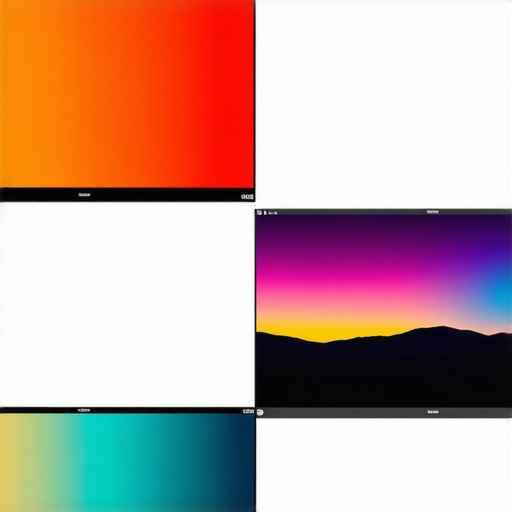
Image prompt: Comparative visualization of OLED and QLED HDR panels showcasing color gamut and contrast differences with vibrant scene examples.
Leverage Calibration Techniques to Counteract Panel Variability
Advanced calibration transcends simple factory adjustments; it involves meticulous, scene-specific tuning to account for panel variability, aging, and environmental influences. Techniques such as spectral calibration, which measures how different wavelengths are reproduced, enable calibration of both colorimetric and spectral outputs, ensuring that the display’s color volume maintains integrity over time. Implementing multi-point, 3D LUT (Lookup Tables) calibration profiles caters to the complex color management demands of HDR workflows, preserving tonal accuracy across the entire luminance spectrum. High-end hardware—such as spectroradiometers paired with software like CalMAN Master Drive—facilitates this process, empowering professionals to achieve consistent results aligned with the specifications mandated by industry standards like Dolby Vision or HDR10+.
Synergizing Hardware and Software for Peak Color Precision
Optimal calibration is a symphonic process involving both hardware precision tools and sophisticated software algorithms. For example, integrating an X-Rite i1Display Pro Plus with calibration suites like LightSpace can refine the display’s gamut mapping and tone response, adapting it to specific project needs. Regular calibration routines—recommended quarterly or after hardware updates—are vital to compensate for display drift. Moreover, understanding how local dimming algorithms influence uniformity and color consistency across different HDR scenes is crucial. Professionals must also be aware that software calibration profiles must be compatible with their editing workflows and color management systems, ensuring seamless integration and accurate output reproduction.
The Future of HDR Displays: Beyond Static Calibration
Emerging trends suggest a shift toward real-time, adaptive calibration systems leveraging machine learning to predict and compensate for panel aging or environmental changes. Such innovations promise to maintain peak color fidelity dynamically, reducing manual calibration frequency and enhancing reliability. With the advent of displays featuring higher bit-depths and improved spectral fidelity, the potential for ultra-precise color reproduction expands. Integrating these advancements into existing workflows necessitates a comprehensive understanding of new calibration paradigms, software capabilities, and hardware compatibilities—endorsing a proactive approach to mastering next-generation HDR technology.
How Do Panel Uniformity and Local Dimming Impact Color Consistency in Critical HDR Work?
Panel uniformity issues, such as uneven luminance or color shift across the display surface, pose a significant challenge in high-end HDR workflows. Local dimming algorithms, which selectively control specific zones of the screen, can mitigate some of these issues by enhancing contrast and uniformity. However, clunky or poorly implemented local dimming may introduce artifacts like blooming or halo effects, hampering color accuracy. Therefore, selecting displays with high-grade full-array local dimming technology and understanding its influence on perceived color consistency are vital for color-critical tasks. Combining this hardware expertise with rigorous calibration ensures that every pixel reflects the true tonal and color intent of the content, regardless of scene complexity or display imperfections.
For deeper insights, explore this detailed resource on calibration methodologies tailored for high-end HDR monitors.
Producers and colorists seeking tailored consultation are encouraged to connect with our experts, guiding you through the intricacies of calibration strategies and display selection for ultimate visual fidelity. Visit our contact page to learn more.
,
Refining Image Fidelity Through Advanced Panel Technologies and Calibration Strategies
Progressions in HDR display technology continually redefine the landscape of professional color grading, demanding a nuanced understanding of how panel characteristics influence outcome accuracy. While quantum dot-enhanced LCDs and OLEDs offer exceptional color volume, their inherent disparities necessitate tailored calibration routines to leverage their full potential. For instance, high-end OLED panels provide superior contrast ratios and true blacks but may require meticulous spectral calibration to mitigate burn-in risks and ensure enduring color fidelity. Conversely, quantum dot displays excel in peak luminance and broader gamut coverage but benefit from uniformity mapping techniques to address slight luminance variances across their surfaces. Recognizing these distinct profiles allows colorists and mastering engineers to optimize workflows aligned with specific project demands.
Expert Insights & Advanced Considerations
Precision Matters Beyond Specifications
Achieving impeccable color accuracy requires not just choosing high nit levels but understanding the intricate interplay of panel uniformity, spectral response, and local dimming algorithms. This holistic approach ensures consistent, reliable outputs aligned with industry standards.
Leverage Emerging Calibration Technologies
Adopting spectral calibration and multi-point 3D LUT profiling enables professionals to mitigate display variances over time, preserving visual integrity crucial for high-end color grading and mastering workflows.
Opt for Panel Technologies Aligned with Project Needs
IPS panels offer unparalleled color consistency ideal for critical editing, while OLED displays provide superior contrast for nuanced tonal work. Recognizing these subtle distinctions informs smarter equipment decisions that directly impact creative results.
Implement Dynamic Calibration Solutions
Emerging AI-driven calibration systems promise real-time compensation for panel aging and environmental shifts, reducing manual intervention and maintaining peak fidelity throughout production cycles.
Adopt a Lifecycle Perspective in Equipment Choice
Consider the long-term implications of panel degradation, spectral stability, and calibration frequency. Strategic planning ensures lasting accuracy, saving costs and safeguarding project quality over time.
Curated Expert Resources
- Monitors.WorkstationWizard Comprehensive HDR Guide: Offers an in-depth analysis of display technologies, calibration practices, and industry standards tailored for visual professionals.
- CalMAN Calibration Solutions: Industry-leading software and hardware tools for achieving and maintaining perfect color accuracy, with tutorials on spectral calibration and LUT management.
- Professional Review of Panel Technologies: Comparative studies detailing IPS, OLED, and QLED performance metrics, aiding informed hardware investments.
- Emerging Trends in Display Calibration: Recent IEEE and SMPTE publications exploring AI-based calibration systems and spectral measurement advancements.
Final Perspective for Color-Conscious Creatives
Stepping beyond basic specifications into the realm of advanced calibration and panel technology empowers professionals to unlock true visual fidelity in HDR workflows. Mastering these nuances ensures your productions resonate with authenticity and impact. Dive deeper by engaging with our team or exploring the extensive resources available—elevate your expertise and set new standards in visual excellence.
About the Author