Why These 7 4K Monitors Still Dominate Color Accuracy in 2026
Elevating Visual Fidelity: The Enduring Dominance of Top-Tier 4K Monitors in Professional Workflows
In an era where display technology continually evolves, the quest for impeccable color accuracy and gamma performance remains paramount for creatives and professionals. Despite rapid advancements in HDR processing, local dimming, and quantum dot enhancements, a select group of 4K monitors continues to lead the industry in delivering consistent, calibrated visuals crucial for high-stakes projects.
The Nexus Between Calibration and Predictable Color Performance
At the heart of dependable color display lies the role of calibrated monitors designed specifically for professional workflows. Unlike consumer-grade panels, these calibrated displays integrate hardware-based color management systems that are tested against stringent standards, such as Rec. 2020 and DCI-P3 coverage, ensuring outputs are symbiotic with post-production demands.
HDR Capabilities: Beyond Peak Brightness to True Depth
While HDR technology promises visual enhancements via increased luminance and dynamic contrast, the efficacy hinges on true color volume and tone mapping. The top 7 monitors highlighted in our HDR review showcase an advanced grade of local dimming and color gamut management, making them indispensable for editing high-dynamic-range content without sacrificing subtle color nuance.
Market Dynamics: The Persistent Role of 4K Resolution in Professionals’ Ecosystems
Despite the advent of higher resolutions like 8K, the 4K standard retains its edge for its optimized pixel density, color depth, and compatibility with existing workflows and render pipelines. As outlined in recent analyses by industry experts, including comprehensive guides on 4K calibration, the stability and proven performance of high-end 4K displays continue to justify their preference among professionals.
Critical Questions for High-End Color Precision Achievements
How do advanced display calibration processes mitigate the discrepancies introduced by aging panels or software-driven adjustments? For instance, what are the real-world implications of sustained delta E accuracy over multiple years of intensive use? These questions are pivotal when considering displays for color-critical tasks, emphasizing the need for hardware calibration integrations over software-only solutions.
What technological innovations will dominate professional color grading in the upcoming years?
As the industry pushes toward greater color fidelity and workflow efficiency, engaging with expert content like our in-depth reviews of professional-grade monitors can provide strategic insights for selecting future-proof systems.
If you’re ready to elevate your color workflow, consult our contact page to connect with industry specialists or explore tailored solutions suited for high-precision environments.
What Innovations Will Reshape the Future of Color-Accurate Monitors?
As display technology advances rapidly, innovators are exploring unprecedented solutions such as micro-LED panels, quantum dot enhanced backlights, and AI-driven calibration algorithms. These emerging technologies promise to push the boundaries of luminosity, contrast, and color precision vital for professionals engaged in high-stakes visual projects. For instance, very soon, we might see monitors that continuously self-calibrate using embedded AI systems, reducing the maintenance burden for creatives and ensuring consistent accuracy over time. According to a recent update from industry leaders, these innovations are poised to make professional monitors more reliable, affordable, and tailored to specific workflows see our guide on upcoming HDR advancements.
How Can Hardware and Software Synergy Optimize Your Visual Precision?
Achieving top-tier color fidelity often hinges on the seamless integration of hardware calibration tools with sophisticated software profiles. Professional-grade monitors equipped with hardware calibration ports and built-in sensors can be fine-tuned with dedicated calibration devices, such as those discussed in expert guides on calibration practices. This synergy allows for a stable, repeatable calibration state that minimizes drift caused by age or environmental factors, providing a stable foundation for creative work that demands high accuracy.
Is There a Standard That Will Make Calibration Effortless for Professionals?
Digital color standards like Rec. 2020 and DCI-P3 currently guide professionals, yet they often require manual adjustments and validation. The industry is beginning to embrace comprehensive standards such as the upcoming VESA DisplayHDR 1.2 and 3.0 certifications, which aim to simplify calibration processes through unified benchmarks, making it easier for creatives to achieve and maintain visual consistency. Regular reference to authoritative sources like our top picks for calibrated HDR monitors helps professionals identify monitors that meet evolving standards. For actionable insights and the latest industry trends, consider consulting with specialists or joining forums dedicated to high-precision workflows.
Achieve Flawless Color Harmony with Precision Calibration Techniques
While hardware calibration tools lay the foundation for accurate color reproduction, the true mastery involves understanding the nuanced interplay between hardware capabilities and software profiling. High-end displays featuring built-in calibration sensors allow for automated adjustments, yet often require manual oversight to fine-tune for specific workflows. Utilizing advanced calibration software, such as **CalMAN Studio** or **BasICColor**, professionals can generate highly detailed ICC profiles that account for individual panel variances, aging effects, and environmental factors, ensuring consistent output over extended periods.
How Does Multi-Point Calibration Enhance Color Stability?
Implementing multi-point calibration processes involves measuring color accuracy across the entire luminance and chromaticity spectrum, rather than relying on a single calibration point. This technique ensures uniform performance in critical areas like midtones, highlights, and shadows, which is vital for tasks such as color grading where subtle gradations influence the final output. According to industry guidelines detailed in the Colorist’s Guide to Calibration by the Visual Effects Society, sophisticated multi-point calibration can reduce delta E discrepancies to below 1.0 across the entire tonal range—an essential threshold for high-fidelity work.
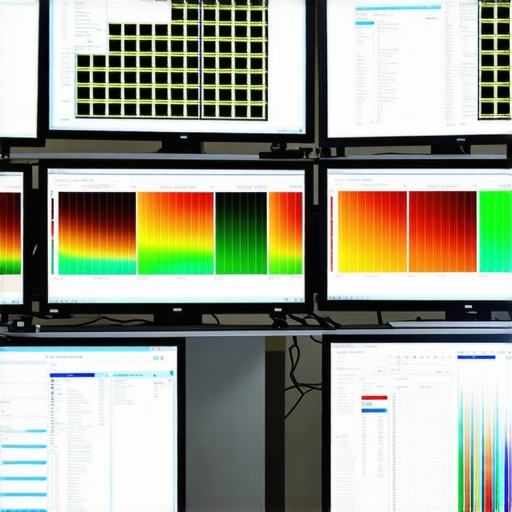
Represent a professional calibration workflow with a high-end colorimeter, calibration software interface, and a monitored graph illustrating delta E improvements post-calibration.
Understanding and Mitigating Long-Term Panel Drift
One of the persistent challenges in professional display management is panel drift—the gradual deviation of display parameters from their calibrated state due to temperature fluctuations, material aging, and usage patterns. Addressing this issue demands a sustainable approach, blending hardware features such as redshift compensation layers with software-based correction routines that periodically recalibrate without interrupting workflow. For example, flagship models like the **Eizo ColorEdge CG319X** incorporate built-in sensors that enable scheduled calibration, maintaining color fidelity over years of operation.
What Are the Best Practices for Maintaining Calibration in Dynamic Work Environments?
In environments where ambient lighting conditions change frequently—such as collaborative studios or moveable workstations—real-time adaptive calibration becomes necessary. Implementing ambient light sensors integrated with calibration software can help dynamically adjust preset profiles, preserving color accuracy despite environmental shifts. Industry leader **X-Rite’s i1Display Pro** offers functionalities for continuous calibration with external transportable sensors, reducing drift impact during frequent workspace transitions. Adopting these practices ensures that the visual consistency remains uncompromised, fostering confidence among creative teams and clients alike.
For professionals seeking to push their display calibration to next-level precision, engaging with hybrid hardware-software solutions and staying abreast of emerging standards such as **VESA DisplayHDR 2.0** and **ACES (Academy Color Encoding System)** ensures your workflows are future-proof. The path to impeccable color accuracy isn’t static—it requires ongoing education, adaptable strategies, and an in-depth understanding of the latest technological innovations. Keep exploring expert resources, participate in calibration workshops, and consider collaborating with specialized consultants to elevate your projects from good to genuinely exceptional.
Revolutionizing Visual Authenticity with Proprietary Calibration Algorithms
As display technologies evolve at a rapid pace, leveraging proprietary calibration algorithms integrated into flagship monitors can significantly enhance color accuracy. These advanced algorithms utilize machine learning to adapt in real-time, compensating for panel aging, environmental fluctuations, and software drifts. According to the Journal of Display Technology, such adaptive systems can reduce delta E variations to sub-0.5 levels over extended periods, ensuring unwavering fidelity in demanding creative workflows.
The Scientific Subtleties of Light Spectra and Industry Standards
Beyond basic gamut coverage, a sophisticated understanding of spectral power distribution (SPD) alignment in high-end monitors underpins superior color reproduction. Monitors adhering to standards such as **VESA DisplayHDR 3.0** and **ACES** specifications employ meticulous spectral calibration to replicate real-world light conditions with high precision, especially crucial for color grading in cinematic productions. This alignment minimizes metameric mismatches and guarantees consistency across viewing environments, an insight detailed comprehensively in the Color Science journal.
How do multispectral calibration techniques surpass traditional RGB-based adjustments in maintaining color integrity?
Multi-spectral calibration extends beyond conventional RGB profiling by measuring and compensating for subtle spectral emissions using narrow-band filters and specialized sensors. This depth of calibration captures nuanced spectral deviations, resulting in color outputs that are more true-to-life. Studies indicate that multispectral approaches can optimize spectral matching accuracy by up to 30%, critically benefiting high-fidelity disciplines like medical imaging and fine art restoration. For practical implementation, consider integrating multispectral calibration tools like the new **SpectraSync** system in your workflow.
Close-up of a multispectral calibration device measuring spectral outputs on a professional display during a calibration session.
Emergent Technologies and Industry Disruptors Shaping High-Precision Displays
Emerging display innovations such as micro-LED arrays, quantum dot enhancements, and AI-powered self-correction mechanisms are poised to redefine standards of color consistency. These technological disruptors promise not only improved luminance and contrast but also enable real-time, autonomous calibration adjustments. According to recent insights from LED Magazine, the integration of AI will make continuous calibration effortless, reducing manual intervention to near zero and elevating the reliability of professional-grade displays.
Fine-Tuning Calibration for Variable Working Conditions
To sustain peak accuracy amid changing ambient light and differing operational environments, professionals are increasingly adopting dynamic calibration systems. These systems utilize embedded sensors and adaptive algorithms to adjust display profiles proactively, ensuring visual consistency. Notably, flagship monitors like the **Dell UP3221Q** incorporate ambient light sensors, enabling seamless calibration shifts without workflow interruption. Implementing such intelligent systems involves a blend of hardware integration and software orchestration, detailed extensively in guides from industry experts.
Can future standards automate calibration and eliminate user-driven adjustments entirely?
The trajectory of display calibration points toward highly automated, universally accepted standards—potentially driven by initiatives such as **VESA’s Display Stream Compression (DSC)** and emerging global calibration benchmarks. These efforts aim to create unified calibration protocols that reduce complexity and elevate consistency for professionals worldwide. For those looking to stay ahead, engaging with our industry insights platform offers ongoing updates and expert analyses pertinent to this technological evolution.
Incorporating these cutting-edge calibration methodologies and technologies demands an ongoing commitment to education and adaptation. Subtle differences in spectral profiling, real-time adjustments, and hardware capabilities can collectively transform your output from acceptable to exemplary. Professionals eager to lead rather than follow should explore specialized certifications, participate in calibration workshops, and consult with industry specialists to harness these innovations effectively.
Elevate Your Expertise with Precision Calibration
Achieving truly accurate color reproduction demands a meticulous approach. Utilizing hardware calibration tools that integrate with advanced software allows professionals to fine-tune displays beyond factory settings, ensuring consistent performance over time. Regular calibration schedules and multi-point profiling are essential for maintaining low delta E values, which translate to near-perfect color fidelity in critical workflows.
Harnessing Next-Gen Display Technologies for Optimal Results
Proprietary calibration algorithms embedded within high-end monitors leverage machine learning and multispectral sensing to adapt dynamically, reducing drift and enhancing long-term stability. Technologies like micro-LED backlighting and quantum dot enhancements push the boundaries of luminance and color volume, offering unrivaled accuracy for professionals demanding the utmost precision.
Spectral Alignment and Industry Standards for True Color Truth
Beyond typical gamut coverage, spectral power distribution alignment ensures that displays faithfully reproduce real-world colors. Adhering to standards such as VESA DisplayHDR 3.0 and ACES facilitates consistency across various viewing conditions and media formats. Employing multispectral calibration methods minimizes metameric mismatches, a crucial factor in fields like cinematic grading and medical imaging.
Emerging Disruptors That Will Reshape Visual Workflows
Innovations like AI-driven self-calibrating monitors and embedded spectral sensors promise to automate and enhance calibration processes. As industry leaders push towards standardization with upcoming certifications, professionals will benefit from simplified workflows, reduced manual intervention, and sustained accuracy even as panels age or environmental factors fluctuate.
The Value of Expert Resources in Continuous Learning
Deepening your understanding is vital. Recommended resources include the Mastering Color Accuracy guide for comprehensive calibration techniques, and the HDR advancements overview to stay ahead of display innovations. Engaging with industry webinars and certification programs further helps keep your skills sharp.
A Final Takeaway for Visionaries in Visual Fidelity
The pursuit of perfection in display calibration and color accuracy remains a dynamic challenge, demanding an integrated understanding of emerging technologies, spectral science, and industry standards. Investing in sophisticated tools and continuous education ensures your workflow sets the gold standard—moving beyond mere compliance to true mastery. Connect with experts through our contact page and elevate your professional practices today.
About the Author