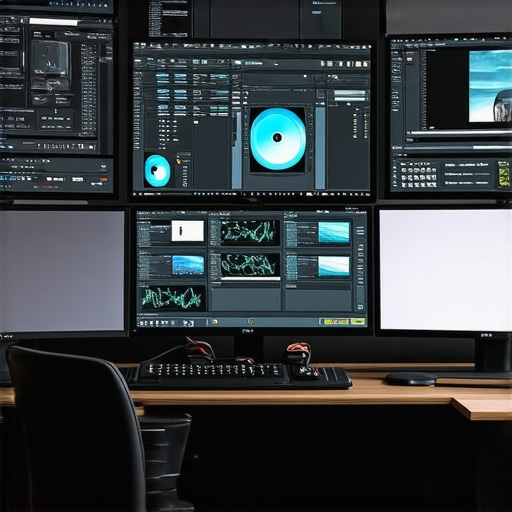
Ultimate Guide to Calibrated Monitors for Photo & Video Creators in 2024
Unlocking the Power of Calibrated Monitors: A Strategic Approach for Photo & Video Professionals in 2024
In the rapidly evolving landscape of digital content creation, the quest for impeccable color fidelity and display accuracy remains paramount. As an industry expert, I recognize that calibrated monitors are not merely tools but strategic assets that underpin the credibility and quality of professional work. This guide delves into the intricate nuances of calibration technology, color science, and practical workflows that elevate creative outputs to new standards of excellence.
Beyond Basic Calibration: The Role of Advanced Color Management Systems
Modern calibrated monitors integrate sophisticated color management architectures, including hardware calibration sensors and software profiling. These systems ensure consistent color reproduction across a variety of devices and environments, mitigating the risks of color shifts during post-production. For instance, professional-grade monitors like those discussed in Mastering Color Accuracy for Creatives exemplify the depth of calibration precision necessary for high-stakes projects.
Why Calibration Matters for Creative Precision
Color accuracy directly influences the fidelity of visual storytelling, especially in fields like high-end photography, cinematic video, and digital art. An uncalibrated monitor can distort hues, contrast, and luminance, leading to flawed decisions in color grading and editing. Expert workflows demand that screens maintain industry-standard color spaces such as Adobe RGB, DCI-P3, or Rec. 709, depending on the project’s scope. Achieving this requires not only initial calibration but ongoing monitoring, which is where professional-grade calibration tools excel.
What Are the Challenges of Maintaining Calibration Over Time?
Despite the technological advancements, calibration is an ongoing process. Factors like ambient lighting, monitor aging, and hardware variations can cause color deviations. Regular calibration sessions, ideally with devices like the X-Rite i1Display Pro or the Datacolor SpyderX, are recommended to sustain peak accuracy. Moreover, understanding the technical limitations of calibration hardware is crucial—no system is perfect, but ongoing adjustments can keep deviations within acceptable thresholds.
How Can Creatives Optimize Their Workflow for Consistent Color Fidelity?
Establishing a robust calibration routine integrated into daily workflows is essential. This includes setting up a controlled environment with consistent ambient lighting, using LUTs (Look-Up Tables) for color correction, and leveraging software profiles that align with the monitor’s hardware capabilities. For further insights, explore Calibrated Monitors Explained for a comprehensive understanding of the importance of precision in creative industries.
How do professional calibration standards influence client trust and project outcome?
Adhering to established calibration standards not only enhances visual consistency but also builds credibility with clients who rely on precise color reproduction for branding, print, or digital media. It demonstrates a commitment to quality that differentiates top-tier creatives from amateurs.
To deepen your expertise, consider exploring the latest trends in HDR and 4K calibration, which are transforming how visual fidelity is perceived in 2024. For example, the advancements discussed in HDR Monitors for 2025 highlight the evolving standards for color accuracy in high-dynamic-range workflows.
For a comprehensive resource, review the detailed analyses available at Ultimate Guide to Calibrated Monitors for Photo & Video Editing in 2024.
How Do Calibration Standards Shape the Future of Visual Consistency and Professional Credibility?
In the high-stakes world of professional content creation, adhering to industry-standard calibration protocols is more than a technical requirement—it’s a strategic differentiator that fosters trust and elevates project outcomes. Calibration standards, such as those outlined by organizations like the International Color Consortium (ICC), serve as benchmarks ensuring that displays deliver predictable and consistent color reproduction across different devices and environments. This consistency is vital when working on complex projects that demand precise color matching, like high-end photography, cinematic post-production, or digital art.
Implementing rigorous calibration protocols, including regular device profiling and environmental control, directly impacts client confidence. When clients see that a creative professional employs calibrated monitors aligned with recognized standards, they gain assurance that the final output will meet their expectations for color fidelity and quality. This meticulous attention to detail enhances reputation and opens doors to more lucrative, high-profile projects.
According to authoritative sources like Mastering Color Accuracy for Creatives, maintaining calibration standards requires ongoing vigilance. Regular calibration sessions, combined with the use of advanced tools like the X-Rite i1Display Pro or Datacolor SpyderX, ensure consistent adherence to color spaces such as Adobe RGB or DCI-P3. These practices not only improve workflow efficiency but also safeguard against costly reworks caused by color discrepancies.
What Are the Practical Steps for Integrating Calibration Standards into a Creative Workflow?
Successful integration begins with establishing a routine that includes daily or weekly calibration checks, depending on project demands. Setting up a controlled workspace with ambient lighting that remains consistent helps minimize variables that can affect display accuracy. Leveraging hardware calibration tools combined with professional calibration software ensures that monitor output aligns with target color profiles, facilitating seamless color management throughout the editing process.
Furthermore, documenting calibration results and maintaining detailed logs can help identify patterns or drifts over time, enabling proactive adjustments. For instance, many professionals utilize calibration reports to verify that their displays remain within acceptable tolerances, aligning with industry benchmarks. This disciplined approach not only improves accuracy but also demonstrates professionalism to clients and collaborators.
To deepen your understanding of best practices, explore resources like Best Calibrated Monitors for Color Accuracy in 2024 and integrate these standards into your routine for maximum impact.
In what ways can adopting rigorous calibration standards influence your competitive edge in an increasingly saturated creative market?
If you’re eager to elevate your calibration practices further, consider sharing your insights or experiences in the comments. Additionally, exploring comprehensive guides on calibrated workflows can provide actionable tips to refine your process. For more in-depth strategies, visit our contact page.
Elevating Professional Credibility Through Rigorous Calibration Standards in Creative Industries
In today’s hyper-competitive landscape of digital content creation, the significance of adhering to stringent calibration standards cannot be overstated. These standards serve as the backbone of consistent, high-fidelity visual output that meets industry benchmarks and client expectations. By integrating internationally recognized protocols, such as those established by the International Color Consortium (ICC), creative professionals ensure their displays deliver predictable and accurate color reproduction across diverse environments and devices.
Implementing these standards involves meticulous calibration routines, including device profiling, ambient light assessment, and regular re-calibration schedules. The use of advanced tools like the X-Rite i1Display Pro or the Datacolor SpyderX, coupled with professional software solutions, enables precise control over color accuracy. Such practices not only elevate the quality of work but also signal a high level of professionalism to clients, fostering trust and confidence in the final deliverables.
How do calibration standards influence project outcomes and client relationships?
Adherence to calibration standards directly impacts the fidelity and consistency of visual content, which is critical for projects requiring exact color matching—be it branding, product photography, or cinematic post-production. When clients see a creative professional consistently delivering work aligned with industry-standard color spaces like Adobe RGB, DCI-P3, or Rec. 709, it reinforces the perception of expertise and reliability. This consistency reduces costly reworks and revisions, streamlining workflows and strengthening long-term relationships.
According to a detailed analysis in “Mastering Color Accuracy for Creatives” by Workstation Wizard, maintaining calibration involves more than initial setup; it requires ongoing vigilance through scheduled calibration sessions and environmental controls. This proactive approach ensures that displays remain within acceptable tolerances, thereby safeguarding the integrity of the creative process over time.
Integrating Calibration Protocols into a Seamless Creative Workflow for Optimal Results
Seamless integration of calibration standards into daily workflows demands a disciplined routine. Start by establishing a dedicated, controlled workspace with consistent ambient lighting—preferably with neutral, indirect light sources that minimize glare and color shifts. Regular calibration sessions, ideally weekly or bi-weekly, should be scheduled using hardware calibration tools paired with sophisticated software to create accurate color profiles tailored to your specific display and project needs.
Documenting calibration results is equally vital. Maintaining logs allows for tracking deviations over time and facilitates proactive adjustments. Many professionals utilize calibration reports to verify ongoing compliance with industry standards, ensuring that their work remains consistent regardless of external variables. This discipline not only enhances accuracy but also demonstrates a commitment to quality that clients value highly.
Furthermore, integrating color management workflows—such as employing LUTs for color correction and utilizing color-managed software—ensures that color fidelity is preserved from creation to delivery. The synergy of hardware calibration and software management creates a robust environment where visual consistency is a natural outcome, empowering creators to produce work of the highest caliber.
What are the future trends in calibration technology that could redefine standards in 2024 and beyond?
Emerging innovations in calibration technology include AI-driven calibration algorithms that adapt in real-time to environmental changes, and HDR calibration protocols that provide a more comprehensive approach to high-dynamic-range workflows. Companies are also exploring cloud-based calibration management systems that facilitate remote monitoring and centralized control across multiple devices—an invaluable feature for large creative teams or studios.
For those eager to stay ahead, exploring authoritative sources such as the latest publications by the International Color Consortium and industry leaders like CalMAN and LightSpace will be essential. These advancements promise to further refine calibration accuracy, reduce manual intervention, and enhance the overall quality of digital content production.
To deepen your expertise and implement cutting-edge standards, consider joining professional forums and subscribing to updates from calibration hardware manufacturers. Your proactive engagement will ensure your workflows remain at the forefront of visual fidelity in 2024 and beyond.
Future-Proof Your Visual Craftsmanship with Cutting-Edge Calibration Protocols
As the creative landscape advances, the integration of emerging calibration technologies such as AI-driven adaptive calibration systems and cloud-based management platforms is transforming industry standards. These innovations facilitate real-time adjustments, ensuring your display maintains impeccable accuracy regardless of environmental fluctuations, thereby safeguarding the integrity of your digital artistry.
How Do AI and Cloud Innovations Redefine Calibration Precision?
Artificial intelligence algorithms now enable dynamic calibration that responds instantaneously to changes in ambient lighting or hardware aging, significantly reducing manual intervention and enhancing consistency. Simultaneously, cloud-based calibration management allows collaborative teams to synchronize device profiles centrally, fostering uniformity across multiple workstations. These technologies not only streamline workflows but also set new benchmarks for reliability, making them indispensable for high-stakes productions.
The Strategic Importance of Calibration in Client Confidence and Market Competitiveness
Adhering to advanced calibration standards demonstrates a relentless commitment to quality, which directly correlates with client trust and project success. When clients observe that your workflow incorporates rigorous, state-of-the-art calibration protocols—aligned with organizations like the International Color Consortium—they gain confidence in your capability to deliver precise, consistent results, ultimately elevating your reputation in a competitive industry.
What Are the Practical Steps to Incorporate Future-Ready Calibration into Daily Operations?
Begin by investing in AI-enabled calibration tools and establishing a centralized, cloud-connected calibration dashboard. Schedule regular automated calibration sessions during off-hours to minimize workflow disruption. Maintain comprehensive logs of calibration history and environmental conditions, leveraging analytics to anticipate hardware drift before it impacts output. Educate your team on emerging calibration protocols through ongoing training, ensuring your studio remains at the forefront of technological adoption.
Why Continuous Education and Industry Engagement Are Crucial in Staying Ahead
Keeping abreast of the latest developments from authoritative sources such as the International Color Consortium and leading calibration hardware manufacturers is vital. Attending specialized seminars, participating in industry forums, and subscribing to professional journals will empower you to adapt swiftly to evolving standards, ensuring your work remains both relevant and exemplary in quality.
How can mastering these advanced calibration standards give you a competitive edge in high-end visual production?
By implementing pioneering calibration protocols, you distinguish yourself as a meticulous professional committed to excellence, which resonates strongly with discerning clients seeking flawless visual fidelity. This strategic differentiation not only enhances your project outcomes but also positions your brand as a leader in the pursuit of perfection, opening doors to exclusive, high-value collaborations.
Explore further insights and stay updated on the latest calibration innovations by visiting industry-leading resources and engaging with professional communities dedicated to color science and digital imaging.
Expert Insights & Advanced Considerations
Precision Calibration as a Foundation for Creative Excellence
Mastering calibration techniques ensures that professional displays consistently meet the highest industry standards, reducing rework and enhancing client trust. Leveraging AI-driven calibration tools can adapt in real-time to environmental changes, maintaining optimal accuracy without manual intervention.
Integration of Color Management Systems in Complex Workflows
Incorporating advanced color management architectures, such as hardware LUTs and cloud-based profiling, allows for seamless color fidelity across multiple devices. This integration is crucial for collaborative projects involving large teams or remote workflows, ensuring uniformity and efficiency.
Continuous Education and Industry Engagement
Staying current with emerging calibration standards and technological innovations, such as HDR and 4K protocols, positions professionals at the forefront of visual fidelity. Regular participation in industry forums and training enhances expertise and maintains a competitive edge.
Strategic Use of Professional Calibration Resources
Utilizing authoritative sources like Mastering Color Accuracy and Ultimate Guide to Calibrated Monitors provides deep insights into best practices. These resources support informed decision-making and continuous improvement in calibration routines.
Curated Expert Resources
- International Color Consortium (ICC): The ICC standards are the backbone of consistent color management, ensuring device interoperability and fidelity across platforms.
- X-Rite and Datacolor Calibration Tools: Industry-leading hardware calibration solutions that provide precise profiling and ongoing device monitoring.
- Industry Journals and Professional Forums: Publications and communities focused on color science and display technology keep professionals updated on latest trends and research.
Final Expert Perspective
In the realm of professional visual creation, mastering advanced calibration standards for 2024 is paramount. These standards underpin the integrity of digital artistry, ensuring that every pixel aligns with the creator’s vision and client expectations. By embracing cutting-edge tools and continuous learning, experts can elevate their craft and secure a competitive advantage. Engage actively with industry resources and share your insights to contribute to the collective pursuit of perfection in calibrated displays.
About the Author


The emphasis on ongoing calibration routines and the use of advanced tools like the X-Rite i1Display Pro really resonated with me, as I’ve found that consistency is key in maintaining trust with clients. I’ve recently started scheduling weekly calibration checks to ensure that my workspace stays within industry standards, and I’ve already noticed a reduction in discrepancies during the final review stages. What’s been more challenging for me is balancing ambient lighting conditions with the calibration schedule; I wonder if others have found effective ways to control environmental factors for optimal calibration results? Additionally, I am curious about the latest AI-driven calibration systems—do they really adapt sufficiently to dynamic lighting environments, or is manual oversight still essential? Overall, this post highlights how critical it is to stay updated with emerging technologies to remain competitive and deliver reliable, high-quality work.
Reading through the guide really underscored how critical regular calibration is, especially as monitors age or environmental conditions shift. I’ve experimented with setting up more consistent lighting environments in my studio and have noticed my calibration results are more stable now. However, I’m still curious about whether AI-driven calibration tools really offer the robustness they claim. I’ve tried a few, but wonder if manual adjustments or periodic professional calibrations are still necessary for the most critical projects. Also, maintaining a detailed calibration log has helped me track noticeable shifts over time and plan timely recalibrations, which seems to be a step many overlook. What are other creatives’ experiences with integrating these new technologies into their workflows? Do you find AI-driven tools reliable enough for high-stakes projects, or is there still a significant need for manual oversight? Would love to hear some insights or recommendations from those who have tested these systems thoroughly.
This comprehensive guide really highlights how crucial a meticulous calibration routine is for professional creatives. I’ve been using the X-Rite i1Display Pro for a while, and I can attest that integrating regular calibration sessions greatly improves color consistency across projects. One challenge I’ve faced, similar to Emily, is balancing ambient lighting—finding that perfect environment is easier said than done, especially with varying light conditions throughout the day. I’ve started experimenting with light-controlled environments and even using software to simulate different lighting scenarios, which seems promising. Regarding AI-driven calibration systems, I remain somewhat cautious; while they’re innovative, I still prefer manual oversight for critical projects because I want to ensure the utmost accuracy. Does anyone have experience with combining AI tools with manual calibration? How do you ensure your workflow remains both efficient and precise? Would love to hear tips from others who’ve refined their process in this area.
This post highlights some really crucial points about maintaining calibration accuracy over time, especially with the rapid tech advancements in 2024. I’ve been experimenting with integrating AI-driven calibration tools in my workflow, and I’ve found that while they offer incredible convenience and adaptability, there’s still some value in manual calibration, particularly for critical color grading. Regular checks with calibrated hardware are necessary to verify AI adjustments—they shouldn’t be completely relied upon but used in tandem for best results. One thing I wonder about is how well these systems handle environmental changes in demanding studio setups, especially when ambient lighting varies throughout the day. Has anyone here found effective ways to combine AI with traditional calibration methods to stay ahead of color shifts? I believe the future belongs to systems that can learn and adapt constantly, but human oversight remains vital for high-stakes projects. Would love to hear your experience with blending these approaches—are the benefits of AI calibration outweighing the occasional need for manual tweaks?
This comprehensive post really emphasizes the importance of integrating advanced calibration protocols into daily workflows, especially in a landscape where technology evolves rapidly in 2024. I’ve been experimenting with cloud-based calibration management systems and AI-powered tools for my studio. While I agree that these innovations are promising—allowing for real-time adjustments and consistent color management—they still require a disciplined routine of manual checks. I’ve noticed that regular calibration logs help me spot subtle drifts early, which has been invaluable for maintaining high standards. My question is, how many of you have found that AI tools can fully replace manual calibration, or do you still see the need for periodic human oversight? Balancing efficiency with precision remains my biggest challenge, especially when working on high-profile projects where color fidelity is critical. Would love to hear how others are navigating this dance between emerging tech and traditional practices.
This article really resonated with me, especially the section on integrating advanced color management systems into workflows. I’ve been using the Datacolor SpyderX for calibration over the past year and, like many, I’ve noticed that regular calibration improves color consistency but also introduces questions about environmental control. The challenges of ambient lighting variability are real; I’ve tried some solutions like gliding shades and setting up dedicated lighting, but I wonder whether investing in AI-powered calibration tools with real-time adjustments might be the next step. Has anyone experimented with these systems in demanding projects? How reliable are they compared to traditional methods, especially for critical color grading? I believe continuous education on these emerging technologies is essential if we want to stay competitive. Would love to hear insights from others who are exploring or implementing AI calibration tech and how they’re managing integration into their existing workflows.
This guide sheds valuable light on how advanced color management systems are transforming professional workflows in 2024. I’ve been experimenting with hardware calibration sensors alongside software profiling, and I agree that regular recalibration is crucial, especially as monitors age or environmental conditions fluctuate. One area I find particularly intriguing is the integration of AI-powered calibration tools, which promise real-time adjustments to ambient lighting changes. From my experience, these systems are quite promising, but I still believe manual oversight remains important for critical tasks like high-end color grading. What are others’ thoughts on balancing AI automation with manual calibration to maintain precision? Also, does anyone have insights into how these tech advancements are affecting project turnaround times and overall accuracy? I think embracing these emerging technologies can give us a significant edge, but it’s essential to stay vigilant and continue refining our workflows to leverage their full potential.
This post really underscores the importance of regular calibration routines, especially with the rapid pace of technological advancements in 2024. I’ve been experimenting with both hardware calibration tools like the X-Rite i1Display Pro and AI-powered solutions to maintain color accuracy across different lighting environments. While I find that AI systems are quite promising for real-time adjustments, I still prefer manual calibration checkpoints for high-stakes projects, just to double-check and ensure nothing is missed. The real challenge is balancing efficiency with meticulous accuracy, particularly when managing multiple devices in a collaborative setting. Has anyone here integrated AI tools with their manual workflows? If so, how has that impacted your project turnaround times and overall output quality? I believe the future of calibration lies in smart systems that adapt seamlessly, but human oversight remains critical during complex color grading. Would love to hear how others manage this integration effectively.