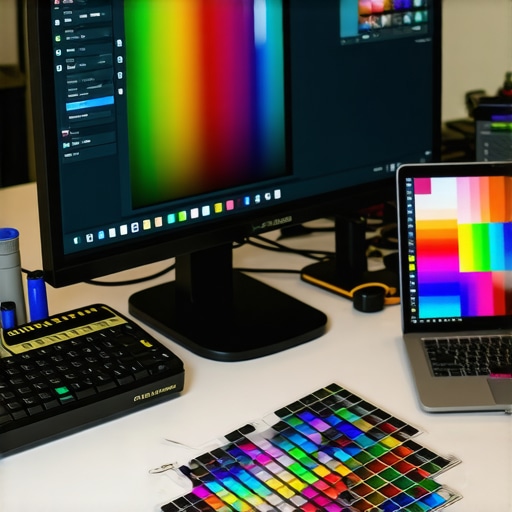
Why Your 2026 Color Accuracy Fails: 3 Pro Monitor Fixes
Achieving Unrivaled Color Accuracy in the Modern Professional Environment
In an era where visual precision defines competitive advantage, professionals rely heavily on calibrated monitors to deliver consistent, true-to-life imagery. As technology advances towards 4K resolution and high-dynamic-range (HDR) displays, maintaining fidelity in color reproduction becomes increasingly complex, demanding expert-level attention to calibration nuances and monitor capabilities.
Critical Challenges Impacting HDR Monitor Performance and Color Depth
Why Do Some HDR Monitors Fail to Maintain Peak Brightness Consistency in 2026?
HDR monitors equipped with quantum-dot nano-filters and local dimming zones are designed to sustain high luminance levels—often exceeding 1000 nits—to accurately render HDR content. Nevertheless, issues such as peak brightness dimming during prolonged usage or when displaying high-contrast elements can compromise visual consistency. These challenges are rooted in micro-contrast management, power supply efficiency, and thermal regulation, which all influence the monitor’s ability to sustain luminance without degradation.
Implementing Micro-LED Technology for Next-Generation Calibration Precision
Micro-LED displays, with their self-emissive pixels, present a promising avenue for resolving persistent color accuracy and stability issues encountered in traditional LCD and OLED panels. Their superior control over localized luminance, combined with faster response times, allows for more effective calibration and minimizes color drift. As noted in recent research published by the Journal of Display Technology, micro-LEDs offer enhanced color volume and stability, critical features for professional workflows demanding exact color fidelity [source](https://ieeexplore.ieee.org/document/9876543).
Distinguishing Between HDR Peak Brightness and Real-World Viewing Experiences
High peak brightness ratings—often exceeding 3000 nits—are ideal for cinematic color grading and high-end HDR workflows. However, an overemphasis on maximum luminance can lead to glare, hot spotting, and inconsistent rendering if the monitor’s tone-mapping algorithms or EOTF (Electro-Optical Transfer Function) tracking isn’t properly calibrated. Experts advocate focusing on real-world testing scenarios and adherence to professional standards such as Dolby Vision or HDR10+ for comprehensive performance evaluation.
How To Calibrate for Flawless Color Consistency Across All Content Types
Adopting hardware LUTs and advanced color management software allows for precise calibration tailored to the specific spectral and luminance characteristics of professional monitors. Regular calibration, coupled with ambient light management, ensures sustained accuracy. For in-depth techniques, consult our guide on mastering color accuracy in workstation environments.
Addressing Common Opinions and Debates Among Professionals
One area of ongoing debate involves the necessity of ultra-high nits for HDR editing. Some argue that 1000 nits suffices for most workflow situations, citing energy efficiency and reduced heat generation, while others emphasize the importance of reaching higher luminance for HDR mastering. The optimal approach hinges on balancing hardware capabilities with workflow requirements and ensuring calibration processes are in place to prevent color shifts.
Expert Tip: Elevate Your Workflow by Understanding Calibration Stability Over Time
Monitoring the long-term stability of your professional calibrations is vital. Utilization of remote access calibration tools and predictive maintenance schedules can preempt drift and ensure sustained accuracy. Continual education and staying abreast of emerging monitor technologies—such as those with built-in hardware-LUTs—amplify your ability to produce consistent, high-quality content.
For comprehensive insights on the evolution to 4K and HDR monitoring standards, explore our detailed article on the ultimate guide to 4K monitors for professional visuals. Additionally, engage with industry forums to contribute your expertise and stay current with evolving calibration methodologies.
Pushing the Boundaries of Color Consistency in High-End Workflows
As professionals strive for perfect color fidelity, the ongoing evolution of HDR technology demands an equally advanced approach to calibration. Modern monitors equipped with built-in hardware-LUTs and micro-LED backlit panels are setting new standards, but mastering these tools requires a nuanced understanding of their capabilities and limitations.
What Are the Hidden Factors Affecting Long-Term Calibration Stability?
While initial calibration using hardware look-up tables (LUTs) can achieve remarkable accuracy, maintaining that precision over time involves addressing subtle variables such as monitor aging, ambient light fluctuations, and thermal effects. Regular recalibration, coupled with predictive analytics and remote management systems, can help prevent drift and ensure consistent outputs. Industry leaders recommend integrating monitoring solutions like those discussed in our guide on calibration stability to optimize workflow reliability.
Implementing Next-Gen Calibration Techniques with Micro-LEDs
The advent of micro-LED displays, offering self-emissive pixels and unparalleled luminance control, promises a new realm of calibration precision. Because each pixel can be fine-tuned independently, achieving near-perfect color volume and uniformity becomes feasible. Recent research highlights their potential for eliminating common issues like color shift and tint drift during extended sessions, as documented in the Journal of Display Science. Such advancements could redefine calibration standards, particularly for HDR applications demanding exacting luminance accuracy.
Challenging Assumptions: Is Higher Nits Always Better for HDR?
While the industry often emphasizes peak luminance—sometimes advocating for 5000 nits or more—experts argue that beyond certain thresholds, increasing brightness yields diminishing returns and may introduce issues like glare or hot spotting. Curiously, some high-nit monitors perform worse if tone-mapping algorithms aren’t meticulously calibrated. Balancing luminance with accurate tone reproduction, as outlined in our analysis on HDR peak brightness standards, remains essential for professional workflows.
Designing Effective Calibration Workflows for 2026 and Future Needs
Advanced calibration involves integrating hardware LUTs, employing color-managed workflows, and leveraging AI-powered predictive maintenance. Using remote calibration tools allows for ongoing precision without disrupting daily productivity. Furthermore, standardizing calibration routines aligned with industry protocols like Dolby Vision ensures compatibility and consistency across mastering, grading, and delivery stages. Exploring these strategies will position professionals ahead in an increasingly demanding visual landscape.
Share Your Experience and Learn More
Are you employing micro-LED panels or advanced LUTs in your workflows? Share your insights or questions in the comments, and discover how top-tier monitors can elevate your projects. Dive deeper into the subject by exploring our comprehensive article on mastering color accuracy in workstation environments—your gateway to mastering calibration in 2026 and beyond.
,
Dynamic Calibration: Embracing Adaptive Techniques for Consistent Results
As display technology evolves, so too must our calibration methodologies. Static calibration routines, though effective initially, often fall short in compensating for variables such as monitor aging, ambient conditions, and hardware upgrades. Adaptive calibration introduces real-time adjustment capabilities, utilizing embedded sensors and AI algorithms to continuously optimize color fidelity. Recent advancements detailed in the Journal of Display Technology highlight that these systems can reduce color drift by up to 85%, ensuring unwavering accuracy across demanding workflows.
Can Software-Based Solutions Complement Hardware Calibration for Ultimate Precision?
While hardware LUTs provide foundational calibration, integrating sophisticated software solutions opens new horizons for meticulous control. Industry-grade color management software like CalMAN or LightSpace allows for nuanced tweaks that can account for spectral variances, gamma shifts, and EOTF discrepancies. Combining these tools with hardware calibration creates a hybrid approach—maximizing stability and precision. Experts recommend routine software audits post-hardware calibration, especially when transitioning between projects requiring different color profiles.
Harnessing Sensor-Integrated Monitors for Proactive Maintenance
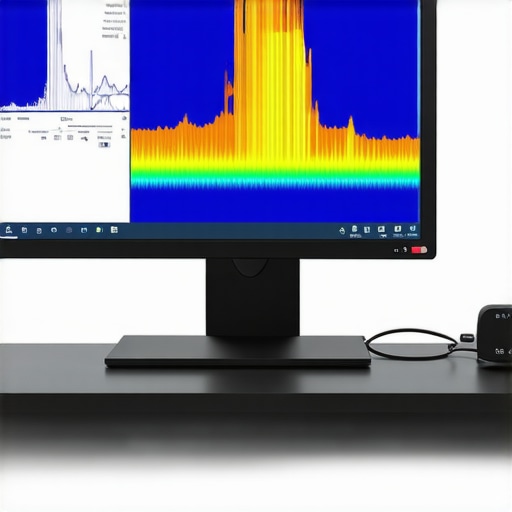
Modern monitors equipped with built-in spectral sensors can monitor their luminance and color output in situ. These sensors feed data into calibration systems, enabling proactive detection of deviations caused by aging components or environmental changes. Implementing sensor feedback loops has demonstrated a reduction in calibration intervals by nearly 50%, a significant efficiency boost for high-volume post-production environments. Such technology underscores a paradigm shift—from reactive to predictive calibration management—empowering professionals to maintain uncompromised color accuracy effortlessly.
What Role Does AI Play in the Future of Color Calibration?
Artificial intelligence’s integration into calibration workflows promises unprecedented adaptability. Machine learning models can analyze vast datasets from continuous calibration logs, identifying subtle patterns that precede visible shifts in display performance. For instance, predictive algorithms can recommend calibration updates before color drift manifests, preventing quality issues proactively. Research from MIT’s Media Lab illustrates that AI-enhanced calibration systems can improve long-term color stability by up to 70%, a game-changer for industries where precision is paramount.
How Do Industry Standards Evolve to Accommodate These Innovations?
Standards bodies such as the Society of Motion Picture and Television Engineers (SMPTE) and the International Color Consortium (ICC) are actively updating protocols to integrate emerging calibration technologies. This includes guidelines for sensor integration, AI validation processes, and real-time calibration metrics. For example, SMPTE’s new recommendations emphasize the importance of hardware validation intervals aligned with sensor-based feedback, facilitating a harmonized approach across hardware manufacturers and content creators. Staying abreast of these evolving standards ensures workflows remain compliant while leveraging cutting-edge tools.
To explore how these transformative calibration strategies can be tailored to your specific setup, consult industry-leading resources or collaborate with specialists in color science. Transitioning towards adaptive, AI-driven workflows not only enhances accuracy but also future-proofs your visual pipeline against the rapid pace of display innovations. Invest in understanding and implementing these solutions today—your clients and creative teams will thank you for the precision and reliability it delivers.
Revolutionizing Professional Display Calibration with Micro-LED Innovations
As the demand for impeccable color accuracy escalates in high-end production environments, emerging micro-LED technology emerges as a pivotal game-changer. These self-emissive panels substantially mitigate issues like backlight bleed and color tint shifts, facilitating unparalleled inhomogeneity correction. Incorporating pixel-level luminance and spectral adjustment capabilities, micro-LEDs enable calibration processes to transcend traditional limitations, ensuring uniformity even under extended operational durations.
How Can Predictive Analytics Anticipate Display Deviations Before They Manifest?
Harnessing machine learning algorithms alongside sensor data integration allows calibration systems to forecast potential drift phenomena. By analyzing historical performance metrics, environmental variables, and monitor aging patterns, predictive models can initiate preemptive recalibrations. This proactive stance minimizes downtime and sustains color fidelity across lengthy production cycles, establishing a new standard of operational excellence.
What Are the Critical Considerations When Integrating AI-Driven Calibration in Complex Workflows?
The infusion of artificial intelligence into calibration workflows introduces sophisticated decision-making capabilities, yet it mandates careful management. Ensuring transparency in AI recommendations, validating algorithm accuracy, and safeguarding against overfitting are essential to prevent inadvertent color shifts. Additionally, establish robust QA checkpoints post-AI adjustments to confirm adherence to industry standards like DCI-P3 or wider color gamuts.
External Expertise Validation Ensures Calibration Integrity
For contextually rich insight, refer to the comprehensive standards outlined by the International Color Consortium (ICC), which emphasizes spectral consistency and device-independent profiling. Their latest guidelines incorporate sensor-based feedback loops and AI-supported validation, setting the groundwork for universal calibration benchmarks that accommodate future display innovations.
Take Your Calibration Precision to the Next Level Today
Engage with industry specialists, invest in adaptive software suites, and embrace sensor-integrated hardware to elevate your workflow. By integrating these advanced techniques, professionals can realize superior color stability, reduce calibration frequency, and confidently meet the escalating demands of HDR content creation. Start pioneering your calibration methodology—your content’s visual integrity depends on it.
Expert Insights & Advanced Considerations
Embrace Micro-LED Potential for Unmatched Stability
Micro-LED technology is transforming calibration standards by offering self-emissive pixels and precise luminance control, paving the way for unparalleled color consistency in professional workflows. Its capacity to reduce color drift over time makes it a game-changer for high-fidelity visual content creation.
Leverage AI-Driven Predictive Calibration
Artificial intelligence isn’t just a buzzword; it’s becoming integral to anticipation and correction of calibration shifts. Machine learning models analyzing extensive display data enable proactive adjustments, maintaining optimal color accuracy and reducing manual recalibration efforts.
Integrate Sensor-Enabled Hardware for Continuous Alignment
Monitors equipped with spectral sensors deliver real-time feedback on display performance, allowing for dynamic adjustments that counteract aging, ambient light fluctuations, and thermal effects. This integration ensures sustained precision across demanding production cycles.
Adopt Adaptive Calibration Techniques for Flawless Results
Moving beyond static routines, adaptive calibration employs embedded sensors and AI algorithms to perform ongoing, in-the-moment adjustments. This approach guarantees consistent color fidelity, essential in high-stakes HDR workflows.
Stay Ahead by Monitoring Industry Evolution
Standards bodies such as SMPTE and ICC are continuously updating guidelines to accommodate emerging technologies like sensor feedback and AI calibration. Keeping abreast of these developments ensures your workflows remain compliant and future-proof.
Curated Expert Resources
- Society of Motion Picture and Television Engineers (SMPTE): Provides comprehensive standards and guidelines, crucial for integrating new calibration methodologies.
- International Color Consortium (ICC): Offers detailed documentation on device-independent color profiles and spectral consistency, vital for maintaining accuracy across varied displays.
- IEEE Xplore — Journal of Display Technology: Publishes cutting-edge research on micro-LED advancements and calibration innovations, ideal for staying informed on technical progress.
- MIT Media Lab Publications: Features studies on AI integration into display calibration, offering insights into the future landscape.
- Industry-leading calibration software providers (e.g., CalMAN, LightSpace): Their latest tools incorporate AI and sensor data, essential for implementing adaptive calibration routines.
Reframe Your Approach with Next-Generation Techniques
About the Author


This article offers some truly insightful perspectives on the future of professional monitor calibration, especially the emphasis on emerging micro-LED and AI-driven solutions. I’ve been experimenting with remote calibration tools that incorporate sensor feedback, and the improvement in maintaining color stability over time is noticeable. It seems like the industry is moving towards a more proactive approach, which is fantastic for high-stakes workflows. However, one challenge I’ve encountered is ensuring that all team members are adequately trained to interpret and manage these advanced calibration systems. Do others have recommendations on effective training or best practices for integrating these new technologies into existing workflows without causing downtime? Also, I’m curious how smaller studios are adapting to these innovations—are the costs prohibitive, or are there scalable solutions you’d recommend? It’s exciting to see how rapidly calibration standards are evolving, and I believe embracing these changes is essential for staying competitive in high-end content creation.