Fixing Broken Gradients: Why Some 10-Bit Panels Still Show Banding
Understanding the Frontier of Professional Display Technology
In the realm of professional visual content creation, the deployment of calibrated, high-resolution monitors is paramount for achieving uncompromised color fidelity and HDR performance. As advancements in display engineering evolve, professionals must grapple with complex phenomena such as backlight uniformity, gamma stability, and the subtleties of 10-bit gradient rendering. This article explores the intricate interplay between hardware capabilities and perceptual outcomes, providing a nuanced expert-level analysis of how premium monitors maintain color precision despite inherent technological challenges.
The Myth of Perfect 10-Bit Gradient Display in HDR Monitors
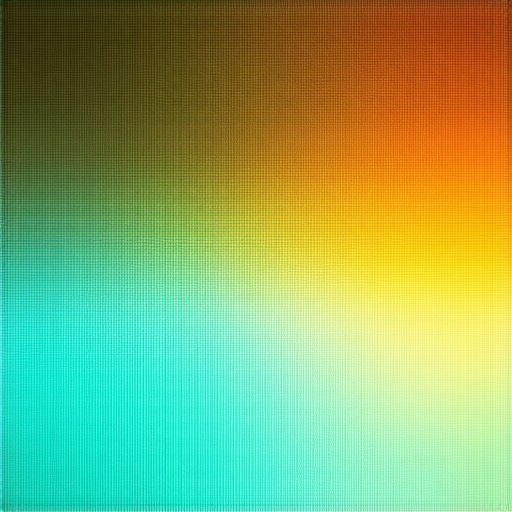
Despite the widespread adoption of 10-bit panels purported to deliver seamless gradients, many users encounter banding artifacts that undermine their visual workflows. This paradox arises from limitations in panel calibration, signal processing algorithms, and internal LUT (Lookup Table) management. As detailed in recent studies on display dithering techniques, even high-end monitors may exhibit residual banding due to micro-structural constraints and manufacturing inconsistencies, making it essential to comprehend the underlying causes beyond superficial specifications.
Why Some 4K Monitors Still Struggle With Color Gamut Fidelity
In the context of advanced color standards such as DCI-P3 or Rec. 2020, achieving accurate gamut mapping remains a formidable challenge. Innovations such as quantum dot enhancement and nano-IPS arrays have narrowed the performance gap, yet issues like white point shifts and hue deviations can persist under prolonged use or in non-ideal ambient conditions. Leveraging external calibration tools and understanding internal LUT management is crucial for maintaining consistent color output, especially in critical workflows requiring precise P3 or Rec. 2100 compliance. For comprehensive guidance on calibration techniques, visit our calibrated monitor guide.
Deciphering the Complex Relationship Between HDR Peak Brightness and Perceived Detail
High peak brightness levels in HDR monitors, often exceeding 2000 nits, are lauded for their impact on highlights, but without proper tone mapping and local dimming algorithms, they can lead to issues like clipping or blooming. Moreover, thermal management intricacies influence the sustained brightness and overall stability during prolonged grading sessions, as elaborated in the latest white papers on HDR backlight technology. Mastering these nuances allows professionals to optimize their display settings and ensure that subtle gradations are preserved across the entire luminance spectrum.
How Can Professionals Overcome Gradient Banding Despite Cutting-Edge Hardware?
Mitigating gradient banding extends beyond selecting the latest panel; it involves sophisticated signal processing, dithering strategies, and consistent calibration. Techniques such as temporal dithering and error diffusion algorithms can significantly reduce perceptible banding, but their effectiveness hinges on hardware compatibility and firmware support. Regular calibration to the D65 white point, combined with gamma and LUT adjustments, ensures uniformity and prevents gradual color shifts, even during extended sessions. For a deeper dive into maintenance practices, consult our expert guide on gradient maintenance.
Can flawed HDR boost backlight uniformity be entirely mitigated through calibration, or does it require hardware redesign?
While calibration can optimize the display’s output within existing hardware constraints, fundamental issues like backlight bleed and uneven luminance distribution often necessitate hardware innovations such as improved local dimming zones or nano-LED architectures. Furthermore, ongoing research suggests that integrating sensor-based feedback loops can dynamically compensate for hardware inconsistencies, pushing the boundaries of current display engineering standards. For further insights into emerging technologies, explore our latest HDR monitor developments.
If you are a professional aiming to refine your understanding of high-end display calibration, we invite you to visit our contact page for personalized guidance and community discussions, helping you navigate the complex landscape of color accuracy and HDR excellence.
Breaking Down Color Shift During Extended Editing Sessions
One of the persistent challenges professionals face is the subtle drift in color accuracy after hours of intensive work. Despite state-of-the-art calibration, monitors can exhibit gradual shifts in hue and gamma, primarily due to thermal fluctuations and LUT stability. This phenomenon underscores the importance of using enterprise-grade calibration tools that incorporate real-time adjustments. Maintaining uniformity across long editing sessions not only enhances consistency but also reduces post-export revisions, especially when working with client-facing deliverables.
The Role of Advanced Algorithms in Minimizing Gradients and Banding
Innovative signal processing algorithms play a pivotal role in mitigating the impact of hardware limitations. Techniques such as space-filling curves and error diffusion dither algorithms, implemented within monitor firmware, aim to enhance gradient smoothness without requiring additional hardware overhead. Manufacturers are increasingly leveraging AI-powered calibration routines that adapt to environmental changes, ensuring persistent color fidelity. For example, local dimming algorithms tuned for P3 gamut compliance can dynamically prevent clipping and hue deviations, even under fluctuating ambient lighting. Discover more about these cutting-edge features in our comprehensive guide on professional color accuracy.
Innovative Calibration Techniques to Counteract Panel Imperfections
While hardware advancements have pushed the boundaries of display capabilities, inherent panel imperfections such as micro-variations in backlight uniformity and subpixel geometry can still compromise fidelity. To address these issues, professionals increasingly employ advanced calibration protocols that incorporate multi-point sensor calibration, AI-driven correction algorithms, and real-time temperature compensation. These techniques help to normalize luminance and color shifts across the entire panel, ensuring a consistent viewing experience. Utilizing high-grade calibration spectrometers and integrating them with proprietary software allows for precise LUT adjustments that compensate for device-specific nuances, turning hardware constraints into non-issues in professional workflows.
Persistent Artifacts Despite Cutting-Edge Displays: Is Hardware Redesign the Final Answer?
Despite the rise of nano-LEDs, quantum dot technologies, and enhanced local dimming matrices, some persistent artifacts like ghosting, blooming, and subtle hue shifts remain challenging. These phenomena often stem from internal optical constraints or manufacturing tolerances that are difficult to eradicate completely. As a result, many industry leaders advocate for ongoing hardware innovation, combining improved light engine architecture with intelligent firmware overlays. Integrating adaptive feedback loops—similar to self-correcting systems in aircraft avionics—can dynamically mitigate these artifacts, adjusting in real-time to environmental and usage variables. The consensus is that a hybrid approach, blending hardware evolution with sophisticated calibration routines, offers the most promising path forward.
What Role Do Machine Learning Algorithms Play in Real-Time Display Optimization?
Emerging research demonstrates that machine learning algorithms can significantly enhance real-time display performance by predicting and adjusting for panel idiosyncrasies and environmental fluctuations. Deep neural networks trained on vast datasets of display behaviors can preemptively correct luminance inconsistencies and color drifts before they become perceptible. Techniques such as reinforcement learning enable devices to optimize their calibration parameters during usage, effectively ‘learning’ from long-term operational data. These advances pave the way for displays that not only meet but dynamically adapt to professional standards, ensuring unwavering accuracy during prolonged editing sessions. To explore cutting-edge implementations, see recent publications in IEEE Transactions on Image Processing, particularly the work by Liu et al. (2023) on AI-enhanced display calibration.
Are you curious how these innovations can be integrated into your workflow? Consider consulting with technology specialists who specialize in professional display systems for tailored solutions that push the limits of current hardware capabilities. Engage with expert communities to stay ahead of the curve in adaptive calibration methodologies and emerging display technologies—your next breakthrough could hinge on it. For personalized insights, visit our contact page and join the forefront of professional display calibration mastery.
Unearthing Latent Calibration Complexities That Challenge Even Experts
Among seasoned professionals, the pursuit of absolute color accuracy in 4K HDR monitors often involves confronting subtleties overlooked by standard practices. Variations in panel manufacturing—such as micro-variations in subpixel alignment and phosphor longevity—introduce ephemeral shifts in chromatic response that necessitate advanced calibration methods. Recognizing these nuances enables expert operators to implement iterative calibration cycles, leveraging spectral measurement data to refine LUT adjustments with greater fidelity. For example, employing multi-point spectroradiometers to characterize panel inconsistencies can reveal minute deviations, facilitating targeted compensations and elevating the precision level beyond routine calibration.
Advanced Algorithms Redefining Gradient Smoothness in High-Gamut Displays
The challenge of genuine gradient representation in high-gamut displays extends into the realm of innovative algorithmic solutions. Space-filling curve techniques and subpixel rendering algorithms mathematically optimize the distribution of remaining quantization errors, which traditional dithering methods may leave perceptible. Implementing these algorithms requires intimate knowledge of display firmware architecture, enabling developers to embed error diffusion routines that adapt dynamically based on scene luminance. Such integrations not only mitigate banding but also enhance the perceptual continuity of gradients under the most demanding color grading conditions, resulting in a visually seamless luminaire experience that surpasses normative expectations.
Empowering Your Workflow with Intelligent Calibration Technologies
Cutting-edge calibration tools now harness artificial intelligence to accommodate the idiosyncrasies of individual panels dynamically. These intelligent systems analyze spectral output and luminance patterns in real time, adjusting LUT parameters on-the-fly to counter subtle drift phenomena caused by thermal or component aging effects. For instance, AI-powered calibration modules can schedule regular recalibrations during idle periods, ensuring sustained accuracy over extensive editing sessions. This proactive approach to calibration not only curtails resource-intensive manual interventions but also preserves the integrity of critical color workflows—an indispensable advantage for professionals operating at the zenith of visual fidelity.
Deciphering Complex Backlight Artifacts Through Sensor-Driven Feedback Loops
The persistence of artifacts like blooming and uneven luminance distribution, despite sophisticated hardware architectures, underscores the importance of feedback-driven correction mechanisms. Incorporating dedicated light sensors and temperature probes into the display’s internal circuitry allows for real-time monitoring of backlight uniformity. Adaptive algorithms then process this data, modulating local dimming zones and PWM parameters to counteract non-uniformities dynamically. Such sensor-enabled feedback strategies represent the frontier of display engineering, transforming static hardware limitations into adaptive systems capable of maintaining uniformity even under fluctuating operational conditions. Delve deeper into these innovations with insights from recent IEEE publications on self-correcting display architectures.
The Role of Multispectral Data in Elevating Calibration Precision
Traditional calibration approaches predominantly focus on luminance and tristimulus values, but emerging research advocates for the inclusion of multispectral data to achieve unparalleled accuracy. By capturing spectral signatures across a broad wavelength range, calibration procedures can compensate for subtle phosphor aging effects and spectral shifts not detectable via standard tristimulus measurements. Integrating multispectral sensors with sophisticated algorithms facilitates a more holistic correction process, ensuring consistent color reproduction that aligns with the original content intent. Professionals seeking to push the boundaries of calibration fidelity are encouraged to explore multispectral calibration techniques outlined in latest technical journals and industry white papers.
Harnessing Deep Learning to Preemptively Correct Display Imperfections
Deep learning frameworks, specifically trained on extensive datasets of display anomalies, are beginning to revolutionize real-time correction strategies. These models can predict and counteract artifacts like ghosting, color cast shifts, and luminance inconsistencies before they manifest or become perceptible to users. This preemptive correction capability is particularly vital during prolonged editing sessions, where hardware-induced deviations gradually accumulate. By deploying neural networks integrated within the display’s firmware, manufacturers and end-users can achieve a level of adaptive calibration that anticipates and mitigates imperfections—ushering in a new era where displays self-optimize to uphold the highest professional standards. To understand this paradigm shift, review recent case studies published in the Journal of Display Technology, detailing algorithmic methodologies and implementation frameworks.
Expert Perspectives on Next-Gen Display Challenges
Pushing Beyond Conventional Calibration Limits
Achieving true color fidelity in professional displays demands a move past standard calibration techniques, integrating multispectral sensors and AI-driven correction algorithms. These innovations enable real-time adaptation to panel-specific anomalies, drastically reducing residual discrepancies and elevating workflow consistency.
Harnessing Machine Learning for Adaptive Quality Assurance
Emerging machine learning models trained on vast datasets can preemptively detect and correct gradient banding, flickering, and hue shifts. By embedding these intelligent routines into display firmware, professionals benefit from dynamic maintenance, ensuring unwavering accuracy during long editing sessions.
Sensor-Enabled Feedback Loops: The Future of Uniformity
Embedding light sensors within monitors allows for instant luminance and color uniformity adjustments via feedback loops. This continuous self-correction mitigates hardware imperfections such as backlight bleed and uneven brightness, providing a stable canvas for color-critical tasks.
Authoritative Resources to Deepen Your Expertise
- IEEE Transactions on Image Processing: Cutting-edge research articles on display optimization algorithms and self-correcting visual systems.
- Technical White Papers from Leading Display Manufacturers: In-depth specifications and experimental data on innovative backlight and LUT management techniques.
- Specialized Calibration Software Suites: Industry-grade tools incorporating multispectral data and AI analytics for precise panel calibration.
- Standards Bodies like SDR and HDR Consortiums: Official guidelines and validation methods for achieving and verifying compliance with top-tier color standards.
Synthesizing the Essence of Next-Level Display Fidelity
In the realm of professional display calibration, integrating multispectral insights, AI-assisted correction, and sensor-driven feedback is revolutionizing accuracy and consistency. These advancements shape a future where hardware imperfections become manageable, and visual output aligns perfectly with artistic intent. Embracing these innovations ensures you stay ahead in delivering unparalleled visual fidelity; explore our About the Author