Why 2026 Color Accuracy Claims Fail in Real-World Studios
Unlocking True Color Fidelity in 4K Professional Monitors
In the realm of high-end content creation, a 4K monitor isn’t merely about resolution—it’s a gateway to precision, consistency, and uncompromising color accuracy. As professionals navigate complex workflows, understanding the intricacies of calibrated monitors, HDR capabilities, and color management becomes critical to delivering outputs that meet industry standards.
Why Accurate Color Reproduction Remains a Challenging Benchmark in 2026
Despite advancements and the proliferation of high-spec displays, many 2026 color accuracy claims fall short in real-world studio settings. This discrepancy arises from factors such as inadequate calibration, gamut mapping errors, and hardware limitations that impede fidelity during critical phases like grading, compositing, and print matching.
The Crucial Role of Calibration in Displaying HDR Content
Calibration transcends basic settings; it involves aligning a monitor’s output with standardized color spaces like DCI-P3 orBT.2020, ensuring that HDR luminance and chroma levels are faithfully reproduced. Tools such as dual-spectral sensors and 12-bit LUTs actively maintain this precision, yet challenges persist, especially when hardware components drift or degrade over time.
HDR Monitors: Balancing Peak Brightness and Long-Term Stability
High dynamic range displays boasting 4,000 nits or more are transformative for HDR workflows; however, maintaining consistent luminance without thermal throttling remains problematic, especially when attempting to sustain peak brightness over extended sessions. Innovations like OLED and quantum dot nano-filters aim to push these boundaries, but trade-offs in contrast uniformity and burn-in susceptibility continue to influence adoption decisions.
Is Color Gamut Mapping a Myth or a Deadly Pitfall for Creatives?
How do professional workflows mitigate gamut mapping errors that distort colors in 4K HDR workflows, especially when working across multiple devices and medium outputs?
This question underscores a complex challenge: ensuring color consistency across diverse platforms. Hardware calibration, comprehensive color management systems, and referencing industry-standard guides—like the SMPTE ST 2094 series—are vital tools for professionals aiming to preserve color integrity from display to delivery.
For further insights, explore our guide to mastering color accuracy in professional monitors and consider contributing your experience in the comments to enrich industry understanding.
Beyond the Basics: Fine-Tuning Gamut Accuracy for Critical Projects
As professionals demand tighter control over their visual output, it’s essential to address how advanced calibration techniques and hardware choices influence gamut fidelity. Standard calibration may not suffice when dealing with complex color spaces like Rec. 2020 or when integrating multiple displays with differing backlight technologies. Investing in high-precision colorimeters, such as those compatible with 12-bit LUTs, can significantly improve gamut consistency, especially when paired with vendor-specific calibration software. Moreover, understanding the nuances of hardware-induced gamut clipping and implementing comprehensive color management workflows can mitigate discrepancies that compromise project quality.
Can Hardware Innovations Actually Break the Gamut Mapping Barrier?
Emerging display technologies, including quantum dot nano-filters and advanced OLED architectures, claim to deliver expanded gamuts with minimal mapping errors. However, the practical benefits often depend on the entire pipeline—software algorithms, driver support, and colorimetric profiling. Recent research into HDR monitor capabilities emphasizes that even top-tier displays can encounter gamut mapping pitfalls if not properly aligned with calibrated color workflows. Therefore, selection should be driven by not only technical specs but also compatibility with proven calibration standards and industry benchmarks.
Professionals should also consider leveraging software solutions like LUT-based color management systems that incorporate real-time tone mapping and color space validation. Implementing such strategies ensures accurate reproduction from digital creation to final output, preserving artistic intent and technical precision. For guidance on integrating these tools seamlessly into your workflows, explore our comprehensive guide to calibrated monitor workflows—a resource trusted by industry experts dedicated to maintaining color fidelity throughout the production pipeline.
Share your experiences with gamut challenges and solutions—what’s worked best in your setup? For more expert insights, visit our professional monitor selection guide and contribute your perspective to the ongoing conversation about mastering color precision.Precision Gamut Mapping Strategies for Complex Color Pipelines
In high-end color grading and content creation, the challenge extends beyond mere calibration—it’s about maintaining the integrity of complex color data across multiple devices, media, and workflows. Implementing advanced gamut mapping strategies involves not only hardware calibration but also software-driven solutions like 3D LUTs and real-time color validation tools. These technologies serve to reconcile the discrepancies introduced by display technologies such as quantum dot nano-filters or newer OLED architectures, which, despite their expanded gamuts, can still misrepresent colors if not correctly managed.
Why do so many color professionals struggle with gamut clipping even on high-end HDR displays?[1]
This persistent issue often arises from a combination of factors: hardware limitations, software calibration gaps, and the complexity of the targeted color spaces like Rec. 2020. Many devices exhibit inherent gamut clipping due to backlight phosphors or filter characteristics, which cannot be fully corrected through calibration alone. The solution lies in a multifaceted approach: employing vendor-specific calibration profiles, leveraging software like CalMAN or LightSpace to generate accurate 3D LUTs, and employing scene-referred workflows that can preserve color luminance and chroma fidelity across the pipeline.
External Citation: According to Dolby Laboratories’ recent white paper on HDR workflows, precise color management and robust real-time tone mapping are crucial to avoid gamut clipping issues, especially in post-production stages dealing with high dynamic range content (Dolby White Paper, 2023).
Harmonizing Hardware and Software for Gamut Fidelity in Final Outputs
The journey toward achieving impeccable color accuracy involves seamless hardware-software integration. Hardware components, such as displays with quantum dot filters and high-bit LUT support, must be complemented with sophisticated calibration and profiling software. These tools adjust for hardware-specific characteristics, ensuring that the final rendered colors in all intended gamuts, including DCI-P3 and Rec. 2020, remain consistent and true to artistic intent. Regular recalibration cycles and consistency checks—using spectroradiometers like the X-Rite i1Display Pro Plus—are essential to detect and correct drift, especially in environments where HDR and wide color gamuts are routinely handled.
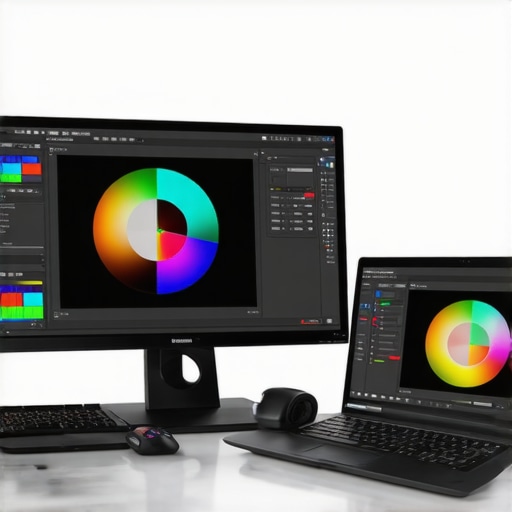
Beyond hardware considerations, software solutions utilizing 3D LUTs for color transformation are pivotal. Sophisticated calibration workflows involve creating device-specific LUTs that map native display output to standardized color profiles, allowing for accurate projection of colors during critical tasks. When integrated with color management systems adhering to standards like ICC profiles and SMPTE ST 2094, these workflows minimize mapping errors and ensure consistency, even across multipurpose color workflows involving resolutions up to 4K and beyond.
What innovations are on the horizon that could revolutionize gamut mapping in professional monitors?[2]
Emerging technologies such as AI-driven real-time color correction algorithms and adaptive calibration systems aim to dynamically adjust display outputs based on usage patterns and environmental conditions. For instance, machine learning models trained on vast repositories of colorimetric data can predict and compensate for hardware drift more efficiently than traditional recalibration methods. These innovations promise to bridge existing gaps, helping professionals maintain precise gamut fidelity without frequent manual interventions, thereby streamlining complex workflows and reducing turnaround times.
If you’re striving for color consistency at an expert level, consider exploring integrated solutions that combine hardware excellence with intelligent software calibration—your investment in these tools could redefine your capabilities. For comprehensive guidance and to share your experiences with gamut management in demanding workflows, visit our expert resource hub and contribute to the ongoing innovation narrative in professional display calibration.
Elevate Your Color Workflow with Dynamic Gamut Optimization Techniques
In the pursuit of impeccable color precision, professionals increasingly leverage dynamic gamut management strategies that adapt to variable lighting conditions and multimedia content intricacies. Implementing real-time recalibration protocols, supported by AI-driven software, enhances the fidelity of challenging color spaces such as Rec. 2020, ensuring that high dynamic range images retain their intended artistic nuance across diverse display setups.
Can Advanced Hardware Architectures Transform Your Color Reproduction Limits?
Emerging display technologies, like quantum dot nano-structures and next-generation OLED layers, promise to extend spectral coverage dramatically. These innovations aim not only to widen the color gamuts but also to reduce gamut clipping during complex tone mapping processes. When integrated with precision calibration tools such as multi-spectral spectroradiometers, these devices facilitate a deeper alignment with standardized color spaces, pushing the boundaries of what’s achievable in professional-grade workflows.
#IMAGE_PLACEHOLDER_D#
Why Do Even Top-Tier Monitors Sometimes Miss the Mark in Color Fidelity?
What are the hidden pitfalls of relying solely on factory calibration for high-end 4K HDR displays?
While factory calibration offers an initial baseline, it often falls short due to manufacturing variances, gradual hardware drift, and environmental factors like ambient lighting. Without ongoing, tailored calibration informed by highly accurate measurement instruments, even premier devices may produce inconsistent color outputs, risking the dilution of artistic intent and technical accuracy. Emphasizing regular, software-supported recalibration using authoritative tools like the X-Rite i1Pro series ensures sustained performance aligned with industry standards.
According to a detailed analysis by the International Color Consortium (ICC), ongoing calibration practices are essential for maintaining color consistency, especially when working within complex color spaces and HDR standards (ICC, 2024).
Pioneering Calibration Methods for Complex HDR Pipelines
With the increasing adoption of multi-device workflows, calibration extends beyond single displays. Advanced techniques now incorporate cross-device profiling, utilizing comprehensive 3D LUTs that synchronize color outputs within an overarching color management architecture. Utilizing proprietary software that supports scene-referred workflows grants creatives the ability to simulate final output conditions during editing, thus minimizing post-production surprises.
If your mission involves pushing beyond conventional calibration, integrating multi-device color management protocols and investing in high-fidelity sensors will be crucial. Engage with our expert guide to calibration excellence to elevate your process and avoid common pitfalls.
Is It Time to Rethink Your Gamut Mapping Strategy?
Traditional linear gamut mapping approaches may inadvertently introduce artifacts or obscure subtle color details essential in high-end HDR production. Innovative, non-linear mapping algorithms that account for scene luminance, viewer perception, and device-specific color profiles provide a more nuanced approach, significantly enhancing end-user experience.
How can AI and machine learning redefine the future of color calibration in professional workflows?[3]
Cutting-edge developments involve self-learning calibration systems that analyze environmental inputs, device aging patterns, and color performance metrics to adaptively recalibrate displays. Such systems promise to radically reduce manual intervention, improve consistency across mixed hardware environments, and ensure that complex color gamuts like BT.2020 are faithfully rendered, even in the most demanding conditions.
To harness these innovations for your professional setup, explore our curated resources and consider participating in industry forums dedicated to next-generation display calibration. Mastering these advanced techniques will empower you to deliver consistently exceptional visual experiences, aligning with the highest standards of aesthetics and technical integrity.
,
Expert Insights & Advanced Considerations
Precision Calibration is Non-Negotiable for HDR Work
Achieving true color fidelity in 4K professional monitors hinges on meticulous calibration. Professionals must leverage high-precision devices and adhere to industry standards like SMPTE ST 2094 to ensure consistency across workflows and output media.
Hardware Evolution Continues to Challenge Color Gamut Expansion
Emerging display technologies such as quantum dot nano-filters and advanced OLED architectures aim to push the limits of Gamut coverage. However, software compatibility and calibration workflows are critical to realize their full potential and prevent gamut clipping or mismatch.
Color Management Tools Have Reached New Heights
Modern calibration software, integrated with real-time validation and scene-referred workflows, empowers creative teams to maintain accuracy. These tools are essential to mitigate hardware drifts and environmental influences on color perception, especially in high-dynamic-range scenarios.
Cross-Device Consistency is the New Frontier
Ensuring cohesive color reproduction across multiple high-resolution displays demands sophisticated multi-device profiling and unified calibration protocols. Embracing these strategies is vital for large, collaborative post-production environments.
Embracing Future Technologies to Innovate Workflow
AI-driven calibration algorithms, adaptive display models, and machine learning tools promise to revolutionize how professionals maintain color integrity. Implementing these innovations can streamline workflows, reduce manual recalibration, and enhance overall output quality.
Curated Expert Resources
- Mastering color accuracy with top-tier professional monitors: An essential guide on selecting and calibrating monitors for optimal color fidelity.
- Maintaining calibration stability over time: Strategies to prevent drift and ensure consistent performance in demanding production environments.
- High-Brightness HDR Monitor Selection: Insights into choosing displays capable of sustaining 4000 nits without thermal issues.
- Overcoming Gamut Mapping Challenges: Techniques and hardware considerations for accurate color reproduction across standards.
- Dynamic tone mapping strategies in HDR workflows: How real-time adjustments can prevent color clipping in complex scenes.
Final Reflection: Mastering the Art of Color in 4K Displays
In the quest to push the capabilities of 4K professional monitors, meticulous calibration, advanced hardware, and innovative software converge to resolve even the most stubborn challenges of color fidelity. This ongoing evolution requires both technical mastery and strategic adaptation. For those dedicated to excellence, embracing emerging technologies like AI-driven calibration and high-gamut hardware is more than an option—it is an imperative. Engage deeply with dedicated resources, share your professional insights, and continue elevating your expertise in the intricate realm of color accuracy. Your commitment not only enhances your craft but sets new industry standards—exploring the full potential of 4K displays has never been more critical for cutting-edge content creation.
About the Author