Why Your Client’s MacBook Pro Looks Better Than Your Grading Monitor
Mastering Color Fidelity: Why HDR Monitors Are Essential for Creatives
In the realm of professional content creation, pixel-perfect accuracy and dynamic range are paramount. High Dynamic Range (HDR) monitors have revolutionized how visual professionals approach color grading, video editing, and digital art, offering richer details and a broader spectrum of luminance. When selecting an HDR monitor, understanding how to optimize factors like color accuracy and resolution becomes critical for delivering industry-standard output that matches client expectations and industry benchmarks.
The Complexity of Achieving Authenticity on a 4K Calibrated Monitor
While 4K resolution provides crisp clarity, it’s the combination with precise calibration and monitor calibration that ensures color fidelity remains unerring during long sessions. A calibrated monitor compensates for drift and displays consistent color at the levels demanded by professional standards, such as DIC, D65 white points, and Rec. 709 compliance. Such calibration is not just an initial setup but an ongoing process that sustains accuracy over extended periods.
HTR Technology and the Promise of Peak Brightness in 2025
The evolution of HDR technology involves not just peak luminance but also the stability of brightness and contrast, enabling creators to visualize highlights and shadows with unprecedented clarity. Industry leaders like Dolby Vision and HDR10+ advocate for monitors capable of holding sustained luminance levels—sometimes exceeding 4000 nits—without thermal or power-induced dimming. Recent advancements underscore the importance of selecting monitors that not only claim high peak brightness but consistently deliver these levels during prolonged editing sessions, as discussed in HDR monitor technology reviews.
Bridging the Gap: When Does a High-End Monitor Surpass a Client’s Display?
One perplexing phenomenon professionals observe is how powerful professional monitors sometimes appear to underperform in real-world settings compared to a well-configured MacBook Pro display, which benefits from optimized system calibration and factory calibration profiles. This inconsistency sparks debates about the true efficiency of high-end hardware versus real-world workflow integration. Factors such as gamma settings, monitor uniformity, and color management workflows often influence these disparities.
Does the latest HDR panel technology genuinely translate to better color correction outcomes in live workflows?
Addressing this question involves evaluating the tangible benefits of advanced HDR panels in everyday professional scenarios. Newer monitors equipped with localized dimming, higher bit-depth, and advanced gamut mapping improve confidence during critical tasks, but their efficacy hinges on consistent calibration, system compatibility, and user expertise. For insights into how these technological improvements impact final deliverables, industry standards espouse rigorous calibration and validation protocols, as outlined by the International Color Consortium.
Interested in elevating your mastery of monitor calibration? Explore more at top professional monitors designed for discerning professionals. Your insights and experiences could help shape the future of visual technology—share your expertise with our community today.
Pushing Beyond Standard Gamut Boundaries for True Color Precision
One of the persistent challenges in high-end HDR monitoring is achieving accurate gamut mapping, especially when working within demanding color spaces like DCI-P3 or Rec. 2020. While many monitors advertise wide gamuts, their actual performance often falls short in real-world scenarios, leading to color inaccuracies that distort visual storytelling. Advanced gamut mapping algorithms and real-time calibration adjustments are crucial for ensuring consistent color delivery across workflows, aligning with standards outlined by industry leaders such as the International Color Consortium.
The Power and Pitfalls of Brightness Stability Through Dynamic Thermal Management
High peak luminance levels are desirable; however, maintaining stable brightness throughout lengthy editing sessions remains a complex task. Modern HDR monitors employ sophisticated thermal management systems to prevent overheating and sustain luminance, but unintended consequences like thermal dimming can still occur, adversely affecting shot-to-shot consistency. Techniques such as adaptive backlight control and embedded sensors contribute to mitigating these issues, ensuring that your highlights remain luminous without sacrificing detail or color fidelity.
How do emerging nano-LED and OLED panel innovations challenge existing standards of brightness and longevity in professional HDR workflows?
This question invites a nuanced discussion about the future evolution of display technology. As research into nano-LEDs advances, expectations around true black levels, peak brightness, and uniformity are shifting. However, LLL (Lifetime, Luminance, and Longevity) trade-offs persist, influencing long-term reliability and calibration stability. For industry insights, reviewing white papers from display manufacturers and organizations like Dolby Vision provides a balanced perspective on how these innovations are shaping professional standards.
If you’re eager to incorporate the latest advancements into your workflow, consider exploring comprehensive guides on calibration stability, such as pro-grade 4K monitors. Sharing your experiences or questions about emerging display tech can help foster a community focused on pushing visual boundaries forward.
Harnessing the Full Potential of Color Gamut Expansion for Creative Precision
Recent advancements in display technology, particularly with DCI-P3 and Rec. 2020 gamuts, promise richer, more lifelike visuals that closely mimic theatrical and cinematic standards. Yet, achieving true color accuracy across these expansive color spaces remains a complex endeavor. Many high-end monitors claim wide gamuts, but their real-world performance often encounters hurdles like color clipping, bandwidth limitations, and improper chroma sub-sampling, which can distort the intended hues.
Why does real-world gamut performance often fall short of specifications?
This discrepancy stems from a range of factors, including suboptimal calibration methods, limited color bit-depth, and display hardware constraints that hamper the full realization of specified color volumes. Implementing real-time calibration tools, such as those compliant with the International Color Consortium standards, can help mitigate these issues. Additionally, understanding the importance of tone mapping and linear workflow management ensures that gamut expansion translates into accurate color reproduction rather than exaggerated or muted tones.
For professionals striving for pixel-perfect color fidelity, investing in hardware capable of high LULU (Lifetime, Luminance, and Longevity) management—coupled with meticulous calibration routines—is paramount. As the industry pushes forward, emerging techniques such as quantum dot filters and nano-LED backlights are promising solutions to bridge the gap between manufacturer claims and practical performance, challenging existing standards and setting new benchmarks.
The Evolution of Brightness Stability in HDR Displays: Overcoming Thermal and Power Constraints
High peak luminance values are integral to creating compelling HDR content, but the pursuit of brightness often introduces stability issues via thermal management challenges. As HDR monitors strive to sustain 2000, 4000, or even 10,000 nits, they must contend with heat dissipation and power delivery limitations that threaten luminance consistency.
Modern HDR designs incorporate sophisticated cooling systems, such as vapor chamber cooling, and advanced power modulation techniques like dynamic backlight dimming and localized LED control. These methods aim to preserve global brightness levels while protecting the hardware from thermal degradation. However, real-world performance, including phenomena like thermal dimming and uniformity loss during prolonged high-brightness operation, still hampers seamless workflow integration.
Can adaptive thermal management truly stabilize brightness without compromising image quality?
This question addresses the delicate balancing act modelled by innovative display engineers. Adaptive systems that monitor internal temperatures and dynamically adjust luminance levels—sometimes in real-time—are advancing toward solutions capable of maintaining consistent highlights and shadows. As technology progresses, the challenge remains to harmonize these adaptive processes with the need for calibrated, predictable visual output, especially in critical professional environments.
Furthermore, emerging nano-LED and OLED panels introduce a new set of considerations—namely, the impact of material longevity and phosphor degradation on long-term brightness stability. Extensive testing and white paper analyses from leading display manufacturers, such as Samsung and Sony, reveal that integrating these new materials might well redefine the parameters of peak luminance and stability, pushing the boundaries of what is currently feasible while maintaining industry standards.
Interested in mastering the latest stabilization techniques? Engage with specialized calibration protocols and stay updated on industry innovations—your mastery over brightness and color fidelity could redefine your creative projects. Share your experiences or questions with our community to foster a collective pursuit of visual perfection.
,
Revolutionize Visual Fidelity: How Emerging Calibration Technologies Elevate HDR Performance
Transitioning from conventional calibration methods, latest innovations incorporate AI-driven algorithms and spectrophotometric hardware that enable more precise and dynamic calibration workflows. These advancements facilitate real-time adjustments tailored to specific lighting environments and content types, thereby ensuring consistent color accuracy during intensive editing sessions. As experts advocate, leveraging such cutting-edge calibration solutions not only enhances the reliability of HDR displays but also streamlines workflows, reducing the margin of error that traditionally hampers professional-grade color grading.
Could Quantum Dot Implementation Redefine Gamut Expansion and Uniformity Constraints?
Quantum dot technology, with its ability to produce narrower emission spectra and wider color gamuts, promises to bridge gaps between manufacturer claims and real-world performance. When integrated into high-end HDR monitors, quantum dot filters can significantly improve color volume, reduce spectral spill, and promote uniform brightness across the panel. Nevertheless, understanding the nuanced trade-offs—such as potential issues with light bleed and manufacturing consistency—is crucial for professionals seeking to maximize gamut precision without sacrificing panel uniformity or longevity. Consulting detailed white papers from industry leaders like Samsung and LG can provide valuable insights into these technological leaps.
What Are the Hidden Challenges of Maintaining Calibration Consistency Over Extended HDR Projects?
Long-term calibration stability remains a complex aspect, especially when dealing with OLED panels susceptible to burn-in or nano-LEDs that may experience spectral shifts over time. Environmental factors, such as ambient temperature fluctuations and power supply stability, can subtly influence luminance and color accuracy. Advanced calibration routines now incorporate periodic validation checks utilizing embedded sensors and software-driven feedback loops, which anticipate and correct drift before it impacts the quality of your output. Emphasizing proactive maintenance strategies ensures your monitor’s fidelity remains pristine, even in extended workflows involving intricate HDR grading.
Discover the Power of Custom Calibration Profiles for Specific Content Types
Developing tailored calibration profiles optimized for different project genres—be it cinematic vision, commercial advertising, or fine art—can dramatically improve the consistency and precision of color reproduction. Employing dual or multi-profile systems allows professionals to switch seamlessly between color spaces and luminance targets, aligning monitor output with the specific standards required. Mastery in creating and managing these profiles, supported by tools like CalMAN and LightSpace, becomes indispensable for studios aiming for meticulous control over their visual storytelling—minimizing discrepancies in deliverables and client revisions.
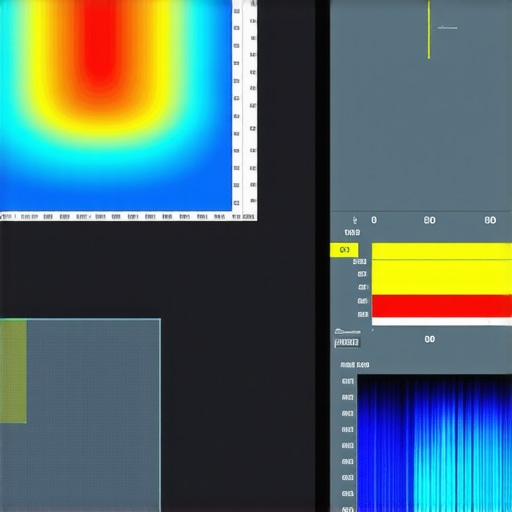
Visualize the intricate process of calibrating a high-end HDR monitor with advanced spectrophotometric devices, highlighting the precision and technological sophistication involved in achieving industry-leading color fidelity.
Harnessing Spatial Uniformity for Consistent HDR Highlight Rendering
Achieving even luminance across the entire panel is vital for accurate highlight rendering, especially in scenes with intense brightness levels. Techniques such as pixel-level backlight modulation, innovative diffuser layers, and advanced panel stacking are instrumental in reducing vignetting and glow, ensuring that every section of the display matches the intended luminance and color values. Ensuring spatial uniformity becomes increasingly critical when working with HDR workflows where subtle variances can mislead grading decisions or compromise final output quality. Industry-standard tests and validation protocols, including using chroma charts and luminance meters, are essential tools for diagnosing and correcting these issues.
How Do Future Display Materials Promise to Overcome Current Limitations?
Emerging materials like micro-LEDs and perovskite quantum dots are poised to revolutionize display longevity, brightness, and color accuracy. Micro-LEDs offer targeted longevity and exceptional luminance stability, while perovskite materials promise richer color reproduction with superior stability and lower power consumption. However, scaling these materials from laboratory prototypes to mass production presents significant challenges, including defect management and manufacturing complexity. Industry experts believe that, within the next decade, these materials will surpass current LCD and OLED standards, providing a new benchmark for HDR performance and color precision—fundamentally reshaping professional display standards and workflows.
Staying informed and adaptable to these transformative technologies not only sustains your competitive edge but also ensures your creative endeavors align with the highest possible standards of visual excellence. Engaging with industry forums, white papers, and supplier consultations will be crucial as we move toward this future of unparalleled fidelity and performance.
Expert Perspectives on Precision in High-End Display Technology
Prioritize Systematic Calibration for Long-Term Accuracy
Investing in advanced HDR monitors is only the beginning; implementing routine calibration protocols ensures sustained color fidelity, vital for professional workflows that demand consistent precision over time.
Leverage Real-Time Spectrophotometric Adjustments
Emerging calibration tools harness AI and spectral measurement to adapt dynamically to environmental changes, sealing the gap between static profiles and real-world conditions for unrivaled accuracy.
Aim for Uniformity Across the Panel
Superior spatial luminance uniformity prevents inconsistencies in highlight rendering, enabling more reliable grading and color correction, especially in scenes where meticulous detail matters most.
Understand Limitations of Wide Gamut Capabilities
While high-end displays claim expansive color volumes, real-world performance is constrained by hardware and calibration practices; mastery lies in managing these limitations through precise workflow controls.
Evaluate Emerging Material Technologies Carefully
Technologies like micro-LEDs and perovskite quantum dots promise breakthroughs in brightness and longevity but require critical assessment of longevity, spectral stability, and supply chain maturity before integration into professional environments.
Curated Resources for Mastering Visual Fidelity
- International Color Consortium Standards: Essential for understanding industry-accepted calibration and color management protocols.
- Mastering Color Accuracy: A comprehensive guide for professionals seeking to optimize monitor performance.
- HDR Monitor Innovations 2025: Insights into the latest advances shaping high-fidelity workflows.
- Calibrated Monitors and Workflow Precision: Deep dive into calibration methodologies.
- HDR Brightness Stability Challenges: Analyzes prevalent issues and tech solutions.
Distilling the Heart of High-Performance Display Practices
In the ever-evolving landscape of high-end HDR monitor technology, the maxim emerges that true mastery is achieved through a harmonious blend of cutting-edge hardware and disciplined workflow management. Knowing the intricacies of calibration, understanding the limitations of current display materials, and staying informed about the latest innovations empowers professionals to push creative boundaries confidently. Engage with the community, share your insights, and contribute to the collective elevation of visual standards—your expertise not only refines your craft but also shapes industry evolution.
About the Author