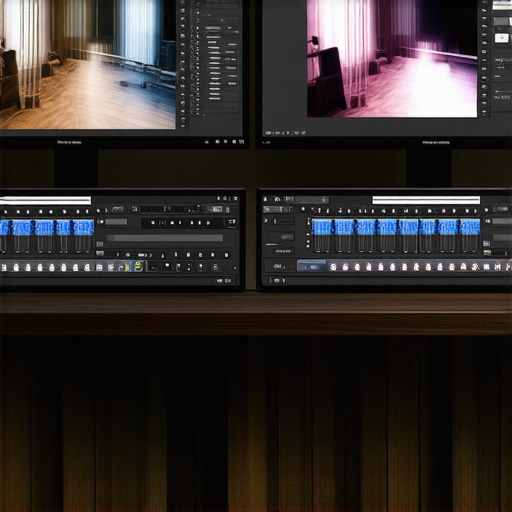
Why Your Rec.709 Exports Never Look the Same on Client Screens
In today’s high-stakes digital content production, achieving impeccable color fidelity across various display environments is not merely a technical necessity but a professional imperative. Skilled creatives and technicians recognize that the nuances of color accuracy, combined with advanced calibration techniques, constitute the backbone of reliable visual storytelling, especially when working with HDR and 4K displays. This article explores the complex interplay between high-precision professional monitors, calibration methodologies, and their influence on consistent image reproduction across diverse client screens.
Elevating Visual Precision through Sophisticated Calibration Strategies
At the core of professional video and photomontage workflows lies the need for meticulously calibrated monitors that serve as definitive references for color rendition. Unlike consumer-grade displays, calibrated professional monitors incorporate hardware-level adjustments, ensuring that color spaces such as Rec.709, DCI-P3, or Dolby Vision are faithfully rendered under controlled conditions. Effective calibration helps mitigate issues like gamma shifts, white point drifts, and tone response inconsistencies. For an in-depth understanding of calibration techniques, refer to this comprehensive guide.
Why Do Client Screens Ever Differ from Your Calibrated Monitors?
This question underscores a persistent challenge faced by professionals: why do final exports often look different on clients’ displays despite precise on-site calibration? The answer is multifaceted, involving display technology disparities, ambient lighting conditions, and differences in color management workflows. Variations in panel types—such as IPS, OLED, or Nano-LED—result in divergent color volume and contrast performance. Furthermore, client screens often operate under less controlled conditions, and their hardware might not be calibrated to industry standards, leading to inconsistencies in visual perception. Perspectives from recent industry white papers suggest that calibration must extend beyond the editing suite into understanding display degradation over time and environmental influences during playback.
HDR Monitors and 4K Displays demand Expert Calibration and Maintenance
The deployment of HDR monitors within professional workflows introduces additional complexity, largely due to the high dynamic range (HDR) metadata management and peak brightness requirements. For example, latest HDR monitor models tout capabilities exceeding 4000 nits, but maintaining this luminosity without thermal throttling or color shift necessitates rigorous calibration protocols. Similarly, 4K resolution, while providing razor-sharp details, imposes substantial demands on the hardware’s consistency; subtle variations in pixel response or color uniformity can cause discrepancies that jeopardize client approval. Ensuring that these high-end displays function harmoniously within standardized workflows requires an integrated approach combining hardware calibration with ongoing performance validation.
Advanced Techniques for Ensuring Cross-Device Color Consistency
To bridge the gap between professional-grade calibration and real-world viewing environments, professionals employ sophisticated methodologies: utilizing hardware colorimeters integrated with custom calibration profiles, leveraging spectral measurement tools, and deploying color management systems that adapt content dynamically based on ambient light sensors. These techniques help maintain color fidelity, tone accuracy, and luminance consistency during critical editing stages and final delivery. The aim is to minimize the delta E variance and prevent perceptual shifts when viewing on disparate screens. For insights into cutting-edge tools, explore professional monitor testing labs reports.
In sum, mastering color consistency across HDR and 4K environments demands an expert understanding of monitor technology, calibration intricacies, and environmental factors. The challenge lies not only in setting up accurate hardware but also in managing the inevitable drift over time.
For professionals eager to deepen their expertise, engaging with advanced calibration techniques and sharing insights on emerging display technologies is essential. Visit our contact page to connect with industry experts or contribute your experiences to the broader professional community.
Push Beyond Calibration: Embracing Real-World Variability in Display Environments
While meticulous calibration establishes a critical baseline, real-world conditions often introduce anomalies that challenge even seasoned professionals. Ambient lighting fluctuations, panel aging, and hardware inconsistencies can result in perceptible shifts that impact color fidelity. Recent studies emphasize the importance of adaptive calibration workflows, where ongoing validation and adjustment become part of routine maintenance. Integrating spectral measurement tools with real-time ambient light sensors allows for dynamic compensation, ensuring your workflow remains precise regardless of environmental changes. For an expert approach to maintaining consistency, explore advanced HDR monitor calibration techniques.
Can we truly achieve flawless color consistency across diverse viewing conditions, or is there always an inherent margin of error?
This question probes the limits of current calibration practices, urging professionals to examine the practical implications of acceptability thresholds. Industry leaders recommend establishing delta E targets below 2 for critical work, but real-world environments often exceed these marks. Supplementing hardware calibration with color management systems that account for ambient conditions can help bridge this gap. Recognizing the inevitability of some variability encourages a proactive approach—regular reviews, environment controls, and informed client expectations become essential components of professional practice.
Future-Proofing Calibration with Smart Technologies
Emerging innovations in display technology and calibration, such as self-correcting hardware and AI-driven adjustment algorithms, promise to elevate the consistency standards further. These systems automatically recognize drift patterns and compensate without human intervention, significantly reducing the risk of errors during long sessions. For example, some of the latest calibrated monitors feature embedded sensors that maintain optimal color output over time. Investing in such smart solutions can redefine the reliability of your color workflows, especially when working under demanding deadlines or in fluctuating environmental conditions.
Recognizing these advances is essential for future-proofing your studio’s calibration protocols, aligning technical excellence with operational efficiency. Stay updated on these innovations by consulting authoritative sources and industry reviews that test and validate emerging technologies.
To deepen your understanding of how calibration impacts every facet of content creation and output, consider engaging with specialized communities and professional resources. Sharing insights and experiences not only enhances collective knowledge but also helps develop standardized best practices that push the boundaries of precision and consistency in the digital realm. For personalized assistance, our expert team is here to support your calibration journey.
Overcoming Display Discrepancies for True Color Harmony
In high-end content creation, ensuring consistent color reproduction across multiple devices requires not just meticulous calibration but also an in-depth understanding of the underlying display technologies. Variations in panel types—such as IPS, OLED, and MicroLED—introduce unique challenges. For example, OLED displays excel in contrast and black levels but may suffer from color shift over time due to organic material aging, impacting long-term consistency. A sophisticated approach involves deploying spectral measurement tools alongside adaptive calibration workflows that update profiles dynamically based on ambient and hardware conditions, effectively mitigating these discrepancies.
How Can Color Management Systems Adapt to the Dynamic Nature of Modern Displays?
This nuanced question examines the capabilities of advanced color management software that integrates real-time sensor data. Industry standards now encourage the use of spectroradiometers combined with embedded environmental sensors to create living calibration profiles which adjust on the fly, maintaining delta E values below perceptible thresholds. Companies like Calman and Portrait Displays have pioneered solutions that facilitate this adaptive process, but implementing them effectively requires a profound understanding of spectral data and environmental influences. Staying ahead necessitates continuous monitoring, which can be achieved through automated routines embedded within these systems, guaranteeing ongoing precision throughout the production cycle.
Leveraging Environmental Control for Peak Color Consistency
Beyond technical calibration, controlling the ambient environment dramatically influences visual fidelity. Professional studios employ proper lighting conditions—with neutral grey walls and light sources with high CRI ratings—to minimize color cast influences. Additionally, using ultra-violet and infrared filtering on ambient lighting helps prevent unintended color shifts. This disciplined approach is vital when aiming for spot-on accuracy, especially in critical grading and mastering phases. For instance, implementing spectrally calibrated lighting fixtures that match the spectral response of monitors ensures an environment optimized for accurate viewing. Such measures, although seemingly subtle, are instrumental in upholding color integrity during long mastering sessions.
Is Standardization the Key to Global Consistency?
Establishing industry-wide standards for calibration and ambient conditions is crucial to achieving a universally comparable visual experience. Organizations like the Society of Motion Picture and Television Engineers (SMPTE) offer guidelines, yet the practical application often varies globally due to differences in equipment and environmental controls. To bridge this gap, many studios adopt IEEE’s standards for lighting and color measurement alongside ISO protocols, creating a comprehensive foundation for consistency. However, the complexity lies in translating these broad standards into tailored workflows that address the specific nuances of each production environment. Further research and sharing of best practices among industry leaders are essential steps toward harmonizing output across devices and geographic regions.
Predictive Calibration: Embracing AI to Foresee and Correct Drift
The advent of artificial intelligence introduces an era where calibration shifts can be anticipated before they manifest perceptibly. AI algorithms analyze historical data from display sensors, environmental logs, and usage patterns to predict impending color drift—allowing preemptive calibration adjustments. This proactive methodology not only reduces downtime but also enhances overall color stability. Companies like SpectraCal and colorimetry startups are pioneering this convergence of AI and spectral measurement, creating intelligent systems capable of maintaining perfection with minimal human intervention. Implementing these solutions requires integrating sensor data streams with machine learning models trained on diverse display behaviors, leading to a new standard of precision and reliability in high-stakes workflows.
As display technologies evolve and workflows become more complex, embracing smart calibration solutions is becoming indispensable. They enable a level of consistency previously unattainable, especially over extended production periods or in multi-location setups. The future of color fidelity hinges on our ability to harness these emerging innovations—empowering professionals to deliver content with unwavering visual integrity. To stay at the forefront, regular engagement with industry forums and continuous education on cutting-edge calibration methods is vital. Connect with our expert team to explore how these advanced technologies can be seamlessly integrated into your workflow, ensuring your content always meets the highest standards of fidelity and consistency.
Revolutionizing Professional Display Calibration with Adaptive Technologies
As digital imaging advances, the demand for impeccably calibrated professional monitors escalates, especially in HDR and 4K workflows where minute discrepancies become conspicuous. Traditional calibration methods, while foundational, often cannot keep pace with the dynamic nature of modern display technologies. Cutting-edge adaptive calibration systems now leverage spectral sensing, environmental analysis, and machine learning algorithms to automatically correct color drifts in real-time. These systems not only enhance accuracy but also streamline workflows by reducing manual interventions, ensuring visual consistency across sessions and devices.
How Can AI-Driven Calibration Transform Your Post-Production Precision?
Artificial intelligence is emerging as a pivotal tool in maintaining spectral fidelity. By continuously analyzing color performance data and environmental variables, AI algorithms predict future drift tendencies and preemptively adjust calibration profiles. This proactive approach minimizes perceptible inconsistencies, particularly critical during lengthy grading sessions or when switching between multiple displays. Industry reports from IEEE Standards Association emphasize that integrating AI into calibration workflows can significantly reduce errors and enhance repeatability, positioning it as a cornerstone of next-generation color management.
The Role of Spectral Management in Ensuring Uniform Color Reproduction
At the heart of high fidelity lies sophisticated spectral measurement. Unlike colorimetric assessments, spectral data offers comprehensive insights into the exact wavelengths emitted by a display, revealing subtle shifts that influence visual perception. Deploying advanced spectroradiometers allows technicians to craft ultra-precise ICC profiles tailored to specific hardware, environmental lighting, and target color spaces such as Dolby Vision or HDR10+. Incorporating spectral management into calibration routines ensures a shared color language among diverse displays, fostering truly consistent viewing experiences.
Can Spectral Profiling Guarantee Industry-Standard Color Uniformity?
This probing question underscores the pursuit of near-perfect consistency. While spectral profiling greatly narrows the margin of error, absolute uniformity remains elusive due to inherent display limitations and environmental variables. Nonetheless, adopting spectral techniques aligned with industry standards—such as those outlined by SMPTE guidelines—significantly elevates the fidelity bar, ensuring deliverables meet stringent professional criteria. Continuous validation and iterative profile updates become essential in this process, enabling producers to adapt swiftly to hardware aging and ambient fluctuations.
Implementing Calibration Protocols with Multi-Sensor Environments
Real-world studios seldom operate in ideal conditions; multiple sensors, diverse lighting, and varying ambient conditions complicate calibration consistency. Multi-sensor calibration frameworks now incorporate sensor fusion technology, aggregating data from colorimeters, lux meters, and infrared detectors to form a holistic environmental model. This layered insight facilitates dynamic calibration adjustments—modulating luminance, white point, and gamma in response to real-time environmental shifts. Such integrated approaches bridge the gap between laboratory accuracy and practical reliability, ensuring each display maintains optimal color fidelity regardless of external influences.
Is It Feasible to Achieve Absolute Color Stability in Uncontrolled Environments?
Achieving absolute stability remains a formidable challenge due to uncontrollable variables like sudden lighting changes or hardware degradation. Industry leaders advocate for setting pragmatic delta E thresholds—commonly below 1.5—and adopting continuous calibration workflows that include scheduled validations. The deployment of smart calibration environments, equipped with spectral sensors and adaptive lighting, significantly mitigates instability. While perfection may be aspirational, embracing these sophisticated solutions ensures that visual discrepancy remains imperceptible to viewers, meeting the highest industry standards.
Exploring the Impact of Future-Ready Display Technologies on Calibration Standards
Next-generation display innovations such as MicroLED, quantum dot displays, and laser-based projectors promise unprecedented luminance, contrast, and color volume. However, their complex architectures present new calibration challenges, demanding tailored approaches that leverage spectral analysis and AI-driven adjustments. Moreover, these technologies emphasize scalability and modularity, enabling seamless calibration across large multi-display arrays or immersive environments. Staying ahead necessitates a commitment to ongoing education, participation in industry consortiums, and collaboration with display manufacturers to develop calibration protocols aligned with emerging hardware capabilities.
What Does the Future Hold for Color Management Amid Rapid Technological Evolution?
This forward-looking question highlights the need for adaptable, future-proof calibration strategies. As displays become more intelligent and integrated, the convergence of spectral management, AI, and material science will redefine standards of color accuracy. Embracing cloud-based calibration repositories, standardized data exchange formats, and real-time analytics will empower professionals to maintain impeccable fidelity effortlessly. Engaging with industry advancements today positions your workflows to capitalize on these transformative trends, ensuring your visual outputs remain at the cutting edge of quality and consistency.
Stay at the forefront of calibration innovation by leveraging expert communities, participating in specialized training, and exploring collaborative projects with technology leaders. If you’re eager to elevate your HDR and 4K workflows, our team offers tailored consultations to integrate these advanced solutions seamlessly into your operations—ensuring your content consistently achieves professional excellence and visual perfection.
Elevate Your Workflow with Next-Level Calibration Techniques
Achieving consistent color fidelity in HDR and 4K environments transcends basic calibration—it’s about implementing sophisticated, adaptive strategies that anticipate and compensate for display variability. Experts leverage spectral measurement tools, real-time ambient sensors, and AI-driven algorithms to maintain impeccable accuracy, ensuring your content looks flawless across all viewing scenarios.
Implement Dynamic Calibration for Real-World Conditions
Static calibration provides a baseline, but integrating ongoing validation using spectral sensors and environmental data creates a living profile that adapts to changing conditions. This approach diminishes color drift over time, preserving visual integrity without manual intervention.
Harness AI to Predict and Correct Variations
Artificial intelligence analyses historical performance and environmental trends to forecast potential color shifts, enabling preemptive calibration adjustments. This proactive method minimizes perceptible discrepancies, maintaining the highest standards of fidelity during demanding editing sessions.
Curated Resources for Industry Leaders
- Calibrated Monitors Explained: Deep dives into calibration fundamentals tailored for professional workflows.
- HDR Monitor Innovations: Insights into latest HDR display technologies shaping calibration practices.
- Preventing Monitor Drift: Proven methods to ensure long-term color stability in active production environments.
- Pro-Level 4K Monitors Review: Analyzing spectral accuracy and durability in high-end displays.
- AI in Calibration: Cutting-edge developments transforming display consistency management.
Synthesizing Innovation for Peak Performance
In the realm of professional color management, the convergence of spectral measurement, adaptive calibration workflows, and AI technology redefines the standards of fidelity. Embracing these strategies equips you to deliver visuals that resonate with precision, regardless of environmental or hardware variances. Staying engaged with these advancements and participating in specialized communities ensures your skillset remains razor-sharp, empowering you to set the benchmark in visual accuracy. Connect with our experts to explore how integrating these innovations can revolutionize your content creation process—because in high-stakes environments, excellence is non-negotiable.
About the Author