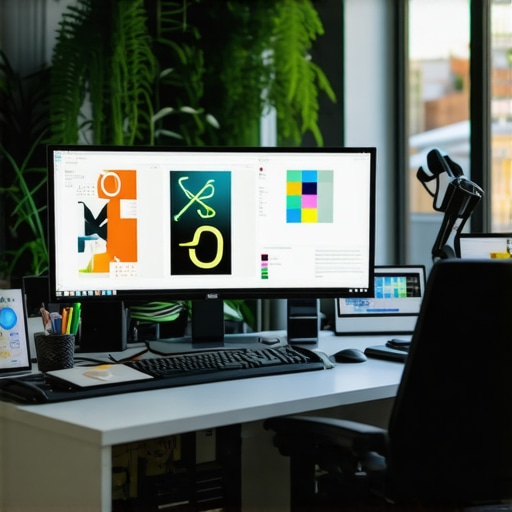
Top Calibrated 4K Monitors for Image Accuracy & Creative Professionals
Harnessing the Power of Calibrated 4K Monitors for Professional Creativity
In the realm of high-end visual production, where color fidelity and image accuracy are paramount, calibrated 4K monitors stand as indispensable tools for discerning professionals. Their ability to deliver consistent, true-to-life visuals transforms workflows, enhances creative output, and ensures compliance with rigorous industry standards. This article delves into the nuances of selecting the finest calibrated 4K monitors, exploring their technical prowess, and understanding their strategic significance in professional settings.
Why Calibration is a Non-Negotiable in Professional Color Work
Calibration ensures that a monitor’s output aligns precisely with industry color standards, such as D65 white point or Rec. 709 and DCI-P3 gamuts. For photographers, videographers, and graphic designers, this means their edits translate flawlessly across devices and media. Advanced calibration protocols involve hardware calibration tools and software that fine-tune gamma, luminance, and color accuracy, ultimately minimizing discrepancies that could compromise project fidelity.
What Are the Critical Factors in Choosing a Calibrated 4K Monitor for Creatives?
Professional-grade monitors should feature wide color gamuts (e.g., DCI-P3 or Adobe RGB), high bit depth (10-bit for smoother gradients), and factory calibration with ongoing calibration support. Additionally, uniformity across the display, HDR capabilities, and robust calibration software compatibility are essential. These features collectively foster a reliable color environment, crucial for tasks demanding the highest precision.
Integrating Advanced Technologies for Ultimate Visual Fidelity
Modern calibrated monitors leverage quantum dot technology, local dimming, and hardware calibration interfaces to enhance color volume and contrast. The integration of calibration tools and software ensures long-term accuracy, a necessity for professionals whose work is scrutinized for color consistency. Furthermore, high dynamic range (HDR) support expands the tonal range, offering more nuanced color gradations crucial for high-end visual storytelling.
Expert Insights: Balancing Performance and Price in Calibrated Monitors
While high-end calibrated monitors can command premium prices, strategic investment pays dividends in quality assurance and workflow efficiency. For instance, models like the top-tier calibrated displays offer exceptional color accuracy and reliability, making them suitable for professional post-production environments. Conversely, mid-tier options provide a cost-effective alternative without significantly compromising essential features, provided they are properly calibrated and maintained.
How Do Professional Creatives Maintain Calibration Over Time?
Regular calibration cycles, typically monthly or quarterly, are recommended to sustain accuracy. Utilizing hardware calibration devices such as X-Rite i1Display Pro or Datacolor SpyderX, professionals can easily automate calibration routines, ensuring their displays remain within industry tolerances. Additionally, understanding the impact of ambient lighting and monitor positioning enhances color consistency across different working conditions.
To explore more about the technology behind color calibration, visit mastering color accuracy for creatives. For detailed comparisons of top models in 2024, consult our comprehensive guide on best calibrated monitors for photo and video.
Refining Color Precision: Advanced Calibration Techniques for Creative Professionals
Maintaining impeccable color accuracy over time is both a science and an art—one that professionals must master to ensure their work remains consistent and trustworthy. Regular calibration is essential, but what are the subtle, expert-level strategies that can elevate this process? Leveraging the latest tools and understanding the nuances of ambient conditions can make the difference between good and industry-leading color fidelity.
How Can Creatives Develop a Robust Calibration Routine That Stands the Test of Time?
Developing a sustainable calibration routine involves more than periodic device use; it requires a strategic approach that accounts for workflow, ambient lighting, and hardware capabilities. Experts recommend setting calibration cycles aligned with project deadlines or software updates—typically monthly or quarterly—to minimize drift. Incorporating automated calibration tools like the X-Rite i1Display Pro or Datacolor SpyderX streamlines this process, ensuring consistency without extensive manual intervention.
Additionally, professionals should consider the impact of ambient lighting. Using consistent lighting conditions, ideally with color temperature-controlled light sources, prevents fluctuations in perceived color. Positioning monitors to avoid glare and reflections further stabilizes visual accuracy. Some experts integrate ambient light sensors into their calibration routines, automatically adjusting display settings to suit changing light conditions, thereby preserving color integrity throughout the day.
The Nuances of Calibration Software: Beyond Basic Adjustments
While hardware calibration tools are crucial, the calibration software’s sophistication can significantly influence long-term accuracy. Leading solutions incorporate advanced profiling algorithms, allowing for detailed gamma, luminance, and color gamut adjustments. For example, the best calibration software offers continuous profiling, which detects subtle shifts and applies incremental corrections, maintaining a pristine color environment over extended periods.
Furthermore, some calibration systems provide a calibration history log, enabling professionals to track performance trends and preempt potential issues. This proactive approach aligns with industry standards and best practices, ensuring that creative output remains reliable and compliant with client or broadcast specifications.
What Role Do Emerging Technologies Play in Future-Proofing Calibration Processes?
Emerging innovations like AI-driven calibration, machine learning, and enhanced color sensors are poised to revolutionize how professionals maintain accuracy. AI algorithms can analyze calibration data over time, predicting when recalibration is necessary and automatically initiating adjustments, reducing manual oversight. Similarly, improved sensors can detect minute shifts in display performance, offering near real-time calibration capabilities.
These advancements promise a future where calibration becomes more intuitive, less time-consuming, and more precise—ensuring professionals can focus on their creative endeavors without fretting over technical imperfections. For a comprehensive understanding of how these innovations are shaping industry standards, visit our expert guides on calibration technology.
Engage with our community: share your calibration routines or suggest additional tools that have transformed your workflow. Your insights can help fellow creatives elevate their color management practices to professional excellence!
Implementing Spectral Data Analysis for Precision Calibration in 4K Monitors
One of the most sophisticated approaches to calibration involves spectral data analysis, where professionals utilize spectroradiometers to measure the spectral power distribution (SPD) of the display. Unlike traditional colorimeters, spectroradiometers capture detailed spectral information across the visible spectrum, enabling a comprehensive understanding of how a monitor emits light at every wavelength. This data-driven method allows for meticulous adjustments that align the display’s output with precise colorimetric standards, such as CIE XYZ and Lab values, ensuring an unprecedented level of fidelity for high-stakes visual work.
By integrating spectral analysis with calibration software—such as those provided by X-Rite or Konica Minolta—creatives can generate custom ICC profiles that account for the unique spectral characteristics of their specific monitor model. This process is especially valuable when working with high-gamut displays and HDR content, where subtle deviations can impact the final output. Moreover, spectral data analysis facilitates the detection of spectral shifts over time, informing predictive maintenance schedules that preempt color drift before it compromises project quality.
Can Adaptive Calibration Algorithms Surpass Static Calibration in Dynamic Work Environments?
Adaptive calibration algorithms, powered by machine learning, are emerging as a game-changer in maintaining consistent color accuracy amidst fluctuating ambient conditions and hardware aging. Unlike static calibration routines performed periodically, adaptive systems continuously monitor display output via embedded sensors or external reference devices, making real-time adjustments to compensate for temperature variations, aging phosphors, or changes in ambient lighting. This dynamic approach ensures that professionals always work with optimal color fidelity, reducing the need for frequent manual recalibration.
For instance, some advanced monitors incorporate built-in ambient light sensors and AI-driven algorithms that analyze incoming data, automatically fine-tuning brightness, contrast, and color parameters. Companies like Eizo and NEC are pioneering such intelligent calibration solutions, which promise to streamline workflows and elevate precision in professional environments where even minor discrepancies are unacceptable. As this technology matures, it could redefine how agencies, post-production houses, and color grading studios manage their color workflows.
External Validation and Certification: Elevating Calibration Standards to Industry Benchmarks
Achieving calibration excellence isn’t solely about the tools and techniques employed; external validation through recognized standards cements a monitor’s credibility in professional spheres. Certifications such as the International Colorist Certification or compliance with standards set by the Society of Motion Picture and Television Engineers (SMPTE) ensure that calibrated displays meet rigorous industry benchmarks. For example, the ACES (Academy Color Encoding System) standard emphasizes the importance of consistent color management across devices and platforms, mandating precise calibration and profiling protocols.
Professionals who seek certification or validation demonstrate their commitment to industry-best practices, which can be a decisive factor in competitive markets. Additionally, collaborating with calibration laboratories that utilize traceable calibration sources and adhere to ISO standards provides an extra layer of assurance, fostering trust with clients and stakeholders. As the visual content landscape becomes increasingly demanding, such external validation is vital for establishing and maintaining a reputation for excellence.
How Do Emerging Technologies Like Quantum Dots Influence Future Calibration Paradigms?
Quantum dot technology, with its ability to produce highly saturated, pure colors, presents both opportunities and challenges for future calibration strategies. These displays have a wider color gamut and improved luminance uniformity but require more sophisticated calibration techniques to manage their spectral outputs effectively. Researchers are exploring how quantum dot emissions can be precisely characterized and profiled using advanced spectral measurement tools, paving the way for calibration algorithms that can harness their full potential.
Furthermore, the integration of quantum dot displays with AI-powered calibration systems could enable real-time, self-correcting color management that adapts seamlessly to hardware aging and environmental shifts. As these innovations become mainstream, calibration protocols will evolve from static, periodic routines to continuous, intelligent processes—ushering in an era of unprecedented color precision. For professionals eager to stay ahead, understanding these emerging paradigms is essential to future-proof their workflows and uphold the highest standards of visual fidelity.
Engage with our community: share your experiences with spectral analysis, adaptive calibration, or emerging display technologies. Your insights can inspire innovation and elevate industry practices to new heights!
Unlocking the Potential of Spectral Data for Ultra-Precise Color Calibration
While traditional calibration methods focus on RGB and luminance adjustments, spectral data analysis introduces a transformative approach by capturing the full spectral power distribution (SPD) of a display. Using spectroradiometers, professionals can obtain granular spectral information across the visible spectrum, enabling the creation of highly accurate ICC profiles tailored to the unique spectral characteristics of each monitor. This method is especially critical when working with high-gamut displays and HDR content, where minute spectral deviations can significantly influence color accuracy.
Integrating spectral analysis into calibration workflows allows for meticulous correction of spectral shifts over time, ensuring consistent fidelity. According to the Colorimetry Research Institute, the adoption of spectral data significantly reduces color discrepancies in high-end post-production environments, setting a new standard in professional color management.
How Can Spectral Data Analysis Elevate Calibration Accuracy Beyond Conventional Limits?
Spectral data analysis enables calibration at a level of precision that surpasses standard RGB-based methods by accounting for the spectral emission profiles of display phosphors and backlights. This comprehensive approach ensures that the monitor’s output aligns perfectly with industry standards such as CIE XYZ, Lab, and specialized colorimetric profiles. Additionally, spectral profiling helps identify and compensate for subtle aging effects and spectral shifts caused by phosphor degradation or LED wear, prolonging the monitor’s calibrated accuracy. This level of control is indispensable for professionals demanding the highest standards of color fidelity and consistency.
To explore this advanced technique, consult the detailed spectral calibration protocols outlined by experts at Colorimetry Research Institute.
Are Adaptive Calibration Algorithms the Next Frontier in Dynamic Color Management?
Adaptive calibration systems leverage AI and machine learning to provide continuous, real-time adjustments to display output. Embedded sensors monitor ambient light, display temperature, and spectral output, feeding data into intelligent algorithms that dynamically optimize color and luminance settings. This approach effectively neutralizes the effects of environmental fluctuations and hardware aging, ensuring that the display maintains optimal accuracy throughout prolonged workflows.
Leading manufacturers like Eizo and NEC are pioneering adaptive calibration solutions that automatically recalibrate based on real-time conditions, reducing manual intervention and minimizing drift. These systems are particularly valuable in environments with changing lighting conditions, such as outdoor shooting or multi-studio workflows, where maintaining consistent color fidelity is challenging.
For a comprehensive overview of adaptive calibration technologies, visit Eizo’s official site.
External Validation: How Certification Elevates Calibration Standards
External validation via industry certifications ensures that calibration processes adhere to the highest standards of accuracy and consistency. Standards such as the International Colorist Certification and SMPTE’s rigorous guidelines serve as benchmarks for quality assurance. Certified displays undergo meticulous testing with traceable calibration sources, providing confidence that the visual output meets or exceeds industry specifications.
Engaging with certified calibration laboratories that follow ISO standards further enhances credibility, especially for high-stakes projects like cinematic post-production or broadcast quality control. These validations not only affirm technical precision but also reinforce a professional’s commitment to excellence in color management.
What Role Will Emerging Technologies Like Quantum Dots Play in Future Calibration Paradigms?
Quantum dot displays, renowned for their wide color gamut and high luminance, present new calibration challenges and opportunities. Their spectral emissions are highly saturated and precise, requiring advanced spectral profiling and calibration algorithms that can harness their full potential. Researchers are developing spectral measurement tools capable of capturing the unique emission profiles of quantum dots, enabling more accurate color profiling and correction.
Furthermore, the integration of AI-driven calibration systems with quantum dot technology promises real-time, self-correcting displays that adapt to aging and environmental factors. This synergy could revolutionize color fidelity standards, making ultra-precise calibration accessible even in dynamic or variable conditions, thus future-proofing creative workflows.
Stay ahead by exploring emerging calibration solutions and embracing innovations that will shape the future of professional color management. Share your insights or experiences with spectral analysis and adaptive systems to contribute to industry-wide excellence!
Expert Insights & Advanced Considerations
Innovative Calibration Techniques Are Evolving
Advanced spectral data analysis and AI-driven calibration are setting new standards in precision. Professionals leveraging spectral profiling can achieve unparalleled color accuracy, crucial for high-stakes projects where even minor deviations are unacceptable.
Ambient Light Management Is Critical
Controlling ambient lighting conditions through integrated sensors and consistent workspace lighting significantly enhances calibration stability over time, ensuring visual fidelity in dynamic environments.
Emerging Technologies Will Transform Workflows
Quantum dot displays combined with adaptive calibration algorithms promise real-time, self-correcting color management, reducing manual intervention and maintaining industry-grade accuracy effortlessly.
Certification and External Validation Are Industry Must-Haves
Certifications such as SMPTE compliance and ISO standards elevate a monitor’s credibility, providing assurance of adherence to rigorous industry benchmarks essential for professional credibility.
Strategic Investment in Calibration Tools Is Justified
Investing in top-tier calibration devices like the X-Rite i1Display Pro or Datacolor SpyderX ensures long-term accuracy, supporting a workflow that demands highest fidelity and consistency.
Curated Expert Resources
- Mastering Color Accuracy for Creatives: Provides comprehensive guidance on calibration best practices and industry standards, essential for professionals aiming for precision.
- Ultimate Guide to 4K Monitors for Visual Professionals: Offers detailed comparisons and insights into the latest high-performance displays suitable for demanding creative tasks.
- Colorimetry Research Institute Publications: Deep dives into spectral profiling and advanced calibration techniques, invaluable for those seeking cutting-edge knowledge.
Final Expert Perspective
Harnessing the full potential of calibrated 4K monitors demands a nuanced understanding of spectral analysis, ambient management, and emerging calibration technologies. As industry standards evolve, proactive engagement with innovative tools and validation processes ensures your visual outputs remain at the pinnacle of accuracy. For creative professionals committed to excellence, continuous learning and strategic tool investment are non-negotiable steps toward achieving mastery in color fidelity. Engage with our community, share your advanced calibration insights, and explore dedicated resources to elevate your expertise in professional color management.
About the Author


This comprehensive post highlights the importance of calibration for high-end visual production, particularly the emphasis on spectral data analysis and AI-driven algorithms. From my experience working in post-production, maintaining consistent color fidelity has always been a challenge, especially when managing multiple monitors and changing ambient light conditions. Spectral calibration tools have been a game-changer, allowing for far more precise control over color accuracy, which is crucial when delivering content that must meet strict industry standards. I’m especially intrigued by the potential of adaptive systems that self-correct in real-time — they could significantly reduce downtime and manual calibration efforts.
One question I have is how accessible these spectral and AI-powered calibration solutions are for smaller studios or freelancers. Are there cost-effective options that still provide reliable, industry-grade results, or do these advanced features remain primarily within the realm of larger facilities? It would be fantastic to hear from others about their experiences with implementing such technologies in varying budget environments.
This article really underscores the critical role of precise calibration in professional digital content creation. In my experience, especially working with HDR content, spectral data analysis combined with advanced software has dramatically improved the consistency of color output across multiple projects. It’s fascinating to see how technologies like spectral profiling can detect minute spectral shifts that traditional methods might overlook, ensuring that high-gamut displays deliver the expected performance consistently over time.
I’ve found that even in smaller setups, affordable calibration devices paired with good ambient lighting control can still yield excellent results, especially if complemented with proper software calibration routines. How have others found balancing the cost of such advanced calibration systems with their actual workflow needs? Are there mid-range solutions that efficiently bridge this gap, providing near-industry-grade accuracy without breaking the bank? It would be great to hear insights from fellow creatives managing similar constraints.
This post really highlights how essential calibration is for maintaining color fidelity in high-end visual workflows. I’ve been using a combination of hardware calibration tools like the X-Rite i1Display Pro and good ambient lighting control for a while, and it’s made a noticeable difference, especially when working on HDR footage. The integration of spectral analysis seems like a quantum leap in achieving even higher precision, although I wonder how accessible these advanced solutions are for smaller studios or freelancing artists. Personally, I’ve seen some mid-range monitors that offer decent calibration support, but often, the biggest challenge is ensuring consistent calibration routines over time rather than just the hardware itself. Regular calibration cycles and ambient lighting control have helped me stay close to industry standards, but I would love to explore spectral profiling more deeply — has anyone had experience with spectral calibration beyond the usual software tools? And do you see it becoming more mainstream in the industry, or will it remain specialized for the top-tier professionals? It’s an exciting time for color management technology.