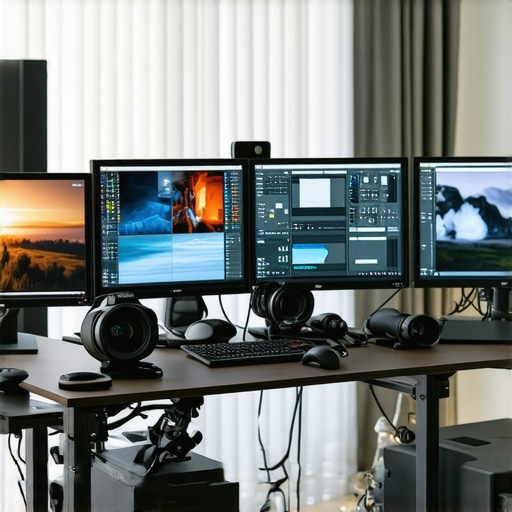
Top HDR & Color Accuracy Monitors for Photo & Video Editing in 2024
Elevate Your Creative Workflow with Precision Display Technologies in 2024
In the realm of professional photo and video editing, the fidelity of your visual output hinges on the quality of your display. As we advance into 2024, the integration of high dynamic range (HDR) and exceptional color accuracy into monitors has become paramount for creators seeking uncompromised precision. This comprehensive guide explores the latest innovations and critical factors to consider when selecting top-tier HDR and color accuracy monitors tailored for creative professionals.
Decoding HDR and Color Calibration for Creative Mastery
High dynamic range enhances contrast and color contrast, revealing details in both shadows and highlights that standard monitors cannot display. Meanwhile, color calibration ensures that what you see on screen accurately reflects real-world colors, essential for tasks demanding true-to-life representation. The convergence of these technologies enables precise color grading, meticulous photo retouching, and vivid video production, positioning monitors as indispensable tools in the creative arsenal.
The Evolution of Professional Displays for Visual Artists
Recent advancements have propelled HDR and calibration capabilities into the professional mainstream, with manufacturers integrating quantum dot technology, wide color gamuts like DCI-P3 and Rec. 2020, and factory calibration processes. These developments empower creators to work with confidence, knowing their monitors reliably reproduce the full spectrum of color and luminance necessary for high-end production workflows. For an in-depth understanding, check our expert guide to mastering color accuracy.
What are the key differences between HDR standards such as HDR10, Dolby Vision, and HLG, and how do they impact editing workflows?
HDR standards differ primarily in their encoding techniques, peak brightness capabilities, and compatibility. HDR10 is the most common, offering broad support for consumer displays, while Dolby Vision provides dynamic metadata for frame-by-frame adjustments, resulting in superior contrast and color precision. HLG, designed for broadcast, offers a seamless experience across live video content. For professional editing, monitors supporting Dolby Vision or high peak brightness HDR10 are preferred for their ability to display a wider luminance range, crucial for accurate grading and mastering.
For those aiming to optimize their visual fidelity, exploring top-calibrated HDR monitors such as the best HDR 4K monitors for professional work in 2024 is essential.
Choosing the Right Display for Your Creative Needs
Selecting a monitor that aligns with your specific workflow involves evaluating several factors: panel technology (IPS for color accuracy, OLED for contrast), maximum brightness, color gamut support, calibration options, and connectivity. High-end models often feature hardware calibration tools, factory calibration reports, and support for professional color spaces, ensuring consistency and reliability across projects. The integration of LUT (Look-Up Table) support further refines color precision, vital for color grading and post-production.
For a curated list of top monitors, consult our top calibrated monitors with color accuracy tailored for demanding creative workflows.
How does the choice of monitor influence color grading accuracy and overall project quality?
The monitor acts as the primary reference point in the post-production chain. An inaccurate display can lead to color shifts, missed details, or over-saturated images, ultimately compromising the integrity of the final output. Professional-grade HDR and calibrated monitors mitigate these issues by providing consistent, high-fidelity visual cues. This ensures that edits translate accurately across different viewing platforms and devices, a necessity underscored by authoritative sources like the white paper on calibration importance for designers.
In conclusion, investing in a high-quality HDR and color-accurate monitor is indispensable for creators committed to excellence. Explore our ultimate guide to calibrated monitors to refine your workspace and elevate your creative output.
Interested in sharing your insights or seeking professional guidance? Contact us here.
Harnessing the Power of High Dynamic Range in Creative Workflows
In the ever-evolving landscape of professional visual arts, HDR technology has become more than just a trend—it’s a necessity. Monitors supporting advanced HDR standards like Dolby Vision and VESA DisplayHDR 1000 or higher deliver luminance and contrast ratios that enable creators to see the full spectrum of their work with unparalleled clarity. This is especially vital for color grading, where subtle tonal differences can make or break a project. For a comprehensive understanding of HDR standards and their impact on creative workflows, visit our latest HDR monitor guide.
Refining Color Precision with Cutting-Edge Calibration Techniques
Color calibration extends beyond factory settings, with professional-grade monitors offering hardware calibration tools, LUT support, and built-in sensors for ongoing accuracy. These features ensure that your display maintains precise color reproduction over time, a critical factor for collaborative projects and client presentations. When selecting a monitor, consider models with wide color gamuts like DCI-P3 and Rec. 2020, which provide a broader palette for more vibrant and true-to-life images. For detailed insights, explore our expert guide on mastering color accuracy.
Could emerging display technologies redefine what we expect from professional monitors in 2024?
Emerging innovations such as MicroLED displays and quantum dot enhancements promise even greater luminance, contrast, and energy efficiency, potentially transforming the standards of visual fidelity. These advancements aim to reduce issues like burn-in and color shift, common in older OLED models. Industry leaders like Samsung and LG are pioneering these technologies, which could soon become the new benchmark for creative professionals. To stay ahead, it’s essential to monitor these developments and consider how they might integrate into your workflow. For an in-depth comparison, see our top-calibrated monitors for 2024.
If you’re committed to achieving the highest possible visual standards, understanding the nuances of these emerging technologies and how they integrate with existing workflows is crucial. Our ultimate guide to calibrated monitors offers valuable insights to help you make informed decisions.
Integrate Advanced Features for Seamless Editing and Color Management
Modern professional monitors often include features like hardware calibration support, multiple color space presets, and extensive connectivity options such as Thunderbolt and HDMI 2.1. These enable seamless integration with high-performance workstations and color management workflows. Enabling features like 10-bit color depth and HDR metadata support ensures that your projects retain fidelity from editing to final output, whether on screens or in print. For tailored recommendations, consult our list of top HDR and color accuracy monitors.
Are you leveraging the full potential of your monitor’s calibration capabilities? Sharing your experiences or seeking advice can help elevate your workflow—consider reaching out through our contact page.
Elevate Your Editing Accuracy with Next-Gen Display Calibration Techniques
As the demand for flawless visual storytelling grows, so does the importance of mastering cutting-edge calibration techniques. Beyond simple factory settings, professional creators now harness hardware calibration tools, such as X-Rite i1Display Pro and Calman, to fine-tune their displays with pixel-perfect precision. These tools enable the creation of custom 3D LUTs that ensure consistent color reproduction across various workflows. According to industry standards outlined by the International Color Consortium (ICC), implementing such meticulous calibration practices guarantees that your monitor’s output aligns with the DCI-P3 or Rec. 2020 color spaces, essential for high-fidelity projects. For a comprehensive dive into calibration methodologies, visit our expert guide on advanced calibration techniques.”} ,
Push the Boundaries with Next-Level Display Calibration Techniques
In the realm of professional visual arts, precision calibration transcends basic factory settings, demanding sophisticated tools like the X-Rite i1Display Pro and Calman for pixel-perfect adjustments. These advanced calibration instruments facilitate the creation of custom 3D LUTs, ensuring your monitor consistently reproduces colors within the DCI-P3 and Rec. 2020 color spaces, as outlined by the International Color Consortium. Mastering these calibration methodologies is crucial for achieving unwavering fidelity, especially when working on high-profile projects requiring exact color matching across devices and media.
Leverage Emerging Display Technologies to Elevate Visual Fidelity
Emerging innovations such as MicroLED and quantum dot enhancements are poised to revolutionize professional monitors. These technologies promise unprecedented luminance, contrast ratios, and energy efficiency, while significantly reducing issues like burn-in and color shift typical of older OLED models. Industry leaders like Samsung and LG are pioneering these advancements, which could soon set new standards for creative workflows. Staying informed about these developments allows professionals to anticipate future-proof investments that maximize visual accuracy and longevity. For an in-depth comparison, explore the latest analyses on next-gen display tech.
Enhance Your Workflow with Adaptive HDR and Color Management
Incorporating adaptive HDR technologies such as VESA DisplayHDR 1400 and Dolby Vision enables real-time luminance adjustments, aligning with the dynamic demands of creative editing. Coupled with hardware calibration support and extensive connectivity options like Thunderbolt 4 and HDMI 2.1, these features facilitate seamless integration into complex color management workflows. This ensures consistent visual output from editing to final delivery, vital for maintaining project integrity. For tailored recommendations, consult our curated list of top HDR and calibrated monitors for professionals.
What specific calibration practices are essential for ensuring long-term color accuracy in high-end monitors?
Implementing rigorous calibration routines that include regular hardware calibration sessions, utilization of high-precision colorimeters, and ongoing validation with industry-standard test patterns is essential. These practices mitigate drift over time, especially in displays supporting wide color gamuts like DCI-P3 and Rec. 2020. According to the ICC standards, maintaining calibrated profiles ensures consistent output, which is critical for high-fidelity content creation and client approval processes.
Engage with these advanced calibration techniques to guarantee your monitor remains a reliable cornerstone of your creative toolkit.
Elevate Your Visual Precision with Expert-Backed Technologies
In the high-stakes world of professional visual arts, leveraging cutting-edge HDR and calibration techniques is no longer optional—it’s essential. Industry leaders emphasize that mastering these technologies directly correlates with superior project outcomes, from cinematic color grading to high-fidelity photography. Embrace hardware calibration tools like the X-Rite i1Display Pro and advanced LUT management to ensure your displays consistently deliver accurate, vibrant visuals. Staying ahead involves continuous learning and adaptation, integrating emerging MicroLED and quantum dot innovations that promise to redefine display standards for creatives in 2024.
Key Insights for Creative Professionals
Invest in True Color Fidelity
Choosing monitors supporting wide color gamuts such as DCI-P3 and Rec. 2020 ensures your work reflects real-world hues with precision. Experts advise prioritizing factory calibration reports and hardware calibration support to maintain long-term accuracy. This approach minimizes color shifts over time, safeguarding your creative integrity.
Harness Advanced HDR Capabilities
Utilize monitors that support high dynamic range standards like Dolby Vision and DisplayHDR 1400 for richer contrast and luminance. These features enable accurate grading in challenging lighting conditions, ensuring that your final output maintains fidelity across all viewing platforms.
Implement Rigorous Calibration Practices
Routine calibration sessions using professional tools and validation with industry-standard test patterns are vital. Regular calibration mitigates drift, especially in displays supporting extensive color spaces, ensuring consistent quality for every project.
Explore Emerging Display Technologies
Stay informed about MicroLED and quantum dot developments, which offer unprecedented luminance, contrast, and energy efficiency. These innovations are poised to become industry benchmarks, providing unparalleled visual fidelity and longevity for demanding creative workflows.
Recommended Resources to Deepen Your Expertise
- International Color Consortium (ICC)—Guidelines and standards for color management ensuring consistency across devices and media.
- Calman Calibration Software—Professional tool for precise hardware calibration and color profiling.
- DisplayFuture.com—In-depth analysis and comparisons of next-generation display technologies like MicroLED and quantum dot displays.
- WorkstationWizard’s HDR Monitor Guides—Curated reviews and buying guides tailored for creative professionals seeking optimal visual fidelity.
- Industry White Papers on Color Gamut Technology—Authoritative research papers detailing advances in color science and display engineering.
Final Perspective from Industry Experts
Attaining the pinnacle of visual quality in 2024 hinges on integrating expert-recommended HDR and calibration technologies into your workflow. Precision in color reproduction and luminance not only enhances your creative output but also ensures that your projects meet the highest standards of fidelity. Continual investment in advanced calibration tools, coupled with staying abreast of emerging display innovations, positions you at the forefront of visual excellence. We invite you to connect with fellow professionals and explore detailed resources—your journey toward uncompromised visual mastery begins here. For personalized guidance or to share your insights, reach out via our contact page.
About the Author

This post really highlights how advanced calibration and HDR technologies are becoming indispensable for professional creators. I’ve recently upgraded to a monitor with hardware calibration support, and the difference in color fidelity alone has significantly improved my workflow, especially for color grading and high-detail retouching. One aspect I find particularly fascinating is the emerging MicroLED technology. It promises not only incredible brightness and contrast but also longer longevity and energy efficiency, which could really change the game for artists working long hours. I wonder, how do others here see the balance between adopting new display tech like MicroLED versus sticking with proven OLED or LCD options? Are there specific features or qualities you prioritize when selecting your monitors in 2024? It’s an exciting time to be in the field—with so many innovations on the horizon, continuous learning and experimentation seem more crucial than ever.
Reading through this detailed overview really underscores how rapidly display technology is advancing in 2024. As someone who works extensively in color grading, I can attest to the importance of high dynamic range and precise calibration. I’ve recently shifted to monitors supporting Dolby Vision and wide color gamuts, and the difference in highlight and shadow details is remarkable. I’m also intrigued by the promise of MicroLED technology, especially its potential for longer lifespan and energy efficiency. However, cost remains a consideration, and I wonder if, for professional workflows, the benefits outweigh the investment right now? From your experience, which emerging tech—MicroLED, quantum dot, or OLED—provides the best balance of performance and value? It’s exciting to think about the future upgrades, but wise choices now can profoundly impact the quality of our work. Looking forward to hearing others’ insights on adopting these innovations in daily creative practice.