Ultimate Guide to Calibrated HDR Monitors for Creative Work in 2024
Elevating Creative Precision with 4K Monitors and HDR Technology
In the evolving landscape of professional visual craftsmanship, the integration of 4K resolution, high-fidelity color calibration, and HDR capabilities has become essential for achieving unparalleled accuracy and creative flexibility. As industry standards advance, understanding the nuanced interplay between these elements empowers creators to produce work that not only meets but surpasses client expectations.
The Significance of Calibrated Monitors in Precision Workflows
Calibrated monitors serve as the cornerstone of color-critical workflows, ensuring consistency and true-to-source reproduction across mediums. Expert workflows, such as high-end photography, video editing, and digital design, demand monitors capable of precise color management. For instance, professional-grade calibrated monitors align with standards outlined by the International Color Consortium (ICC), facilitating seamless integration into color grading pipelines and print production.
Deciphering HDR Capabilities for Enhanced Visual Dynamics
High Dynamic Range (HDR) technology introduces an expanded luminance range and a broader color gamut, allowing creators to craft visuals that authentically reflect real-world lighting and color nuances. Selecting HDR monitors with high peak luminance and wide color coverage, such as DCI-P3 or BT.2020 standards, significantly benefits workflows involving visual effects, post-production, and content creation aimed at modern display environments.
How Do Manufacturers Ensure Color Consistency Across Different HDR Monitors?
This is a complex concern; manufacturers utilize factory calibration, hardware calibration tools, and industry-standard testing to optimize color accuracy. However, variability persists between units, emphasizing the importance of user calibration tools and periodic verification. For professionals, engaging with monitors that support hardware calibration and offer detailed color reporting is essential for maintaining standards over time.
Choosing the Right Professional Monitor for Your Needs
Key factors include resolution, color space coverage, luminance capabilities, and calibration options. Monitors like the best calibrated HDR monitors provide robust features tailored for critical color workflows. Additionally, understanding panel technology—IPS for color stability and viewing angles versus OLED for contrast—furthers the decision-making process for specialized professional applications.
Integrating 4K and HDR for a Cohesive Creative Environment
To fully leverage 4K resolution and HDR, workspace ergonomics and GPU compatibility must be considered. High-end graphics cards supporting HDR and 4K output should be paired with monitors that encompass both high resolution and wide color gamut capabilities. This synergy ensures detailed pixel accuracy and consistent color reproduction, transforming creative teams’ capacity to deliver content that captivates audiences in modern digital landscapes.
For further insights intoHDR monitor innovations and calibration techniques, consult expert resources like the latest HDR monitor advancements. To contribute your professional insights, consider visiting our contact page.
Maximizing Color Fidelity with Advanced Calibration Techniques
Achieving unwavering color accuracy in high-end workflows demands more than just selection; it requires meticulous calibration. Professional-grade calibrators, such as those discussed in mastering color accuracy, enable creatives to align their displays precisely to industry standards like D65 or D50 illumination conditions. Regular calibration ensures that the colors you see are consistent over time, a critical factor for collaborative projects and archiving. But how often should calibration be performed to maintain peak fidelity without disrupting workflow? Experts recommend at least once a month for active use, or immediately after moving or any environmental change that might impact the display’s characteristics.
Addressing the Myth of Universal Compatibility Between HDR and Creative Software
Many professionals assume that installing an HDR-capable monitor seamlessly improves their creative output. However, HDR support varies significantly across editing applications and operating systems. For example, some editing suites may not handle HDR metadata correctly, leading to mismatched previews and rendered outputs. Ensuring compatibility involves choosing monitors certified with standards such as HDMI 2.1 or DisplayHDR 1000, coupled with software optimized for HDR workflows. A comprehensive review of software HDR support can be found in our HDR monitor buying guide. This awareness prevents costly misconfigurations and guarantees reliable color grading in the expanded luminance and color gamut space.
In an era of increasing visual complexity, how can creators effectively harness multi-monitor setups to enhance productivity and creative flow?
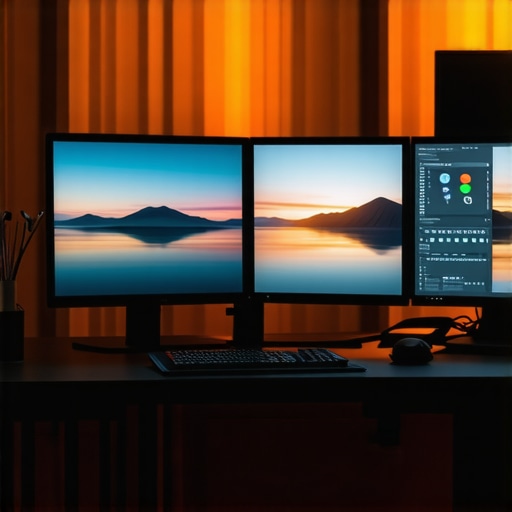
Dynamically managing multiple calibrated displays opens new horizons in workflow efficiency. By leveraging hardware such as video walls or software tools that synchronize color profiles across screens, creators can extend their workspace without sacrificing accuracy. For example, side-by-side comparison of SDR and HDR content becomes more intuitive, streamlining color correction processes. To optimize this setup, consider calibration routines that account for different panel technologies and luminance levels, maintaining consistency across all displays. If you’re interested in building or upgrading a multi-monitor environment, the comprehensive guide on 4K monitors provides valuable insights on balancing resolution, color accuracy, and workspace ergonomics.
For tailored advice on integrating advanced display technology into your creative pipeline, reach out via our contact page or explore the latest innovations at HDR technology advancements. Your next breakthrough in visual fidelity might just be a calibration away.
Achieving professional-grade consistency in color grading requires more than initial calibration; it entails a meticulous, ongoing process that adapts to environmental changes, hardware aging, and evolving project needs. Integrating advanced calibration techniques, such as spatial uniformity testing and spectrophotometric profiling, ensures that every inch of your display maintains fidelity. Expert-grade calibration devices like the X-Rite i1Profiler or Datacolor’s SpyderX Elite allow for detailed measurement and adjustment, facilitating a higher standard of accuracy than factory settings alone.
Maximizing HDR Potential: Techniques for Creative Control and Precision
While HDR brings unprecedented luminance and color depth, actualizing its full potential demands a nuanced approach. Creative professionals benefit from mastering tone mapping protocols, which bridge the gap between HDR content and display capabilities. Understanding how different HDR standards, such as Dolby Vision or HDR10+, influence workflow allows for tailored strategies—be it in live grading sessions or post-production optimizations. For instance, deploying LUTs designed explicitly for HDR workflows can streamline color decisions while preserving dynamic range and color accuracy.
What Are the Practical Implications of Color Volume in HDR Color Grading?
Color volume refers to the three-dimensional space that combines hue, saturation, and luminance. In HDR workflows, an expanded color volume enables more nuanced and vivid color representations, providing creative flexibility that closely mimics real-world perception. According to research by Dolby Laboratories, understanding and managing color volume is critical for maintaining consistency across different display devices, especially when combining HDR content with SDR deliverables. Techniques such as utilizing peak luminance mapping and volumetric calibration help creators maintain visual intent and avoid color or luminance clipping issues.
Integrating Multi-Device Calibration for Cohesive Creative Environments
In complex workflows involving multiple monitors, projectors, or external displays, achieving seamless color harmony is paramount. This process involves creating unified calibration profiles that account for each device’s unique characteristics—considering factors like panel technology, luminance capacity, and viewing angles. Implementing hardware calibration across all devices using professional-grade tools enables synchronization of color spaces and luminance levels, reducing discrepancies that can compromise visual storytelling. Moreover, standardized workspace lighting, such as D65 illumination, minimizes environmental influences, ensuring your calibrated system remains stable over time.
For advanced workflows, adaptive calibration solutions—such as those incorporating ambient light sensors—offer real-time adjustments, maintaining optimal viewing conditions during extended editing sessions. Exploring these techniques might seem intricate initially, but the payoff is a consistent, predictable color environment that elevates your creative output to industry-leading standards.
Harnessing Hardware-Based Calibration in the Digital Age
As modern displays continue to evolve, hardware calibration has become indispensable for professionals aiming for uncompromised accuracy. Technologies like LUT-based calibration engines embedded within high-end monitors or external calibration modules provide granular control over color profiles. Pairing these tools with software like Calman or LightSpace offers detailed analysis and adjustment capabilities, capturing subtleties that software-only calibration cannot achieve. This integration ensures that your display’s color performance adheres strictly to standards such as ST 2084 or PQ, which are essential for HDR mastering.
By adopting an iterative calibration regime—preferably monthly or following significant environmental changes—professionals maintain the integrity of their visual workspace, thus preventing drift that can undermine critical decision-making during color-sensitive projects.
Encouraging Ongoing Education and Industry Engagement
Staying at the forefront of calibration and HDR technologies involves continuous learning. Participating in industry workshops, webinars, and certification programs, such as those offered by the Imaging Science Foundation (ISF) or the Society for Imaging Science and Technology (IS&T), keeps professionals updated on emerging standards, tools, and best practices. Moreover, engaging with online communities enables the exchange of insights and troubleshooting strategies—crucial for navigating the complexities of modern display workflows.
By deepening your understanding of color science, mastering calibration nuances, and embracing innovative HDR techniques, you position yourself at the pinnacle of visual craftsmanship. Curious about integrating these advanced calibration methods into your studio setup? Contact our experts or explore the latest resources that unlock a new dimension of factual accuracy and artistic expression.
Achieving True Color Fidelity Through Dynamic Calibration Strategies
While initial calibration establishes a vital baseline, ongoing assessment of display performance is paramount to sustain industry-leading accuracy. Implementing periodic, advanced calibration protocols—incorporating spatial uniformity tests and spectrophotometric profiling—ensures consistent color reproduction despite environmental fluctuations and hardware aging. Devices like the X-Rite i1Pro series facilitate high-precision measurements, empowering professionals to maintain strict adherence to standards such as D65 and D50 illuminants, thus preserving visual integrity across complex workflows.
Elevate Content Creation with Cutting-Edge HDR Workflow Techniques
Beyond the technological capabilities of HDR, mastery lies in the nuanced application of tone mapping, metadata management, and luminance grading. For instance, utilizing Dolby Vision’s dynamic metadata allows targeted adjustments on a per-scene basis, enhancing vividness without sacrificing detail. Understanding the perceptual limits defined by human vision science—such as the luminance contrast threshold—enables creators to optimize the visual storytelling experience. Resources like the Dolby Labs’s white papers provide rigorous insights into these advanced methodologies.
What is the Role of Perceptual Quantizer (PQ) Curves in HDR Color Grading?
PQ curves serve as the backbone of HDR color workflows by mapping luminance levels in a way that aligns with human visual perception, thereby allowing a broader dynamic range to be accurately represented on displays. This gamma curve facilitates precise luminance gradations essential for high-fidelity grading and mastering, as detailed in the guidelines provided by the Society of Motion Picture and Television Engineers (SMPTE). Mastery of PQ curve calibration directly influences the realism and emotional impact of HDR content, emphasizing its importance in professional production environments.
Coordinate Multiple Calibration Profiles for Complex Setups
In professional environments featuring multi-monitor arrays, synchronization of color profiles becomes a sophisticated endeavor. Implementing hardware calibration across all displays, accompanied by software solutions that support profile merging and luminance mapping, promotes cohesive visual continuity. For example, utilizing color management systems that support DisplayCAL or CalMAN allows for precise adjustments, reducing perceptual discrepancies, and ensuring that each device contributes harmoniously to the creative vision. Maintaining environmental consistency—through controlled lighting and ambient conditions—is equally critical in this process.
Why Hardware Calibration is Non-Negotiable for HDR Workflows
As display technology advances, software adjustments alone fall short in achieving the precise accuracy demanded by HDR workflows. Hardware calibration tools capable of direct LUT (Look-Up Table) adjustments provide granular control over color and luminance. Devices such as the X-Rite RI 600 or LaCie Blue Eye Pro enable professionals to embed custom LUTs into monitors supporting 3D LUT calibration, ensuring that displayed colors conform to industry standards like BT.2020 and PQ EOTF. Regularly updating these calibrations—guided by environmental and hardware longevity considerations—eliminates drift and preserves visual fidelity over time.
Foster Knowledge Growth Through Specialized Training and Community Engagement
Progressing in this field requires continuous education through workshops, certifications, and peer collaborations. Programs offered by the Imaging Science Foundation (ISF) and the Society for Imaging Science and Technology (IS&T) focus on advanced calibration techniques, HDR implementation, and color science. Engaging with professional forums and online networks provides practical insights, troubleshooting strategies, and exposure to emerging standards. Investing in such learning consolidates a mastery that distinguishes seasoned professionals, enabling them to navigate the evolving landscape of HDR and calibration technology efficiently.
Eager to elevate your mastery of HDR workflows and calibration precision? Reach out to our expert team or explore industry-leading resources that will push your creative boundaries and technical expertise to the next level.
Elevating Your Workflow with Precision Tools
In the competitive world of professional visual creation, selecting and maintaining the right display technology determines whether your work stands apart or fades into the background. Leveraging high-end calibrated 4K monitors combined with HDR capabilities enables creators to achieve stunning accuracy, vibrant color, and deep dynamic range—all essential for delivering content that captivates.
Refine Your Color Accuracy and Consistency
Achieving impeccable color fidelity requires more than just the right hardware; it demands rigorous calibration routines backed by industry standards like ICC profiles and spectral profiling. Using advanced calibration devices such as the X-Rite i1Pro series, professionals can fine-tune their displays, ensuring consistent, true-to-source reproduction across projects and over time.
Harness the Power of HDR for Real-World Impact
HDR technology extends the luminance and color gamut beyond traditional SDR limits, bringing visuals to life with unprecedented realism. Selecting monitors with high peak luminance and wide color spaces like DCI-P3 or BT.2020 catapults your workflows into a new realm of creative freedom, essential for modern post-production and content creation.
Achieving Harmonious Color Workflows Across Multiple Displays
Complex projects often involve multi-monitor arrays, each with its unique characteristics. To maintain seamless color harmony, it’s vital to implement synchronized calibration protocols, utilizing hardware LUT calibration and environmental control. These steps prevent discrepancies and uphold the integrity of your visual narrative, regardless of the display count or configuration.
Invest in Tools That Transform Artistic Vision into Reality
Understanding the technical nuances is crucial, but equipping yourself with the right resources amplifies your capabilities. Recommended references such as best calibrated HDR monitors and comprehensive guides on 4K monitor selection provide actionable insights for optimizing your workspace and workflow.
Advance Your Mastery Through Continuous Learning
Staying ahead in the industry involves embracing ongoing education—participating in specialized workshops, engaging with professional communities, and exploring emerging standards like PQ and Dolby Vision. These efforts ensure that your skills and tools evolve in tandem with technological advancements, maintaining your edge and delivering excellence.
To deepen your understanding and explore tailored solutions, consider reaching out via our contact page. Your next breakthrough in creative precision might be just a calibration session away, setting new benchmarks for visual storytelling.
About the Author