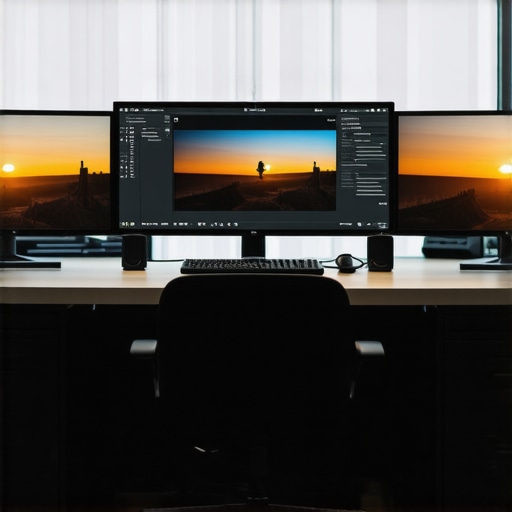
3 Pro 4K Monitors for 2026 Editors Using Rec.2020
Elevating Creative Precision with Advanced Display Technologies
In the realm of professional visual creation, the pursuit of true-to-life imagery and impeccable color rendition has become paramount. As imagery complexity surges and standards like Rec.2020 and HDR evolve, understanding the nuances of calibrated monitors, HDR support, and color fidelity is no longer optional but essential for seasoned professionals. A calibrated monitor ensures consistent, accurate outputs, vital for tasks demanding rigorous color precision such as digital artwork, photography, and video production.
Deciphering the Intricacies of HDR and Its Impact on Workflow
High Dynamic Range (HDR) displays revolutionize visual perception by offering expanded contrast ratios and color depths, facilitating a more immersive and realistic viewing experience. The integration of HDR in professional monitors is vital for accurately previewing content intended for HDR workflows, thereby minimizing post-production surprises. Notably, HDR monitors that support peak luminance levels of 1000 nits or higher, coupled with precise calibration capabilities, empower creators to push creative boundaries while maintaining fidelity across diverse media platforms.
Color Accuracy’s Role in Defining Visual Authenticity
Color accuracy is the cornerstone of professional-grade monitors, enabling creators to reproduce colors that match the original scene or design intent. Monitors employing 99% or higher coverage of color gamuts like DCI-P3 or Rec.2020, paired with Delta E calibrations under 2, elevate post-production quality. For instance, professionals often rely on top-rated color-accurate monitors that have undergone factory calibration, ensuring that edits translate seamlessly across various outputs.
Are All HDR Monitors Reliable for Creative Purposes?
In the field, many creators encounter HDR monitors claiming high peak luminance but failing to deliver consistent calibration or color fidelity. Distinguishing genuine, professionally calibrated HDR displays from those with inflated specifications is critical. Open debates persist regarding budget HDR monitors versus top-tier options, especially considering factors like peak brightness, uniformity, and color consistency. Researchers like those from industry analyses highlight the importance of rigorous validation before integrating new displays into professional workflows.
How can professionals ensure their calibrator remains accurate across different monitor models and usage hours?
Implementing regular calibration routines, utilizing hardware calibration tools, and adhering to manufacturer-recommended calibration intervals are vital. Understanding how display aging affects color consistency guides professionals in scheduling recalibration sessions. For an in-depth discussion and recommended practices, explore this comprehensive guide.
For those seeking to enhance their workflow and maintain high standards of visual fidelity, continuous engagement with the latest research and technology updates is essential. Consider consulting with display calibration specialists or contributing insights to industry forums for collective advancement in display accuracy and HDR implementation.
Achieving Seamless Color Fidelity Across Diverse Workflows
Maintaining consistent color accuracy throughout various stages of production requires more than just a calibrated display; it involves integrating industry-standard workflows such as hardware calibration, color management systems, and environment control. Leveraging tools like calibrated 4K monitors helps ensure that the colors viewed during editing match the final output, whether for digital, print, or broadcast media. Moreover, color spaces like DCI-P3 and Rec.2020 are becoming the norm for achieving cinematic and broadcast-quality visuals, requiring monitors capable of exceeding 99% coverage in these gamuts to meet industry expectations.
What Does True HDR Support Mean for Content Creators?
Conversations around HDR often focus on peak luminance numbers, but the real value lies in the meticulous calibration and uniformity of HDR displays. A monitor claiming 2000 nits without uniformity or proper tone mapping may deliver a subpar viewing experience. Recent studies emphasize the importance of local dimming zones, high contrast ratios, and true bit-depth support to leverage HDR’s potential fully. As highlighted by industry-leading HDR monitors, only displays with precise calibration and comprehensive specs can serve as reliable tools for content preview and final output approval.
How do professional monitors adapt to evolving creative workflows and emerging content standards?
Advanced hardware and software integration allows monitors to stay relevant amidst rapidly changing media standards. Features like hardware redundancy, firmware updates, and adaptive color management systems help ensure longevity and adaptability. For example, many leading models now include built-in colorimeters or compatibility with calibration software like CalMAN or DisplayCAL, facilitating ongoing calibration without needing external devices. Continuous updates from manufacturers, combined with industry standards adherence, are critical for future-proofing a professional workspace. To explore leading models that excel in this evolving landscape, visit this detailed review.
Staying ahead in professional visual creation also involves understanding the latest research, such as the comprehensive analysis by industry experts who specialize in display technologies, like those documented in expert reviews of HDR displays. These insights help creators make informed decisions, ensuring that their tools keep pace with industry advancements and project demands.
Engaging with the community through forums, webinars, and industry conferences provides additional avenues to stay updated. Sharing insights, participating in calibration workshops, and consulting with specialists form a robust strategy for maintaining optimal display performance across complex workflows.
Fine-Tuning HDR for Unmatched Creative Accuracy
Achieving exceptional HDR performance isn’t merely about reaching peak luminance numbers; it entails a holistic approach encompassing tone mapping precision, local contrast control, and the integration of high-quality hardware components. Creators aiming for cinematic realism must scrutinize the monitor’s ability to render nuanced shadow details without sacrificing highlight brightness. This means selecting displays that incorporate advanced local dimming or dual-layer backlighting, which optimize contrast ratio and improve perceived depth, a crucial aspect highlighted by industry leader Dolby Vision’s standards for mastering excellence (Dolby Vision HDR specifications). Ultimately, mastering HDR fidelity requires constant calibration and an understanding of the interplay between hardware capabilities and software tone-mapping algorithms, ensuring content authenticity from preview to final export.
How does local dimming influence HDR quality in professional monitors?
Local dimming enhances contrast by independently controlling backlight zones, delivering deeper blacks and vibrant highlights simultaneously. It’s particularly critical in HDR workflows where contrast ratios magnify the dynamic range of the display. High-end monitors with multiple local dimming zones minimize blooming artifacts and ensure uniform tone reproduction across the screen, fostering consistent visual evaluation. Research by DisplayHDR.org underscores that displays with ≥576 zones significantly outperform those with fewer zones in preserving fine details in both shadows and highlights, an essential factor when grading HDR content (DisplayHDR certification standards). As such, professionals must prioritize local dimming quality alongside luminance specifications to fully leverage HDR’s potential.
Integrating Color Scientific Methodologies into Real-World Calibration
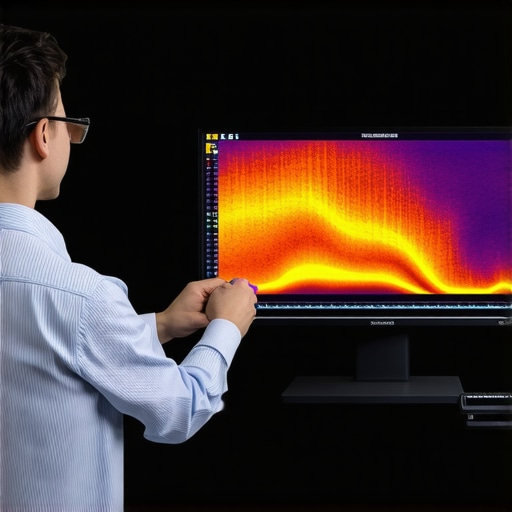
Calibration rooted in rigorous color science involves more than preset factory profiles; it requires understanding the colorimeter’s spectral characteristics, light source profiles, and the monitor’s color response curve. Laboratory-grade calibration often employs Fourier transform spectroscopy to evaluate the spectral reflectance of displays, ensuring accuracy across all visible wavelengths. For instance, the implementation of ISO 12646 standards ensures consistent calibration procedures aligned with industry best practices (ISO 12646). Additionally, integrating technology like spectral-based calibration software enables precise characterization of the display’s color performance, facilitating adjustments that remain valid over longer periods—especially critical in color-critical tasks like digital cinema or scientific visualization. Continuous calibration, combined with an understanding of ambient viewing conditions as outlined by CIE 159-2010 guidelines, safeguards the integrity of visual outputs in professional workflows.
What role does ambient lighting play in HDR display accuracy and consistency?
Ambient lighting profoundly influences perceived contrast and color accuracy, particularly in HDR displays where luminance and contrast are paramount. A controlled environment minimizes reflections and glare, enabling creators to evaluate HDR content under conditions that simulate final viewing environments. The CIE’s standards recommend viewing spaces with subdued lighting levels, typically below 50 lux, to prevent ambient light from washing out the display’s contrast. Moreover, integrating bias lighting—calibrated to match the monitor’s ambient base—can enhance perceived contrast, preventing eye strain and facilitating more accurate color judgments. Advanced monitor setups incorporate ambient light sensors that automatically adjust display parameters to maintain consistent output regardless of environmental changes (CIE publications on lighting considerations). Maintaining such environmental rigor is indispensable for professionals striving for precise HDR content evaluation and final approval.
Innovative Calibration Methodologies Elevating Visual Authenticity
Adopting advanced calibration methodologies rooted in spectral measurement and machine learning algorithms enables professionals to attain unprecedented levels of color fidelity and luminance stability. These techniques analyze the display’s spectral response in real-time, adjusting calibration parameters dynamically to compensate for aging components and environmental variations. For instance, integrating Fourier transform spectroscopy with AI-driven calibration software reduces drift and maintains calibration precision over extended periods, crucial for scientific visualization and high-end content creation.
The Significance of IPS vs. OLED for Targeted Workflows
While IPS panels offer superior color accuracy and wider viewing angles, OLED displays deliver unparalleled contrast ratios and perfect blacks, making each technology suitable for specific professional needs. The choice hinges on workflow priorities: color-critical tasks benefit from IPS panels due to their consistent gamma and color uniformity, whereas OLED’s contrast advantages excel in HDR grading where deep blacks are essential. Staying abreast of this evolving landscape requires understanding the nuanced performance trade-offs and leveraging hybrid solutions that combine the strengths of both technologies.
How Does Display Uniformity Impact Critical Color Evaluation?
Uniformity across brightness, hue, and saturation is paramount when assessing content with subtle tonal variations. Variations can lead to misinterpretation of shadow details or highlight intricacies, especially in high-precision applications like digital cinema mastering. Manufacturers employ techniques such as localized backlight control and panel compensation circuits to enhance uniformity. Professionals should routinely perform uniformity checks using specialized test patterns, as inconsistencies can distort color grading workflows and necessitate correction through targeted calibration adjustments.
< >
>
Leveraging Emerging Color Spaces for Cinematic Quality
Beyond traditional sRGB and Adobe RGB, modern workflows increasingly incorporate color spaces like ACES and Rec.2020 to achieve cinematic realism and future-proof content. Displays capable of rendering these expansive gamuts facilitate a seamless workflow from digital acquisition to final output, ensuring immersive visuals with rich color depth. Mastering these color spaces involves not only selecting compatible hardware but also employing precise calibration strategies aligned with industry standards, thus guaranteeing fidelity from scene capture through post-production.
Crafting an Environmental Ecosystem for Peak Visual Fidelity
Optimal calibration is contingent upon a controlled viewing environment, where ambient lighting, reflection management, and ergonomic positioning converge. Implementing high-quality blackout curtains, anti-reflective coatings, and calibrated bias lighting minimizes ambient interference, allowing for accurate visual assessments. Central to this ecosystem is continuous environment monitoring paired with adaptive display settings—features increasingly available in professional-grade monitors—that preserve calibration integrity amidst changing conditions. This holistic approach ensures consistent evaluation conditions, vital for critical decision-making in post-production settings.
Future Trends in Display Technology and Calibration Paradigms
Emerging advancements such as nano-precision backlighting, quantum dot enhancements, and AI-enabled calibration promise to redefine professional display capabilities. These innovations aim to deliver ultra-high luminance, wider gamuts, and more effortless calibration processes. Moreover, Industry-standard frameworks like VESA’s DisplayHDR and CalMAN’s AI calibration modules are evolving to incorporate these breakthroughs, streamlining workflows and reducing human error. Staying engaged with these developments—and participating in collaborative research initiatives—will position professionals at the forefront of visual fidelity and workflow efficiency.
Join the Vanguard of Visual Excellence
As the landscape of professional display calibration becomes increasingly sophisticated, embracing these pioneering techniques and technologies is essential. Elevate your expertise by engaging with specialized training, participating in industry forums, and collaborating with calibration innovators. Your commitment to mastering cutting-edge methodologies will not only enhance output quality but also solidify your reputation as a leader in visual authenticity.
Elevate Your Visual Expertise with Next-Generation Displays
In today’s fast-evolving visual landscape, only those who harness the latest advancements in professional monitor technology can truly push the boundaries of creative excellence. The integration of high dynamic range, precise color science, and adaptive calibration methods empowers creators to realize their most ambitious visions with unmatched fidelity.
Question the Limits of Calibration Precision
While routine calibration ensures baseline accuracy, leveraging spectral measurement and AI-driven adjustments pushes the envelope further. Imagine a workflow where your display self-cesses errors in real-time, maintaining delta E values consistently below 1 — that’s the frontier of calibration mastery.
Challenge the Norms of HDR Performance
High peak luminance numbers alone don’t guarantee authenticity; nuanced tone mapping, local dimming quality, and contrast stability define true HDR capability. Pro monitors supporting 3000 nits with uniformity and true bit-depth are redefining cinematic standards for content validation and grading.
How Deep Is Your Color Gamut?
Monitors covering 99% or more of DCI-P3 or Rec.2020 open new horizons for immersive storytelling. Yet, calibration practices must account for gamut nuances, ensuring all hues render faithfully without oversaturation or color drift, especially in critical BK workflows.
Are We Future-Proofing Our Setups?
With hardware featuring firmware updates, adaptive color management, and seamless compatibility with emerging color spaces like ACES, the contemporary professional workspace demands tools that evolve. Investing in monitors with software-defined calibration and environmental adaptability guarantees longevity amid rapid standards evolution.
Expert Resources for Deeper Mastery
- Calibrated Monitors and Color Precision — An authoritative guide on the latest calibration technologies.
- HDR Monitors with Over 2000 Nits — An expert review of top-tier HDR workflows for demanding creators.
- Color Accuracy in HDR — Critical insights for visual testing and color validation.
Redefining Professional Display Strategies
Incorporate spectral calibration, environmental controls, and collaborative industry standards to craft workflows that are both efficient and precise. The future belongs to those who not only adapt but also innovate, ensuring their visual systems remain at the zenith of authenticity and performance. Engage with advanced resources, share your insights, and join the vanguard shaping the future of true-to-life digital creation—your impeccable visuals await.
,
About the Author

This post offers a comprehensive overview of the current landscape in high-end display technology. The emphasis on rigorous calibration, local dimming, and the importance of environment control resonates with my experience in post-production. I’ve noticed that even the most advanced HDR monitors can fall short if not properly calibrated or placed in a controlled environment. Personally, I’ve started integrating spectral calibration tools into my workflow, and the difference in color fidelity is remarkable. What are some of the most effective methods others have found for maintaining calibration accuracy over extended periods, especially considering hardware aging? I believe that ongoing education and community sharing are key to keeping pace with rapidly advancing technology.
Your post offers an incredibly detailed overview of the current state and future trends in professional monitor calibration and HDR technology. I particularly appreciate the emphasis on spectral measurement and AI-driven calibration approaches, which I’ve started experimenting with in my own workflow. The challenge of maintaining consistent color accuracy over time, given hardware aging and environmental factors, remains a key concern for me. In my experience, establishing a routine calibration schedule—say, monthly or bi-weekly depending on usage—is essential, but integrating real-time spectral calibration can significantly reduce drift. Tools like spectral-based software and built-in calibration sensors are game changers, especially when combined with controlled viewing environments that follow CIE standards. I’m curious, what strategies or tools have others found most effective for extending calibration validity without frequent recalibration, particularly for setups in high-usage professional settings? Ongoing education and community knowledge-sharing are indeed vital to stay ahead in this rapidly evolving landscape.
This post resonated with me, especially the emphasis on the importance of uniformity and calibration in HDR workflows. I’ve found that regular calibration routines—using high-quality hardware tools—and environment control, like proper ambient lighting with bias lighting, really help maintain consistency over time. One challenge I’ve faced is the natural aging of display components, which can subtly drift color outputs. For that, I’ve started experimenting with spectral calibration software that adapts in real-time, and it’s a game-changer. Have others here integrated AI-driven calibration systems? I’m curious if they’re able to maintain delta E values below 1 over extended periods without frequent manual recalibration. I believe that continuous learning and sharing in the community are key to pushing the industry forward, especially as display tech evolves so rapidly. What are some of the most effective protocols you’ve established for long-term calibration management?
This article sheds light on the importance of integrating advanced calibration techniques like spectral measurement and AI-driven adjustments into professional workflows. From my experience in digital imaging, the consistency of accurate color reproduction depends heavily on regular calibration and environmental controls. One challenge I’ve encountered is the display aging process, which subtly shifts color accuracy over time. Implementing spectral calibration software that adapts in real-time has markedly improved my setup’s reliability. I’m curious, how do others here manage calibration schedules in high-demand environments? Do you leverage automated solutions, or rely on manual recalibration routines? Also, with emerging display technologies like nano-LEDs and quantum dots, do you see calibration practices evolving further? Continuous learning and community sharing are definitely keys to maintaining the highest standards in our craft.