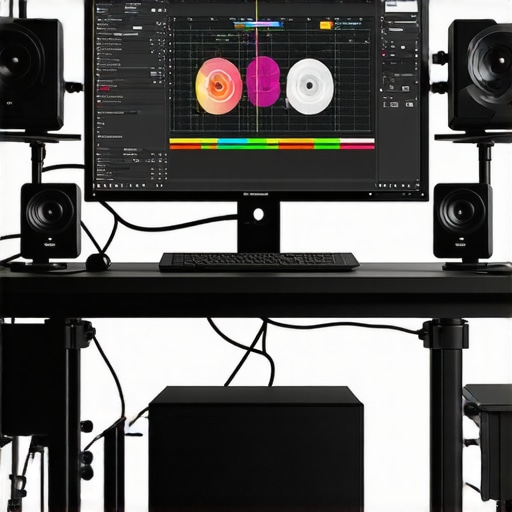
Ultimate Guide to Calibrated Monitors for Photo & Video Editing in 2024
Unlocking Precision: Why Calibrated Monitors Are the Cornerstone of Professional Visual Work in 2024
In the realm of high-end photo and video editing, the fidelity of your display is not merely a preference but an essential component of your workflow. As technology advances, the demand for monitors that deliver unmatched color accuracy and consistency continues to grow. This comprehensive guide explores the nuanced aspects of calibrated monitors, emphasizing their critical role in elevating creative output and ensuring industry standards are met.
The Science Behind Calibration: How Monitors Achieve True Color Fidelity
Calibration involves fine-tuning a monitor’s settings to align with a standardized color profile, often guided by professional calibration tools and software. This process corrects inherent discrepancies such as gamma, white balance, and color gamut, which can vary significantly across different displays. For professionals, understanding the calibration process—detailed in resources like Calibrated Monitors Explained—is fundamental to optimizing visual accuracy.
Advanced Features for Precision: What to Seek in a 2024 Professional Monitor
High-end calibrated monitors incorporate features such as 10-bit color depth, wide color gamuts (DCI-P3, Adobe RGB), and hardware calibration support. These specifications facilitate seamless color grading and photo retouching, reducing the need for secondary calibration devices. Notably, HDR capabilities—discussed in HDR Monitors in 2025—further expand the creative palette for video editors seeking dynamic range and vibrancy.
Addressing the Expert Dilemma: How Do You Ensure Consistency Across Different Workstations?
What are the best practices for maintaining color consistency in a multi-monitor setup, especially when working on high-stakes projects?
Achieving and maintaining color consistency across multiple calibrated displays involves routine calibration schedules, using professional color management systems, and adhering to industry standards such as ICC profiles. Additionally, integrating color calibration hardware—like X-Rite or Datacolor devices—can automate this process, ensuring uniformity in color representation. For detailed guidance, consult the article Mastering Color Accuracy.
Choosing the right calibrated monitor in 2024 requires a nuanced understanding of your workflow, color space requirements, and budget constraints. For professional-grade recommendations, explore options like those listed in Top Calibrated Monitors for Creatives.
Interested in honing your calibration expertise? Visit our Contact Page to discuss your specific needs with our expert team or to contribute your insights into calibration best practices. Remember, in the pursuit of visual perfection, calibration is not a one-time task but a continual process of refinement and validation—an absolute necessity for those committed to excellence.
Beyond Basic Calibration: Exploring the Nuances of Color Consistency in Multi-Device Workflows
While routine calibration is essential, achieving true color consistency across multiple high-end displays demands a deeper understanding of color management principles. Professionals often grapple with subtle discrepancies that can compromise project integrity, especially when collaborating across different studios or remote environments. Implementing a comprehensive color management system, which integrates hardware calibration tools like top calibrated monitors for creatives, and adhering to strict ICC profile workflows, can significantly mitigate these issues.
How Do Color Profiles and Metadata Influence Your Final Output?
ICC profiles serve as the backbone of color management, translating device-specific color spaces into universal standards. When properly embedded and calibrated, they ensure that your colors appear consistent across platforms and outputs. However, many professionals underestimate the importance of maintaining and updating these profiles regularly. As color spaces evolve and new standards emerge, staying current with industry best practices—such as those discussed in Ultimate Guide to Calibrated Color Accuracy—is critical for preserving fidelity.
Are Your Color Management Protocols Robust Enough for High-Profile Projects?
Implementing strict protocols—including routine calibration, software updates, and standardized workflows—can be the difference between a successful project and costly revisions. Utilizing professional tools like X-Rite’s i1Display Pro or Datacolor’s SpyderX, combined with industry-standard software, ensures your monitor’s output remains precise. Furthermore, integrating these tools with your digital workflow—especially when handling complex color spaces like Adobe RGB or DCI-P3—elevates your accuracy to professional levels. For more insights into advanced calibration techniques, visit Ultimate Guide to Calibrated Color Accuracy.
Are you leveraging the latest hardware and software solutions to streamline your calibration process? If not, now is the perfect time to explore options that can automate and simplify routine checks, ensuring your color consistency remains impeccable.
The Practical Implications of Color Fidelity: How Precision Enhances Creative Outcomes
Precision in color calibration directly impacts the quality and credibility of your visual work. Whether you’re producing high-stakes commercial content, fine art reproductions, or cinematic visuals, accurate color reproduction fosters trust and elevates your professional reputation. Moreover, consistent color workflows reduce time spent on revisions and client corrections, enabling you to focus on creative innovation. For a comprehensive look at selecting the best calibrated monitors tailored for your specific needs, refer to best calibrated monitors for perfect color HDR.
Interested in elevating your calibration expertise further? Share your experiences or ask questions in the comments below—your insights contribute to a thriving professional community dedicated to visual excellence.
The Role of Hardware LUTs in Achieving Seamless Color Transitions Across Multiple Devices
When working on high-stakes projects, professionals often grapple with subtle color shifts that can undermine the consistency of their output. Hardware Lookup Tables (LUTs), integrated into premium calibration hardware, are pivotal in bridging these discrepancies. Unlike software-based adjustments, hardware LUTs enable real-time, high-precision color mapping directly within the monitor’s electronics, ensuring that color transitions are smooth and accurate across various shades and gradients. According to industry-leading calibration experts, such as those documented in Color Management Guides, hardware LUTs are indispensable for maintaining fidelity in complex workflows involving HDR and wide color gamuts.
Nuanced Calibration Protocols for Multi-Device Environments: Beyond Basic Settings
While routine calibration suffices for single displays, multi-device environments demand a more rigorous approach. Implementing synchronized calibration schedules, standardized ICC profiles, and uniform hardware tools can mitigate color drift over time. For example, using the same calibration device model—such as the X-Rite i1Display Pro—across all workstations ensures consistency. Moreover, integrating calibration management software like CalMAN or DisplayCAL facilitates centralized control, enabling professionals to compare calibration reports and verify uniformity. This meticulous approach minimizes the risk of subtle color discrepancies that could compromise high-precision tasks like film grading or print reproduction.
How Do Ambient Lighting Conditions Influence Calibration Outcomes and How to Compensate?
Ambient lighting plays a critical role in how we perceive color on calibrated displays. Variations in room lighting—such as daylight, incandescent, or LED sources—can alter perceived hues and luminance, thereby impacting calibration accuracy. To counteract these influences, professionals often employ controlled lighting environments and utilize ambient light sensors integrated into advanced monitors. These sensors dynamically adjust display settings, maintaining consistent visual output regardless of environmental changes. As detailed in Lighting Design Magazine, this adaptive calibration technique is essential for ensuring that color fidelity remains uncompromised during different working conditions.
External Validation: The Significance of Industry Standards and Third-Party Testing
Achieving and maintaining calibration accuracy is not solely dependent on internal processes; external validation through adherence to industry standards is equally vital. Standards such as the ITU-R BT.1886 for luminance and D65 white point, coupled with third-party calibration verification, provide an objective measure of a monitor’s performance. Engaging with independent testing labs or utilizing certified calibration reports from organizations like the International Color Consortium (ICC) ensures that your displays meet rigorous benchmarks. This external validation elevates your workflow’s credibility, especially for clients requiring the highest levels of color precision, such as pharmaceutical packaging or scientific visualization.
Interested in deepening your expertise? Explore professional resources and attend calibration workshops hosted by industry leaders. Proper calibration is a continual journey—regular updates, hardware checks, and staying informed about emerging standards are key to maintaining excellence in your visual output. For tailored advice, contact our calibration specialists through our Contact Page.
Exploring the Impact of Hardware Calibration on Industry-Leading Visual Fidelity
In the pursuit of absolute color accuracy, hardware calibration tools such as 3D LUT boxes and high-precision spectrophotometers have become indispensable for professionals aiming for meticulous control over display output. These devices facilitate direct manipulation of the monitor’s internal lookup tables, allowing for a level of precision unattainable through software adjustments alone. Industry insights from Color Management Guides emphasize that integrating hardware LUTs into your workflow can significantly reduce color drift, especially in HDR workflows where tonal transitions are critically demanding.
How Do Ambient Light Sensors Enhance Color Calibration Consistency?
Ambient light sensors, integrated into high-end monitors, dynamically adjust display parameters to compensate for environmental lighting variations. This technology ensures that color fidelity remains consistent whether working under daylight, incandescent, or LED lighting conditions. According to Lighting Design Magazine, these sensors are vital for maintaining perceptual accuracy, particularly in color-sensitive tasks like digital printing and fine art reproduction. Implementing such adaptive calibration systems elevates the reliability of your visual outputs in real-world working environments.
What Are the Emerging Standards for Multi-Device Color Uniformity?
As display technology evolves, so do the standards governing multi-device color consistency. Industry bodies like the International Color Consortium (ICC) have introduced comprehensive protocols that specify standardized calibration routines, profile management, and validation procedures. Newer standards also emphasize the importance of unified gamma settings and white point uniformity across multiple displays—crucial for collaborative projects in remote studios or post-production houses. The authoritative resource ICC.org offers detailed guidelines and certifications that can help professionals ensure their entire workflow aligns with global best practices.
How Can Experts Leverage External Validation to Guarantee Long-Term Calibration Stability?
External validation through third-party testing and certification ensures ongoing compliance with industry benchmarks. Regularly engaging with independent labs for calibration validation and maintaining detailed records guarantees that your calibration processes remain robust over time. This practice is especially critical in sectors like scientific research, medical imaging, and cinematic production, where even minor deviations can have significant repercussions. For in-depth strategies, consult the standards outlined in Color.org, which set the foundation for trustworthy color management practices.
To stay ahead in the realm of high-precision visual work, continuously updating your calibration methodologies and embracing emerging technologies is essential. Reach out to our expert team to explore tailored solutions that elevate your workflow’s accuracy and reliability.
Expert Insights & Advanced Considerations
1. Multi-Device Consistency Is an Ongoing Challenge
Achieving seamless color uniformity across multiple calibrated monitors requires not only regular calibration schedules but also standardized hardware and software protocols. Professionals should employ consistent ICC profiles and leverage centralized calibration management tools to maintain optimal accuracy in collaborative environments.
2. Ambient Lighting Conditions Can Significantly Impact Calibration Accuracy
Variations in ambient lighting—such as daylight or artificial sources—affect color perception. Implementing ambient light sensors and controlled lighting environments helps maintain consistent visual fidelity, especially during critical color grading sessions.
3. Hardware LUTs Offer Superior Precision for Complex Workflows
Hardware Lookup Tables (LUTs), integrated into high-end calibration tools, enable real-time, device-specific color adjustments. Utilizing hardware LUTs ensures smoother tonal transitions and reduces color drift in demanding workflows like HDR editing.
4. Industry Standards Are Evolving to Address Multi-Device Color Uniformity
Standards from organizations such as the ICC now emphasize unified gamma and white point consistency across multiple displays. Staying updated with these evolving protocols, and obtaining third-party validation, ensures long-term calibration stability and professional credibility.
5. External Validation Is Essential for Long-Term Calibration Reliability
Engaging independent labs for periodic calibration verification and maintaining detailed calibration records guarantees ongoing compliance with industry benchmarks. This practice is crucial in high-stakes environments like medical imaging or cinematic production.
Curated Expert Resources
- Mastering Color Accuracy: Top Professional Monitors for Creatives – An authoritative guide on selecting and maintaining high-precision monitors, essential for professional workflows. Learn more
- The Ultimate Guide to 4K Monitors for Professional Visuals – Comprehensive resource on 4K display technology tailored for creative professionals. Explore now
- Calibrated Monitors Explained: Why Precision Matters for Designers – A detailed overview of calibration techniques and best practices. Read more
- HDR Monitors in 2025 – Insights into emerging HDR technologies and their impact on professional workflows. Discover details
- Best Calibrated Monitors for Perfect Color HDR – Curated list of top monitors optimized for color accuracy and HDR. See options
Final Expert Perspective
In the realm of professional visual work, understanding the nuances of calibrated monitors extends beyond basic setup. Embracing multi-device consistency, ambient light management, and advanced hardware calibration techniques ensures unparalleled accuracy and reliability. Staying informed through authoritative resources and adhering to evolving industry standards position professionals at the forefront of technological excellence. Engage with our team to explore tailored calibration solutions or to contribute your expert insights—your commitment to precision shapes the future of high-fidelity visual production.
About the Author

This post really highlights the importance of meticulous calibration in ensuring color accuracy. As someone who works remotely across different setups, I’ve realized that investing in hardware calibration tools like the X-Rite i1Display Pro has made a huge difference in maintaining consistency. It’s interesting how ambient light and environmental conditions can subtly affect calibration, which many overlook. I’ve also started using ambient light sensors on my monitors to automatically adjust brightness and color temperature, making my workflow more reliable. I wonder, for those managing multiple remote studios, what are the best practices for synchronizing calibration routines across locations without dedicated calibration labs nearby? Sharing insights on integrating calibration management software could be really valuable for professionals working in distributed teams.
Reading this detailed guide really underscores how crucial proper calibration is in our line of work, especially as display technologies evolve so rapidly in 2024. I’ve personally found that integrating hardware LUTs has been a game-changer for my HDR workflows, dramatically improving the smoothness of color transitions. Also, I agree with the importance of routine calibration—skipping this step often leads to subtle discrepancies that only become problematic during client reviews. One challenge I face is maintaining color consistency when multiple team members work across different time zones with varying ambient lighting conditions. I’ve heard that some professionals use ambient light sensors on monitors to dynamically adjust settings, but has anyone experienced pitfalls with this approach, especially over long periods? What are some proven strategies for synchronizing calibration across distributed teams without access to onsite labs? I’d love to hear your insights on managing this in real-world scenarios.
This post provides a comprehensive overview of the critical role calibration plays in achieving consistent and accurate visual output, especially with the technological advancements seen in 2024. From my experience working across multiple studios, establishing a robust calibration schedule paired with reliable hardware tools like X-Rite’s i1Display Pro truly makes a difference in maintaining color fidelity over time. I’ve also explored the benefits of ambient light sensors, which help adjust displays dynamically, reducing perception discrepancies due to changing lighting conditions. However, one challenge I face is ensuring long-term calibration stability, particularly when working remotely. Has anyone found effective ways to verify calibration status periodically without frequent in-person checks? I’m curious if integrating software-based calibration alerts or remote calibration validation services could help maintain consistency without adding to the workload. It would be great to hear how others are managing this aspect in their workflows, especially in multi-location setups.
This post really hits the mark on why calibrated monitors are fundamental for high-quality visual work in 2024. I’ve been working with multi-monitor setups for a few years now, and I can attest that routine calibration combined with hardware tools like the X-Rite i1Display Pro makes a huge difference in maintaining color accuracy over time. Ambient light sensors are indeed helpful, but I’ve found that having a controlled lighting environment also significantly improves consistency, especially when reviewing color-critical projects. A challenge I often encounter is coordinating calibration schedules across different remote offices, particularly during tight project deadlines. Has anyone experimented with centralized calibration management software that can remotely verify and schedule calibrations? Also, do you recommend any specific protocols for ensuring that all team members stay aligned technically and visually? Would love to hear your methods for streamlining this process, especially for distributed teams.
This article really emphasizes how critical proactive calibration practices are for maintaining the integrity of visual work, especially with the rapid advancements in display technology this year. My experience aligns with the need for routine checks—using tools like the X-Rite i1Display Pro has been essential for me, particularly when managing multiple workstations. I also find ambient light sensors very useful; they help mitigate environmental influences that often go unnoticed but can subtly shift color perceptions. One challenge I face is ensuring real-time calibration accuracy across varying environments, especially in remote or multi-location setups where consistent lighting conditions are hard to maintain. Does anyone have insights on how to effectively implement automated calibration alerts or remote validation systems that prevent long-term drift without constant manual intervention? I believe integrating software solutions for calibration management could significantly boost workflow reliability, especially for teams working remotely.