![5 Factory Calibrated Monitor Myths We Debunked [2026 Test]](https://monitors.workstationwizard.com/wp-content/uploads/2026/02/5-Factory-Calibrated-Monitor-Myths-We-Debunked-2026-Test.jpeg)
5 Factory Calibrated Monitor Myths We Debunked [2026 Test]
Elevating Visual Precision: The Strategic Use of Calibrated HDR Monitors in Professional Workflows
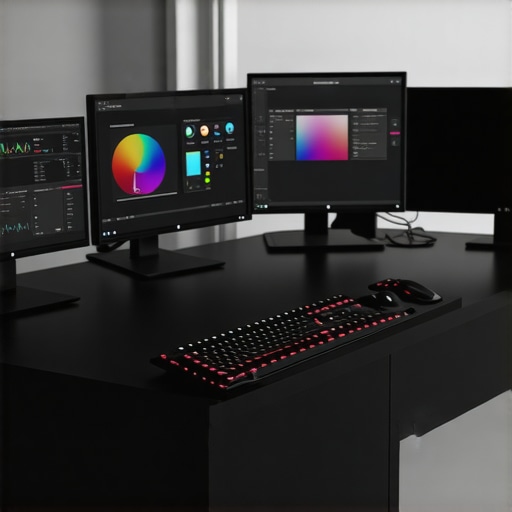
In the realm of professional visual creation, the integrity of color accuracy and luminance fidelity is paramount. As technology advances, the integration of high-dynamic-range (HDR) capabilities with meticulously calibrated monitors—especially those supporting 4K resolution—has become essential for achieving industry-standard standards. Experts recognize that a calibrated calibrated monitor ensures consistent, accurate output vital for digital artists, videographers, and colorists alike.
Dissecting the Myths Surrounding HDR Monitors and Color Fidelity
Are All HDR Monitors Truly Adequate for Critical Color Work?
Contrary to popular belief, not all HDR displays provide the necessary calibration and color precision for professional-grade work. Many consumer-grade HDR monitors boast high peak brightness but lack the comprehensive color gamut coverage and uniformity required by professionals. For example, a display claiming “HDR1000” might have impressive numbers but fall short in real-world color accuracy. This discrepancy underscores the importance of choosing calibrated 4K monitors with verified color gamut coverage and factory calibration certifications.
Furthermore, the concept of calibration extends beyond initial factory settings. Continuous verification and recalibration, often utilizing hardware LUTs and software tools, keep monitors within tight delta-E thresholds, ensuring fidelity across various project phases.
Why 4K Resolution Surpasses Previous Limits for Creative Professionals
The transition from 2K or lower resolutions to true 4K displays revolutionizes detailed workflows, from fine-grain photo editing to pixel-perfect video grading. High-resolution monitors enable professionals to see minute color shifts and gradients more clearly, which is crucial when working with HDR content that demands meticulous control over luminance ranges and color volume. For instance, top-tier professional 4K monitors with comprehensive color support facilitate precise editing and grading, ensuring edited content meets the exacting standards of clients and broadcasters.
The adoption of 4K also aligns with emerging workflows that incorporate AI-based tools and high-bitrate media, where every pixel’s integrity influences the overall outcome. As such, investing in a calibrated 4K monitor becomes a strategic decision for long-term creative viability.
How Compatibility and Calibration Impact Workflow Efficiency
Consider the compatibility of your monitor’s panel technology—IPS, OLED, or Mini-LED—and its influence on color consistency and contrast levels. IPS panels typically offer better color accuracy and viewing angles, while OLEDs excel in contrast and black-level performance. However, to leverage these advantages, proper hardware calibration routines are essential to prevent issues like color shift or luminance inconsistencies, especially in complex HDR workflows.
Professionals often employ hardware calibration devices and custom LUTs—look-up tables—that embed precise color transformations, maintaining uniformity and accuracy throughout post-production stages. It is worth noting that repeated calibration schedules are necessary, as even top-tier monitors drift over time, particularly after extensive usage or environmental changes.
Expert Tips for Optimizing HDR and Color Accuracy in Your Workflow
- Regular calibration and validation with specialized tools—such as i1Display Pro or ColorMunki—are recommended to keep monitor performance aligned with industry standards.
- Focus on monitors with factory-calibrated color profiles that adhere to standards like Rec. 2020 or DCI-P3, pivotal for high-end HDR workflows.
- Prioritize models supporting hardware LUTs for consistent output across diverse media formats and color spaces.
Interested in enhancing your color management? Explore comprehensive guides on calibrated HDR monitors here and contribute your insights in the professional community.
Refining Your Calibration Approach for Peak Performance
Elite professionals understand that calibration is not a one-and-done process but a continuous commitment to maintaining color accuracy over the lifespan of a monitor. Advanced calibration techniques now leverage hardware-native LUTs and AI-assisted algorithms, enabling more precise adjustments tailored to the unique characteristics of each display. These methods help mitigate issues like color drift, luminance inconsistencies, and gamut limitations that often emerge after prolonged use or environmental changes.
Are Your Calibration Tools Up to Par for 2026’s Demanding Standards?
Many professionals rely on traditional calibration devices like the i1Display Pro or ColorMunki, but as HDR workflows evolve, so must our tools. The latest calibration solutions integrate enhanced spectral analysis, broader gamut verification, and automated profiling, providing a more comprehensive safeguard against color inaccuracies. Ensuring compatibility with emerging standards such as Rec. 2020 and HDR10+ is essential for future-proofing your setup and guaranteeing your outputs meet industry benchmarks.
Moreover, some monitors now incorporate built-in hardware LUTs, enabling real-time calibration and calibration-free profiles, which streamline workflows and reduce downtime. For example, top-tier monitors equipped with internal LUTs facilitate faster adjustments and greater consistency, vital in high-pressure post-production environments.
The Impact of Color Management Systems and Workflow Automation
Integrating your calibrated monitor into a robust color management system (CMS) ensures that every piece of content reflects the intended colors accurately. Automation tools that sync calibration data across devices, software profiles, and export settings drastically reduce human error, especially when handling multiple projects or collaborating across teams. This interconnected approach also eases compliance with industry standards, such as DCI-P3 or Rec. 2020, by maintaining calibration integrity across all media formats.
Consider adopting workflow automation platforms or scripts that prompt routine calibration checks or alert you to drift—this proactive management minimizes the risk of delivering sub-par work. For instance, leveraging external calibration reports linked with your CMS can provide a historical overview and enable precise adjustments tailored to specific project deadlines.
What Are the Next Steps in Mastering Monitor Calibration for HDR Excellence?
Questioning whether your current calibration routine is sufficient can lead to breakthroughs. Any professional aiming for top-tier visual fidelity should evaluate their setup against the latest industry advancements and integrate emerging calibration technologies. Continuous education, coupled with utilizing expert-curated resources such as the ultimate calibration guides, can significantly elevate your craft. Remember, maintaining peak calibration is integral to delivering stunning HDR content with consistent quality in an increasingly competitive landscape.
If you’re committed to elevating your calibration game, consider sharing your experiences or seeking tailored advice from specialist consultants to optimize your workflow—visit our contact page for expert support.
Harnessing the Power of High-Precision LUTs to Fine-Tune HDR Displays
At the apex of color accuracy, hardware lookup tables (LUTs) serve as the unsung heroes in professional calibration workflows. These sophisticated tools allow for pixel-level adjustments that tailor the display’s output to exacting standards. Unlike software-based corrections, hardware LUTs embed adjustments directly into the monitor’s circuitry, reducing latency and enhancing stability. For experts seeking absolute precision, investing in monitors equipped with 14-bit or higher internal LUTs—and integrating external calibration solutions—can dramatically improve luminance uniformity and gamut fidelity—especially critical when working with high dynamic range content that pushes the limits of standard color spaces.
Can Advanced Calibration Algorithms Offset Hardware Limitations?
Indeed, cutting-edge calibration algorithms leverage machine learning and AI to compensate for inherent hardware imperfections. These intelligent systems analyze the display’s response, identify subtle deviations, and apply dynamic corrections that adapt over time. By continuously learning from environmental and usage patterns, such algorithms maintain calibration integrity without manual intervention, thus ensuring consistent HDR performance. Notably, solutions like CalMAN’s ML-based calibration tools or LightSys’s adaptive correction modules epitomize this evolution, making high-grade calibration accessible even for complex display modalities.
Real-World Application: Balancing Uniformity and Brightness in HDR Monitors
Practitioners often face the challenge of reconciling peak luminance with uniformity across the panel. High brightness levels are essential for HDR, yet they can exacerbate luminance falloff near edges or corners, introducing inconsistencies that compromise color grading accuracy. To mitigate this, industry standards recommend employing built-in uniformity correction modes or external soft-proofing calibrations that map out luminance variances, subsequently compensating for them through precise calibration profiles. This meticulous balancing act ensures that color and luminance remain stable regardless of content complexity or ambient lighting conditions.
Advanced Calibration Tools and Their Role in Future-Proofing Your Workflow
Emerging calibration devices integrate spectral analysis capabilities, enabling comprehensive verification across broader color gamuts like Rec. 2020 and HDR formats such as Dolby Vision or HDR10+. High-end solutions now offer real-time profiling and automated drift detection, which can proactively alert users to the need for recalibration. As display technology evolves—shifting towards microLED and quantum dot solutions—adaptable calibration workflows become vital for maintaining adherence to industry standards. Keeping abreast of these tools, including their firmware updates and software compatibility, ensures your setup remains resilient against technological obsolescence.
Envisioning the Future of HDR Calibration: Adaptive and AI-Driven Solutions
The future landscape hints at fully autonomous calibration systems that harness AI to anticipate display performance issues before they manifest visually. These adaptive systems will analyze environmental variables like temperature and ambient light, adjusting luminance and color output seamlessly. Furthermore, integration with content management pipelines could allow for on-the-fly calibration tailored to specific projects or broadcast standards, minimizing manual overhead. As industry demands escalate, embracing these innovations is not merely advantageous but necessary for maintaining competitive edge and delivering unwavering quality in high-end HDR workflows.
To explore these cutting-edge methodologies further, consider engaging with specialized training modules or industry conferences dedicated to display technology advancements. Deepening your understanding of these tools and techniques will empower you to elevate your professional calibration practices—ensuring that your HDR content achieves the highest standards of color fidelity and luminance integrity.
What Are the Hidden Challenges of Maintaining Color Consistency in HDR Monitoring?
Beyond the obvious benefits of high luminance and contrast ratios, professional HDR monitors often grapple with subtle yet impactful issues such as inconsistent luminance distribution and color gamut anomalies across different sections of the display. These variances can lead to inaccurate color grading and visual discrepancies that are difficult to detect without sophisticated calibration tools. Experts emphasize the necessity of employing advanced spectroradiometers and real-time uniformity correction technologies to counteract these challenges, ensuring that the luminous intensity and chromatic fidelity are uniformly preserved across the entire panel.
Small Gains, Big Impact: The Power of Fine-Tuning Calibration Curves
While broad calibration settings set the foundation, delving into the micro-adjustments of gamma, white point, and tone curves can dramatically enhance HDR accuracy. High-end calibration workflows leverage 14-bit or higher internal LUTs to implement precise tone mapping and luminance remapping tailored to specific content types, whether cinematic or commercial. This meticulous process ensures that every luminance level and color nuance is rendered authentically, facilitating seamless visual storytelling and grading precision. Utilizing tools such as CalMAN or LightSpace, professionals can craft custom calibration profiles that reflect the unique viewing environment and production requirements.
Can Machine Learning Elevate Your Calibration Routine?
Indeed, the integration of AI-driven calibration algorithms marks a revolutionary shift in display management. These systems analyze the monitor’s response patterns and predict the optimal calibration parameters, adjusting dynamically to maintain peak performance over time. For instance, adaptive calibration solutions can compensate for gradual drifts caused by aging components or environmental influences without manual intervention. As documented by industry-leading research from SMPTE (Society of Motion Picture and Television Engineers), machine learning techniques can heighten calibration accuracy to unprecedented levels, especially crucial for HDR workflows where luminance and color precision directly impact perceived quality.
How Do Your Calibration Strategies Influence Post-Production Efficiency?
Effective calibration is not merely a pre-production concern but a cornerstone of streamlined post-production workflows. Properly calibrated HDR monitors facilitate faster decision-making by reducing the need for repetitive adjustments and corrections downstream. When calibration profiles are embedded within color management systems and shared across the production pipeline, consistency improves, and collaboration becomes more fluid. Implementing automated calibration checks, integrated with asset management systems, helps maintain this consistency over extended periods, especially in high-pressure environments where every frame counts.
Is Hardware Versatility the Missing Ingredient in Your Calibration Arsenal?
Modern calibration solutions offer a spectrum of hardware options, from universal colorimeters to dedicated spectroradiometers, each serving specific accuracy and workflow demands. High-precision devices like the X-Rite i1Pro 3 Plus provide comprehensive spectral analysis essential for verifying gamut coverage and luminance uniformity in HDR contexts. Additionally, the rise of software-defined calibration via embedded hardware LUTs promotes flexibility—allowing rapid recalibration and on-the-fly adjustments tailored to evolving projects or ambient conditions. Choosing the appropriate hardware configuration aligned with your workflow objectives can unlock new levels of reliability and precision.
Why Embracing a Holistic Color Management Framework Is Critical
In high-end HDR workflows, calibration must be integrated within a broader color management ecosystem that encompasses hardware profiling, software profiling, and project-specific color spaces. This holistic approach minimizes the risks of color shifts and gamma inconsistencies, especially when transitioning between SDR and HDR formats. Standards compliance, such as DCI-P3, Rec. 2020, and Dolby Vision, demands meticulous adherence to calibration routines that synchronize across devices. Leveraging color management platforms like Baselight or DaVinci Resolve with built-in calibration support ensures that each stage of production maintains fidelity, enabling professionals to deliver content that stands out for its visual integrity.
How Future-Proof Is Your HDR Calibration Setup in the Age of Rapid Technological Innovation?
Staying ahead in an ever-evolving industry involves adopting calibration methodologies that are adaptable to upcoming standards, such as HDMI 2.1 enhancements and new HDR formats like HDR10+ and HDR Vivid. Engaging with firmware updates, calibration software improvements, and emerging hardware features—such as built-in neural network calibration modules—will maintain your edge. Moreover, fostering collaborations with display manufacturers and service providers to gain early access to innovative calibration tools ensures your workflow remains resilient against obsolescence. Regularly revisiting your calibration protocols and investing in training with specialized resources, like the SMPTE-verified workshops, prepares your practice for future challenges and standards compliance.
Expert Insights & Advanced Considerations
Prioritize hardware with high-bit internal LUTs for seamless calibration precision.
Utilizing monitors equipped with 14-bit or higher internal lookup tables (LUTs) ensures pixel-perfect adjustments, essential for maintaining color accuracy in demanding HDR workflows. Hardware LUTs embedded directly into displays minimize latency and facilitate real-time calibration, which is vital when working with high dynamic range content that requires meticulous luminance and gamut management.
Leverage adaptive AI calibration tools to counteract hardware aging and environmental shifts.
Emerging AI-driven calibration solutions analyze display responses dynamically, compensating for gradual color drift and luminance inconsistencies without manual intervention. These intelligent systems help maintain industry-standard fidelity over time, reducing the need for frequent manual recalibration and ensuring consistent output quality in professional environments.
Implement comprehensive uniformity correction strategies to ensure panel consistency across HDR projects.
Uniformity issues, such as luminance falloff or color shifts at panel edges, can undermine HDR grading accuracy. Employing built-in uniformity compensation features or external soft-proofing calibration techniques helps achieve uniform luminance and color display across all regions, crucial for precise HDR content creation and review.
Curated Expert Resources
- DisplayCAL: Open-source calibration software renowned for its precision and support for professional hardware, offering advanced profiling tailored for HDR workflows.
- X-Rite i1Profiler: Industry-standard calibration hardware and software suite, providing comprehensive tools for ensuring color accuracy at high luminance levels required in HDR mastering.
- SMPTE-verified calibration tutorials: Official guidelines emphasizing best practices in maintaining calibration integrity over time, indispensable for studios aiming for industry compliance.
- Quantum-dot and microLED technology whitepapers: Cutting-edge insights into next-generation display innovations that promise even higher fidelity and stability in HDR applications.
- Industry webinars and conferences: Platforms like the SMPTE Technical Conference offer deep dives into the latest calibration techniques and display advancements, fostering continuous professional development.
Engage and Elevate Your Calibration Approach
Staying at the forefront of HDR monitor calibration demands a commitment to learning and adaptation. Embrace advanced tools, integrate expert resources, and cultivate a proactive calibration routine that responds to evolving standards and technological innovations. Share your experiences, seek professional guidance, and contribute to the collective knowledge that shapes industry excellence. By doing so, you position yourself not just as a user but as a pioneer in delivering uncompromising visual fidelity for your creative projects.
About the Author


This article really underscores the importance of continuous calibration, especially with high-end HDR monitors that can drift over time. I’ve experienced firsthand how even small deviations in white point or luminance uniformity can significantly impact the accuracy of color grading in HDR workflows. Investing in monitors with built-in hardware LUTs and AI-driven calibration tools sounds like a game-changer, particularly for maintaining consistency over long projects.
One challenge I’ve faced is balancing peak luminance and uniformity, particularly in complex scenes with high contrast. Do others have recommendations for specific calibration routines or external tools that help mitigate luminance falloff near edges without sacrificing brightness? It would be great to hear about practical solutions that others are successfully implementing.