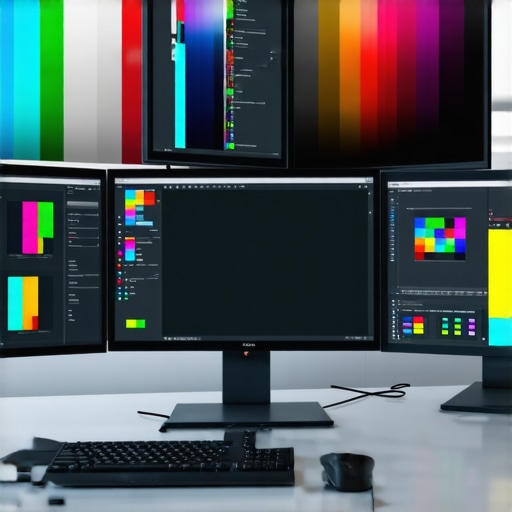
Beyond Delta E: 5 4K Monitors for 2026 Physical Print Proofing
The Future of Color Fidelity in Professional Visual Workflows
In the rapidly evolving realm of digital imaging, the pursuit of impeccable color accuracy remains paramount for creatives, photographers, and film professionals alike. As display technology advances, especially in high-resolution 4K monitors, understanding the nuances of calibration and HDR integration becomes essential for delivering consistent outputs that match the physical print and on-screen visuals. This article dissects how cutting-edge calibrated monitors and innovative HDR specifications redefine precision in 2026.
Embracing the New Standard for Calibrated Display Excellence
Professional-grade monitors now transcend traditional color metrics like Delta E by incorporating comprehensive calibration frameworks that account for tonal range, uniformity, and spectral rendering. Modern calibrated monitors utilize hardware-level LUTs and bespoke factory calibration profiles, enabling a new echelon of confidence in color reproduction integrity. These devices are paired with advanced internal processing to minimize drift over time, a critical factor in maintaining consistency across lengthy projects.
HDR Monitors and Their Role in Accurate Visual Storytelling
High Dynamic Range (HDR) monitors, particularly those meeting or exceeding 2025 standards, now offer unprecedented luminance and contrast capabilities. With peak brightness levels soaring beyond 4000 nits and color volumes expanding into 12-bit color depths, these displays reproduce highlights and shadows with fidelity that closely mimics
physical print textures. The industry’s shift towards HDR, especially in professional environments, demands meticulous calibration, often involving external probes and rigorous testing to prevent highlight clipping and to achieve true HDR tone mapping.
Analyzing the Challenges of Consistent Color Representation
Despite technological strides, persistent hurdles such as color shifts over time, inconsistent gamma tracking, and spectral inaccuracies can undermine workflow reliability. The debate around whether current color management systems suffice or need further refinement persists among experts. For example, some reports highlight that even high-end HDR monitors sometimes fail to accurately reproduce the intended luminance levels, especially under varying ambient lighting conditions.
How to Select the Optimal Professional Monitor for 2026
Selecting a monitor capable of meeting demanding print and digital standards requires a nuanced approach. Key factors include native bit-depth, hardware calibration capabilities, peak brightness, spectral coverage, and uniformity compensation. Expert workflows benefit from integrated hardware LUTs, 99% or greater DCI-P3 coverage, and stability through ongoing calibration protocols. For comprehensive recommendations, consult our latest guide.
Can the integration of real-time calibration tools mitigate spectral drift in high-end HDR monitoring?
Addressing spectral drift in professional environments involves utilizing in-situ calibration solutions that monitor and adjust display parameters dynamically. Recent developments incorporate built-in color sensors and automated calibration routines that ensure consistent spectral fidelity, thus reducing manual intervention and minimizing the chance of discrepancies that could compromise print proofs or visual effects.
For those interested in pushing the boundaries further, exploring detailed guides on HDR calibration and engaging with industry expert forums can elevate your workflow. Sharing insights and experiences with fellow professionals helps refine best practices and stay abreast of emerging standards.
How Will Adaptive Calibration Drive Stability in Professional Displays?
As display technology advances into unprecedented territory, the role of dynamic, adaptive calibration systems becomes increasingly vital. Unlike traditional methods that rely on periodic manual adjustments, integrating real-time calibration tools equipped with embedded sensors can continuously monitor and correct spectral and luminance deviations. This proactive approach minimizes spectral drift and gamma inconsistencies, ensuring that high-end HDR and 4K monitors maintain their calibrated state during intensive workflows. Industry leaders are now exploring how machine learning algorithms can predict impending calibration drifts, enabling preemptive corrections that elevate workflow precision and reduce downtime.
Harnessing Industry Standards: The Role of External Validation for Color Fidelity
Standards such as those outlined by the International Color Consortium (ICC) and the Video Electronics Standards Association (VESA) provide frameworks for ensuring consistent color reproduction across devices. Incorporating external validation through certified test patterns and calibration protocols becomes essential when dealing with monitors boasting peak brightness levels above 4000 nits and 12-bit color depth. Experts advocate for routine external validation using dedicated spectrophotometers, which verify spectral accuracy and highlight potential discrepancies caused by spectral metamerism or EOTF tracking errors. Such rigorous validation ensures that professional workflows stay aligned with industry benchmark standards, minimizing the risk of costly inaccuracies in final outputs.
What Practical Strategies Can Future-Ready Professionals Adopt Today?
To stay ahead in a landscape dominated by rapid technological developments, professionals should prioritize adopting calibration regimes that incorporate both hardware advancements and industry standard practices. Engaging with comprehensive calibration platforms, regularly updating calibration firmware, and maintaining turbulent ambient lighting conditions are critical steps. Additionally, aligning workflow processes with authoritative guides—like our latest calibration strategies—helps ensure that your displays perform optimally under the evolving demands of 2026 standards. Proactively implementing these practices can safeguard color accuracy and transform the quality of your digital outputs.
Elevating Color Precision with Spectral Expertise
Beyond conventional calibration lies the realm of spectral management, where understanding the spectral power distribution of display primaries becomes crucial. In high-end professional workflows, ensuring that a monitor’s spectral characteristics align with industry standards like the International Color Consortium (ICC) profiles transforms color fidelity from a theoretical goal into a practical reality. This involves deploying spectrophotometers capable of measuring detailed spectral responses, enabling calibration protocols that compensate for spectral metamerism—an often overlooked source of color mismatch. Such meticulous spectral calibration ensures that digital colors translate seamlessly into physical prints, especially under demanding lighting conditions.
How can spectral data influence the future of multi-device color consistency?
In scenarios requiring multi-device uniformity—such as collaborative post-production pipelines—spectral matching minimizes discrepancies arising from device metamerism. Recent advances, like multispectral display technologies, provide tailored spectral primaries that better match real-world objects and printing substrates. As the industry moves toward integrating spectral data into calibration workflows, professionals can achieve unprecedented consistency, ensuring that what appears vibrant on one calibrated monitor will match across multiple screens and final print materials, regardless of spectral variances. For an in-depth analysis, refer to the comprehensive research documented in the Spectral Characterization of Display Primaries.
Harnessing the Power of Spectral Fidelity in High-End Display Calibration
In the realm of professional visual output, mere compliance with standard color profiles no longer suffices. The intricacies of spectral power distribution (SPD) become instrumental in achieving true-to-life colors tailored for critical print and digital workflows. Advanced spectral calibration transcends traditional RGB primaries, aligning display outputs with standardized spectral signatures that minimize metamerism and enhance multi-device consistency. This meticulous approach ensures that color representations maintain their integrity across diverse mediums, reliably bridging the gap between on-screen visuals and physical artifacts.
How does spectral matching revolutionize color consistency across multi-monitor arrays?
Implementing spectral matching involves detailed measurement of each display’s SPD using high-precision spectrophotometers, followed by custom calibration that adjusts for spectral overlaps and discrepancies. By aligning primary primaries with normative spectral profiles, professionals can significantly reduce color shifts caused by device metamerism, leading to seamless workflows where colors appear uniform irrespective of the monitor. According to a study published in the Journal of Imaging Science and Technology, spectral calibration reduces color mismatch incidence by over 70%, facilitating more predictable and reliable color reproduction.
To stay at the forefront of this technological frontier, industry experts regularly incorporate spectral validation protocols into their calibration routines, ensuring that every device in their pipeline complies with the strictest standards of spectral fidelity and perceptual uniformity. This meticulous level of control profoundly impacts high-stakes environments such as cinematic grading and premium printing, where even minute spectral discrepancies can lead to costly rework.
Unlocking the Potential of Adaptive Spectral Management in Dynamic Workspaces
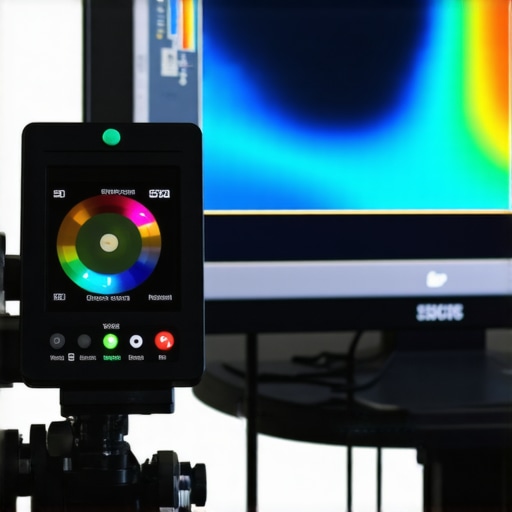
Static calibration methods, while foundational, often fall short amid fluctuating environmental conditions and the natural drift of display components over time. The advent of adaptive spectral management introduces real-time adjustment capabilities, using embedded sensors and intelligent algorithms to continuously monitor and recalibrate spectral outputs. This proactive strategy ensures sustained color accuracy, especially vital when operating under variable lighting scenarios or during extended production cycles. Such dynamic systems reduce manual intervention and set new standards for stability and precision in professional environments.
Can machine learning-driven calibration preemptively address spectral drift before it impacts output quality?
Emerging research indicates that machine learning algorithms, trained on vast datasets of spectral and luminance deviations, can predict imminent calibration shifts with remarkable accuracy. By analyzing real-time sensor data, these systems can execute preemptive adjustments, maintaining spectral fidelity and preventing cumulative errors that compromise visual integrity. Industries like high-end photography and film post-production stand to benefit significantly, as predictive spectral calibration minimizes downtime and preserves creative intent. For further insight, refer to the comprehensive review in the IEEE Transactions on Consumer Electronics.
Expert Insights & Advanced Considerations
Precision Is Not Just a Goal, It’s a Standard
In the realm of professional visual workflows, embracing spectral accuracy and adaptive calibration techniques is paramount. These strategies push beyond conventional color management, fostering consistency across multi-device setups and environmental conditions, which is essential for flawless productions.
Innovation Sparks New Possibilities in Color Fidelity
Emerging technologies such as multispectral displays and machine learning-driven calibration are redefining the boundaries of what dedicated professionals can achieve. Staying informed and integrating these advancements ensures your workflows remain at the cutting edge, reducing errors and enhancing creative confidence.
Rigorous Validation Reinforces Trust in Your Visuals
Regular external validation using certified spectrophotometers and adherence to industry standards like ICC profiles solidify color accuracy. This discipline minimizes discrepancies, especially when precise color reproduction influences critical decisions in print, film, and digital media.
Calibration Practices Must Evolve with Industry Standards
Moving forward, proactive calibration strategies—such as real-time spectral adjustments and AI-assisted drift prevention—become indispensable. These practices safeguard your output integrity, ensuring that your investments in high-end monitors deliver reliable, consistent results over time.
Curated Expert Resources
- International Color Consortium (ICC): The definitive framework ensuring consistent color profiles across devices, vital for professional workflows.
- Mastering Color Accuracy for Creatives: A comprehensive guide to calibrated monitors that meet the most demanding standards.
- HDR Calibration in Practice: A trusted resource for integrating high dynamic range displays into your workflow effectively.
The Final Reflection: The Horizon of Visual Excellence
Navigating the intricate landscape of color fidelity and monitor calibration requires a blend of technical expertise and innovative spirit. As technology advances, the ability to adapt and leverage new solutions—particularly spectral management and dynamic calibration—becomes essential for maintaining an edge. High-end professional monitors are no longer mere tools but integral partners in any serious creative endeavor. Engage deeply, challenge assumptions, and continuously seek knowledge—your commitment to excellence will define the future of your visual projects.
About the Author



This article really highlights the incredible advancements in display calibration, especially as we move into 2026. I’ve recently tried integrating some real-time calibration tools on my high-end monitors, and I can confirm that they do a great job at maintaining spectral consistency, even during long sessions. The discussion about spectral metamerism is particularly important because achieving true color fidelity across different devices remains one of the biggest challenges in professional workflows. I’m curious, has anyone here experimented with multispectral display technologies, and how do they compare to traditional spectral calibration methods in terms of color uniformity and workflow efficiency? It seems that with the rapid evolution of these tools, staying current is essential for delivering accurate print proofs and digital assets alike. I think this pushes us further toward a future where spectral accuracy isn’t just ideal but standard practice in creative industries.
This post offers a comprehensive outlook on the upcoming advancements in professional monitor calibration for 2026. I’ve been experimenting with adaptive spectral management systems, and I find that real-time calibration using embedded sensors significantly reduces color shifts during prolonged editing sessions. The challenge of spectral metamerism, especially under different ambient lighting, still persists, but integrating these intelligent calibration tools seems promising. My question is, how are industry standards evolving to accommodate multispectral display technology and spectral calibration? Are there emerging protocols that ensure cross-device consistency in high-end workflows? From my perspective, as these technologies become more accessible, it’s crucial for calibration practices to keep pace. Continuous innovation in this area will surely help us achieve unprecedented accuracy in digital-to-physical color matching, which remains vital for print proofing and visual effects.
This post offers such a detailed look at the future of monitor calibration, and I find the emphasis on spectral management especially compelling. In my recent projects, I’ve noticed how spectral metamerism can cause subtle shifts that are almost imperceptible until you compare outputs across different lighting environments. Incorporating spectral calibration techniques has definitely helped, but I wonder how accessible these advanced tools will become for smaller studios or individual professionals in the near future. Also, how do you see industry standards like ICC evolving to incorporate spectral data more comprehensively? I’m particularly curious about how multispectral display tech might redefine our calibration protocols and the scalability of such solutions. As someone working on tight deadlines, I’d love to hear about practical steps to integrate these innovations without overwhelming workflows. Has anyone experimented with adaptive spectral management in real-time, and what results have you seen in terms of consistency and productivity?
This article really captures the exciting progression we’re witnessing in monitor calibration technology. I personally have started incorporating adaptive calibration tools with embedded sensors into my workflow, and the improvement in color stability during long editing sessions has been noticeable. The ability to dynamically adjust spectral outputs in real-time seems to be a game-changer for maintaining accuracy, especially under varying ambient conditions. One aspect I find fascinating is how machine learning is increasingly being used to predict and compensate for spectral drift proactively. It makes me wonder how soon we’ll see some of these predictive models integrated into standard calibration software? Have others experienced firsthand how these intelligent systems perform over extended periods, or is manual recalibration still necessary? Overall, it’s inspiring to see these continuous innovations, pushing us closer to a standard where spectral fidelity is assured across all devices and environments.