3 Calibrated Monitors for 2026 Studios with Zero Fan Noise
Elevating Visual Fidelity: The Ingenious Intersection of Calibration and Professional Monitors
In the rapidly evolving landscape of digital content creation, the caliber of a calibrated monitor determines the success of a project. As displays become more complex, with 4k resolution and HDR capabilities, understanding how to harness their full potential becomes paramount for professionals committed to color accuracy. Calibration isn’t merely a technical step; it’s an essential process that directly influences the fidelity of visual outputs, ensuring that what you see on screen meticulously matches the final print or broadcast.
Unpacking True Color Precision in the Age of HDR and 4K
The advent of high dynamic range (HDR) and ultra-high-definition (UHD) displays has revolutionized the creative industry, yet it introduces new challenges. Monitors must accurately reproduce a broad color gamut, such as DCI-P3 or Rec. 2020, while managing brightness levels that can range up to 10,000 nits in professional-grade devices. Achieving precise color reproduction requires a synergy between hardware capabilities—like 12-bit color depth and hardware LUTs—and regular calibration routines tailored for these advanced features.
Why Color Accuracy Remains Critical for Creatives Navigating Complex Workflows
Color fidelity is the backbone of professional-grade visual projects, from cinematic post-production to commercial photography. The importance of accurate color rendition becomes particularly evident when multiple devices, each with unique spectral characteristics, are involved. Professional monitors employing high-precision IPS panels or OLED technologies with factory calibration help mitigate discrepancies, but diligent calibration remains indispensable—especially considering the inevitable drift caused by environmental factors and usage over time. For instance, a display calibrated against high-precision color standards like CalMAN or LightSpace ensures consistent outputs, fostering trust across the entire production pipeline.
How can professionals mitigate the risk of color drift in calibrated monitors during extended intensive sessions?
Addressing the persistent issue of color drift requires implementing routine calibration protocols, ideally with hardware calibration tools that can automate adjustments and document consistency. Regularly scheduled recalibrations—ranging from weekly to monthly intervals—are essential, especially for displays subjected to fluctuating ambient lighting or prolonged use. Manufacturers like Eizo and NEC produce monitors with built-in protective features such as thermal sensors and auto-calibration, thus reducing drift and maintaining the desired color accuracy. For further insights, explore our comprehensive guide to calibrated monitors and color precision.
Advanced Display Technologies Shaping the Future of Visual Workspaces
Emerging innovations such as quantum dot backlighting, microLED, and ongoing enhancements in HDR standards are pushing the boundaries of what professional monitors can deliver. MicroLED displays, with their self-emissive pixels, offer unparalleled contrast ratios and true blacks, vital for colorists requiring nuanced luminance control. Meanwhile, the integration of 10,000 nits peak brightness in HDR monitors ensures compliance with the latest mastering standards, but only if the hardware and calibration protocols are aligned. Engaging with these cutting-edge technologies demands an expert understanding of their specifications and limitations, particularly concerning color consistency and longevity.
Key Factors in Selecting Your Next Professional Calibration Partner
Choosing a monitor for professional work involves a nuanced assessment beyond resolution and refresh rate. The focus must be on color gamut coverage, uniformity, calibration stability, and hardware features such as built-in LUTs and hardware calibration ports. Notably, some displays include advanced cooling mechanisms and firmware that support ongoing calibration without performance degradation. To ensure a future-proof investment, prioritize devices capable of handling emerging standards and with proven track records in maintaining delta E values under 2 after calibration, as outlined in our ultimate guide to calibrated monitors.
Conclusion: Precision in Practice, Confidence in Output
As professional workflows become increasingly complex with higher standards for color fidelity, HDR, and 4k content, mastery over calibrated monitors becomes an indispensable skill. Embracing rigorous calibration routines, staying informed on technological advancements, and understanding the intrinsic capabilities of your display form the bedrock of authentic visual storytelling and accurate reproduction. Ultimately, calibrated monitors are not just tools—they are partners in achieving excellence and maintaining creative authority in an ever-competitive digital world.
Elevating Calibration Practices with Cutting-Edge Hardware Tools
In the quest for impeccable color accuracy, reliance solely on software calibration solutions is increasingly insufficient. High-precision hardware calibration devices, such as X-Rite i1Display Pro Plus or Klein K10-A, provide the granular control necessary to fine-tune displays at the spectral level, ensuring consistent results even under varying environmental conditions. These tools facilitate the creation of custom calibration profiles that account for individual monitor spectral responses, which is vital as display technologies evolve rapidly, incorporating new color gamuts like Rec. 2020 and higher peak brightness levels.
Are You Prepared to Handle Increasing Display Complexity and Calibration Demands?
As monitors integrate advanced features—such as hardware LUTs, HDR support, and self-calibration capabilities—professional workflows require calibration routines that leverage hardware-level adjustments. Relying on traditional software calibration methods can leave residual inaccuracies, particularly when dealing with ultra-wide color gamuts or high-dynamic-range content. Incorporating dedicated calibration hardware into daily routines ensures delta E values remain below perceptible thresholds, maintaining integrity across project stages. For a deeper understanding, check out our comprehensive guide to hardware calibration.
Harnessing Calibration Data to Predict and Prevent Color Drift
Advanced calibration tools don’t just set initial benchmarks—they enable ongoing measurement and analysis of display behavior over time. Features like sensor auto-off and logging capabilities allow professionals to identify patterns of color drift caused by aging components or environmental factors. By establishing calibration schedules based on real-time data, studios can proactively prevent deviations that compromise color fidelity. Collaborating with display manufacturers that offer firmware integration for hardware calibration further enhances stability, especially for high-end devices designed for color-critical work. To explore this in detail, visit our latest insights into color drift prevention.
What innovations in hardware calibration are set to redefine professional color management in the next decade?
Emerging technologies like multi-spectral sensors, AI-driven calibration algorithms, and cloud-enabled calibration management platforms are poised to revolutionize how professionals maintain color accuracy. These innovations promise real-time corrections, cross-device profiling, and predictive maintenance schedules, effectively future-proofing creative workflows. Industry leaders such as Datacolor and X-Rite continue investing in these developments, aligning with standards like ISO 12646 for display calibration accuracy. Staying informed about these advancements is crucial; consider subscribing to industry updates and participating in user forums to adapt swiftly to upcoming changes in calibration protocols.
For more insights into maximizing accuracy and efficiency, subscribe to our newsletter or reach out via our contact page. Remember, mastering calibration tools today ensures visual integrity tomorrow—don’t leave your workflow vulnerable to obsolescence.
Beyond Basic Calibration: Crafting a Resilient Color Management System
Simply calibrating your monitor isn’t enough; establishing a comprehensive color management system requires integrating hardware calibration tools with workflow best practices. This involves setting standardized procedures for calibration intervals, ambient lighting control, and cross-device verification. By maintaining consistent calibration routines, creative teams can ensure seamless visual experiences across editing, review, and delivery phases, thereby reducing costly revisions and ensuring client satisfaction. Implementing color standards such as ICC profiles calibrated meticulously to industry benchmarks like FOGRA39 or sRGB ensures uniformity and predictability in final outputs.
Innovative Display Technologies: The Next Frontier in Visual Fidelity
The convergence of microLED, quantum dot enhancements, and OLED advancements promises a new era of display excellence. MicroLED displays, characterized by self-emissive pixels, eliminate issues like burn-in and offer extraordinary contrast ratios—crucial for color grading professionals demanding precise luminance control. Similarly, quantum dot technology expands the color gamut, enabling coverage of standards like Rec. 2020 with remarkable accuracy. Integrating these innovations into professional workflows necessitates mastering their unique calibration requirements, such as managing pixel stability and uniformity over time. Staying ahead in this domain demands active engagement with product ecosystems evolving rapidly around these cutting-edge displays.
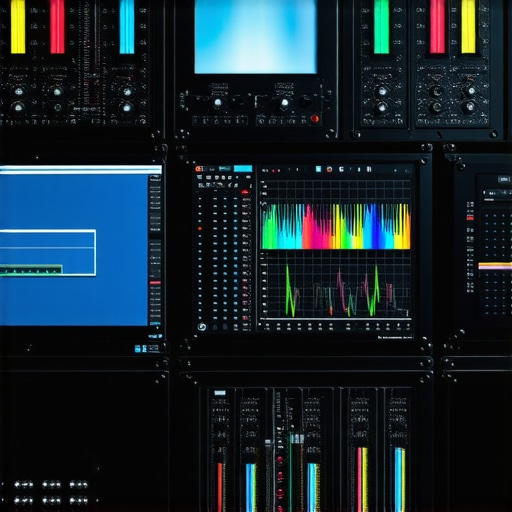
Navigating the Limitations of Hardware Calibration in High-Gamut Environments
While hardware calibration devices excel at fine-tuning complex display profiles, they encounter limitations when dealing with ultra-wide gamuts like Rec. 2020 or high peak brightness levels. These constraints are attributed to sensor spectral response overlaps, limited hardware LUT depths, and the physical characteristics of the panels themselves. For instance, achieving delta E values below 1 across the entire gamut may be unattainable due to material and manufacturing constraints. Recognizing these barriers is essential for professionals aiming to optimize workflow; it underscores the importance of comprehensive calibration strategies, including toner management, environmental controls, and periodic hardware assessments. Consulting expert-guided calibrations or collaborating with display manufacturers can further mitigate these challenges.
Why Is Cross-Device Calibration Critical for Multi-Display Environments?
In complex production setups where multiple displays operate in tandem—such as an editorial suite combining OLED reference monitors with LCD workstations—ensuring consistency across devices is paramount. Discrepancies, even minor, can lead to misinterpretations of color and luminance, ultimately affecting creative decisions. Implementing cross-device calibration and profiling—using shared calibration targets and synchronized hardware profiles—aligns color outputs effectively. Notably, using spectrally-aware calibration tools capable of creating unified profiles for devices with different spectral responses reduces mismatch risks. According to industry standards outlined by the International Color Consortium, maintaining delta E differences below 2 across all devices is considered optimal for professional applications.
The Future of Calibration: AI, Automation, and Predictive Adjustments
Artificial intelligence and machine learning algorithms are increasingly integrated into calibration hardware and software, enabling real-time adjustments that adapt to environmental changes or monitor aging components. These systems can analyze spectral deviations, predict drift trends, and automatically recalibrate displays with minimal human intervention. Such automation reduces downtime, prevents quality lapses, and enhances workflow efficiency. For example, AI-powered calibration platforms can learn a display’s unique spectral signature over time, refining profiles dynamically and ensuring consistent accuracy. As these technologies mature, stakeholders should anticipate a shift toward fully autonomous calibration ecosystems, making the task more accessible without sacrificing precision.
Are You Ready for the Next Leap in Display Calibration Technology?
Staying at the forefront of calibration advancement means actively engaging with emerging solutions—such as integration of smart sensors, cloud-based calibration management, and adaptive algorithms—designed to serve high-precision industries. Leaders investing in these innovations will unlock unprecedented consistency, reduce calibration cycles, and future-proof their workflows against rapid technological evolution. Dive into industry reports, participate in professional forums, and consult with calibration hardware specialists to identify solutions aligned with your specific needs. Remember, embracing next-gen calibration isn’t optional but essential for those aiming to maintain a competitive edge in visual fidelity mastery.
Push the Limits with Next-Gen Color Reproduction Techniques
As display technology accelerates into uncharted territories, professional-grade monitor calibration must evolve beyond traditional methods. Incorporating spectral measurement tools with multi-dimensional profiling allows for capturing subtle color shifts and luminance variations, especially critical when working with emerging wide-gamut displays like Rec. 2020 or Dolby Vision-enabled screens. These advanced techniques facilitate future-proof workflows, ensuring your color grading maintains integrity amid rapid hardware advancements and environmental fluctuations.
Expert Strategies to Combat Long-Term Color Stability Challenges
Maintaining consistent color fidelity over extended periods entails a multi-layered approach integrating hardware solutions and environmental controls. Employing dual-sensor calibration devices that continuously monitor display parameters enables predictive adjustment models, anticipating drift before it impacts your work. Additionally, implementing controlled ambient lighting environments minimizes external influences, safeguarding your calibrated state. Always factor in display age and usage intensity to preemptively schedule recalibrations, aligning with industry standards such as those specified by the International Color Consortium.
What sophisticated calibration protocols can professionals implement to safeguard against spectral inaccuracies in ultra-wide gamuts?
Addressing spectral inaccuracies requires integrating spectroradiometric calibration instruments capable of resolving minute spectral discrepancies across the entire color spectrum. Combining these data with vendor-specific calibration firmware ensures that tonal relationships remain precise, particularly vital when handling HDR and high-bit-depth content. Detailed spectral profiles assist in creating customized LUTs tailored not just for color accuracy but also for spectral fidelity, essential for high-end color grading and visual effects integrations. Consult authoritative technical resources such as the SMPTE standards documentation for comprehensive calibration frameworks.
Revolutionizing Visual Fidelity with Adaptive Calibration Technologies
Innovation is streamlining calibration routines through the advent of AI-driven adaptive systems. These intelligent platforms continually analyze environmental variables, display performance metrics, and user interactions, adjusting calibration profiles dynamically to sustain optimal accuracy. For instance, adaptive algorithms can compensate for thermal fluctuations and OLED pixel aging, ensuring color consistency without manual intervention. Deploying these technologies requires an understanding of their underlying models and limitations, underscoring the importance of partnering with vendors pioneering these solutions.
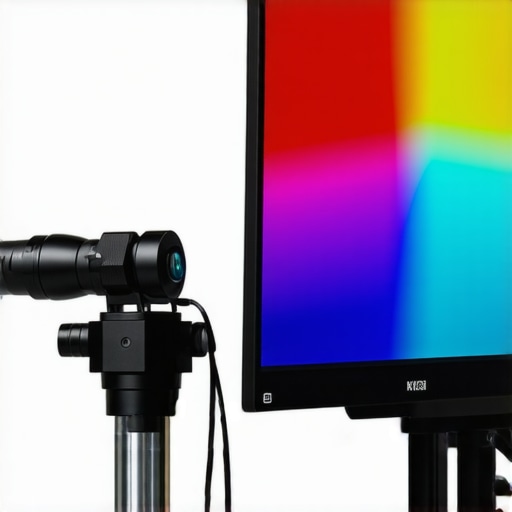
Integrating Multispectral Data for Unmatched Consistency
Leveraging multispectral imaging data extends calibration precision by accounting for spectral responses unique to each display unit. This approach enables the creation of highly granular models that align spectral characteristics across multiple devices, forming the backbone of cohesive multi-monitor workflows. Such meticulous profiling is especially beneficial for high-end content creators involved in cinematic color pipelines, where even slight deviations can compromise artistic intent. Professionals should consider investing in multispectral sensors compatible with existing calibration software and subscribing to industry consortium updates delineating best practices in spectral management.
How can professionals exploit AI to predict and correct spectral shifts before they manifest visually?
AI models trained on extensive spectral data sets can forecast potential shifts by identifying subtle patterns of aging or environmental impact. Integrated into calibration hardware, these systems enable preemptive adjustments, ensuring spectral accuracy remains within perceptual thresholds. Implementing machine learning algorithms that continuously learn from real-time spectral feedback transforms reactive calibration into proactive maintenance, elevating the standard of color fidelity assurance. Industry-leading calibration platforms are increasingly embedding such capabilities, underscoring their importance in future workflows.
Future-Proofing Your Workspace with Modular Calibration Ecosystems
Embracing modular calibration infrastructures allows for scalable and adaptable color management frameworks. By combining hardware calibration units, centralized data repositories, and cloud synchronization, studios can dynamically update profiles tailored to each project’s unique requirements. This setup supports seamless integration with emerging display technologies, complex multi-projection environments, and virtual production setups. Ensuring interoperability and security within these ecosystems mandates adherence to industry standards and rigorous vendor validation, ultimately empowering creative teams to stay agile amidst technological evolution.
Embrace the Cutting Edge and Elevate Your Visual Precision
Staying at the forefront of calibration technology isn’t merely advantageous; it’s essential for maintaining competitive excellence. Engage with ongoing industry research, participate in calibration workshops hosted by recognized standards organizations, and cultivate relationships with innovative vendors pushing the boundaries of display accuracy. Your commitment to continuous learning and technological adoption not only enhances visual fidelity but also signifies your leadership in a highly exacting creative domain. Remember, the investment in advanced calibration tools and knowledge directly translates into superior output quality and enduring reputation among clients and peers alike.
Expert Insights & Advanced Considerations
Leverage multispectral calibration for spectral fidelity
In high-end color workflows, employing multispectral measurement tools enhances calibration precision by capturing subtle spectral shifts, ensuring consistent accuracy across complex display technologies like Rec. 2020 and Dolby Vision. This level of detail aids professionals striving for perfection in every hue and luminance gradient.
Implement real-time adaptive calibration systems
Emerging AI-driven calibration platforms dynamically adjust display profiles based on environmental changes and display aging, maintaining unwavering color fidelity without manual intervention. Such proactive systems are indispensable for critical projects demanding relentless consistency.
Prioritize cross-device harmony in multi-monitor setups
Using spectrally-aware calibration tools to generate unified profiles across various display technologies minimizes color discrepancies, ensuring seamless visual experiences in complex editing pipelines—vital for collaborative and high-precision environments.
Anticipate hardware limitations with spectral profiling
Recognize that ultra-wide gamuts like Rec. 2020 challenge calibration devices due to spectral overlaps; integrating specialized spectroradiometers and customized LUTs can mitigate these issues, aligning color output closely with standards.
Stay ahead with cloud-enabled calibration management
Utilizing cloud-based platforms allows for centralized monitoring, remote calibration updates, and historical tracking, enabling distributed teams to uphold consistent color standards regardless of location, boosting productivity and quality assurance.
Curated Expert Resources
- SpectraCal Technical Guides: Offers in-depth methodologies for spectral calibration and device profiling essential for mastering color accuracy in advanced workflows.
- ISO 12646 Standards Documentation: Provides authoritative benchmarks for display calibration accuracy, ensuring compliance in professional environments.
- International Color Consortium Profiles: Resources for creating and managing ICC profiles tailored for high-gamut displays and cinematic grading.
- Industry Forums and Conferences: Engage with communities like the Society for Information Display (SID) to stay informed about cutting-edge calibration techniques and technologies.
- OEM Calibration Firmware Updates: Regularly consult manufacturer resources for firmware enhancements that improve spectral accuracy and calibration stability.
Elevate Your Perspective and Lead the Field
Achieving mastery in monitor calibration extends beyond routine procedures—it’s about pushing the boundaries of spectral fidelity and adaptive precision. These insights and trusted resources position professionals at the forefront of visual excellence. Embrace continuous learning, contribute your expertise, and set new standards for color accuracy. Dive deeper into the realm of calibrated displays and discover how the innovation of tomorrow can redefine your creative workflow—visit our comprehensive guide to professional calibration and stay inspired to elevate your craft.
About the Author