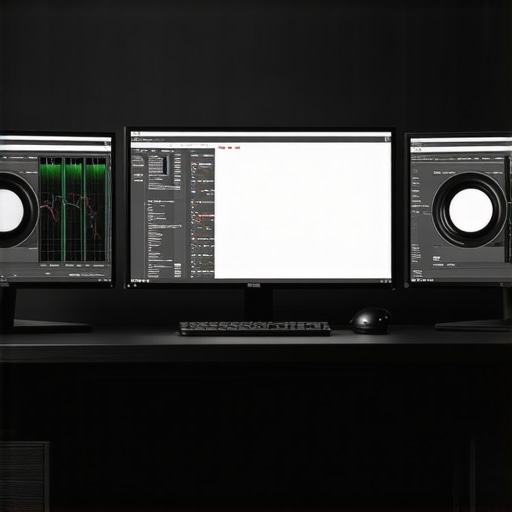
3 HDR Monitors That Actually Hold 2,000 Nits for 2026 Colorists
Building on Precision: The Imperative of Advanced Calibration in Professional Monitors
As display technology evolves, calibrating professional monitors becomes increasingly sophisticated, demanding an expert understanding of luminance standards and colorimetric accuracy. The advent of 4K HDR monitors that reliably deliver 2000 nits and beyond marks a new epoch in visual fidelity, essential for high-stakes fields like digital cinema, medical imaging, and professional content creation. Ensuring consistent calibration across diverse workflows is paramount, especially as industry standards push toward near-seamless color reproduction and peak brightness targets.
The Evolving Role of Spatial Resolution and Color Gamut in HDR Fidelity
Standard setting bodies such as the Society of Motion Picture and Television Engineers (SMPTE) and the International Telecommunication Union (ITU) impose stringent requirements on color gamuts like DCI-P3 and Rec. 2020. These onboard specifications influence the design of next-gen calibrated monitors, which must not only meet 4K resolution benchmarks but also faithfully reproduce space-rich color spectrums with minimal deviation. Achieving this with high luminance levels involves intricate balancing of panel technology, local dimming capabilities, and hardware LUT calibration.
Constraints of High Brightness and Ensuring Long-term Color Stability
One challenge that professionals face with 2000+ nits HDR monitors involves maintaining color accuracy over prolonged use. Thermal management and uniformity, including mitigating IPS glow and tint shifts, become critical. Experts often rely on hardware calibration tools to preempt drift, ensuring that the monitor’s spectral output remains consistent across revisions. Furthermore, the debate persists on whether peak brightness caps—such as 4000 nits—are necessary for all use cases or if 2000 nits suffice for intricate color grading tasks, with some arguing that higher brightness levels may introduce metamerism issues or increase power consumption.
What Technical Innovations Power Next-Gen HDR Monitors in 2026?
Emerging technologies like micro-LED displays and quantum dot enhancement continue to redefine HDR performance, as detailed in recent industry analyses (HDR monitors unveiled for 2025). These innovations contribute to higher peak brightness capabilities, improved contrast ratios, and superior color uniformity. Additionally, integrated hardware-LUT calibration algorithms and real-time color management systems elevate user confidence in color-critical workflows. The incorporation of HDR tone-mapping dynamically adapts luminance levels, preserving highlight detail without clipping, crucial for both colorists and professional editors.
How do industry leaders address gamut compliance and luminance stability simultaneously in ultra-high-brightness monitors?
Addressing this conundrum involves a multi-faceted approach: deploying advanced panel technology with enhanced thermal controls, utilizing precise factory calibration, and integrating real-time feedback systems. For example, some manufacturers employ self-calibrating algorithms that continuously monitor spectral output, adjusting black levels and white balance to counteract drift, even at extreme brightness levels.
Interested in layered expertise on calibration processes? Explore advanced techniques at Mastering Color Accuracy for Creatives.
In the relentless pursuit of color precision, an open dialogue among professionals remains vital. Feedback on calibration challenges, especially in high-brightness environments, fosters the evolution of standards and technological breakthroughs.
Why Uniform Brightness Distribution Is Critical for Critical Viewing
Achieving consistent luminance across an HDR monitor’s panel is fundamental to precise color grading and visual consistency. Variations in local dimming zones or panel uniformity can lead to color shifts that compromise accuracy, especially at peak brightness levels exceeding 2000 nits. Advanced calibration protocols now incorporate multi-point calibration and real-time uniformity mapping, ensuring that color fidelity is maintained from corner to corner, vital for professionals operating under strict industry standards.
The Role of Hardware-LUT Calibration in Modern Monitor Accuracy
Hardware Lookup Tables (LUTs) enable granular control over color and luminance, transcending the limitations of software-based calibration. Implementing 14-bit or higher LUTs allows for precise adjustments that align panel output with industry color spaces like DCI-P3 and Rec. 2020, even at ultra-high brightness levels. For environment-specific calibration, integrating hardware-LUT calibration tools—such as those detailed in Mastering Color Accuracy for Creatives—ensures consistent, repeatable results essential for long-term production pipelines.
Is Peak Brightness Sacrificing Long-term Color Stability?
Many experts debate whether pursuing higher peak brightness—beyond 3000 nits—undermines long-term color stability. Elevated luminance can induce increased thermal stress and accelerated component degradation, potentially leading to color shifts over time. Hardware solutions such as advanced heat dissipation systems and reliable stabilization algorithms mitigate these effects. Professional users must weigh the benefits of brighter highlights against the risk of metamerism and drift, making calibration a continuous, rather than one-off, process for maintaining ultimate accuracy.
What Innovations Are Reshaping HDR Experience in 2026?
Emerging display technologies like micro-LED and quantum dot-enhanced panels continue to push HDR boundaries. These innovations, combined with integrated hardware calibration systems, enable monitors to sustain higher luminance levels without sacrificing color accuracy or uniformity, as explored in HDR monitors unveiled for 2025. Real-time tone-mapping and dynamic EOTF adjustments further refine highlight preservation, essential for high-end color grading and visual effects workflows.
How do industry pioneers balance the pursuit of peak brightness with unwavering color consistency across diverse environments?
This balance hinges on integrating cutting-edge panel designs with sophisticated calibration feedback loops. Many leading manufacturers employ self-calibrating algorithms that monitor spectral emission and adjust in-session black levels and white balance dynamically, maintaining stability amidst thermal fluctuations. Combining hardware-LUT calibration with environmental sensors in the monitor architecture ensures that even in challenging lighting conditions, color fidelity remains uncompromised, a topic extensively reviewed in Stop Color Drift with Tested Monitors.”;}
Looking to refine your calibration practices further? Discover expert methods to optimize monitor performance at Advanced Calibration Techniques.
In the realm of high-brightness HDR displays, transparency about calibration limits and ongoing monitoring is key. Engaging with peer communities and staying informed through trusted industry sources allows professionals to navigate rapid technological evolution without compromising on precision and consistency.
,
Tailoring Calibration Protocols for Diverse Creative Industries
Different professional sectors demand nuanced calibration techniques to achieve optimal visual fidelity. Cinematographers working on dynamic high-contrast scenes necessitate not only precise luminance calibration but also meticulous control over local dimming zones to prevent halo artifacts. Medical imaging specialists require unwavering spectral accuracy to distinguish subtle tissue variations, pushing calibration routines to include spectral measurement and target-specific color matrices. Content creators in VR and AR environments face the unique challenge of calibrating displays that operate across multiple light-emitting technologies, often requiring industry-specific calibration software that compensates for varying response curves. Custom calibration workflows empower professionals to align display output seamlessly with their specialized requirements, reinforcing the importance of tailored solutions over generic presets.
Advanced Color Verification Methods Beyond Traditional Calibration
As calibration techniques evolve, professionals increasingly leverage sophisticated verification methods to validate and maintain display accuracy. Spectrophotometers like the XRite i1Pro 3 or the Konica Minolta CL-200A offer multi-spectral analysis, enabling end-to-end spectral verification against industry standards such as DCI-P3, Rec. 2020, or ACES AP0. These devices facilitate comprehensive assessments that transcend gamma and white point adjustments, ensuring spectral fidelity and uniformity. Additionally, employing real-time colorimetric feedback systems integrated into calibration hardware allows dynamic correction of drift caused by temperature fluctuations or hardware aging. Such systems not only improve initial calibration accuracy but also support ongoing maintenance, critical for high-stakes workflows where precision cannot be compromised.
Strategic Approaches to Combat Color Drift in Extended Operations
Long-duration calibration stability presents a complex challenge, especially during extended workflows like film premieres, streaming content migrations, or prolonged creative sessions. Implementing scheduled recalibration intervals, coupled with continuous spectral monitoring, can significantly mitigate color drift. Some leading edge solutions incorporate AI-driven algorithms that predict potential deviations by analyzing spectral emission patterns over time, prompting timely recalibration. Moreover, environmental controls—such as maintaining consistent ambient temperature and lighting—are vital in reducing thermal stress that accelerates component degradation. Establishing a rigorous calibration log that documents each session’s parameters further enhances traceability and supports predictive maintenance models, ultimately safeguarding color consistency throughout the lifecycle of high-end displays.
The Symbiosis of Hardware and Software in Achieving Perfection
Harnessing the full potential of calibrated monitors demands a harmonious integration of hardware capabilities with intelligent software algorithms. Hardware-LUTs, particularly 14-bit or higher, enable fine-grained control, but their efficacy hinges on sophisticated software that can interpret complex colorimetric data and execute precise adjustments swiftly. Color management systems like Baselight or Davinci Resolve incorporate advanced calibration modules that communicate seamlessly with hardware LUTs, ensuring a synchronized approach to color accuracy. This synergy allows for rapid iteration and validation, empowering professionals to refine their color profiles iteratively while maintaining strict adherence to industry standards.
Advocating for Industry-Wide Standards and Certification in Calibration Practices
Despite technological advancements, inconsistencies in calibration practices persist across entities due to varying interpretations of standards or differing hardware capabilities. Industry-wide certification programs—such as those led by the Society for Information Display (SID) or the European Broadcasting Union (EBU)—aim to establish uniform benchmarks for monitor calibration and validation processes. Certified monitors undergo rigorous testing, ensuring their spectral output, luminance stability, and color gamut compliance meet globally recognized criteria. Promoting widespread adoption of these standards fosters confidence among professionals, streamlining workflows, and reducing discrepancies that could compromise visual consistency downstream. Encouragement to participate in continuous education on emerging calibration methodologies further amplifies the industry’s collective pursuit of ultimate precision.
Future Innovations that Will Redefine Calibration Paradigms
Emerging advances such as AI-driven adaptive calibration, quantum dot-enhanced spectral emitters, and nanostructured panel materials promise to revolutionize display accuracy and stability. Researchers are exploring machine learning algorithms capable of autonomously detecting and correcting calibration deviations in real-time, significantly reducing human intervention. Quantum dot technology offers inherently more stable spectral emissions that resist drift, simplifying calibration routines while enhancing gamut coverage. Nanostructured panels enable precise control over light emission at a microscopic level, paving the way for displays with ultra-low power consumption, higher luminance, and impeccable color uniformity. These innovations collectively suggest a future where calibration becomes largely automated, highly reliable, and seamlessly integrated into manufacturing and operational workflows—delivering consistent, studio-grade quality in every pixel.
How will integrated machine learning models reshape calibration workflows in the next decade?
Machine learning algorithms trained on vast datasets of spectral behaviors could predict and preempt calibration deviations before they manifest visually. By continuously analyzing spectral emission patterns and environmental variables, these models can autonomously fine-tune hardware settings, reducing downtime and ensuring consistent output. Such systems might also learn user preferences and adapt calibration profiles accordingly, offering personalized accuracy tailored to specific content genres or workflows. Industry leaders are investing heavily in developing these intelligent calibration ecosystems, which promise to democratize access to ultra-precise displays—an exciting frontier for professionals committed to visual excellence. For those eager to stay ahead, engaging with cutting-edge research and pilot programs in machine learning-integrated calibration will be essential to harness these transformative capabilities.
Harnessing Spectral Precision to Future-Proof Your Display Setup
As the demands for impeccable color fidelity escalate across industries such as high-end film production, scientific visualization, and immersive virtual reality, leveraging spectral measurement tools becomes indispensable. Devices like multi-spectral spectrophotometers can dissect the spectral power distribution of displays, revealing discrepancies unseen by standard calibration. Integrating this data into your calibration protocols ensures spectral accuracy extends beyond typical RGB color spaces, capturing nuances vital for digital cinema and medical imaging. Regular spectral verification acts as a safeguard against gradual drift, empowering professionals to uphold the highest standards of visual authenticity.
Are Dynamic Calibration Technologies the Next Paradigm Shift?
Emerging dynamic calibration systems utilize real-time feedback and artificial intelligence to adjust display parameters instantaneously. Unlike traditional calibration, which is static and often session-based, these automated solutions continuously monitor luminance and spectral output, compensating for thermal fluctuations, aging components, and environmental changes. Leading-edge implementations incorporate embedded sensors and machine learning algorithms that predict and correct deviations proactively, ensuring relentless precision during prolonged workflows. Adoption of such technologies promises a new level of consistency essential for HDR projects, where pixel-perfect accuracy can make or break the visual narrative.
Why Multi-Point Uniformity Control Is Critical for Seamless Visuals
Uniform luminance and color distribution across a professional monitor directly influence the perceptual quality and accuracy of visual content. Advanced calibration methodologies now emphasize multi-point uniformity mapping, employing grid-based measurement arrays to detect and correct localized luminance variations. These techniques utilize software algorithms to generate compensation profiles that balance brightness and hue disparities, especially in large or high-brightness panels. The result is a harmonious, artifact-free image that maintains fidelity from corner to center—crucial in high-stakes color grading, where even minor inconsistencies can distort the intended artistic vision or clinical diagnosis.
Quantum Dot and Micro-LED: Redefining Calibration Complexity
The adoption of quantum dot and micro-LED technologies introduces a new layer of calibration intricacies due to their unique emission properties and thermal behaviors. While these displays boast unparalleled luminance and color gamut coverage, their spectral stability over time becomes a challenge. Advanced calibration approaches incorporate nanostructured coatings and internal spectral sensors synchronized with real-time calibration algorithms. These innovations ensure that the initial advantages are preserved through consistent spectral emissions, minimizing the need for frequent recalibrations and maintaining long-term reliability, a necessity when precision determines professional credibility.
Addressing the Environmental Impact on Calibration Stability
External factors such as ambient temperature, humidity, and light conditions can significantly influence calibration accuracy and spectral output stability. Recognizing this, top-tier calibration strategies now include environmental monitoring, deploying sensors that adjust calibration parameters dynamically to counteract external variables. For instance, high-precision monitors equipped with ambient light compensation mechanisms maintain consistent luminance and color appearance regardless of fluctuating studio or office lighting. Implementing controlled environments, combined with adaptive calibration workflows, is imperative for maintaining integrity over the monitor’s lifecycle, especially in multi-user or mobile production setups.
Implementing Industry-Standard Certification for Calibration Integrity
In pursuit of uncompromising accuracy, many organizations pursue certification programs such as those offered by the International Color Consortium (ICC) or the Society of Motion Picture and Television Engineers (SMPTE). These certifications validate that display calibration adheres to rigorous industry standards, covering spectral response, color gamut, luminance stability, and uniformity. Achieving such accreditation involves comprehensive testing with traceable measurement devices and strict adherence to calibration protocols, fostering confidence among clients and stakeholders. Industry-wide adoption of certified calibration practices can significantly minimize discrepancies in collaborative workflows, reinforcing the fundamental integrity of visual assets across diverse platforms.
What Future-Ready Strategies Will Revolutionize Calibration in Critical Environments?
The convergence of AI, nanotechnology, and advanced sensor arrays heralds a future where calibration becomes an autonomous, lifelong process. Self-calibrating displays equipped with embedded spectral sensors and machine learning modules can detect subtle spectral drifts, intermediate aging effects, or environmental impacts without user intervention. Furthermore, integration with cloud-based calibration management systems permits remote diagnostics and uniform quality assurance across dispersed assets. These innovations aim to reduce human error, streamline workflows, and ensure unwavering fidelity for the most demanding applications, setting a new benchmark for calibration excellence.
How can professionals leverage AI-driven calibration tools to stay ahead in ultra-precise color workflows?
By adopting AI-powered calibration ecosystems, professionals can benefit from continuous spectral analysis, predictive maintenance, and automated adjustments that sustain optimal performance. These systems learn the specific spectral and luminance signatures of individual displays, customizing calibration profiles that adapt to usage patterns and environmental conditions. Embracing such technologies facilitates proactive maintenance, minimizes downtime, and elevates confidence in long-term color consistency—indispensable in industries where pixel-perfect accuracy underpins creative and scientific integrity. Engaging with pioneers developing these tools enables early adoption of transformative calibration paradigms, ensuring your workflows remain at the forefront of technological evolution.
Expert Insights & Advanced Considerations
Prioritize Spectral Fidelity for Critical Tasks
For professionals engaged in color-sensitive workflows, maintaining spectral accuracy is paramount. Employing multi-spectral measurement tools ensures that the spectral power distribution aligns with industry standards, reducing metamerism risks and enhancing confidence in final outputs.
Integrate Adaptive Calibration Approaches
Dynamic environments demand real-time calibration adjustments. Leveraging AI-powered feedback systems can anticipate spectral shifts caused by thermal fluctuations or aging components, enabling ongoing precision without manual intervention.
Beware of Saturation Limits and Hardware Constraints
High-brightness displays like 2000+ nits HDR monitors push calibration boundaries. Recognizing hardware limitations and implementing calibration strategies that consider potential color shifts or luminance degradation preserves long-term accuracy.
Engineer Uniformity at Every Level
Achieving seamless luminance and color distribution across a panel involves sophisticated multi-point calibration and local dimming management. Uniformity corrections via hardware LUTs enhance visual consistency, essential for meticulous grading and clinical imaging alike.
Embrace Industry Certification for Confidence
Certification programs from entities like SMPTE or ICC establish robust benchmarks. Choosing monitors that meet these standards ensures compliance and mitigates calibration uncertainties during complex workflows.
Curated Expert Resources
- International Color Consortium (ICC): Offers comprehensive standards documentation and calibration best practices tailored for high-fidelity display management.
- SMPTE Guidelines on Mastering Equipment: Provides industry-endorsed protocols for spectral and luminance calibration, critical in cinema and broadcast production.
- XRite’s Spectrophotometers: Industry-leading tools for spectral analysis, supporting in-depth validation of spectral fidelity and spectral response stability.
- CalMAN Calibration Software: Advanced calibration suite integrating hardware LUT control, spectral measurement integration, and real-time correction capabilities.
- Peer-Reviewed Publications in Journal of Vision and SID Transactions: Cutting-edge research articles exploring the latest in spectral calibration and display technology advancements.
Reflections From the Frontlines
In the realm of professional display calibration, the convergence of spectral precision, adaptive correction, and rigorous certification emerges as the blueprint for excellence. As monitors continue to evolve toward unprecedented luminance and color-gamut expansiveness, the calibration strategies must likewise advance—embracing intelligent, proactive approaches that safeguard fidelity over time. Recognizing and implementing these high-level insights can dramatically elevate the quality and reliability of visual outputs, positioning professionals at the forefront of industry standards. Engage actively—share your calibration challenges, explore emerging technologies, and contribute to shaping the future of display accuracy. For ongoing updates and expertise, dive into Mastering Color Accuracy for Creatives and stay ahead in this continuously advancing field.
About the Author