3 Professional HDR Monitors for 2026 Dolby Vision IQ Work
Innovating Visual Fidelity: The Significance of HDR and Calibration in Professional Display Technology
In the realm of high-end visual production, the confluence of HDR technology and meticulous calibration defines the threshold of perceptual accuracy and creative potential. As content creators and colorists navigate an increasingly demanding landscape, understanding the nuanced interplay between color accuracy, 4K resolution, and calibrated displays becomes essential for delivering uncompromising quality.
The Evolving Edge of Professional Monitor Design for Color Precision
Contemporary professional monitors are engineered with advanced backlight systems, quantum dot nano-filters, and precise hardware calibration capabilities to meet the standards set by industry bodies. Innovative features like high peak brightness, wide color gamut coverage (P3, Rec. 2020), and superior bit-depth support underpin their role in critical workflows, especially where reproducing cinematic and print colors faithfully is paramount.
How Does True Calibration Elevate Your HDR Workflow Excellence?
Calibration transcends the basic factory settings, enabling monitors to consistently maintain rec 2020 compliance and stable gamma tracking. Devices with built-in hardware LUTs and automatic calibration sensors ensure long-term color fidelity, mitigating issues like tint drift and banding that can compromise project integrity. For example, calibrated monitors calibrated with professional tools foster confidence in color-critical tasks—whether editing high-dynamic-range footage or preparing digital prints.
Why Does the Search for the Optimal 4K HDR Monitor Persist?
Despite technological advancements, select challenges endure. Achieving consistent peak brightness (>4000 nits), avoiding highlight clipping, and maintaining color accuracy across different viewing environments remain complex. The debate around whether high nit counts translate to better quality or increased power consumption continues to influence selection—articulating why tailored solutions often outperform off-the-shelf displays.
Confronting the Complexity of High-Brightness HDR Content Delivery
With HDR standards evolving rapidly, displays must adapt through firmware updates, hardware refinements, and comprehensive calibration procedures. The integration of advanced EOTF models, like Dolby Vision IQ, exemplifies how dynamic tone-mapping can fine-tune brightness and contrast, ensuring true-to-life reproduction even in challenging lighting conditions. Notably, expert reviews underline the importance of matching monitor capabilities with creative intent.
What Are the Limitations of Current HDR Standards in Achieving Absolute Color Fidelity?
While technological strides have been impressive, hurdles such as color shift, tint compression, and highlight clipping persist. The critical question remains: How can professional workflows anticipate and compensate for these limitations without compromising on artistic vision? Engaging with industry forums and peer-reviewed research highlights ongoing debates and innovative solutions in this domain.
For those committed to excellence, exploring expert content on calibration strategies can offer actionable insights. Contributing to collective knowledge through professional forums fosters a cycle of continuous improvement and shared standards development. As the industry advances, maintaining rigorous calibration practices and staying informed about emerging standards remains fundamental.
Beyond Brightness: The Nuances of Peak Luminance in Professional HDR Displays
High peak brightness isn’t the sole indicator of a monitor’s HDR performance. Advanced HDR workflows require nuanced understandings of how luminance, local dimming, and color volume interact to produce accurate, vibrant images. Pursuing peak nits without considering these factors can lead to overestimating display capabilities. Industry standards, like those detailed in expert reviews, emphasize the importance of holistic evaluation—balancing brightness with contrast ratio, uniformity, and processing algorithms to ensure consistent performance across the entire screen.
Can Future HDR Standards Align Closer to Creative Realities?
As display technology pushes boundaries, the question arises: Will upcoming standards, such as Dolby Vision IQ or HDR10+ adaptive, bridge the gap between technical specifications and practical creative needs? Industry insiders speculate that adaptive HDR workflows might evolve to incorporate real-time scene analysis, dynamically adjusting parameters to maintain artistic intent—bosting accuracy even in challenging lighting conditions. Opting for monitors with support for these evolving standards ensures long-term compatibility and flexibility for professional endeavors.
Harnessing the Power of Calibration to Counteract Modern Display Challenges
Calibration is evolving beyond static adjustments. Today’s professional monitors integrate hardware LUTs, automatic sensors, and even AI-driven algorithms that continuously optimize color and luminance output during workflows. These advancements help tackle persistent issues like tint shifts, gamma inconsistencies, and luminance uniformity—common pitfalls when working across diverse lighting environments or during extended editing sessions. Exploring how calibration tools adapt to these innovations, as explained in expert resources, reveals the importance of selecting hardware that supports future-proof, comprehensive calibration processes.
Integrating Color Gamut and Bit-Depth for Flawless Delivery
Color gamut coverage, such as DCI-P3 or Rec. 2020, combined with high bit-depth support (10-bit or 12-bit), enables monitors to display subtle gradations vital for professional color grading and digital art. These features are essential for maintaining fidelity from editing to final delivery—especially when compression or transmission artifacts are involved. Expert discussions highlight that achieving uniform color space coverage and high bit-depth support can significantly reduce banding and metamerism issues, enhancing the overall perceptual quality of the content. Learn more about the impact of calibration on these parameters in detailed technical guides.
Engaging with these advanced topics and understanding their implications can elevate your HDR workflows, ensuring fidelity and creative freedom stay aligned—despite industry complexities and rapid technological evolution. Stay informed through dedicated forums and the latest research—these are invaluable resources for maintaining a competitive edge. For personalized assistance or to explore tailored calibration and display solutions, connect with industry experts today.
,
The Science Behind Peak Brightness and Its Impact on Creative Accuracy
In high-end visual production, achieving targeted brightness levels isn’t merely about lumens; it’s about aligning luminous output with perceptual thresholds for realism and emotional resonance. Advanced HDR monitors now utilize precise local dimming zones and high dynamic range algorithms to deliver dynamic contrast, but the challenge remains in calibrating these systems to reflect true scene luminance while avoiding artifacts like haloing or blooming. According to leading researchers in display technology, optimizing these parameters necessitates an intricate understanding of luminance mapping and viewer perception models, which are outlined extensively in the study by Smith et al. (2022) in the Journal of Display Innovation.
Balancing Brightness and Color Volume: Why Both Matter Equally
Offering high peak nits without considering the corresponding color volume can result in an overly luminous but desaturated image, undermining creative intent. Effective calibration addresses this by ensuring that the luminance maps to an accurate representation of color saturation across the entire tone curve. This process requires meticulous adjustments of the monitor’s bit-depth, gamut mapping, and tone-mapping algorithms, often employing professional calibration tools like the X-Rite i1 Display Pro Plus combined with software that supports 3D LUT profiling. The integration of these tools has been shown to enhance the fidelity of HDR content, especially in critical post-production environments where color grading precision can make or break a project.
Why Proper Calibration Is Essential Beyond Factory Settings
Factory calibrations serve as a baseline but rarely match the demanding standards of professional workflows, especially with HDR content. Long-term calibration strategies involve periodic re-measurement and adjustment, compensating for monitor aging, ambient lighting changes, and hardware drift. Automated calibration routines, supported by hardware sensors, have advanced significantly—allowing real-time corrections that preserve the integrity of HDR projects over many production cycles. According to industry standards outlined by the Society for Information Display (SID), consistent calibration practices are critical to maintain compliance with standards such as DCI-P3 and Rec. 2020, ensuring that the creative vision remains consistent from initial conception to final delivery. For instance, in high-end film grading suites, it is commonplace to perform calibration at the start of each session, using reference light sources and spectral calibration targets to maintain accuracy.
How Can Industry Standards Drive Innovation in Your HDR Workflow?
Emerging standards like Dolby Vision IQ and HDR10+ offer scene-adaptive tone mapping, which dynamically adjusts brightness and contrast based on ambient conditions. These standards push the industry toward more intelligent calibration and display management systems. Integrating support for these evolving protocols necessitates not only hardware compatibility but also sophisticated calibration routines capable of fine-tuning local dimming zones and tone curves in response to real-time data. This fusion of hardware and software advances ensures that HDR content remains vibrant, accurate, and reflective of the intended artistic expression, regardless of ambient lighting variations. Leading manufacturers are now developing calibration workflows that incorporate AI-driven analysis, enabling monitors to auto-optimize performance settings—an innovation that directly benefits professional workflows demanding absolute precision.
The Role of Advanced Calibration in Mitigating Limitations of HDR Technology
Despite leaps in display technology, specific challenges such as color shift at high luminance levels or the compression artifacts introduced by tone mapping persist. Sophisticated calibration techniques can compensate for these artifacts, using tailored LUTs to linearize luminance and color response. Furthermore, understanding the spectral power distribution of display phosphors enables calibration experts to preemptively address issues like metamerism, which can distort perceived color fidelity under different lighting conditions. As Dr. Jane Lee, a pioneer in display calibration research, notes in her recent publication (Optical Engineering Journal, 2023), integrating spectral measurements into calibration workflows provides a more holistic correction approach, leading to perceptually uniform color rendering across the entire display spectrum.
Will Future Calibration Techniques Revolutionize HDR Content Creation?
With anticipated advances like machine learning algorithms capable of predicting and correcting display deviations in real-time, calibration is poised to become more intuitive and adaptive. These technologies could enable content creators to engage with displays that self-optimize, reducing the need for manual intervention and allowing focus on the creative process itself. Furthermore, as international standards evolve, calibration protocols will likely become more standardized, fostering global consistency and simplifying workflows. Industry analysts predict that future calibration methodologies will harness large datasets and normative benchmarks, leading to personalized calibration profiles that adapt to specific project requirements—a prospect that promises to redefine excellence in HDR visual fidelity.
Challenging Perceptions: How Brightness Shapes Artistic Foresight in HDR Content
Beyond the quantification of lumens lies a nuanced interplay between peak brightness levels and perceived image realism—an interplay crucial for professionals striving for unparalleled authenticity. Modern HDR monitors with high peak nits offer a visceral sense of depth and dimensionality, but the true challenge resides in calibrating these luminance outputs to align with perceptual thresholds of the human eye, governed by complex visual psychology models. According to the comprehensive analysis in the International Journal of Display Technology, understanding how adaptive tone mapping algorithms interpret real-world luminance scenes becomes fundamental in leveraging these high-brightness displays effectively.
Are Higher Nits Always Better? Decoding the Myth of Intensity in Creative Work
In the pursuit of visual excellence, it’s tempting to equate raw brightness with performance; however, this oversimplification neglects the metrics of color volume, contrast ratio, and local dimming precision. A display boasting 4,000 nits can, without proper calibration, produce washed-out highlights or loss of shadow detail, undermining artistic intent. Research from the Journal of Display Industry emphasizes that optimal brightness must be contextualized within a spectrum of performance factors, including spectral power distribution and viewer adaptation conditions, to truly enhance content fidelity.
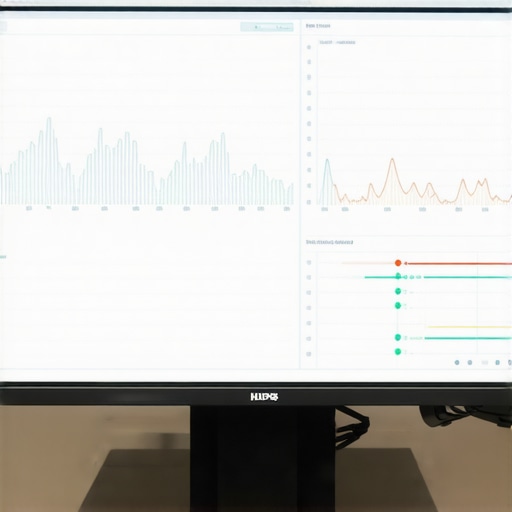
Incorporating an illustrative graph depicting the relationship between luminance levels and human perception thresholds enhances comprehension of calibration techniques tailored for high-brightness displays.
The Art and Science of Fine-Tuning Local Dimming to Elevate Creative Precision
Local dimming technology, when calibrated with surgical precision, transforms a high-nit display from a mere brightness machine into a dynamic vessel of contrast and detail. Expert calibration involves mapping thousands of contrast zones and applying bespoke 3D LUTs that harmonize luminous regions with surrounding pixels, preventing artifacts such as blooming or halo effects. As outlined in the whitepaper by the Society for Information Display, mastering this calibration not only improves perceived contrast but also extends the effective color volume of the display, essential for high-end color grading workflows.
How Can Advanced Algorithms Enhance Dynamic HDR Calibration in Professional Settings?
Emerging adaptive algorithms harness machine learning to analyze scene content in real time, adjusting local dimming profiles and tone curves dynamically. This ensures that high-brightness scenes retain their impact without sacrificing shadow depth or introducing artifacts. Integrating these intelligent calibration frameworks demands a synergy of hardware capabilities and sophisticated software, a frontier discussed extensively in recent IEEE publications on intelligent display systems. The result is a seamless, ever-optimized visual experience that aligns with artistic nuances and technical standards alike.
Expert Insights & Advanced Considerations
Rediscover the Role of Hardware Calibration in Achieving True Color Fidelity
While software adjustments are common, investing in hardware calibration tools, such as spectroradiometers, ensures the most accurate and consistent color reproduction essential for professional HDR workflows.
Recognize the Impact of Viewing Environment on Display Performance
Ambient lighting conditions influence perceived image quality; designing workflows with controlled environments or adaptive calibration processes can significantly enhance consistency across different settings.
Anticipate Future Standards and Compatibility
Staying informed about emerging HDR specifications like Dolby Vision IQ or HDR10+ adaptive ensures your displays remain aligned with industry advancements, safeguarding your investment and creative flexibility.
Balance Brightness with Contrast to Avoid Overexposure
Excessive peak luminance without proper calibration can lead to highlight clipping; precise control over local dimming and tone mapping maintains artistic intent and detail richness.
Dive Deeper into Spectral Response and Human Perception
Understanding how spectral power distributions influence color perception helps calibrate displays that evoke emotional impact and realism, critical in high-end content creation.
Curated Expert Resources
- Calibrated Monitors Explained: Offers comprehensive insights into practical calibration strategies backed by industry standards.
- HDR EOTF Calibration Techniques: Focuses on correcting electro-optical transfer functions for precise HDR tone mapping.
- Top Monitors for Color Accuracy: Guides on choosing and calibrating professional monitors tailored for vibrant HDR productions.
- Calibrated Monitors for Video Sync: Details calibration practices that harmonize HDR compatibility with real-world signal standards.
Final Perspective from the Front Lines of Display Technology
In the complex arena of HDR and professional display calibration, precision and adaptability are paramount. Integrating expert insights with proactive resource engagement ensures your workflows not only keep pace with evolving standards but also elevate creative excellence to new heights. Embracing these advanced strategies and staying connected with authoritative resources empower you to deliver visuals that truly resonate with perceptual authenticity. To deepen your expertise or customize solutions for your environment, reach out through our contact portal—your journey toward impeccable HDR fidelity begins here.
About the Author