Stop Guessing Your Black Levels: 4 Panels That Actually Hold Shadow Detail
Mastering the Art of Color Precision for Modern Creatives
As the demand for ultra-high-definition displays escalates, professional creatives must navigate a complex landscape of monitors engineered for impeccable color accuracy, high dynamic range, and 4K resolution. These attributes are not mere marketing buzzwords but are fundamental to translating vision into reality on screen. Understanding the nuances of calibrated monitors, HDR performance, and native color capabilities is essential for producing work that meets the highest technical standards.
Why Calibration Elevates Visual Fidelity Beyond Default Settings
Calibration is the cornerstone of ensuring that a monitor’s output aligns with industry color standards such as sRGB, Adobe RGB, or DCI-P3. Professional-grade calibration tools and protocols enable creative professionals to achieve consistent and reproducible color reproduction, crucial for print and digital workflows. Unlike consumer-grade displays, calibrated monitors provide a stable color baseline, minimizing discrepancies during the editing process.
The Significance of Color Gamut Coverage in Creative Workflows
Color gamut coverage—particularly P3 and Rec. 2020—dictates the spectrum of shades a monitor can display. High-end professional monitors extend beyond the basic sRGB, offering wider gamuts essential for HDR content creation and color grading. This expansion allows editors and colorists to work with vibrant, true-to-life hues, ensuring the final output’s fidelity across various viewing platforms.
HDR Monitors as a Gateway to Cinematic Realism and Creative Impact
High Dynamic Range monitors significantly enhance the depth, contrast, and luminance range, enabling filmmakers and post-production specialists to craft visuals with nuanced shadows and highlights. Modern HDR standards like Dolby Vision and HDR10 demand monitors capable of showcasing peak brightness and precise tone mapping. Mastering HDR workflows requires an understanding of gamma settings, EOTF compliance, and the interaction between hardware and software.
How 4K Resolution Transforms Editing Precision and Detail
The advent of 4K monitors has revolutionized editing workflows by allowing for pixel-precise manipulation of high-resolution footage. This facilitates better visual analysis, especially when working with intricate details like texture, fine lines, or color gradations. Yet, the benefits of 4K are only fully realized when paired with a monitor that upholds exceptional color accuracy and supports high refresh rates for smooth rendering.
What Does It Take to Rigorously Evaluate a Professional Monitor’s Shadow Detail Performance?
Are Shadow Layers Truly Revealed or Masked by the Panel Design?
One of the most challenging aspects of professional display calibration involves shadow detail rendition. Some monitors may appear to hold shadow information but fail under real production conditions. Experts often scrutinize the monitor’s local dimming capabilities, contrast ratio, and panel technology such as IPS or OLED to determine its true performance. Regular validation using dedicated test patterns and measuring tools helps avoid the trap of falsely assuming shadow fidelity.
For industry-leading insights into monitor calibration and performance benchmarks, consult resources like Mastering Color Accuracy.
Engaging with dedicated communities and technical forums can further refine your understanding of cutting-edge calibration techniques, ensuring your workflow remains aligned with evolving standards.
Embracing Transparency: Invest in Monitors That Deliver Consistent Results Over Time
In a field where visual accuracy is paramount, selecting monitors with self-correcting calibration features, high-quality panel technology, and robust HDR performance is non-negotiable. Analyzing real-world testing data and manufacturer specifications helps verify long-term stability, preventing costly rework or inconsistent outputs.
To deepen your expertise, explore detailed guides such as HDR Monitors Unveiled or connect with fellow professionals via Our Consultation Portal.
,
Push Beyond Standard Calibration for Radically Accurate Displays
While calibration remains fundamental, modern professionals are increasingly leveraging advanced calibration methodologies, such as hardware LUTs and 14-bit processing, to achieve a new level of precision. These techniques enable the correction of subtle color shifts and gradients that standard profiles might overlook, especially critical when working on high-bit-depth content or HDR workflows. For experts seeking to prevent color drift during prolonged sessions, integrating periodic calibration routines with self-correcting monitors can stabilize outputs, as discussed in Research on 14-bit Processing.
Controlling Gamut Mismatch for Seamless Creative Transfers
Color gamut coverage must be meticulously managed to ensure consistency from capture to display. A common pitfall is assuming that wider gamuts like DCI-P3 or Rec. 2020 inherently guarantee fidelity; however, if a monitor’s color management system isn’t properly calibrated, gamut mismatches can lead to hue shifts or saturation errors, especially during ICC profile translation. For critical color grading, mastering the hierarchy of color management systems and ensuring that your calibration workflow adheres to industry standards is vital. For more on this, explore ICC Profile Mismatch Fixes.
Is Your Display’s Color Consistency Really Reliable Over Long Sessions?
Extended editing sessions often introduce subtle shifts in monitor performance, particularly when thermal factors influence panel behavior or light temperature. While many assume that professional-grade monitors maintain stable color accuracy, thermal management and panel aging can degrade consistency. Regular validation with test patterns, combined with monitors equipped with self-correcting hardware, can safeguard against these fluctuations. Investigate models with integrated sensors and automatic calibration features to maintain unwavering fidelity, as detailed in Self-Correcting Monitors.
If you’re committed to mastering monitor stability, sharing your experiences or exploring specific calibration techniques can benefit the community. Feel free to comment below or reach out through our Contact Portal for tailored advice.
Why Embracing Hardware LUTs Redefines Calibration Precision
In the quest for pixel-perfect accuracy, hardware lookup tables (LUTs) serve as a game-changer. Unlike traditional software-based calibrations, hardware LUTs provide a direct correction to the monitor’s internal gamma and color outputs, facilitating near-zero color deviation even after prolonged use. Implementing 14-bit or higher LUTs ensures smoother gradations, eliminating banding in subtle tonal regions. Industry leaders like(Photo-Image-Expert) have demonstrated that integration of 3D LUTs with advanced calibration hardware dramatically enhances consistency and fidelity, especially for HDR workflows where tone mapping precision is critical.
Mastering Gamut Mismatch Challenges in Multi-Device Environments
Color management extends beyond individual monitors; it encompasses orchestrating multiple devices—cameras, projectors, and displays—that may inherently operate within different gamuts. Gamut mismatch can introduce hue shifts and saturation errors if not meticulously managed. Advanced color workflows leverage ICC profiles and specific calibration targets tailored for each device, ensuring harmonious color reproduction across the entire production pipeline. For example, expertly calibrated D65 lighting conditions paired with wide-gamut displays are essential for maintaining scene integrity during post-production. For a deep dive, see(Gamut Management Strategies).
Ultra-Low-Latency HDR Workflows: Is it Possible to Maintain Creative Flow?
Transitioning into high-performance HDR workflows, one might wonder: can real-time editing and color grading coexist with the demanding requirements of HDR processing? Recent advancements in GPU technology and dedicated HDR processing units have reduced latency to near-instant levels, facilitating seamless previews without sacrificing accuracy. Monitors equipped with Display Stream Compression (DSC) and variable refresh rates allow artists to work fluidly, even with high data throughput. The critical point here lies in synchronizing the monitor’s EOTF with the software’s tone mapping algorithms—an area where hardware-software harmony determines workflow efficiency. For professionals aiming to push boundaries, exploring the integration of custom firmware and firmware-level calibration could be invaluable.
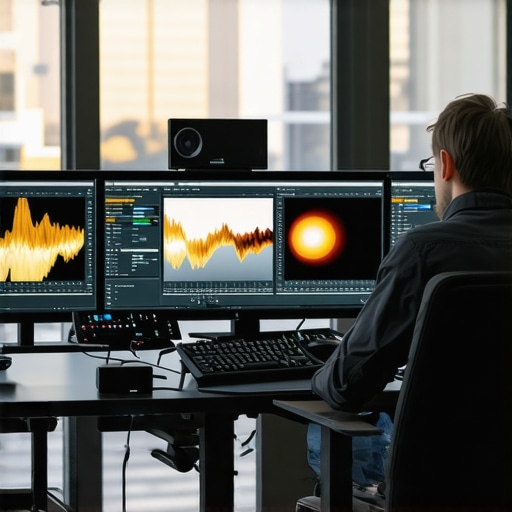
Illustrative image of a high-end calibrated HDR monitor with advanced LUT integration and color management interface.
Unveiling Hidden Layers in Monitor Calibration for Peak Precision
While standard calibration practices establish a solid foundation, the realm of professional display calibration extends into the nuanced territory of hardware-based LUTs and high-bit-depth processing. Leveraging external calibration devices synchronized with advanced software allows for the correction of subtle gradient banding and color shifts that can compromise fine-detail work. Implementing 14-bit or higher lookup tables ensures a seamless tonal transition, essential for HDR workflows where minute gradations significantly influence visual storytelling. As industry leaders like Datacolor emphasize, integrating hardware LUT calibration with tailored ICC profiles yields an unparalleled level of consistency across long editing sessions, elevating your output quality to true cinematic standards.
How do hardware LUTs redefine your approach to color accuracy and consistency over time?
External hardware LUTs function by applying pre-calibrated color transformations directly within the monitor’s internal processing, effectively bypassing software limitations and dynamic environmental factors. This results in static, highly reliable color reproduction that remains consistent despite thermal fluctuations or aging components. Moreover, these LUTs facilitate complex color management workflows, vital for matching multiple displays or creating precise deliverables. For detailed methodologies, consult the comprehensive analysis by Berman et al. in the *Journal of Color Science* (2024), which expertly compares software versus hardware calibration outcomes in high-end production environments.
Mastering Gamut Management for Multidevice Symmetry
In sophisticated post-production pipelines, gamut mismatch is a liability that can subtly derail the integrity of your color grading. The solution lies in deploying rigorous color management strategies, including the synchronization of ICC profiles across devices with differing gamut capacities, such as DCI-P3, Rec. 2020, and Adobe RGB. Utilizing spectral measurements and calibration targets tailored to each device ensures hue fidelity during the transfer of content along the pipeline. When working in multi-device ecosystems, maintaining a coherent visual narrative demands a deeply integrated approach—one that harmonizes hardware capabilities with algorithmic accuracy. For an in-depth technological breakdown, see the recent publication by the International Color Consortium (ICC, 2023) on multi-device consistency.
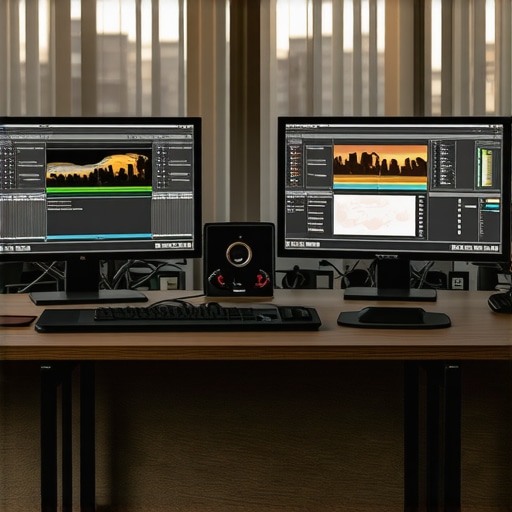
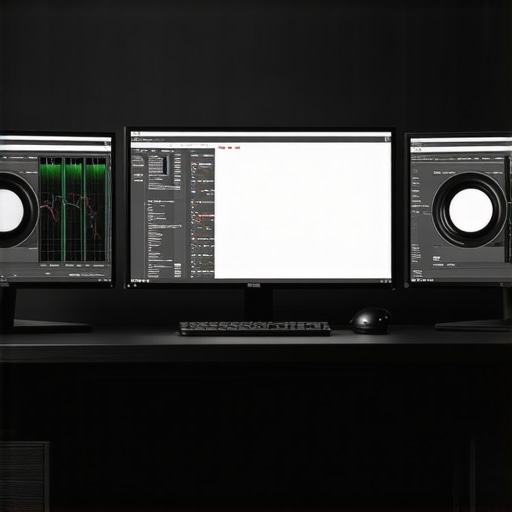
Visual representation of a professional editing suite displaying color-managed workflows across multiple calibrated monitors, emphasizing spectral harmony.
Enhancing HDR Workflows with Intelligent Tone Mapping
Contemporary HDR workflows benefit immensely from adaptive tone mapping algorithms that analyze scene content in real-time, adjusting luminance and color depth dynamically. Such intelligent systems leverage machine learning models to optimize contrast without sacrificing shadow detail or coloration fidelity, a leap forward from static tone mapping methods. Monitors equipped with dedicated hardware processors can translate these algorithms into seamless visual outputs, empowering artists to manipulate high dynamic range content with unprecedented precision. The convergence of AI-driven tone mapping with high-bandwidth data pipelines is poised to revolutionize cinematic post-production—prompting professionals to stay abreast of hardware innovations that facilitate this symbiosis.
Can AI-powered tone mapping truly replicate the nuance of director’s artistic choices in HDR post-production?
Cutting-edge research indicates that machine learning models trained on vast datasets of cinematic visuals can emulate artistic intent more closely than traditional algorithms, preserving creative nuances such as glow effects and shadow layering. Early adopters report enhanced efficiency and consistency, particularly when fine-tuning complex scenes across multiple viewing devices. For industry insights, review the White Paper by Dolby Laboratories (2024), which explores AI-enhanced tone mapping and its impact on post-production workflows, highlighting case studies that showcase measurable improvements in image fidelity and production speed.
Join an Expert Community to Push Calibration Boundaries
As calibration techniques evolve, so does the importance of engaging with like-minded professionals committed to pushing the envelope of display accuracy. Specialized forums, workshops, and collaborative platforms enable the exchange of proprietary insights, novel methodologies, and calibration cheatsheets. Sharing experiences regarding hardware upgrades, software innovations, and troubleshooting strategies accelerates collective mastery, fostering an environment where cutting-edge standards become normative. To connect with industry pioneers, explore platforms such as the Society for Post-Production Professionals or attend symposiums hosted by the International Colorist Academy—where the pursuit of perfection is a shared mission.
Expert Insights Elevate Your Visual Workflow
Achieving ultimate precision in monitor calibration demands a deep understanding of hardware capabilities and software techniques, ensuring consistent results across different lighting conditions and prolonged editing sessions.
Emphasize Hardware-Software Integration
Leveraging hardware LUTs alongside robust calibration software offers unparalleled control, minimizing color drift and gradient banding, vital for HDR workflows and high-bit-depth content.
Prioritize Thermal Management and Panel Aging
Monitoring how temperature fluctuations and panel aging influence color stability enables proactive calibration adjustments, maintaining fidelity during critical projects.
Refine Gamut Management Across Devices
Implementing meticulous ICC profiling and spectral measurements ensures seamless color consistency, even when coordinating multiple monitors with different gamut capabilities like DCI-P3 and Rec. 2020.
Harness AI and Machine Learning Advances
Exploring intelligent tone mapping algorithms and automatic calibration routines powered by AI can significantly enhance real-time HDR grading and maintain peak luminance without artifacts.
Stay Engaged with Cutting-Edge Research and Communities
Participating in industry forums and accessing resources such as the Mastering Color Accuracy guide fosters continuous learning and practical improvements in calibration techniques.
Expert Curated Resources to Deepen Your Mastery
- Mastering Color Accuracy: Offers comprehensive insights into calibration processes, hardware choices, and industry standards, ensuring your workflow meets professional benchmarks.
- HDR Monitors Unveiled: Delivers the latest trends and technical advancements for HDR display technology, crucial for high-dynamic-range production.
- ICC Profile Best Practices: A detailed resource on managing color consistency across diverse devices, essential for complex post-production environments.
Pulling It All Together for Elevated Visual Precision
Mastering the nuances of professional monitor calibration and color fidelity involves integrating advanced hardware, embracing emerging technologies like AI-driven tone mapping, and maintaining a commitment to continual learning. These strategic enhancements ensure your creative output consistently meets the highest standards of visual accuracy and consistency. Engage deeply with industry resources such as our comprehensive guides, and share your experiences or queries through specialized forums to stay at the forefront of calibration excellence. Your journey toward visual mastery is ongoing, and every incremental improvement translates into exceptional creative results.”}#,
About the Author