Ultimate Guide to Calibrated 4K Monitors for Photo & Video Creators 2024
Elevating Creative Work with Calibrated 4K Monitors in 2024
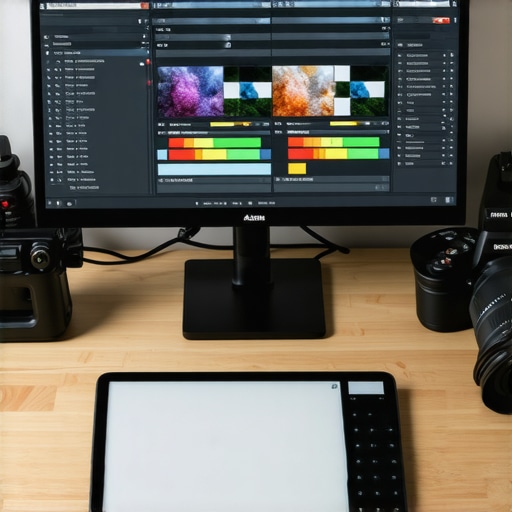
In an era where visual fidelity defines professional credibility, mastering the nuances of calibrated 4K monitors becomes essential for photo and video creators. These advanced displays serve as the cornerstone of color accuracy, dynamic range, and resolution clarity, providing a reliable platform for precision editing and vibrant content production. As technology advances, understanding the complexities of calibration and display technology ensures that professionals deliver work that meets the highest standards of quality and consistency.
Why Calibration Transcends Basic Display Settings
Calibration is not merely a technical step but a strategic process that aligns a monitor’s output with industry standards. Professional-grade calibrated monitors incorporate hardware calibration sensors and software that fine-tune gamma, white balance, and color gamut. This meticulous process ensures that what appears on the screen is an exact representation of the final output, whether for print, digital media, or broadcast. Vendors like Eizo and NEC offer monitors with built-in calibration features that are indispensable for high-stakes creative workflows.
Choosing the Right 4K Display for Creative Fidelity
Filtering through the myriad 4K options requires an understanding of key specifications—color gamut coverage (preferably AdobeRGB or DCI-P3), peak brightness, contrast ratios, and panel technology (IPS being the gold standard for color consistency). Selecting a display with comprehensive calibration tools, such as those discussed in Mastering Color Accuracy, guarantees long-term fidelity essential for professional projects.
Addressing the Challenges of Consistent Color Management
Color management is an ongoing process, complicated by ambient lighting, device aging, and software calibration limits. Implementing a controlled workspace environment and routine calibration schedules ensures sustained accuracy. Professionals often rely on external calibration devices like X-Rite i1Display Pro or Datacolor SpyderX to maintain strict standards, especially when working across multiple devices or collaborating with clients. For more insights into calibration techniques, visit Calibrated Monitors Explained.
What Advanced Features Should You Prioritize
Beyond basic calibration, look for monitors offering hardware calibration support, wide color gamuts, high bit-depth processing, and uniformity compensation. These features reduce color shifts across the display and improve tonal consistency, vital for professional workflows. Additionally, HDR support, particularly HDR10 and Dolby Vision, enhances dynamic range and color depth—crucial for high-end video production. For a comprehensive review of HDR capabilities, explore HDR Monitors for 2025.
How Can Creators Ensure Long-Term Calibration Stability?
Maintaining calibration stability over time involves regular use of external calibration tools, consistent workspace lighting conditions, and hardware updates. Some high-end monitors include self-calibration routines, reducing manual intervention. Additionally, tracking monitor aging and color drift with software tools helps preserve color accuracy, ensuring that your work remains trustworthy and publish-ready across years of use.
For more expert insights on calibration practices, consider visiting Best Calibrated Monitors for Perfect Color.
Engaging with the community via forums and professional networks can also uncover innovative calibration techniques and emerging display technologies. Your mastery over calibrated 4K monitors in 2024 will elevate your creative output to unprecedented levels of precision and visual storytelling excellence.
Refining Calibration Strategies for Enduring Accuracy
Achieving perfect calibration today is only part of the equation; maintaining that precision over months and years requires a disciplined approach. High-end monitors equipped with hardware calibration support often include self-calibration routines that help preserve color accuracy, but users must also adopt consistent calibration schedules. Routine calibration, ideally monthly or quarterly, using trusted external devices like the X-Rite i1Display Pro, ensures that monitor drift does not compromise your work’s integrity. Such disciplined practices are vital, especially for professionals whose work demands unwavering color fidelity across projects and time.
Challenging Assumptions About Display Longevity and Performance
Many creatives mistakenly believe that once calibrated, a monitor will stay accurate indefinitely. However, displays are subject to aging, which can cause shifts in color accuracy, contrast, and brightness. This is why understanding the lifespan of display components, especially OLED and IPS panels, is crucial. Studies, like those summarized in the Ultimate Guide to Calibrated Monitors, reveal that regular recalibration and hardware maintenance significantly extend a monitor’s effective lifespan. Recognizing the signs of aging, such as uneven luminance or color shifts, and acting proactively can prevent costly replacements and ensure consistent output quality.
Can Emerging Display Technologies Outperform Traditional Calibration?
Emerging display technologies, including mini-LED and OLED panels, promise enhanced color stability, higher contrast ratios, and better longevity. These advancements challenge the traditional benchmarks set by IPS panels, especially when combined with advanced calibration tools and software. For example, newer monitors with built-in self-calibration and adaptive brightness features are already reducing drift and maintaining accuracy longer than previous generations. Professionals should evaluate how these innovations align with their workflow, considering factors like color gamut coverage, HDR support, and calibration compatibility. For a comprehensive understanding, check out the best calibrated monitors for color accuracy and see how recent innovations are reshaping professional standards.
If you’re interested in exploring how to implement these cutting-edge solutions into your workflow, visit our contact page for expert advice tailored to your creative needs.
Future-Proofing Your Investment in Professional Displays
As technology continues to evolve rapidly, selecting a monitor with upgradeability options, firmware updates, and manufacturer support becomes essential. Future-proofing your setup involves not only choosing a high-caliber device today but also ensuring it can adapt to upcoming standards like HDR10+ and wider color gamuts. Reviewing detailed guides such as Ultimate Guide to Calibrated 4K Monitors aids in making informed decisions that sustain your investment’s relevance. In the end, the combination of advanced hardware, rigorous calibration routines, and proactive maintenance will keep your creative output at peak quality for years to come.
Mastering the Art of Consistent Color Accuracy for 4K Creative Displays
In the fast-evolving world of digital content creation, the quest for perfect color fidelity is relentless. Beyond basic calibration, professionals leverage advanced techniques such as spectral calibration and color profiling to refine their displays. Spectral calibration involves measuring the entire spectral output of a monitor’s light sources, ensuring that each wavelength aligns precisely with industry standards, such as DCI-P3 or AdobeRGB, thereby eliminating subtle color discrepancies that can compromise creative integrity. This process requires specialized equipment like spectrophotometers, exemplified by the XRite i1Pro 3, which captures detailed spectral data for comprehensive calibration.
Implementing a robust calibration workflow often involves multi-stage processes, including hardware calibration, software profiling, and environmental adjustments. For instance, calibration sessions should be scheduled during consistent lighting conditions, ideally in a controlled environment with neutral gray walls and indirect lighting, to prevent ambient light from skewing results. The use of calibration software like DisplayCAL or CalMAN, integrated with hardware sensors, automates many of these steps, providing detailed reports and calibration targets tailored to specific project needs.
Furthermore, emerging techniques such as spectral imaging and quantum dot backlighting are pushing the boundaries of display accuracy. Quantum dot technology, used in devices like the Dell UltraSharp UP3221Q, enhances color volume and reduces spectral shifts over time, offering a more stable baseline for calibration. These innovations are particularly beneficial for high-end post-production workflows, where even minor deviations can lead to costly rework or inconsistent outputs.
How Do Advanced Calibration Methods Improve Long-Term Display Stability?
Advanced calibration methods, including multi-point and adaptive calibration, help mitigate the effects of hardware aging and environmental changes. Multi-point calibration involves creating detailed 3D color lookup tables (LUTs) that account for non-linearities across the entire display, ensuring tonal accuracy from shadows to highlights. Adaptive calibration goes a step further by continuously monitoring the monitor’s output using embedded sensors, adjusting color parameters dynamically to compensate for drift without user intervention. This technology is gaining traction in professional-grade monitors, like the Eizo ColorEdge series, which feature built-in sensors for ongoing calibration.
Studies such as those published in the Journal of Imaging Science and Technology (2022) demonstrate that these methods significantly extend the effective lifespan of calibration accuracy, reducing the need for manual recalibration sessions and maintaining visual fidelity over years of intensive use. Regularly scheduled calibration, combined with real-time adjustments, ensures that creative professionals can rely on their displays for critical color-sensitive tasks, even in fluctuating environmental conditions.
To maximize these benefits, professionals should incorporate calibration routines into their daily workflow, utilizing software like CalMAN Studio or LightSpace CMS, paired with hardware sensors. Additionally, maintaining a stable workspace environment—consistent lighting, temperature, and humidity—further preserves calibration stability, safeguarding your investment in high-end displays.
Are There Future Technologies Poised to Revolutionize Display Calibration?
Looking ahead, innovations such as self-healing OLED panels and AI-driven calibration algorithms promise to revolutionize how professionals maintain color accuracy. Self-healing OLEDs can autonomously repair micro-damage and mitigate aging effects, potentially reducing the frequency of calibration cycles. Meanwhile, AI-powered calibration systems analyze ongoing display performance, predicting drift patterns and proactively adjusting settings before deviations become perceptible. Companies like Samsung and LG are already exploring these technologies within their flagship professional monitors.
Moreover, the integration of machine learning with spectral imaging allows for highly precise calibration that adapts to both hardware variations and environmental factors in real-time. These advancements could make calibration more accessible, less labor-intensive, and more reliable, empowering creators to focus on their craft without worrying about display inconsistencies.
For those eager to stay at the forefront, exploring the latest monitor models equipped with these innovations is advisable. Regularly updating calibration tools and methodologies ensures your workflow remains aligned with the cutting-edge standards of the industry. To learn more about upcoming display technologies and how they can enhance your creative process, follow authoritative industry reports such as those published by DisplayMate or the Society for Information Display (SID).
Harnessing Quantum Dot Technology to Elevate Calibration Precision
Quantum dot backlighting has revolutionized display technology by offering unparalleled color volume and spectral stability, which are crucial for high-fidelity calibration. These panels maintain consistent spectral output over time, reducing the need for frequent recalibration and ensuring that professional workflows remain uncompromised. Experts recommend monitors like the Dell UltraSharp UP3221Q, which leverage quantum dot technology to deliver a broader color gamut and enhanced luminance uniformity, making them ideal for color-critical tasks.
Innovative Spectral Calibration for Ultra-Accurate Color Profiling
Spectral calibration transcends traditional gamma and white point adjustments by precisely measuring the entire spectral output of a display. This meticulous process guarantees that each wavelength aligns with industry standards such as DCI-P3 and AdobeRGB, eliminating subtle color discrepancies that can undermine creative integrity. Equipment like the XRite i1Pro 3 spectrophotometer enables professionals to perform spectral profiling, ensuring their monitors deliver the highest level of color fidelity essential for professional-grade editing.
How Do AI-Driven Calibration Systems Transform Long-Term Display Stability?
AI-powered calibration algorithms analyze real-time display performance, proactively compensating for aging and environmental fluctuations. Monitors embedded with these intelligent systems can dynamically adjust color parameters without user intervention, maintaining consistent accuracy over extended periods. This approach not only simplifies maintenance but also guarantees that workflows remain aligned with exacting standards, especially in demanding post-production environments.
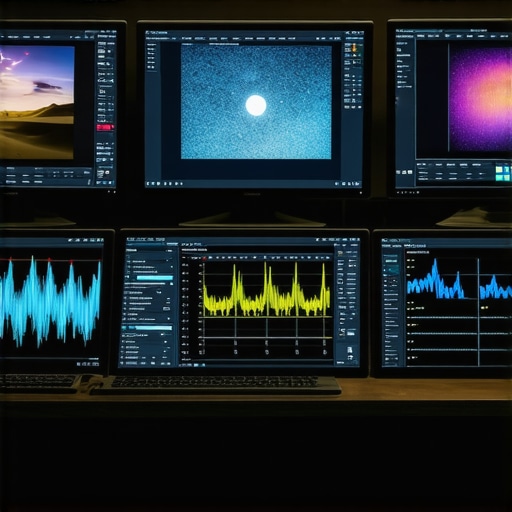
Visualize how AI integration in high-end monitors allows for continuous self-calibration, adapting seamlessly to hardware changes and ambient conditions, thus ensuring unwavering color precision throughout your creative projects.
Unlocking the Potential of Adaptive Multi-Point Calibration
Adaptive multi-point calibration involves creating comprehensive 3D LUTs that address non-linearities across the entire display surface. This technique ensures tonal accuracy from shadows to highlights, compensating for hardware imperfections and aging effects. Monitors like the Eizo ColorEdge series incorporate embedded sensors that facilitate ongoing multi-point calibration, providing a stable foundation for critical color workflows and reducing manual recalibration efforts.
What Future Technologies Will Redefine Display Calibration Standards?
Emerging innovations such as self-healing OLED panels and machine learning algorithms promise to redefine calibration paradigms. Self-healing OLEDs possess the capability to autonomously repair micro-damage and mitigate aging effects, significantly reducing calibration frequency. Meanwhile, AI-driven spectral imaging systems can predict drift patterns, allowing preemptive adjustments that maintain color accuracy. Industry leaders like LG and Samsung are pioneering these advancements, which could soon become standard in professional displays.
To stay ahead, professionals should monitor developments from authoritative sources such as the Society for Information Display (SID), which regularly publishes groundbreaking research on display science and calibration technologies.
Take Your Calibration Mastery Beyond the Basics
Adopting advanced spectral calibration, leveraging AI-driven systems, and understanding emerging display materials are essential steps for professionals committed to excellence. Regularly updating calibration routines, investing in hardware with future-proof features, and engaging with industry innovations will ensure your creative output remains at the pinnacle of accuracy and reliability. Embrace these expert strategies to elevate your visual storytelling and maintain a competitive edge in 2024.
Expert Insights Drive the Future of Visual Fidelity
In the rapidly evolving landscape of high-end displays, staying ahead requires a keen eye for emerging technologies and a deep understanding of calibration mastery. Professionals who leverage spectral calibration and AI-driven systems elevate their work by ensuring unwavering accuracy across projects. The integration of quantum dot technology and self-healing OLEDs promises a new era where reliability and longevity become baseline expectations, not exceptions.
Refined Color Management Strategies Enhance Creative Precision
Implementing multi-point calibration and adaptive routines is essential for maintaining long-term consistency, especially as displays age. These advanced methods, supported by embedded sensors and high-grade hardware, enable artists and editors to trust their visual output implicitly, even under variable environmental conditions. Staying informed about innovations, such as spectral imaging and machine learning algorithms, positions professionals to optimize workflows continually.
Expert Resources You Can Trust for Deepening Knowledge
- DisplayMate Technologies: Renowned for authoritative research on display performance, offering insights into latest advancements.
- Society for Information Display (SID): Leading industry body sharing breakthroughs in display science and calibration techniques.
- CalMAN and DisplayCAL Software: Industry-standard tools for spectral calibration and profiling, trusted by professionals worldwide.
- X-Rite i1Pro Series: The gold standard external calibration hardware, pivotal for maintaining color fidelity over time.
Final Reflection: Elevate Your Visual Workflow with Cutting-Edge Techniques
Embracing the latest in calibration innovations and display technologies ensures your creative work remains unparalleled in accuracy and quality. As 4K and HDR standards continue to evolve, professional mastery over these tools becomes a strategic advantage. For those committed to excellence, engaging with expert insights and continuously refining calibration routines is not optional but essential. Reach out via our contact page to explore tailored solutions that keep your visuals at the forefront of industry standards.
About the Author