How to Spot Thermal Dimming Before It Ruins Your HDR Color Grade
Why Precision in Color Accuracy Defines Professional Monitor Performance
In high-end creative environments, particularly those involving 4K content production and HDR grading, the fidelity of color reproduction is paramount. The quest for achieving color accuracy goes beyond mere specifications; it requires understanding the intricacies of calibration, panel technology, and the impact of ambient lighting conditions. Professionally calibrated monitors ensure consistent output, minimizing discrepancies that could jeopardize client satisfaction and project integrity.
The Significance of HDR Monitors in Modern Visual Workflows
HDR technology elevates visual storytelling by presenting a broader dynamic range, deeper blacks, and more vibrant colors. However, not all HDR monitors deliver on these promises equally. Advanced HDR monitors designed for professional use incorporate features such as high peak brightness, low latency, and precise gamma curves. Such monitors are essential for correctly visualizing high-dynamic-range content, especially in color-critical tasks like mastering and visual effects compositing.
Behind the Scenes of True 4K Monitor Capabilities
The transition to 4K monitors has revolutionized creative workflows by providing detailed resolution and improved clarity. Yet, resolution alone isn’t sufficient; true professional 4K monitors offer gamut coverage, uniformity, and enhanced pixel response times. When paired with accurate color calibration, these displays become vital tools for demanding applications such as digital cinema mastering and professional photography editing.
How Calibrated Monitors Elevate Creative Fidelity and Consistency
Calibration transforms consumer-grade displays into reliable tools for color grading and post-production. Rigorous calibration processes involve adjustments to luminance, color temperature, and gamma settings to conform to industry standards like D65 white point and Rec. 2020 color gamut. As a result, calibrated monitors serve as the foundation for achieving consistent outputs across various devices and viewing environments, thereby safeguarding the integrity of professional deliverables.
Identifying Rare but Critical Challenges in HDR and Color Workflow Management
What Are the Risks of Overlooking Subtle Panel Variability During Long Color Sessions?
Even with high-quality monitors, panel variability can introduce subtle shifts in color and luminance over extended periods. Such drift may manifest as uneven black levels or color casts, undermining the accuracy necessary for HDR grading. Continuous calibration or the use of monitors with built-in sensors that perform automatic adjustments can mitigate these issues, preserving visual consistency across prolonged sessions.
For an in-depth exploration of calibration techniques and the latest HDR monitor innovations, visit HDR monitor advancements and their role in professional workflows. To share your insights or inquire about tailored solutions, contact our team via our consultation page.
Why Subtle Variations Can Sabotage Your Color Workflow
Even the most meticulously calibrated monitors are subject to minute panel variances and environmental influences that can skew color accuracy over time. These subtle shifts, often imperceptible to the naked eye, can lead to significant discrepancies in high-stakes tasks like HDR grading or precision color correction. Implementing monitors with advanced self-correcting features, such as automatic calibration every 24 hours, can be game-changing in maintaining consistent output during extended sessions.
What are the hidden risks of ignoring environmental interference in calibration routines?
Ambient lighting, room reflections, and even intra-office temperature fluctuations can compromise your monitor’s calibration integrity. To combat these variables, professional colorists often utilize controlled environments and choose monitors with integrated sensors that adapt dynamically to changing conditions. This approach ensures that your critical decisions are based on reliable, standardized visuals, preserving creative fidelity with every project. For an in-depth guide on filtering environmental influences, see calibration best practices for studio environments.
The Role of Gamut Coverage and Bit Depth in Achieving True Fidelity
Achieving color precision extends beyond calibration; it involves selecting displays capable of covering industry-standard gamuts like DCI-P3 or Rec. 2020, coupled with high bit-depth processing. Monitors with 10-bit or higher color depth can display nuanced gradations, reducing banding and posterization in complex scenes. Advanced calibration techniques can optimize gamut mapping, ensuring subtle color transitions are represented accurately, which is vital for devices like Dolby Vision and HDR workflows. For expert insights, refer to top professional monitors for color accuracy.
Beyond Calibration: Integrating Hardware and Software Tools for Ultimate Control
Modern color professionals leverage a combination of hardware calibration tools—like spectroradiometers—and sophisticated software for continuous profile management. These integrations facilitate real-time monitoring and adjustments, drastically reducing the risk of drift during prolonged editing sessions. Technologies such as colorimeters with automatic feedback loops, paired with profile validation software, can preserve your monitor’s embedded calibration data, ensuring ongoing consistency. Discover more about these cutting-edge tools and their implementation at monitor calibration stability and reliability.
Mastering the Nuances of White Point Calibration for Ultimate Color Consistency
Achieving pristine color output begins with meticulous white point calibration, a process often underestimated outside high-end post-production circles. Industry standards recommend a D65 white point—approximately 6500K—as a baseline for most color-critical workflows. Nevertheless, subtle deviations in white point can drastically influence overall color fidelity, especially when working across multiple devices or during HDR mastering. Advanced calibration involves not only setting the correct Kelvin temperature but also verifying the uniformity of the white point across the entire screen. High-precision spectroradiometers, such as the X-Rite i1Pro 2, can detect and adjust these minute discrepancies, ensuring that the monitor displays a perfectly balanced neutral — avoiding the dreaded bluish or yellowish cast that skews your entire color palette.
Why Tonal Response Curves Are the Hidden Pillars of Accurate Grading
While many focus on color gamut and luminance levels, the importance of accurate tonal response curves cannot be overstated. Gamma settings determine how midtones are rendered, directly impacting contrast, shadow detail, and highlight retention. Professionals committed to spot-on grading often employ 3D Look-Up Tables (LUTs) to match their monitor’s tonal response precisely to industry standards like Rec. 709 or DCI-P3. Implementing these LUTs, coupled with hardware calibration, allows colorists to see content exactly as intended across different viewing environments. Correct gamma curves ensure that subtle gradations are preserved, preventing posterization or loss of detail in shadow regions even in the most challenging scenes.
Can ambient light measurement optimize your calibration routines?
Absolutely. Ambient light significantly influences perceived contrast and color accuracy. Modern calibration workflows incorporate ambient light measurement devices, such as the Konica Minolta CL-200A, which quantify environmental luminance and color temperature. When integrated into calibration routines, these measurements facilitate adaptive adjustments—modifying display brightness and contrast dynamically to compensate for ambient conditions. This leads to a consistent visual experience regardless of whether you’re working in a brightly lit editorial suite or a darker grading room. For professionals seeking peak accuracy, personalized calibration protocols that account for workspace lighting are essential; see detailed methodologies in industry-standard guidelines provided by the Society of Motion Picture and Television Engineers (SMPTE).
The Impact of Panel Variability and Long-Term Drift on Color Stability
Panel heterogeneity, driven by manufacturing tolerances, causes subtle but accumulative deviations in color and luminance. Over time, even high-grade monitors may exhibit drift, leading to discrepancies during critical tasks like HDR grading or digital cinema mastering. Researchers from the Fraunhofer Institute for Integrated Circuits have demonstrated that uncorrected panel drift can alter color gamut coverage by up to 3% annually, which might be imperceptible in everyday use but disastrous in professional workflows. Addressing this challenge requires ongoing calibration—preferably automated—and selecting monitors with built-in sensors capable of periodic self-adjustment. Such features are especially vital when multiple units are synchronized for large-scale projects, maintaining uniformity across the production pipeline.
Furthermore, long-term drift underscores the importance of calibration quality over time. Regular recalibration routines, ideally integrated into daily workflows, prevent gradual divergence from absolute standards. For instance, integrating a spectroradiometer with software that tracks calibration history allows technicians to monitor stability trends, facilitating preemptive maintenance and ensuring compliance with industry calibrations like the SMPTE ST 2084 PQ standard for HDR content.
Optimizing Gamut Mapping to Preserve Nuanced Color Transitions
Gamut mapping processes translate source color data into a display’s native capabilities, aiming to preserve chromatic richness without oversaturation or color clipping. Precision in this process depends on the monitor’s ability to cover the target gamut, whether DCI-P3, Adobe RGB, or Rec. 2020, and on software algorithms that handle out-of-gamut colors gracefully. Advanced calibration solutions offer custom gamut mapping profiles tailored to specific project requirements, which ensures that subtleties—such as skin tones or pastel shades—are rendered with fidelity. For content creators working on HDR formats like Dolby Vision, maintaining accurate gamut mapping during grade adjustments is paramount to achieving an immersive visual experience that stays true to creative intent.
Leveraging Profile Management Software for Consistent Creative Output
The complexity of modern monitors necessitates sophisticated profile management to maintain ongoing color accuracy. Professional tools like CalMAN, Lightspace, and basICColor facilitate detailed profiling, validation, and adjustment of display capabilities. These platforms can automate routines, store multiple calibration profiles tailored to different workflows, and provide continuous monitoring to catch drifts early. Integrating real-time feedback mechanisms ensures that the monitor remains calibrated during extended editing sessions, even amidst environmental changes. Furthermore, software solutions that support multi-monitored setups enable seamless synchronization across devices, which is critical in collaborative environments and large-screen editorial suites.
For those seeking to elevate their calibration standards, exploring the latest innovations in monitor profiling software and hardware integration is advisable. Advanced tools not only guarantee fidelity but also streamline workflows, saving time and reducing human error—an indispensable advantage for high-stakes creative projects.
Expanding the Horizon: Integrating Advanced Color Management Strategies for Cutting-Edge Display Calibration
In the pursuit of impeccable visual fidelity, integrating comprehensive color management workflows becomes essential. Professionals increasingly leverage color profiling tools that interface seamlessly with operating systems, enabling precise device link profiles that ensure consistency across software applications and hardware devices. Utilizing high-precision spectroradiometers, alongside robust calibration software, allows for granular adjustments that surpass standard factory settings, fostering an environment where every hue, gradient, and tonal transition aligns meticulously with industry standards.
How Does Gamut Mapping Impact Real-World Content Creation?
Gamut mapping isn’t merely a technical formality; it directly influences the authenticity of creative outputs. When translating content from source color spaces like Rec. 2020 to display-specific gamuts such as DCI-P3, sophisticated algorithms mitigate color clipping and preserve subtle chromatic nuances. This process reduces the risk of oversaturation or desaturation, resulting in images where skin tones, pastel shades, and complex textures retain their intended vibrance and depth. Artists and colorists benefit from hardware that offers extensive gamut coverage coupled with software capable of intelligent gamut mapping, facilitating an uncompromised viewing experience throughout the production pipeline.
Expert Strategies for Combatting Long-Term Monitor Drift
Even the most meticulously calibrated monitors are susceptible to drift caused by panel aging, environmental factors, and thermal fluctuations. Recognizing early signs of deviation—such as inconsistent luminance, unexpected color shifts, or black level inconsistencies—is crucial. Implementing scheduled recalibration routines, ideally employing automated sensor-based feedback systems, ensures ongoing adherence to calibrated standards. Parallelly, maintaining a controlled environment with stable ambient lighting and temperature minimizes external influences. Such proactive strategies are vital for studios where color fidelity over extended projects influences final deliverables, especially in HDR workflows where minute discrepancies become glaring defects.
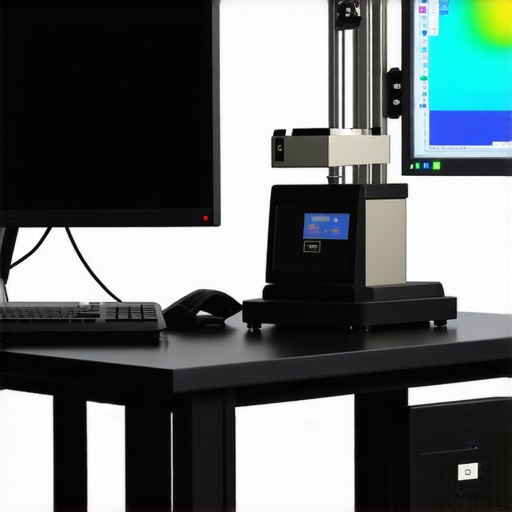
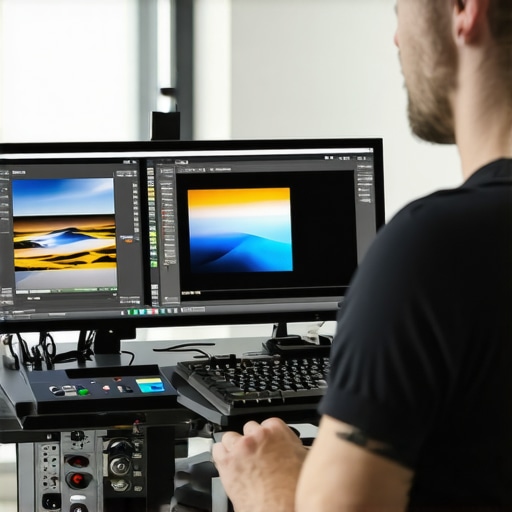
Visual illustrating advanced calibration process involving spectroradiometers and color profiles for professional monitors.
Refined White Point Calibration Techniques for Optimal Accuracy
Achieving an exact white point calibration, especially in mixed lighting conditions, requires precision tools and methodical procedures. Employing high-resolution spectroradiometers allows for detailed analysis of the display’s spectral output, ensuring the white point aligns precisely with the industry standard of D65 (~6500K). Moreover, verifying uniformity across the entire screen prevents localized color casts that could distort grading decisions. Integrating these rigorous calibration protocols into daily workflows guarantees that colorists’ decisions are based on a neutral and consistent reference, ultimately elevating the fidelity of HDR masterings and digital cinema content.
Unveiling Subtle Panel Variabilities and Their Effects
Manufacturing tolerances inevitably lead to minor discrepancies among panel units, which can manifest as color cast variations, brightness inconsistencies, or response time disparities. Over time, these variances may amplify, particularly during prolonged editing sessions, compromising the repeatability and reliability of color correction outcomes. Advanced monitors equipped with sensor-driven self-correction algorithms and multi-point calibration capabilities significantly mitigate these issues. Regular validation by professional calibration tools helps detect and compensate for drift, maintaining tight uniformity and ensuring that every project benefits from uncompromised accuracy.
The Crucial Role of Ambient Environment in Color Fidelity
Ambient light plays a subtle yet profound role in perceived color accuracy. Inadequate control over studio lighting conditions can skew visual judgment, especially in HDR workflows where high luminance levels demand precise environment management. Employing light-mimicking environments with controlled reflectance properties and consistent illuminance levels enhances calibration reliability. Implementing luminance metering tools during calibration routines allows technicians to adjust display settings dynamically, compensating for environmental factors and maintaining true-to-source color reproduction regardless of external conditions.
Next-Level Gamut Coverage and Its Creative Implications
Maximizing a monitor’s industry-standard gamut coverage—be it DCI-P3 or Rec. 2020—paves the way for richer, more vivid representations of content. High-end monitors with extended gamut support enable content creators to push visual boundaries confidently, knowing that their displays can accurately render the full spectrum of colors intended for immersive experiences like virtual reality, HDR gaming, and cinematic post-production. Fine-tuning gamut mapping ensures that every hue transitions seamlessly, preventing posterization and preserving the integrity of nuanced color gradations vital for storytelling and branding consistency.
Harnessing Profile Management to Uphold Color Integrity
Implementing sophisticated profile management software, such as CalMAN or Lightspace, allows for continuous oversight and dynamic adjustments to display calibration profiles. These tools facilitate multi-monitor synchronization, real-time drift monitoring, and comprehensive validation reports, ensuring that the entire visual environment remains within stringent color accuracy parameters. Automating routine calibrations through these solutions not only enhances efficiency but also guarantees the reliability of output across complex workflows, from initial creation to final delivery, underpinning trust in every pixel delivered.
To ascend beyond basic calibration, professionals are encouraged to explore state-of-the-art tools and methodologies that integrate hardware sensor feedback, advanced software analytics, and environmental controls—empowering them to master the artistry of perfect color fidelity.
Expert Insights & Advanced Considerations
Prioritize Gamut Coverage for Creative Freedom
Ensuring your monitor covers industry-standard color gamuts like DCI-P3 and Rec. 2020 is essential. Expanded gamut support allows for richer and more accurate color reproduction, vital for immersive HDR projects and high-fidelity content creation.
Implement Continuous Calibration to Counteract Drift
Panel variability and aging can subtly alter color accuracy over time. Automated, sensor-driven calibration routines maintain consistency, safeguarding your work against long-term drift and ensuring every project remains precise.
Optimize White Point Precision in Variable Environments
White point calibration using high-res spectroradiometers like the X-Rite i1Pro 2 ensures a balanced neutral baseline. Regular verification across the entire display surface helps prevent localized color shifts, especially critical during HDR mastering.
Leverage Software for Real-Time Profile Management
Advanced profiling tools such as CalMAN and Lightspace facilitate ongoing management of display profiles. Real-time monitoring and automatic recalibration support keep color fidelity intact throughout extended editing sessions.
Control Ambient Lighting’s Influence on Perceived Accuracy
Ambient light can subtly skew visual judgment. Utilizing controlled environments with uniform lighting and integrated sensors allows dynamic adjustments, ensuring your color assessments are based on true-to-source visuals.
Curated Expert Resources
- CalMAN Spectrum Calibration Software: Offers comprehensive tools for precise display profiling and calibration.
- Society of Motion Picture and Television Engineers (SMPTE) Guidelines: Provides industry standards for ambient lighting and calibration best practices.
- X-Rite’s Spectroradiometers: High-precision devices essential for white point and spectral analysis, enabling meticulous calibration.
- Latest HDR Monitor Reviews on Workstation Wizard: In-depth evaluations of recent high-end HDR displays tailored for professionals.
Refined Perspective on Achieving Visual Authority
Attaining pristine color accuracy in professional monitors goes beyond hardware specifications; it hinges on a strategic combination of calibrated settings, environmental control, and ongoing management. Especially when working with advanced HDR workflows, paying attention to gamut coverage, sensor-driven calibration, and ambient influences allows specialists to deliver content with unwavering fidelity. Empower your creative process by integrating cutting-edge tools and established standards, elevating your work’s authenticity and impact. Dive deeper into these strategies through our comprehensive resources and tailored consultations—your precision is the hallmark of excellence in visual production.
About the Author