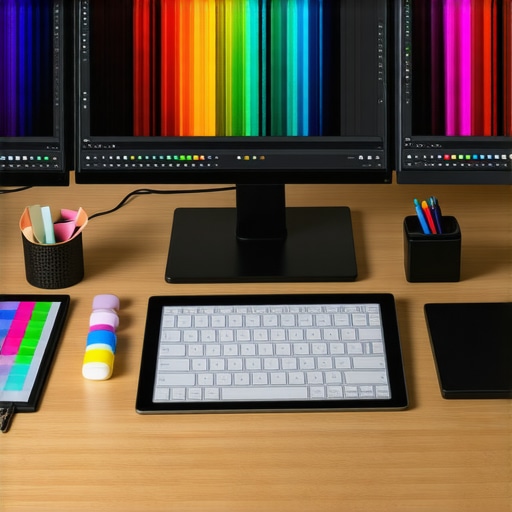
Top HDR & Color Accuracy Monitors for Creative Professionals in 2024
Elevating Visual Fidelity in Creative Workspaces
In the realm of professional visual production, the precision of your display can make or break the quality of your final output. As we advance into 2024, the significance of investing in a calibrated monitor with outstanding color accuracy, high dynamic range (HDR), and 4K resolution becomes increasingly evident. These tools are not merely peripherals but vital instruments that underpin the integrity of creative workflows, whether in photography, video editing, or graphic design.
Why Top-Tier Monitors Are Essential for Creative Professionals
Professional-grade monitors serve as the cornerstone of accurate color reproduction, enabling creatives to see their work as intended across various devices and platforms. The advent of calibrated monitors ensures that visual fidelity remains consistent, reducing the risk of color mismatches and enhancing productivity. Furthermore, advanced HDR monitors expand dynamic range, revealing subtle tonal variations vital for high-end post-production.
Integrating 4K Resolution for Detail-Rich Editing
The leap to 4K monitors has revolutionized digital creation, allowing professionals to work with higher-resolution assets with unparalleled clarity. This pixel-perfect detail is crucial when dealing with complex visuals or intricate color grading. For those seeking a balanced blend of resolution and color fidelity, the best 4K monitors offer a comprehensive solution, combining sharpness with precise calibration capabilities.
What Makes a Monitor Truly Suitable for Professional Use
How do advanced calibration and color management impact workflow?
Calibration is the backbone of any professional monitor. A calibrated monitor ensures that the colors displayed align with industry standards, such as Rec. 2020 or DCI-P3. This consistency is essential for brand-sensitive projects and cross-platform compatibility. High-end models incorporate hardware calibration sensors, enabling fine-tuning that remains stable over time and across different lighting conditions.
Choosing Between HDR and SDR Displays for Creative Precision
The debate between HDR and SDR is nuanced. HDR monitors significantly enhance the tonal spectrum, revealing details in shadows and highlights that standard displays cannot. For professionals engaged in HDR content creation or high-dynamic-range film editing, selecting a monitor with true HDR capabilities, such as those compliant with VESA DisplayHDR 1000 or higher, is imperative. Conversely, SDR-focused workflows benefit from high color accuracy and uniformity, which should be prioritized when choosing a display.
The Future of Visual Clarity and Color Fidelity in Professional Monitors
As technology evolves, the integration of quantum dot backlights, OLED panels, and AI-driven calibration promises even greater precision and realism. Industry leaders are pushing the boundaries of what professional monitors can deliver, aiming for near-perfect color reproduction and dynamic range. For example, HDR 4K monitors with advanced color grading tools exemplify this trend, empowering creators to achieve unprecedented authenticity.
For professionals committed to excellence, staying informed about the latest developments in monitor technology is crucial. Explore our comprehensive guide or contact us for tailored recommendations that align with your creative ambitions.
Unlocking the Power of Professional Calibration in Visual Arts
In the competitive realm of digital artistry, the difference between good and exceptional work often hinges on the fidelity of your display. As we delve deeper into 2024, understanding how advanced calibration techniques influence your workflow becomes crucial. Hardware calibration tools, such as colorimeters and spectrophotometers, allow professionals to fine-tune their monitors with precision, ensuring that every hue, shadow, and highlight is represented accurately. This meticulous process not only enhances consistency across projects but also mitigates the risk of costly reworks due to color mismatches. For an in-depth look at how calibration impacts creative accuracy, visit our expert guide on color accuracy.
Are OLED Displays the Future for Creative Professionals?
OLED technology has rapidly gained traction among high-end monitors, promising unparalleled contrast, vibrant colors, and incredible black levels. Unlike traditional LCD panels, OLEDs emit their own light, enabling precise control over individual pixels. This results in a display capable of rendering a broader color gamut and delivering deeper tonal nuances—features highly desirable for HDR workflows and detailed visual editing. However, challenges such as burn-in risk and higher costs remain considerations. Yet, industry leaders are investing heavily in refining OLED panel durability and affordability, making them increasingly viable for professional creatives. For a comprehensive comparison, explore our latest OLED monitors review.
What technological innovations will redefine professional display standards in the coming years?
Emerging advancements like quantum dot backlights, AI-powered calibration, and microLED technology are poised to radically enhance visual fidelity. Quantum dot enhancements improve color volume and brightness, particularly in HDR content, while AI-driven calibration offers real-time adjustments for consistent accuracy regardless of ambient lighting. MicroLED displays promise the next leap, combining the best features of OLED and LCD with increased lifespan and stability. These innovations will likely set new benchmarks for color precision, dynamic range, and longevity, pushing creative professionals toward even higher standards. Staying informed about these trends can give you a strategic edge; check out our comprehensive future-proof guide.
Harnessing the Power of Quantum Dot and MicroLED Technologies for Creative Mastery
As the digital art landscape evolves, the integration of cutting-edge display technologies like quantum dot backlights and microLED panels is transforming creative workflows. Quantum dots significantly enhance color volume and brightness, especially in HDR content, enabling artists and editors to visualize their work with unprecedented vibrancy and accuracy. MicroLED, on the other hand, promises a leap in display longevity, uniformity, and contrast ratios, combining the best features of OLED and LCD displays. These innovations are not just incremental improvements—they redefine the boundaries of visual fidelity and precision, offering creatives tools that align perfectly with the demands of high-end production standards.
Why Real-Time AI Calibration Will Become Industry Standard
Imagine a future where calibration is no longer a manual, time-consuming task but an automated process that maintains pixel-perfect accuracy regardless of ambient lighting or hardware drift. AI-powered calibration systems are already making strides toward this reality, utilizing machine learning algorithms to analyze display output and adjust settings in real time. This ensures that color accuracy remains consistent throughout the creative process, significantly reducing rework and enhancing collaborative workflows across teams and locations. For professional artists, photographers, and videographers, this technology offers a seamless experience, ensuring their vision is faithfully represented without the constant need for manual calibration adjustments.
What Are the Challenges of Adopting Next-Gen Displays in Creative Environments?
While the potential of quantum dot, microLED, and AI-driven calibration technologies is immense, adopting these innovations involves navigating several challenges. High costs remain a primary barrier, especially for small studios or independent creators. Additionally, integrating new display hardware with existing production pipelines may require significant upgrades to supporting hardware and software systems. There’s also a learning curve associated with mastering new calibration and color management protocols. Nonetheless, industry leaders are actively working to reduce costs and streamline integration processes, making these advanced displays more accessible. Staying informed about these developments can position your enterprise to capitalize on the next wave of visual fidelity advancements.
How to Prepare for the Transition Toward Ultra-High-Definition and HDR Dominance
As 4K and HDR content become the standard in professional workflows, it’s crucial to adapt your setup proactively. This involves investing in calibrated, high-dynamic-range monitors that support wide color gamuts like DCI-P3 or Rec. 2020. Additionally, training your team in the nuances of HDR workflows and color management ensures that your creative output meets industry standards. Consider implementing advanced color grading tools and software that leverage hardware acceleration for real-time editing and previewing. Ultimately, embracing these technologies today prepares your studio for the demands of tomorrow’s digital content landscape, ensuring your work remains competitive and cutting-edge.
What strategic steps can creative professionals take to future-proof their displays?
To stay ahead, it’s essential to prioritize displays that feature hardware calibration sensors, support for multiple color gamuts, and compatibility with emerging technologies like microLED and quantum dot backlights. Establishing partnerships with display manufacturers and staying updated through industry forums and expert reviews can also provide valuable insights into upcoming innovations. Furthermore, integrating AI-powered calibration tools into your workflow will ensure consistent color accuracy with minimal manual intervention. By adopting a forward-looking approach, creative professionals can safeguard their investments and continue delivering exceptional visual content that meets the highest standards of quality and realism.
Harnessing Quantum Dots to Elevate Color Reproduction Beyond Limits
Quantum dot technology has emerged as a game-changer for high-end monitors, significantly expanding color volume and brightness. This innovation allows professionals to visualize their work with exceptional vibrancy, especially in HDR workflows, ensuring that every hue and tonal nuance is rendered with impeccable accuracy. As industry leaders such as Samsung and LG continue to refine quantum dot panels, the potential for ultra-precise color management becomes increasingly attainable, setting new standards for visual fidelity in creative environments.
MicroLED Displays: The Next Leap Towards Unmatched Visual Depth
MicroLED technology is heralded as the future of professional-grade displays, promising unparalleled contrast ratios, brightness, and longevity. Unlike OLEDs, microLEDs do not suffer from burn-in issues, making them ideal for sustained, intensive use in post-production studios. Their ability to produce deeper blacks and a broader color gamut translates into more accurate and immersive visual experiences, enabling artists and editors to make more informed creative decisions. Industry pioneers are investing heavily in microLED development, positioning this technology at the forefront of visual mastery.
Are AI-Driven Calibration Systems Changing the Game?
Advanced AI-powered calibration tools are revolutionizing how professionals maintain color accuracy. These systems utilize machine learning algorithms to analyze display output continuously, adjusting settings in real-time to compensate for hardware drift and ambient lighting changes. The result is a consistently calibrated display that requires minimal manual intervention, streamlining workflows and reducing costly reworks. As AI calibration becomes more sophisticated, it will soon be a standard feature in high-end monitors, ensuring that visual fidelity remains uncompromised throughout the creative process.
What technological innovations will redefine professional display standards in the coming years?
Emerging breakthroughs such as microLED, quantum dot enhancements, and AI-integrated calibration are poised to radically elevate display quality. These innovations will enable near-perfect color accuracy, dynamic range, and longevity, fundamentally transforming creative workflows. According to a recent report by Display Supply Chain Consultants (DSCC), the adoption of microLED and quantum dot panels will accelerate, making ultra-high-definition, true HDR monitors the norm rather than the exception. Staying abreast of these advancements is crucial for professionals aiming to maintain a competitive edge in visual arts.
Prepare for the Future with Strategic Investment in Display Technology
To future-proof your creative workspace, invest in monitors supporting the latest in quantum dot, microLED, and AI calibration technologies. Prioritize hardware that offers hardware calibration sensors, extensive color gamut support, and seamless integration with high-end editing software. Collaborate with industry vendors and participate in professional forums to stay informed about upcoming innovations, enabling your team to adapt swiftly to technological shifts. Embracing these cutting-edge solutions today ensures your creative output remains at the forefront of quality and realism, ready to meet the demands of tomorrow’s digital content landscape.
Strategic Calibration Will Define Creative Excellence
Mastering hardware calibration techniques is no longer optional; it’s essential for maintaining color accuracy and consistency across projects. Advanced tools like spectrophotometers enable professionals to achieve near-perfect calibration, ensuring visual fidelity aligns with industry standards such as DCI-P3 or Rec. 2020. For those committed to excellence, integrating AI-driven calibration systems can further optimize workflows by providing real-time adjustments that adapt to lighting conditions and hardware drifts, elevating creative output to new levels.
OLED and MicroLED Will Reshape Visual Storytelling
Emerging display technologies like OLED and MicroLED are set to revolutionize digital creation environments. OLED’s remarkable contrast and true blacks provide unparalleled depth for HDR workflows, while MicroLED promises enhanced longevity and stability without burn-in risks. These advancements will empower professionals to push the boundaries of visual realism, making immersive, accurate color reproduction more accessible and reliable than ever before. Keeping abreast of these innovations is vital for future-proofing your studio’s capabilities.
AI and Quantum Dots Will Drive Precision and Consistency
The integration of AI-powered calibration and quantum dot backlights signifies a new era of ultra-precise visual fidelity. Quantum dots amplify color volume and brightness, especially in HDR content, enabling creatives to visualize their work with extraordinary vibrancy. Simultaneously, AI systems can automatically fine-tune display settings, ensuring consistent accuracy even as hardware ages or ambient conditions shift. These synergistic technologies are poised to become industry standards, streamlining workflows and reducing costly reworks.
Resources for Deepening Your Expertise in Display Technologies
- Calibrated Monitors Explained – A comprehensive guide on why precision calibration is critical for creative professionals.
- Ultimate Guide to 4K Monitors – In-depth insights into selecting high-resolution displays for professional use.
- Best HDR 4K Monitors 2024 – Curated recommendations for HDR-capable displays tailored for creatives.
- HDR Calibrated Monitors for Creators – Advanced resources on HDR calibration techniques and equipment.
Final Perspective: Embracing the Cutting Edge for Visual Mastery
As the landscape of professional monitor technology evolves rapidly, it’s clear that integrating advanced calibration, embracing OLED and MicroLED innovations, and leveraging AI and quantum dot enhancements will define the future of visual fidelity in 2024. Staying informed and proactive allows creative professionals to harness these breakthroughs, ensuring their work remains at the pinnacle of quality, accuracy, and realism. For those seeking to lead rather than follow, continuous learning and strategic investment in these technologies are vital. Explore our contact page to discuss tailored solutions or dive deeper into industry-leading resources to elevate your expertise.
About the Author


I’ve been using calibrated monitors for my editing suite for a couple of years now, and the difference in color accuracy is truly remarkable. Staying ahead of the latest display tech, especially with emerging microLED and AI calibration solutions, is vital for professionals aiming for precision, particularly in HDR workflows. One challenge I’ve encountered is balancing cost and performance when selecting the right display. Has anyone here found effective strategies for integrating these next-generation monitors into smaller or budget-constrained studios? It’s exciting to see the industry pushing toward more immersive and accurate visuals. I believe investing in such technology not only improves final output quality but also boosts confidence in client presentations. What are some key features you prioritize when choosing a monitor for high-end creative work?
This post highlights how crucial high-quality displays are for creative workflows, especially with all this new tech arriving in 2024. From my experience in both photography and video editing, calibrated monitors with high HDR and 4K support are truly game-changers, allowing us to see the most subtle tonal and color nuances. I’ve recently been exploring OLED and microLED options, and the depth of black levels and color vibrancy they offer is remarkable. However, balancing cost with these advanced features remains a challenge, particularly for small studios like mine. I’ve found that prioritizing a monitor’s hardware calibration capabilities and color gamut support helps ensure longevity and consistency. I’m curious—what other ways have fellow professionals managed to upgrade their setups without breaking the bank? Are there any reliable, budget-friendly solutions that still deliver near-professional calibration and HDR performance? I think staying informed and investing strategically is key, especially as these technologies become more accessible.