Stop Clipping 5,000 Nit Highlights: 4 Pro HDR Monitors for 2026
Elevating Creative Workflows with Precision Displays
In the realm of professional visual production, the demand for impeccable accuracy has never been higher. A meticulously calibrated monitor forms the backbone of quality assurance, ensuring that colors are true to intent and that dynamic ranges are faithfully reproduced. As technology advances, the integration of HDR capabilities and 4K resolution further refines the visual fidelity, enabling creatives to push the boundaries of their craft with confidence.
Why Color Accuracy and Calibration Reign Supreme in Professional Environments
The fidelity of color reproduction hinges on comprehensive calibration procedures, often achieved through hardware LUTs and advanced color management. Accurate color calibration not only improves consistency across different devices but also mitigates issues like tint drift and gamma misrepresentation. For instance, professional-grade monitors equip users with tools to maintain uniformity, crucial for tasks such as digital printing, medical imaging, or film grading.
HDR Monitors and Their Impact on Dynamic Range Management
High Dynamic Range (HDR) monitors—particularly those capable of reaching 4000 nits or more—offer a profound increase in luminance and contrast, making them indispensable for mastering and streaming high-quality content. Yet, the debate persists regarding the necessary peak brightness levels for different applications. While HDR standards recommend certain thresholds, actual deployment requires careful consideration of tone-mapping and clipping behaviors, especially with the advent of new standards like Dolby Vision IQ.
4K Resolution: The Standard for Sharpness or a Size Game?
4K monitors have become synonymous with clarity, but their true value lies in color depth, uniformity, and input latency. High-resolution screens facilitate superior detail discernment, yet without precise calibration and wide color gamut support, they risk delivering inflated pixel counts with compromised color accuracy. The integration of professional-grade 4K displays, complemented by hardware calibration tools, ensures that visual output remains trustworthy and production-ready.
Balancing HDR and Calibration for Seamless Production
Combining HDR prowess with meticulous calibration presents unique challenges, sometimes requiring bespoke workflows and hardware considerations. Monitors leveraging quantum dot nano-filters and advanced EOTF tracking excel at preserving highlight detail without clipping, while consistently maintaining color fidelity across various brightness levels. This synergy empowers colorists and editors to deliver content that meets stringent quality standards and viewer expectations.
How Can Industry Professionals Overcome Limitations of Current Display Technologies?
What are the most effective strategies for mitigating color shifting and clipping in high-brightness HDR workflows?
Experts recommend adopting calibrated displays with built-in hardware LUTs, integrating continuous environmental monitoring, and employing high-quality color management software. Additionally, participating in regular calibration sessions and utilizing specialized tools—like those discussed in calibration guides—can minimize artifacts and maintain color consistency over time.
For further insights, explore how super-high resolution displays affect workflow efficiency and accuracy. Industry professionals are encouraged to contribute their experiences to foster best practices in evolving display technologies.
Transforming Color Precision Through Innovative Calibration Methods
For professionals committed to unmatched fidelity, conventional calibration routines often fall short when tackling complex workflows or new display technologies. Enter advanced calibration techniques like spectral profiling and multi-point gray balance adjustments, which enable a deeper level of control over color accuracy. These methods harness the power of comprehensive hardware tools and sophisticated software algorithms to fine-tune every nuance of a monitor’s output, pushing beyond the basics to achieve near-perfect reproduction of colors across the entire spectrum.
How Can Spectral Data Enhance Your Calibration Arsenal?
Traditional calibration relies heavily on tristimulus measurements and delta E assessments, which, while effective, can overlook subtle spectral mismatches—especially critical in workflows involving LED or OLED displays with wide color gamuts. Spectral profiling captures the nuanced emission characteristics of display phosphors, allowing for precise alignment with industry standards like DCI-P3 or Rec. 2020. By integrating spectral data, calibration can be tailored to specific workflows such as digital cinema or high-end photographic printing, reducing artifacts like metamerism failure and ensuring consistent color matching across devices. Discover more on effective calibration techniques in our comprehensive calibration guide.
High-Performance Calibration Tools: Not Just for Experts
While the sophistication of calibration hardware has grown, so has the accessibility for professionals seeking precise control without extensive technical expertise. Devices equipped with multi-spectral sensors and auto-ambient light compensation enable users to execute multi-point, spectral-aware calibrations with minimal fuss. Software platforms now offer intuitive interfaces that guide users through complex workflows, such as creating custom ICC profiles tailored for specific lighting environments. These tools ensure that even boutique studios or freelance professionals can maintain the highest standards of visual fidelity, essential for projects demanding calibrated perfection.
What Are the Risks of Over-Calibrating, and How Can You Avoid Them?
Experts warn that excessive calibration, especially in pursuit of perfection, can inadvertently introduce inconsistencies or diminish the monitor’s native luminance and contrast. Over-adjusting settings without considering the monitor’s inherent capabilities may result in unnatural color shifts or loss of dynamic range. Therefore, understanding the monitor’s firmware and hardware limits is crucial. Regularly referencing authoritative resources such as our calibration optimization strategies helps maintain a delicate balance, ensuring calibration enhances rather than hampers visual performance.
Are you ready to elevate your calibration workflows with spectral profiling and intelligent hardware? Share your experiences or ask questions in the comments—collaborative insight accelerates industry-wide mastery. For tailored advice, don’t hesitate to reach out to our calibration experts.
Harnessing Spectral Profiling for Next-Level Color Fidelity
Building upon the foundational calibration methods, spectral profiling emerges as a game-changing approach for professionals seeking unparalleled accuracy. Unlike traditional tristimulus-based measurements, spectral profiling captures the full emission spectrum of display phosphors, enabling precise color matching across industry standards like Rec. 2020 and DCI-P3. This granular data allows for creating highly tailored ICC profiles that mitigate metamerism and ensure consistent color reproduction, vital for high-end digital cinema and photographic workflows.
Implementing spectral calibration involves sophisticated hardware, such as spectroradiometers, paired with advanced software capable of interpreting complex emission data. For instance, integrating spectral data can significantly reduce the color inconsistencies seen in OLED displays when transitioning between different lighting environments, enhancing both HDR and SDR workflows. As display technologies evolve, embracing spectral profiling becomes essential to maintain a competitive edge in delivering visually impeccable content.
Addressing the Challenges of Multi-Display Calibration Environments
In today’s multimedia production studios, multiple displays often operate concurrently, each with distinct characteristics. Achieving uniformity across such a heterogeneous setup requires more than individual calibration—it demands a cohesive, multi-device workflow. The complexity amplifies when combining OLEDs, LED backlit panels, and newer quantum dot displays, each responding differently to calibration routines.
The key lies in employing hardware that can synchronize calibration procedures—such as colorimeters that support multi-device profiles—and software capable of managing complex color management systems (CMS). Technologies like spectral calibration, coupled with machine learning algorithms, can adapt calibration parameters dynamically based on ambient conditions and device aging effects. Such strategies ensure that whether editors are working side-by-side or on different stages of the project, their visual references remain consistent and reliable.
What Innovations Are Poised to Transform Professional Display Calibration?
Looking ahead, several promising innovations stand to reshape calibration paradigms. Quantum dot nano-structures and micro-LED technology promise displays with inherently stable spectral emissions, reducing the need for frequent calibration adjustments. Simultaneously, real-time calibration techniques—powered by embedded sensors and AI-based analysis—could enable adaptive correction during use, continuously refining color accuracy without user intervention.
Furthermore, the integration of cloud-based calibration data management allows professionals to share, compare, and optimize profiles across global teams seamlessly. This convergence of hardware, software, and data ecosystems hints at an era where calibration becomes a continuous, inherently integrated element of the display lifecycle rather than a periodic task. As these innovations arrive, staying informed and adopting early solutions will be crucial for top-tier production facilities seeking to maintain their edge in visual fidelity.
Deepening Your Expertise: Connecting Calibration to Content Integrity
Ultimately, calibration extends beyond technical precision; it fundamentally underpins the integrity of visual storytelling. Professionals who master advanced calibration techniques can confidently ensure that their creative intent translates flawlessly onto the screen, preserving subtle color nuances and dynamic ranges vital for impactful narratives.
To deepen your expertise, consider exploring how calibration intricacies influence content grading in different mediums—be it HDR film, high-resolution printing, or immersive VR experiences. Collaborate with industry peers through specialized forums and attend certification courses focused on spectral management and high-fidelity workflows. This ongoing commitment to learning ensures that your technical skills evolve alongside advancements in display technology, safeguarding your reputation as a quality-centric creator.
Beyond Basic Calibration: Fine-Tuning for Critical Color Work
Achieving perfect display calibration extends far past initial settings. Advanced techniques such as spectral profiling and multi-point gray balance adjustments allow professionals to address subtle color deviations that can compromise high-stakes projects. Employing these methods reduces metamerism issues in digital cinema workflows and ensures consistent color matching in photographic printing, especially when dealing with wide-gamut displays like Rec. 2020 or DCI-P3. Incorporate comprehensive hardware tools—like spectroradiometers—and sophisticated software for detailed analysis, elevating your calibration process to an art form.
What Next-Gen Tools Are Set to Revolutionize Professional Display Calibration?
Emerging innovations such as quantum dot nano-structured displays and integrated AI-driven calibration sensors promise to transform industry standards. These technologies enable real-time, adaptive calibration that responds dynamically to environmental changes, display aging, or content variations, minimizing downtime and maximizing accuracy. Cloud-based calibration profiles further facilitate seamless synchronization across multiple workstations and remote teams, fostering consistency in collaborative projects. Staying ahead demands that practitioners actively evaluate and integrate these advancements into their workflows, ensuring their visual outputs meet the highest criteria of fidelity and reliability.
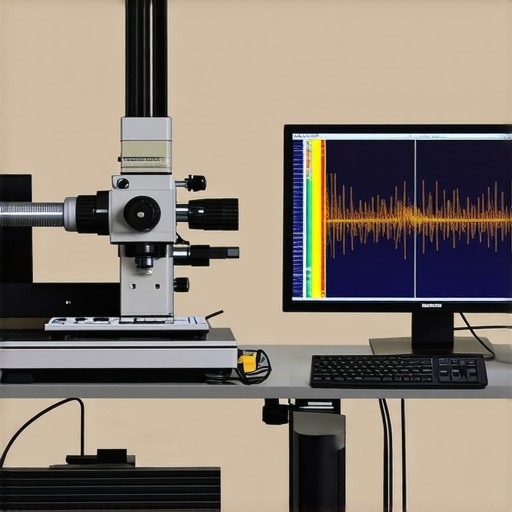
Visualize a spectral profiling process with a spectroradiometer capturing emission data from a professional monitor, highlighting the complexity and precision involved in advanced calibration techniques.
Precision in Multi-Device Environments Ensures Visual Uniformity
In modern production environments, managing a diverse array of display technologies—OLED, LED, quantum dot—requires more than individual calibration; it calls for a cohesive, synchronized approach. Multi-device calibration tools leveraging spectral data ensure consistency across screens, preserving color integrity and luminance harmony. This is critical when editing, grading, or approving content that demands pinpoint accuracy. Additionally, adaptive calibration algorithms utilizing machine learning can optimize performance based on ambient lighting and device aging, maintaining uniform quality even in the most dynamic environments.
Can We Rely on Future Technologies to Make Calibration Obsolete?
The trajectory of development hints at a future where embedded sensors, real-time analysis, and AI algorithms continuously refine display outputs, reducing manual intervention. Industry giants are investing in micro-LED with inherently stable spectral emissions that diminish calibration needs over time. As cloud integration enables collaborative calibration management, the paradigm shifts from periodic intensive sessions to ongoing, seamless optimization. Professionals should stay attuned to these innovations, recognizing their potential to redefine standards of fidelity, reduce operational overhead, and support the ever-increasing demands of immersive content experiences.
Elevate Your Expertise with Specialized Calibration Approaches
For the discerning professional, integrating spectral data into calibration routines results in unmatched color precision, vital for applications where subtle hue differences matter, such as high-end cinematic grading or digital archiving. Combining spectral profiling with multi-point gray balancing and ambient light compensation creates a tailored, holistic approach to display fidelity. Dedicated calibration software now offers intuitive interfaces for complex workflows, empowering users to achieve near-perfect reproduction without requiring extensive technical backgrounds. Embrace these cutting-edge practices to gain a competitive advantage in delivering uncompromised visual content.
How Can You Prevent Calibration Fatigue Among High-Precision Monitor Users?
Over-calibration or frequent adjustments can lead to diminishing returns, introducing artifacts or reducing the monitor’s natural contrast and luminance. Establishing standardized calibration schedules aligned with manufacturer recommendations, and employing automated, adaptive calibration tools, mitigates these risks. Providing continuous education and establishing best practices within teams ensures that calibration efforts enhance, rather than hinder, overall workflow efficiency. Leveraging authoritative resources, such as industry guidelines from standards organizations like SMPTE or DisplayHDR, can further refine routines and uphold the highest standards of visual accuracy.
Ready to push your calibration capabilities to the next level? Engage with our community of experts, share your experiences, or explore tailored solutions by contacting our specialists. Maintaining mastery in display calibration is an ongoing journey—stay informed, experiment, and lead your industry in visual excellence.
Expert Strategies that Redefine Precision in Visual Workflows
For professionals committed to pushing the boundaries of visual fidelity, integrating spectral profiling into calibration routines offers a transformative edge. This technique captures the full emission spectrum of monitors, enabling near-perfect color matching across high-end standards like DCI-P3 and Rec. 2020. Such meticulous calibration minimizes artifacts like metamerism failure, ensuring uniformity especially vital in cinematic and photographic workflows.
Harnessing Real-Time Adjustments
Emerging technologies incorporating embedded sensors and AI algorithms enable ongoing real-time calibration, adapting dynamically to environmental changes and monitor aging. This continuous refinement maintains peak accuracy without manual intervention, elevating consistency in demanding production environments.
Prioritizing Multi-Device Harmony
In multi-display setups, synchronization becomes crucial. Advanced hardware that supports spectral calibration across devices ensures uniformity, reducing discrepancies that could compromise project integrity. Machine learning-driven adjustments further optimize performance, making multi-monitor workflows more reliable than ever.
Innovations Making Calibration Smarter
Next-generation displays leveraging micro-LED technology with inherently stable spectral emissions are poised to diminish calibration frequency. Cloud-based profile management facilitates seamless collaboration across teams worldwide, fostering consistent quality regardless of location. Staying abreast of these innovations ensures your workflow remains at the forefront of technological evolution.
Your Path to Visual Mastery
Deepening expertise in spectral calibration and real-time correction not only enhances technical precision but also enriches creative output. Engage with advanced tools and participate in industry forums to exchange insights, maintaining a competitive edge in high-fidelity content creation. Remember, mastery over display calibration translates directly into impactful storytelling and uncompromising quality.
Curated Resources for the Discerning Professional
- Mastering Color Accuracy in Professional Monitors – An authoritative guide on calibration practices tailored for high-end creatives, emphasizing spectral profiling techniques.
- HDR Standards and Dynamic Range Optimization – An essential resource detailing the latest in HDR technology, tone-mapping, and peak brightness management.
- Advanced Color Management Software – Software platforms renowned for intuitive spectral calibration, multi-device synchronization, and AI-driven adjustments.
- Industry Insights and Future Trends – Reports and webinars exploring upcoming innovations in display tech, including micro-LED and cloud-integrated calibration solutions.
Reflecting on the Future of Visual Precision
The journey towards flawless display calibration is ongoing, blending cutting-edge hardware, intelligent software, and expert craftsmanship. As spectral profiling and real-time adaptive calibration become standard, maintaining a deep understanding of these tools is paramount for professionals aiming for excellence. Embrace these advancements, contribute your insights, and continue elevating the standards of visual fidelity—because in this field, precision isn’t just a goal; it’s a necessity.
About the Author